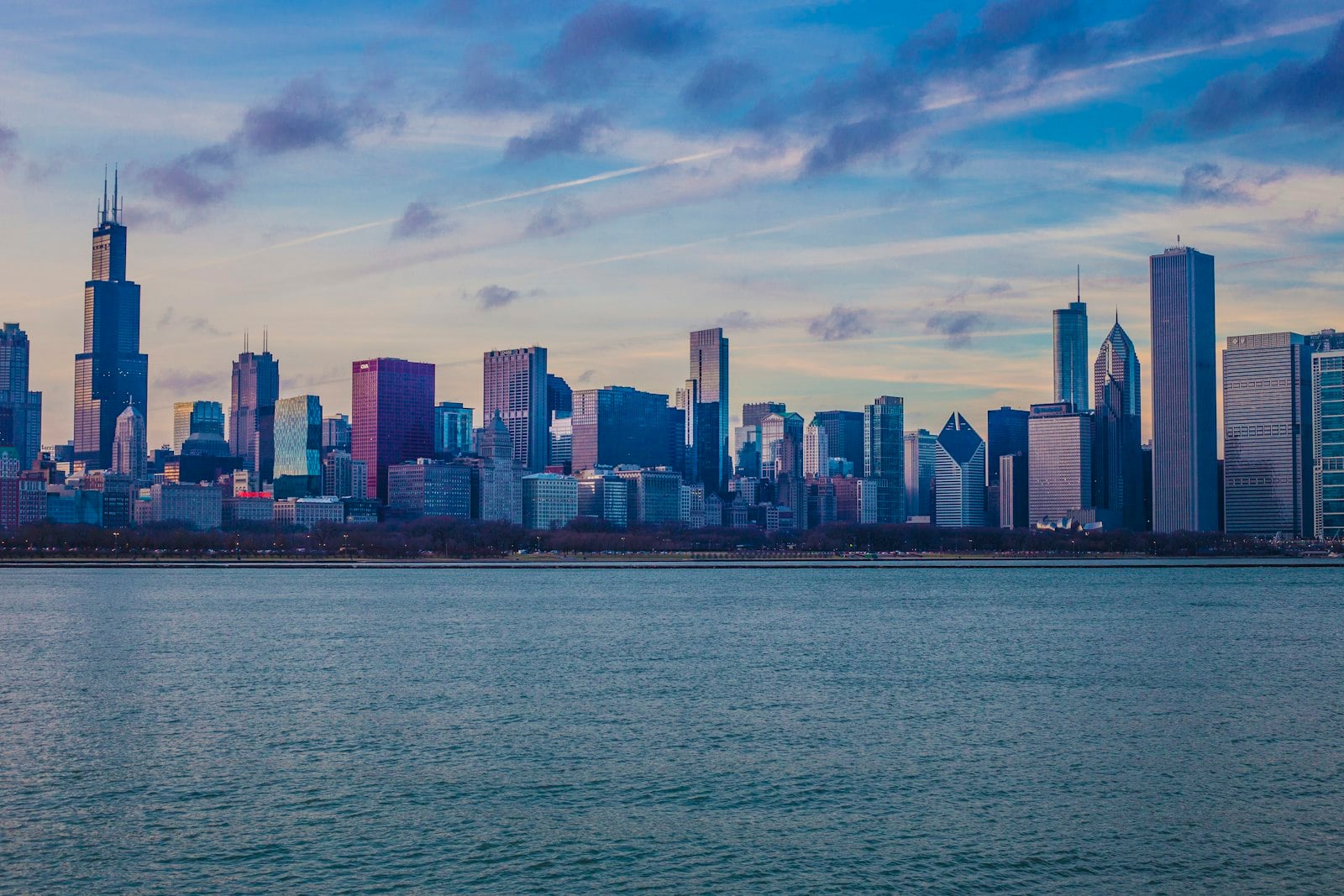
Moving to Richmond from Chicago IL? Here Is What Every Buyer Needs to Know Before They Search
Property tax relief, milder winters, and the neighborhoods that feel like home
Moving to Richmond from Chicago IL in 2026 will not necessarily change your home price much, Richmond’s metro median runs around $375,000-$400,000 versus Chicago’s $350,000-$380,000, but it can save you $3,000-$5,000 a year or more in property taxes alone, since Illinois effective rates run 2.0-2.3% compared to Virginia’s 0.85-1.20%. Richmond’s average commute is about 24 minutes versus Chicago’s 35 minutes, winters bring just 8-12 inches of snow instead of 30-38 inches, and the metro is far smaller at roughly 1.3 million people versus Chicago’s 9.3 million. The Mission Realty Team helps Chicago-area buyers compare tax burden, commute times, and neighborhood character before choosing between areas like the Fan District, Scott’s Addition, and Short Pump.
Table of Contents
If you’re moving to Richmond from Chicago IL, the biggest financial surprise usually isn’t home prices, Richmond’s metro median of $375,000-$400,000 is actually comparable to or slightly above Chicago’s $350,000-$380,000. The real savings show up in property taxes and sales tax: Illinois’ effective property tax rate of 2.0-2.3% is roughly double Virginia’s 0.85-1.20%, and Chicago’s 10.25% combined sales tax towers over Richmond’s roughly 6%.
Richmond’s average one-way commute runs about 24 minutes, compared to Chicago’s 35 minutes and its notorious Kennedy, Eisenhower, and Dan Ryan Expressway congestion. Winters shift dramatically too, from Chicago’s lake-effect snow and biting wind chill (30-38 inches of snow a year) to Richmond’s much gentler 8-12 inches, though Richmond’s summers run longer and more humid.
The scale difference is real: Richmond’s metro population of roughly 1.3 million is a fraction of Chicago’s 9.3 million, so expect a noticeably slower pace, smaller dining and arts scene, and no equivalent to Lake Michigan’s lakefront, though the James River running through downtown Richmond offers whitewater rafting and kayaking that Chicago simply can’t match.
Will moving from Chicago to Richmond actually lower your taxes?
Yes, significantly, even though home prices are fairly comparable. Illinois has among the highest effective property tax rates in the nation, averaging roughly 2.0-2.3% of assessed home value annually, with Cook County and the collar counties often at the higher end. Virginia’s effective property tax rates run roughly 0.85-1.20%, with Richmond city and Henrico or Chesterfield counties generally landing in the 0.90-1.05% range.
On a $380,000 home, that difference plays out as roughly $7,600-$8,700 a year in Illinois property tax versus $3,400-$4,000 in the Richmond area, a gap of $4,000-$5,000 annually. Sales tax tells a similar story: Chicago’s combined rate of approximately 10.25% is among the highest of any major U.S. city, while Richmond’s combined rate runs about 6%.
Illinois charges a flat 4.95% state income tax, while Virginia’s graduated rate tops out at 5.75%, technically higher for most full-time earners since the top bracket applies above just $17,000 of taxable income. Even so, the property tax and sales tax savings typically outweigh the modest income tax increase for most households.
How much shorter is the commute in Richmond compared to Chicago?
Chicago’s average one-way commute runs approximately 35 minutes, with significant variability due to congestion on the Kennedy Expressway (I-90/94), the Eisenhower Expressway (I-290), and the Dan Ryan Expressway (I-90/94). Chicago consistently ranks among the top five most congested U.S. metros for rush-hour delay, and many suburban commuters also pay regular Illinois Tollway charges as part of daily driving costs.
Richmond’s average one-way commute runs approximately 24 minutes, roughly a third shorter. The I-64/I-95 interchange near downtown is the primary chokepoint, but congestion is mild by big-city standards outside of rush hour, and Virginia has no tolling network in the Richmond area comparable to the Illinois Tollway’s I-PASS system.
Richmond is also significantly more car-dependent than Chicago. There’s no rail transit system comparable to the CTA or Metra, though GRTC operates city bus routes, including a fare-free Pulse bus rapid transit line downtown.
How different is Richmond’s weather from Chicago’s brutal winters?
Chicago’s winters are long and harsh, with lake-effect snow off Lake Michigan, biting wind chill, and average annual snowfall of roughly 30-38 inches. January average highs sit in the low 30s, with nighttime lows frequently dipping into the teens or single digits during cold snaps. Summers are relatively short, with July highs typically in the low-to-mid 80s.
Richmond’s winters are much milder, with average annual snowfall of only about 8-12 inches and many winters seeing just a handful of snow events. January average highs run in the mid-40s, with lows typically in the upper 20s to low 30s.
The trade-off is summer: Richmond’s season runs longer and more humid than Chicago’s, with July highs ranging from the mid-80s to mid-90s and heat index values often pushing higher due to humidity.
Does Richmond feel like a real city after living in Chicago?
Not on the same scale. Chicago’s metro population runs approximately 9.3 million, the third-largest metro in the country, with a world-class dining scene, renowned architecture, major arts institutions, and 26 miles of public lakefront shoreline. Richmond’s metro population is approximately 1.3 million, a fraction of Chicago’s, offering a noticeably slower, more relaxed Southern pace of life.
Richmond does have genuine urban neighborhoods and a real skyline, built around the James River, which offers Class III/IV whitewater rafting and kayaking literally within city limits, a rarity for any state capital. Richmond also has a growing craft beer scene, with Scott’s Addition alone hosting multiple breweries within walking distance of one another, and a nationally recognized mural and arts district with more than 100 outdoor murals citywide.
Walkable historic neighborhoods with tree-lined streets and 19th-century architecture offer some of the density and walkability Chicago transplants may miss, just at a much smaller scale.
How far is Richmond from Chicago, and how do you get there?
The driving distance between Chicago and Richmond runs approximately 750-800 miles, roughly 12-13 hours via the I-65/I-64 or I-74/I-70/I-64 corridors, with common routes running through Indiana, Ohio, and West Virginia before entering Virginia.
Direct flights between Chicago (O’Hare or Midway) and Richmond International Airport (RIC) run approximately 2 hours, making periodic visits back manageable even without a direct highway route.
Richmond’s proximity to Washington, DC, roughly 100-110 miles south, about a 2-hour drive or a similar train trip via Amtrak, is a bonus many Chicago transplants come to appreciate for occasional business travel or day trips.
Which Richmond neighborhoods fit a Chicago lifestyle best?
The Fan District offers a walkable grid of historic rowhouses, tree-canopied streets, and a strong sense of community, the closest Richmond equivalent to the density and walkability of Chicago neighborhoods like Lincoln Park or Lakeview. It’s popular with young professionals and families who want an urban feel without a car-first lifestyle.
Scott’s Addition, a former industrial zone turned brewery-and-loft district, draws direct comparisons to Chicago’s West Loop or Fulton Market, with exposed brick, converted warehouses, and new apartment development, all highly walkable. Short Pump, in western Henrico County, is known for strong schools and big-box and lifestyle-center shopping, comparable to Chicago suburbs like Naperville for movers prioritizing schools and space.
Church Hill, one of Richmond’s oldest neighborhoods and home to St. John’s Church, offers historic homes at prices still below the Fan District, while the Museum District offers quiet, leafy streets around the Virginia Museum of Fine Arts for a slightly quieter residential feel.
| Category | Chicago, IL | Richmond, VA |
|---|---|---|
| Cost of living index | ~115-125 | ~96-100 |
| Metro median home price (2026 est.) | $350,000-$380,000 | $375,000-$400,000 |
| Average one-way commute | 35 minutes | 24 minutes |
| Effective property tax rate | ~2.0-2.3% | ~0.85-1.20% |
| Combined sales tax | ~10.25% | ~6% |
| State income tax | Flat 4.95% | Graduated, up to 5.75% |
| Average annual snowfall | 30-38 inches | 8-12 inches |
| Metro population | ~9.3 million | ~1.3 million |
Frequently Asked Questions About Moving to Richmond from Chicago IL
Will I actually save money moving from Chicago to Richmond?
Yes, primarily through property taxes and sales tax rather than home prices. While Richmond-area home prices are comparable to or slightly above the Chicago metro median, Illinois property tax rates of 2.0-2.3% are roughly double Virginia’s 0.85-1.20%, and Chicago’s 10.25% sales tax is well above Richmond’s roughly 6%. Most movers see the biggest annual savings in property taxes, often $3,000-$5,000-plus per year on a comparably priced home.
How does Illinois’ flat income tax compare to Virginia’s?
Illinois charges a flat 4.95% on all income. Virginia uses a graduated scale up to 5.75%, and most full-time workers land close to that top rate since it kicks in above just $17,000 of taxable income. Virginia’s income tax can be nominally higher, but it’s typically offset by much lower property and sales taxes.
What’s the job market like in Richmond?
Richmond has a diversified economy anchored by finance and banking, law, state government, and a growing healthcare sector including VCU Health, Bon Secours, and HCA Virginia. It’s smaller than Chicago’s job market in absolute terms but has been adding jobs steadily, particularly in healthcare, tech, and professional services.
Does Richmond feel like a real city after living in Chicago?
Not on the same scale. Richmond’s metro population of roughly 1.3 million is a fraction of Chicago’s 9.3 million. It has genuine urban neighborhoods and city amenities, but reads more like a mid-size city with big-city pockets, downtown, the Fan, Scott’s Addition, rather than a metropolis.
What neighborhoods should I look at first?
For walkability and urban density similar to North Side Chicago neighborhoods, look at the Fan District or Museum District. For a trendier, brewery-and-loft vibe similar to Fulton Market, check out Scott’s Addition. For suburban schools and space, Short Pump is the go-to comparison to towns like Naperville.
How are the schools?
School quality varies significantly by locality. Henrico County and Chesterfield County, including the Short Pump area, generally have strong public school ratings, while Richmond City Public Schools are more mixed and require closer school-by-school research.
How different is the weather really?
Winters are dramatically milder, Richmond averages just 8-12 inches of snow per year versus Chicago’s 30-38 inches, and January highs run about 10-15 degrees warmer. The trade-off is a longer, more humid summer, with July highs commonly in the high 80s to mid-90s and noticeably higher humidity than Chicago.
I’ll miss Lake Michigan, is there anything similar in Richmond?
Not a Great Lake, but Richmond’s defining natural feature is the James River, which runs right through downtown and offers whitewater rafting, kayaking, tubing, and riverside parks and trails, a very different but genuinely appealing outdoor amenity that’s literally in the city center.
What is there to do for entertainment and culture?
Richmond has a respected arts and mural scene with more than 100 outdoor murals citywide, a growing craft brewery cluster in Scott’s Addition, historic sites tied to its role as a former Confederate and current state capital, and a lively independent restaurant scene. It won’t match Chicago’s scale, but it punches above its weight for a city its size.
What are the healthcare options like?
Richmond is a strong regional healthcare hub, anchored by VCU Health, an academic medical center and Level I trauma center, Bon Secours Richmond, and HCA Virginia’s network of hospitals, giving residents access to major health systems without needing to travel to a larger city.
What airport will I use, and how does it compare to O’Hare or Midway?
Richmond International Airport (RIC) is a small, easy regional airport, a big change from O’Hare’s scale and congestion. There are fewer nonstop options overall, but a far less stressful airport experience with shorter lines and easier parking.
How close is Richmond to Washington, D.C.?
Richmond is roughly 100-110 miles south of D.C., about a 2-hour drive or a similar train trip via Amtrak, making it feasible for occasional day trips or business travel without living in the D.C. area’s higher cost of living.
Is Richmond too quiet or sleepy after Chicago?
It’s a common concern, and the honest answer is that the pace is genuinely slower and entertainment options are more limited. Most transplants who adjust well go in expecting a trade, less big-city energy in exchange for shorter commutes, lower taxes, and easier access to nature.
Is Richmond good for remote workers?
Yes, it’s increasingly popular with remote workers thanks to lower housing costs relative to major metros, reasonably strong broadband infrastructure, and a growing coffee-shop and coworking scene, especially in Scott’s Addition and the Fan.
What’s the sports culture like compared to Chicago?
A major shift, Chicago has the Bears, Bulls, Cubs, White Sox, and Blackhawks, all with die-hard followings. Richmond has no major pro sports franchises; the closest big-league ties run through college sports, with VCU basketball drawing a strong following, and minor-league and regional teams.
Curious What You’d Really Save Moving from Chicago?
The Mission Realty Team runs side-by-side tax and cost comparisons for Chicago-area buyers so you know exactly what to expect before you list your current home. Contact the Mission Realty Team today to start planning your move to Richmond.