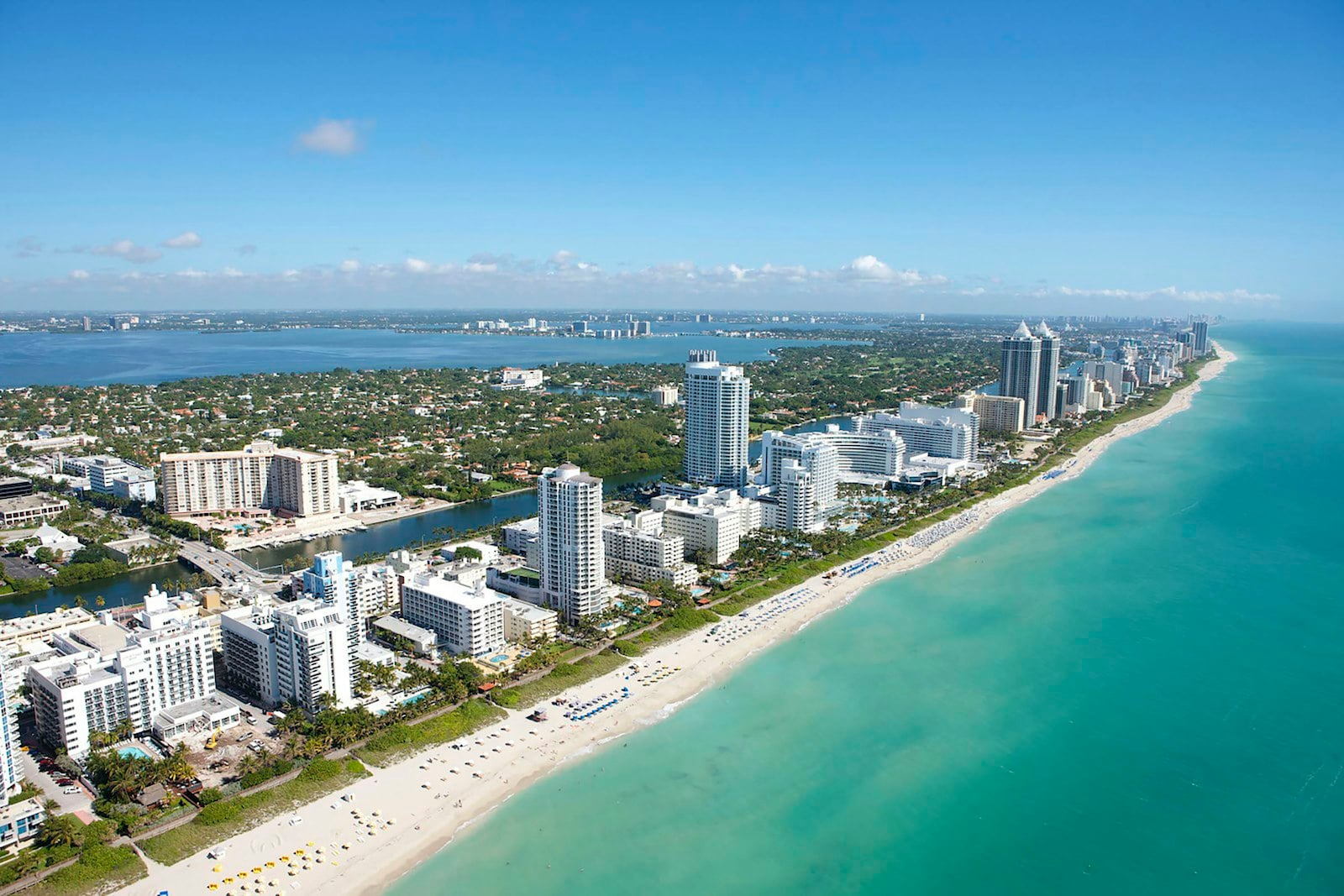
Moving to Richmond VA from South Florida: What to Know Before You Relocate
Insurance savings, hurricane-free living, and the neighborhoods that fit your lifestyle
Moving to Richmond VA from South Florida in 2026 can save homeowners $6,000-$10,000 a year or more on insurance alone, since South Florida homeowners insurance commonly runs $6,000-$10,000-plus annually (and often $8,000-$13,000-plus with flood coverage) while comparable Richmond coverage runs just $1,200-$2,000 a year with no hurricane risk. Richmond’s metro median home price of $375,000-$400,000 is well below Miami metro’s $550,000-$600,000, though Virginia’s income tax (up to 5.75%) offsets some of the savings Florida’s no-income-tax status provides. Expect a genuine four-season climate, a much smaller metro of about 1.3 million people, and no beach access, though the James River provides its own water recreation right downtown. The Mission Realty Team helps South Florida families weigh insurance savings against tax and lifestyle trade-offs before choosing a Richmond neighborhood.
Table of Contents
- Cost of Living: South Florida vs. Richmond
- Commute and Traffic: Escaping I-95 and the Palmetto
- Climate: Trading Hurricane Season for Four Real Seasons
- Culture and Pace of Life
- Distance and Travel Between South Florida and Richmond
- Best Richmond Neighborhoods for South Florida Transplants
- Frequently Asked Questions
Moving to Richmond VA from South Florida in 2026 usually starts with one number: homeowners insurance. South Florida premiums commonly run $6,000-$10,000-plus a year, and coastal or older properties often exceed $12,000-$15,000 once flood coverage is added, while a comparable Richmond home typically runs just $1,200-$2,000 a year. That single line item is frequently the largest financial win in the entire relocation, often exceeding what Virginia’s income tax will cost you annually.
Home prices tell a similar story. Richmond’s 2026 metro median sits around $375,000-$400,000, compared to Miami metro’s $550,000-$600,000, Fort Lauderdale’s $520,000-$570,000, and West Palm Beach’s $500,000-$550,000. Florida’s lack of a state income tax is real, but Virginia’s graduated tax, topping out at 5.75%, is frequently offset by the combination of lower home prices and dramatically lower insurance.
The biggest lifestyle adjustment is climate: South Florida’s hot, humid, hurricane-exposed year-round weather gives way to Richmond’s four distinct seasons, milder overall, but with a real winter and no beach access, though Virginia Beach is a manageable 1.5-2 hour drive away.
How much can you really save on insurance moving from South Florida to Richmond?
This is consistently the single biggest financial relief cited by South Florida transplants. South Florida homeowners insurance commonly runs $6,000-$10,000-plus a year for a standard single-family home, and coastal or older properties, especially those requiring wind mitigation inspections or older roofs, frequently exceed $12,000-$15,000 a year.
Many major national insurers have reduced exposure or exited the Florida market in recent years, pushing homeowners toward Citizens Property Insurance Corporation, the state-backed insurer of last resort, or smaller regional carriers with higher premiums and less financial stability. Flood insurance is frequently required separately, especially in FEMA-designated flood zones common throughout South Florida, adding $1,000-$3,000-plus a year on top of the base policy. Combined, annual insurance burden for a South Florida homeowner often runs $8,000-$13,000-plus once windstorm, flood, and standard hazard coverage are combined.
Richmond homeowners insurance typically runs just $1,200-$2,000 a year for a comparable single-family home, with no hurricane or named-storm deductibles, no mandatory wind mitigation inspections, and flood insurance needed only in specific, limited flood-zone parcels near the James River floodplain, not a metro-wide requirement.
How much easier is the commute in Richmond compared to South Florida?
South Florida traffic is notoriously congested, ranked among the worst in the country. Key chokepoints include I-95, the Palmetto Expressway, I-595, and the Turnpike. The average commute runs about 30 minutes, but that understates the experience, congestion is dense, unpredictable, and extends well beyond traditional rush hours, especially with seasonal tourist traffic each winter.
Richmond’s average commute runs about 24 minutes. Congestion exists at specific points, the I-64/I-95 downtown interchange, the Powhite Parkway, and Short Pump-area retail corridors during peak hours, but it’s far less chronic and far more predictable than South Florida’s.
Overall, Richmond offers a shorter, more reliable, and noticeably less stressful daily driving experience, without the seasonal snowbird traffic surges that hit South Florida every winter.
What’s the real trade-off between South Florida’s climate and Richmond’s?
This is one of the most significant lifestyle changes for South Florida transplants. South Florida is hot and humid essentially year-round, with minimal seasonal variation, summer highs regularly in the low-to-mid 90s with high humidity, and winter lows rarely dipping below the 60s. Hurricane season runs June through November, with real annual risk of major storms, evacuation orders, boarded-up windows, and extended power outages.
Richmond offers a true four-season climate. Summers are hot and humid, with highs in the mid-90s during peak months, though generally slightly less oppressive than South Florida’s humidity. Distinct, colorful spring and fall shoulder seasons follow, and winters bring real cold with occasional snow, typically 8-12 inches a year across several small events rather than one major storm.
Critically, Richmond carries no hurricane risk. It occasionally receives heavy rain from weakened tropical storm remnants that track up from the Gulf or Atlantic, but these arrive as rain events, not landfall-level hurricanes, no shutters, no mandatory evacuations, no wind-driven structural risk.
Will Richmond feel too quiet or less diverse after South Florida?
South Florida is a large, dense, highly diverse metro area of roughly 6.2 million people across Miami-Dade, Broward, and Palm Beach counties, with strong Latin American and Caribbean cultural influence woven into food, music, language, and daily life, plus a beach and coastal lifestyle and vibrant nightlife.
Richmond is considerably smaller, roughly 1.3 million metro residents, a historic Southern capital city with a strong sense of place: cobblestone streets, 18th and 19th-century architecture, and deep Civil War and civil rights history. The James River replaces the ocean as the area’s recreational and social hub, offering kayaking, tubing, rafting, and riverside parks right through downtown.
Richmond has a nationally recognized craft beer and brewery scene, with Scott’s Addition alone hosting one of the highest breweries-per-block concentrations in the country, plus the Richmond Mural Project, which has made the city a genuine street-art destination. It has a smaller but real and growing international and cultural diversity, without Miami’s scale.
How far is Richmond from Miami, and how do you get there?
The driving distance from Miami to Richmond runs approximately 950-1,000 miles via I-95, roughly 14-15 hours of driving, typically split into a two-day trip.
Direct flights between Miami (MIA) or Fort Lauderdale (FLL) and Richmond (RIC) run approximately 2 to 2.5 hours, or via Washington Dulles or Reagan National as connection points if direct service isn’t available on a given route.
Richmond’s proximity to Washington, DC, roughly 90 minutes to 2 hours by car or Amtrak, makes it a realistic option for occasional DC business trips or day visits without DC’s cost of living.
Which Richmond neighborhoods fit a South Florida lifestyle best?
Short Pump, in Henrico County, offers a suburban, master-planned feel with strong schools and upscale retail, comparable in feel to Weston or Coral Springs, a natural landing spot for families wanting suburban space and area schools. Midlothian and greater Chesterfield County offer family-oriented suburban communities, newer construction, strong school districts, and more house for the money, appealing to buyers coming from suburban Broward or Palm Beach County.
The Fan District is a historic, walkable, urban rowhouse neighborhood near VCU and downtown, appealing to transplants who want walkability and architectural character without high-rise density. Scott’s Addition, with converted industrial lofts, breweries, and a young professional urban vibe, is the closest Richmond equivalent to a trendy South Florida urban district like Wynwood, on a smaller scale.
Church Hill offers some of the best skyline and river views in the city, historic and increasingly popular. For beach access, Richmond has no ocean of its own, but the James River provides genuine water recreation, kayaking, paddleboarding, and riverside trails, right in the city, while Virginia Beach remains a manageable 1.5-2 hour drive.
| Category | South Florida (Miami metro) | Richmond, VA |
|---|---|---|
| Cost of living index | ~120-130 | ~96-100 |
| Metro median home price (2026 est.) | $550,000-$600,000 | $375,000-$400,000 |
| Average annual homeowners insurance | $6,000-$10,000+ (often $8,000-$13,000+ with flood) | $1,200-$2,000 |
| State income tax | None | Graduated, up to 5.75% |
| Average one-way commute | 30 minutes (heavy congestion) | 24 minutes |
| Hurricane risk | Real annual risk (June-Nov) | None (rain remnants only) |
| Average annual snowfall | 0 inches | 8-12 inches |
| Metro population | ~6.2 million | ~1.3 million |
Frequently Asked Questions About Moving to Richmond VA from South Florida
How much will I actually save on homeowners insurance moving from South Florida to Richmond?
Most transplants see homeowners insurance drop from $6,000-$10,000-plus a year, or $8,000-$13,000-plus combined with flood coverage, in South Florida to roughly $1,200-$2,000 a year in Richmond, often a $6,000-$10,000 annual savings, since Richmond carries no hurricane or named-storm risk and rarely requires separate flood coverage.
Florida has no state income tax, doesn’t moving to Virginia wipe out my savings?
Virginia’s income tax, up to 5.75%, is real, but for most households the insurance and housing savings outweigh it. A household paying $5,000-$6,500 a year in Virginia income tax often saves considerably more than that on insurance alone, plus tens of thousands less in home purchase price.
Am I really giving up hurricane risk entirely?
Yes, in the meaningful sense. Richmond can get heavy rain and wind from the remnants of tropical systems moving up the coast, but these arrive as weakened rain events, not landfalling hurricanes, no mandatory evacuations, no shutters, no wind-mitigation retrofits required by insurers.
Will I miss the beach and warm winters?
Likely yes to some degree, Richmond has no ocean access, and winters bring real cold and occasional snow. Many transplants offset this with regular trips to Virginia Beach, about 1.5-2 hours away, and lean into the James River for water recreation and a renewed appreciation for genuine seasons.
What’s the job market like in Richmond?
Richmond has a diversified economy anchored by finance, healthcare, state government, law, and a growing tech and startup sector, plus several Fortune 500 headquarters. It’s smaller than Miami’s market but generally more stable and less tourism or seasonality-dependent.
What are the best neighborhoods for someone coming from Weston, Coral Springs, or Boca-style suburbs?
Short Pump and the broader Midlothian/Chesterfield area are the closest match, strong schools, newer construction, and a planned-suburb feel.
How are the schools?
Henrico County (Short Pump area) and Chesterfield County (Midlothian area) both have well-regarded public school systems, generally rated favorably compared to national averages and often competitive with South Florida’s stronger districts.
How hard is the adjustment to snow and cold weather?
Richmond gets modest snowfall, roughly 8-12 inches per season spread across several small events, not one major storm, and real winter cold, but nothing like Northeast or Midwest winters. Most South Florida transplants adapt within a season or two.
What is there to do in Richmond compared to Miami’s nightlife and beach culture?
Richmond offers a strong craft brewery scene, especially in Scott’s Addition, the Richmond Mural Project’s outdoor street art, historic district dining and shopping in the Fan, and James River outdoor recreation. It’s a different, quieter kind of variety rather than a replacement for Miami’s beach-and-nightlife scale.
How does healthcare compare?
Richmond is home to major health systems including VCU Health and Bon Secours, both offering comprehensive specialty and hospital care, generally considered strong regional healthcare infrastructure, though Richmond’s market is smaller overall than South Florida’s.
How does the airport compare to MIA or FLL?
Richmond International Airport (RIC) is far smaller than Miami International or Fort Lauderdale-Hollywood, fewer direct destinations and less frequent flights, but also far less congestion, shorter security lines, and easier parking. Many longer trips connect through Washington Dulles or Reagan National, both within about 1.5-2 hours by car.
Is Richmond really more affordable to buy a home?
Yes, median home prices in Richmond, roughly $375,000-$400,000, run well below Miami metro medians of roughly $550,000-$600,000, and that gap widens further when combined with dramatically lower insurance costs.
Is the humidity as bad as South Florida?
Richmond summers are hot and humid, with highs in the mid-90s in July and August, but the humidity is generally less oppressive than South Florida’s near-constant tropical humidity, and it’s balanced by cooler, drier spring, fall, and winter months.
Is Richmond too quiet or lacking in diversity compared to Miami?
Richmond is considerably smaller, about 1.3 million metro population versus Miami’s 6.2 million, and has less of an international, Latin American cultural presence, but it has a growing and increasingly diverse population and a pace of life many transplants come to prefer after the intensity of South Florida.
How does flood risk compare?
South Florida faces widespread flood risk tied to hurricane storm surge, king tides, and low elevation, often requiring mandatory flood insurance across large portions of the region. Richmond’s flood risk is limited mainly to specific parcels near the James River floodplain, a small fraction of the metro area, meaning most Richmond homeowners never need separate flood coverage at all.
Ready to See Your Insurance Savings in Writing?
The Mission Realty Team helps South Florida families get a real sense of insurance, tax, and home price differences before they list their current property. Contact the Mission Realty Team today to start your Richmond relocation plan.