Relocating to Richmond VA from Milwaukee: Cost of Living, Neighborhoods & What to Expect
You are trading a long severe winter for a long humid summer – and that is the whole decision
Moving to Richmond, Virginia from Milwaukee is, at bottom, a decision about winter. Milwaukee’s winters are long and severe, shaped by Lake Michigan, and its culture is built around making the most of a short warm season. Richmond’s winter is short and mild, its warm season runs from April into October, and its summers are hot and heavily humid. That is the trade, and the humidity is the part Wisconsin households consistently underestimate. Be prepared for one more quirk: Richmond has far less snow-removal infrastructure than Milwaukee, so a snowfall you would drive through without comment will close schools here, and ice storms rather than sustained snow are the characteristic winter hazard. Both cities are water cities, but Lake Michigan and the James River are entirely different amenities, and Richmond’s river runs whitewater through the middle of downtown. The housing offers real familiarity, since Milwaukee’s early-twentieth-century brick bungalow belt has a close cousin in Richmond’s bungalow and Foursquare neighborhoods, but Richmond has far more crawl spaces and fewer full basements, which changes your inspection priorities. Wisconsin and Virginia both levy an income tax, while Virginia adds a local personal property tax on vehicles and an annual safety inspection that are new line items. Buyers researching moving from Milwaukee to Richmond VA, Richmond vs Milwaukee cost of living and Richmond VA neighborhoods will find the detail below. The Mission Realty Team serves Richmond, Henrico, Chesterfield, Goochland, Hanover and Powhatan.
Table of Contents
- Why People Make the Milwaukee to Richmond Move
- Winter and Summer: The Honest Trade
- Housing Stock: Cream City Brick and Polish Flats to Bungalows and Crawl Spaces
- Neighborhood Analogues: Bay View to Church Hill
- Commuting and Driving Culture
- Taxes, Registration and Inspection
- The Richmond Job Market
- Food, Culture and the Outdoors
- What to Do First: A Practical Relocation Sequence
- Frequently Asked Questions
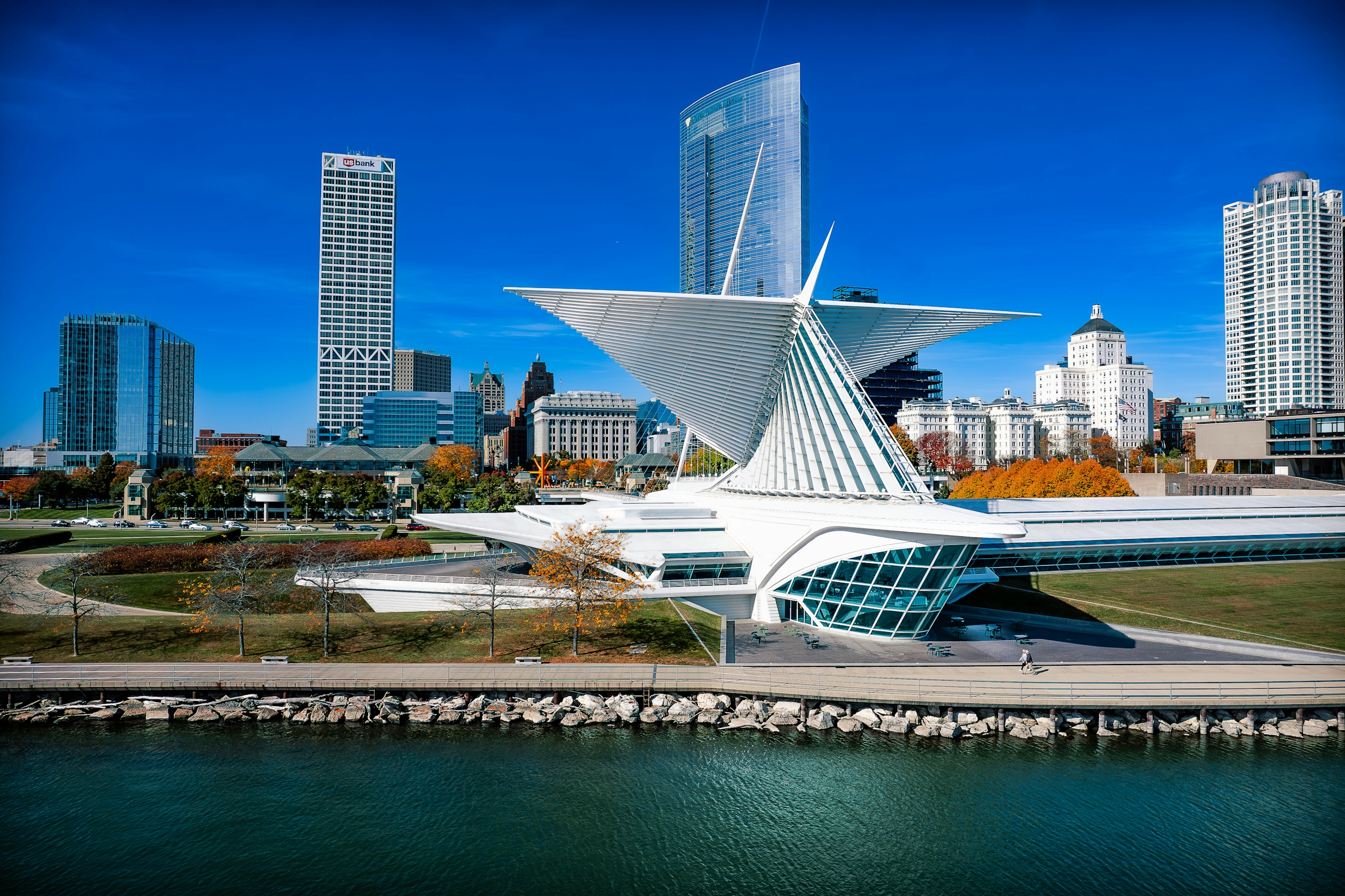
The white wings of the Milwaukee Art Museum opening over the Lake Michigan shoreline are a fair symbol of what that city does well: serious architecture, serious civic pride, and a lakefront that organizes the whole summer. If you are leaving it, we will not pretend Milwaukee is a place people flee. It is a genuinely good city with a short season, and this move is mostly about the calendar.
Richmond sits on the James River at the fall line, the seam where the hard rock of the Piedmont drops to the sandy coastal plain, which is why there are rapids in the middle of the city. Washington, DC is roughly two hours north on I-95, the Atlantic roughly two hours east, and the Blue Ridge roughly two hours west.
We are a licensed brokerage, so you will not find median sale prices, days-on-market figures or cost-of-living percentages here. Those numbers move and we will not publish them as current fact. For a real picture of what your budget buys in any neighborhood below, call the Mission Realty Team at (804) 601-4960.
Why Do People Move From Milwaukee to Richmond?
Winter is the reason almost everyone leads with, and it is the honest one. Milwaukee winters are long, cold and snowy, with the lake amplifying both the snow and the grey, and the season stretches from November well into March. Richmond’s winter is short and mild by comparison, and the shoulder seasons expand to fill the space. Most households tell us the length of the warm season is the change they feel most.
The second reason is East Coast position. Milwaukee is well placed for Chicago and the upper Midwest and a long way from any ocean. Richmond puts Washington about two hours north with Amtrak service continuing to Philadelphia and New York, the Atlantic about two hours east, and the Blue Ridge about two hours west. If your family is on this coast or your work draws you toward the corridor, that changes your year substantially.
The third is economic mix rather than economic size. Milwaukee has real depth in manufacturing and insurance. Richmond’s weight sits in healthcare, finance and insurance, state government and logistics. Neither is obviously larger for every career, but the industries are different enough that this move suits some fields and works against others.
Winter and Summer: The Honest Trade
Milwaukee’s climate is defined by Lake Michigan. Winters are long and cold with substantial snow, lake-effect events add to totals, and the grey can settle in for stretches. Summers are pleasant and comparatively short, which is precisely why the city built a festival culture to use every week of them.
Richmond runs on a different calendar. Winter is short and mild, snow arrives occasionally rather than dependably, and freezing rain and sleet are the characteristic hazard rather than accumulation. Ice storms coat trees and power lines and bring down limbs, so plan for the possibility of a short outage. Here is the part Milwaukee households find genuinely funny and then genuinely inconvenient: Richmond has a small fraction of Milwaukee’s snow-removal equipment, because it would sit unused most years. A two or three inch snowfall closes schools and empties the roads. That is infrastructure and local norms, not driving ability, and you will not be able to fix it by being competent in a Subaru.
The real adjustment is summer. Richmond is hot and heavily humid from June into September, with frequent fast-moving afternoon thunderstorms. Humidity keeps your body from shedding heat efficiently, so an upper-eighties afternoon here feels heavier than a hotter dry day, and shade helps less than you expect. Air conditioning is structural rather than a comfort item. On the other side of the ledger, the warm season is roughly twice as long, spring arrives in March with dogwoods and azaleas, autumn runs long and is often the best season of the year, and the growing season gives you months more in the garden.
Housing Stock: Cream City Brick and Polish Flats to Bungalows and Crawl Spaces
There is more familiarity here than you might expect. Milwaukee’s characteristic housing includes the Polish flat, the two-family duplex, the early-twentieth-century brick bungalow belt, Victorians in the older neighborhoods and the distinctive pale Cream City brick. Richmond’s characteristic types are the bungalow, the American Foursquare, the Colonial Revival, the attached brick rowhouse of the Fan and Church Hill, and an enormous postwar belt of brick ranches and Cape Cods across inner Henrico and Chesterfield. If you have owned a Milwaukee bungalow, the Richmond bungalow will feel like a relative: similar age, similar footprint, similar original systems waiting to surprise you. Brick is the default exterior in both cities, so your instincts about masonry and mortar repointing transfer directly.
The foundation is the significant change. Wisconsin’s frost line requires footings deep enough that a full basement is close to free, which is why Milwaukee houses almost all have one. Richmond’s milder ground conditions never forced that, so ventilated crawl spaces predominate and full basements turn up mostly in the hillier neighborhoods. Two consequences follow. First, you lose the basement as storage, laundry, workshop and rec room, which is a real reduction in usable space you should account for when comparing square footage. Second, your inspection list changes completely: instead of basement water intrusion, sump pumps and foundation cracks from frost heave, you are looking at crawl space moisture and encapsulation, termites and other wood-destroying insects, subfloor humidity, roof age and drainage away from the foundation. A termite and wood-destroying insect inspection is standard practice in a Richmond purchase and should not be treated as optional.
Duplexes and two-flats are also far less common here. If your plan involved living in one unit and renting the other, that inventory exists in Richmond but is much thinner, and we should talk specifically about where.
Neighborhood Analogues: Where Milwaukee Maps Onto Richmond
If you love Bay View or Riverwest – walkable, unpretentious, creative, good bars and coffee, older housing, a strong local identity – look at Church Hill, Scott’s Addition or Forest Hill. Church Hill sits on a bluff above the James with Libby Hill Park and one of the best views in the city, and it holds Richmond’s oldest housing. Scott’s Addition is a former industrial district converted to breweries, apartments and new condominiums, and its brewery density will feel immediately familiar. Forest Hill on Southside pairs modest houses with a large park and direct access to the river trails.
If you love Shorewood or Whitefish Bay – established, leafy, family-oriented, walkable commercial streets, strong schools, a mix of house sizes – look at the Museum District, Bellevue or the Near West End. The Museum District sits beside the Virginia Museum of Fine Arts with the Fan’s architecture and a quieter feel. Bellevue in Northside is a 1920s bungalow and Foursquare grid with a compact commercial strip on MacArthur Avenue. The Near West End, including Windsor Farms, is the grander and more formal option.
If you live in Brookfield or Mequon – newer construction, larger lots, planned subdivisions, homeowners associations, retail convenience – look at Short Pump and the Wyndham area in western Henrico, or Midlothian in Chesterfield, which offers a comparable profile south of the James with its own school division and tax rate. If you want acreage, look at Goochland, Powhatan and western Hanover.
Commuting and Driving Culture
Richmond and Milwaukee are comparable in scale, and both are easy driving cities by national standards. Getting from Northside, the Fan or Forest Hill to downtown or the VCU Health campus is typically well under twenty minutes outside peak hours.
The network is I-95 north to south, I-64 east to west, I-195 and the Downtown Expressway through the center, and I-295 arcing around the north and east as a bypass. If you are used to I-43, I-94 and I-894, the logic will make sense quickly. The one real constraint is the James River, because crossings are limited and peak traffic funnels onto a handful of bridges. If your home and your office end up on opposite banks, that fact will shape your day more than mileage.
Three practical notes. Richmond has toll roads, specifically the Downtown Expressway and the Powhite Parkway, so get an E-ZPass transponder in your first week. Winter driving is a different problem here: less snow overall, but ice events and drivers with far less winter experience, so your Wisconsin skills will not fully protect you from everyone else. And you can retire the block heater and most of the winter kit.
Transit is modest. GRTC operates the Pulse bus rapid transit line along Broad Street between Willow Lawn and Rocketts Landing plus a local bus network, genuinely useful along that corridor and thin elsewhere. Close-in neighborhoods are meaningfully walkable, and cycling works most of the year on flat fall-line terrain. If the Oak Leaf Trail was part of your routine, the Virginia Capital Trail runs from downtown Richmond to Jamestown and the James River Park System has extensive singletrack.
Taxes, Registration and Inspection
Wisconsin and Virginia both levy a state income tax, so that category is not new. Both use graduated brackets, and both adjust rates over time, so verify current figures with the Virginia Department of Taxation and have a tax professional model your actual Virginia take-home before you accept an offer rather than assuming the two states land in the same place.
Real estate tax runs on a familiar model of local assessment and locally set rates. The detail that matters is that rates differ meaningfully across the City of Richmond, Henrico, Chesterfield, Goochland, Hanover and Powhatan, and that spread is a real part of your monthly payment. Compare jurisdictions before you compare houses.
Two Virginia line items are genuinely new to Wisconsin households. The first is the local personal property tax on vehicles. Virginia cities and counties assess an annual tax on cars, trucks, motorcycles, boats and trailers based on assessed value, billed by the locality where the vehicle is normally kept. Wisconsin charges registration fees but does not tax vehicles as personal property this way, so budget for a new annual bill on every vehicle you own. Note also that registering with the Virginia DMV and registering with your locality for personal property tax are two separate steps, and skipping the second produces penalties even when your DMV registration is current. Rates, assessment methods and any relief programs differ by locality and change year to year, so verify current rates directly with the commissioner of the revenue where you land.
The second is the annual vehicle safety inspection, which Virginia requires and Wisconsin does not have as a general program. Emissions testing works differently too: southeastern Wisconsin including the Milwaukee area requires emissions testing, while Virginia’s emissions program applies in certain Northern Virginia localities rather than in Richmond. So you swap an emissions test for a safety inspection.
The Richmond Job Market
Healthcare is Richmond’s largest sector. VCU Health operates an academic medical center and Level I trauma center downtown, and Bon Secours and HCA Virginia both run multiple hospitals across the region. Clinical, administrative and research experience from the Milwaukee health systems transfers directly.
Finance and insurance is the second pillar, and this is where Milwaukee experience translates best. Capital One has a very large presence in the western suburbs, the Federal Reserve Bank of Richmond is headquartered downtown, and there is a deep layer of banking, insurance, asset management, actuarial, compliance and analytics work. If your background is Northwestern Mutual or the broader Milwaukee insurance world, this is recognizable territory.
State government is the third pillar and it is distinctive. Richmond is Virginia’s capital, so the General Assembly, the executive agencies and the surrounding legal, policy and consulting ecosystem are based downtown rather than in Madison. Logistics and distribution round it out, driven by the I-95 and I-64 crossroads, the Port of Virginia’s inland connections and Richmond International Airport. Corporate headquarters include CarMax and Dominion Energy.
Be honest about the gap. Richmond does not have Milwaukee’s industrial base. There is no counterpart to the concentration of heavy manufacturing, industrial automation and machinery engineering represented by firms like Rockwell Automation and Harley-Davidson. Virginia has real manufacturing, including pharmaceutical production in the Richmond region, but if your career is in industrial automation, machine design or plant engineering, this move narrows your local options and you should secure a role before you list your house.
Food, Culture and the Outdoors
Both cities are water cities, and the water is completely different. Lake Michigan is an inland sea: a horizon, a lakefront park system, Bradford Beach, sailing, and a body of water that shapes the weather. The James is a working fall-line river you get into. Because the Piedmont drops to the coastal plain right here, the James runs genuine whitewater inside the city limits, up to Class IV at higher water, and people paddle it on ordinary weekday evenings. The James River Park System runs along both banks with hiking and mountain biking at Belle Isle, Pony Pasture, Buttermilk and North Bank. You lose the horizon and the sailing; you gain rapids and singletrack fifteen minutes from downtown.
On food, be prepared for real losses alongside real gains. Milwaukee’s frozen custard, Friday fish fry, bratwurst culture, supper clubs and the Milwaukee Public Market are specific and beloved, and Richmond does not replicate them. What Richmond has instead is a creative restaurant scene distributed across neighborhoods rather than concentrated in one district, with Church Hill, the Fan, Carytown, Scott’s Addition, Jackson Ward and Forest Hill each running their own cluster, plus strong Southern and Virginia-specific cooking. The brewery culture is one place the two cities genuinely rhyme: Scott’s Addition has a dense craft brewery cluster, and both cities carry a German brewing heritage in their architecture and their habits.
The festival calendar also changes shape. Milwaukee compresses an enormous amount of outdoor programming into a short summer, Summerfest most famously. Richmond spreads its outdoor life across a much longer season instead of concentrating it, which some transplants find less exciting and most find more livable. Institutionally Richmond is strong for its size: the Virginia Museum of Fine Arts is free to enter and genuinely major, and Lewis Ginter Botanical Garden, Maymont, the Institute for Contemporary Art at VCU and the Science Museum of Virginia fill out the rest. Richmond also carries an enormous amount of American history in its streets, including difficult history, and it rewards engaging with that directly.
Professional sports is a clear loss. Milwaukee has the Brewers and the Bucks. Richmond has the Flying Squirrels in baseball and the Kickers in soccer, plus Division I athletics at VCU and the University of Richmond, with Washington roughly two hours north for major league games.
What to Do First: A Practical Relocation Sequence
Visit in late July or August. This is the single most useful thing a Milwaukee household can do. Spend three days here in deep summer, be outside in the afternoon, and find out how you feel about humidity without a lake breeze before you commit rather than after.
Account for the missing basement. When you compare a Richmond house to your Milwaukee one, compare usable space rather than listed square footage. Storage, laundry, workshop and rec room functions all have to go somewhere else, and this is the practical adjustment northern buyers most often overlook until they are unpacking.
Rebuild your inspection checklist. Termite and wood-destroying insect inspection, crawl space moisture and encapsulation, roof age, drainage and grading, and HVAC humidity performance. Frost heave and basement water intrusion come off the list; moisture and insects go on it.
Model the full cost of ownership. Include the local real estate tax rate, the new annual vehicle personal property tax on every vehicle, homeowners insurance quoted by a Virginia agent, and a realistic exterior maintenance budget for lawn care, gutters and tree work across a much longer growing season. Then have a tax professional compare your Wisconsin and Virginia income tax position side by side.
Handle the paperwork block in your first month. Virginia driver’s license, DMV title and registration, separate locality registration for personal property tax, annual safety inspection, voter registration and an E-ZPass. Contact your school division directly about enrollment documentation rather than relying on a website summary.
| Factor | Milwaukee, WI | Richmond, VA | What it means for you |
|---|---|---|---|
| Winter | Long and severe, lake-effect snow | Short and mild, occasional ice | The main reason most people make this move |
| Snow response | Heavily equipped, life continues | Minimal equipment, small snowfalls close schools | Adjust expectations, not your driving |
| Summer | Pleasant and short, lake breeze | Hot and heavily humid, June into September | The real adjustment; AC is structural |
| Warm season length | Short, so the calendar is compressed | April into October | Outdoor life spreads out instead of concentrating |
| The water | Lake Michigan, horizon and sailing | James River, whitewater in the city | Different amenity, not a lesser one |
| Bungalow stock | Large early-1900s brick bungalow belt | Bungalows and Foursquares in volume | Genuine familiarity; instincts transfer |
| Foundations | Full basements nearly universal | Ventilated crawl spaces predominate | Lost usable space and a new inspection list |
| Two-flats and duplexes | Common, including Polish flats | Much thinner inventory | Owner-occupant rental plans need a strategy |
| State income tax | Wisconsin levies graduated brackets | Virginia levies graduated brackets | Not a new category; verify current rates |
| Vehicle tax | Registration fees, no personal property tax | Annual local personal property tax | A genuinely new bill on every vehicle |
| Vehicle inspection | Emissions testing in the Milwaukee area | Annual safety inspection, no local emissions test | You swap one errand for another |
| Employment base | Manufacturing, industrial automation, insurance | Healthcare, finance, state government, logistics | Insurance transfers well, industrial does not |
| Pro sports | Brewers and Bucks | Minor league plus Division I college | A clear cultural loss |
| Coast and DC | A long drive to either | Atlantic and Washington each about two hours | New weekend range |
Frequently Asked Questions About Moving to Richmond VA from Milwaukee
Is Richmond VA a good place to live compared to Milwaukee?
Richmond suits people who want a much shorter winter, a far longer warm season and closer access to the coast and Washington, while Milwaukee holds the advantage on major league sports, basements and a lakefront. The cities are comparable in scale and both have strong neighborhood identity and good early-twentieth-century housing, so the urban texture will feel recognizable. What changes is the calendar: Richmond’s outdoor life spreads across April into October rather than compressing into a short summer. The honest cost is humidity, which is the adjustment Wisconsin households most consistently underestimate. The Mission Realty Team works with Midwest transplants regularly and will talk through both sides.
Is Richmond VA cheaper than Milwaukee?
We will not publish a cost-of-living percentage, because those figures shift and we are a licensed brokerage that will not present stale numbers as current fact. What we can tell you is which line items change. Virginia adds an annual local personal property tax on every vehicle you own, which Wisconsin does not levy, plus an annual safety inspection. Heating costs generally fall and cooling costs generally rise, and real estate tax rates differ meaningfully across the City of Richmond, Henrico, Chesterfield, Goochland, Hanover and Powhatan. Call the Mission Realty Team at (804) 601-4960 for current pricing in a specific neighborhood.
How far is Richmond VA from Milwaukee?
Richmond is roughly nine hundred miles southeast of Milwaukee, which most families treat as a two-day drive with an overnight stop rather than a single push. Routes generally run southeast through Indiana and Ohio and then across the mountains into Virginia. Both cities have commercial airports, with Richmond International on the east side of the metro and Milwaukee served by Mitchell International, so connecting flights back for holidays are straightforward. Amtrak from Staples Mill Road and Main Street Station also connects Richmond north to Washington, Philadelphia and New York.
How bad are Richmond VA winters compared to Wisconsin?
Richmond winters are dramatically milder than Milwaukee’s, with a much shorter cold season and snow that arrives occasionally rather than dependably. The characteristic winter hazard here is freezing rain and sleet rather than accumulation, which coats trees and power lines and brings down limbs, so plan for the possibility of a short power outage during an ice event. The quirk worth knowing is that Richmond has a small fraction of Milwaukee’s snow-removal equipment, because it would sit unused most years. A two or three inch snowfall closes schools and empties the roads, which is a matter of local infrastructure and norms rather than driving ability.
Is summer in Richmond VA hard to get used to?
For most Wisconsin transplants, yes, and it is the honest cost of this move. Richmond is hot and heavily humid from June into September, with frequent fast-moving afternoon thunderstorms and no lake breeze to take the edge off. Humidity prevents your body from shedding heat efficiently, so an upper-eighties afternoon here feels heavier than a hotter dry day and shade helps less than you expect. Air conditioning is structural rather than a comfort item, and the practical advice is to visit in late July or August and spend an afternoon outside before you commit.
Do houses in Richmond VA have basements?
Some do, mostly in the hillier neighborhoods, but ventilated crawl spaces predominate and that is a significant change from Milwaukee. Wisconsin’s frost line requires footings deep enough that a full basement is nearly free, which is why they are close to universal there; Richmond’s milder ground conditions never forced the same practice. The practical consequences are real: you lose the storage, laundry, workshop and rec room functions a Milwaukee basement provides, so compare usable space rather than listed square footage. Your inspection list also changes from basement water intrusion and frost heave to crawl space moisture, termites and subfloor humidity.
Does Virginia have a vehicle property tax?
Yes, and it is a genuinely new bill coming from Wisconsin. Virginia cities and counties assess an annual personal property tax on vehicles, including cars, trucks, motorcycles, boats and trailers, based on assessed value and billed by the locality where the vehicle is normally kept. Wisconsin charges registration fees but does not tax vehicles as personal property this way, so budget for this on every vehicle you own. Registering with the Virginia DMV and registering with your locality for personal property tax are two separate steps, and skipping the second produces penalties. Verify current rates and any relief programs with the commissioner of the revenue in your locality, since they change year to year.
Does Virginia have a state income tax like Wisconsin?
Yes, both Wisconsin and Virginia levy a state income tax using graduated brackets, so this is not a new category of tax. The rates and bracket thresholds differ, and both states adjust them over time, which is why we do not publish specific figures here. Verify current rates with the Virginia Department of Taxation rather than relying on any article. It is worth having a tax professional model your actual Virginia take-home before you accept a job offer rather than assuming the two states land in similar places.
What are the best Richmond VA neighborhoods for someone moving from Milwaukee?
The analogues line up fairly cleanly. If you love Bay View or Riverwest, look at Church Hill, Scott’s Addition or Forest Hill for older housing, walkability and an unpretentious local identity, and Scott’s Addition’s brewery density will feel immediately familiar. If Shorewood or Whitefish Bay is your reference point, look at the Museum District, Bellevue in Northside or the Near West End for leafy established streets with walkable commercial nodes. If you are coming from Brookfield or Mequon, Short Pump and the Wyndham area in western Henrico or Midlothian in Chesterfield will feel closest. For acreage, look at Goochland, Powhatan or western Hanover.
Will my Milwaukee bungalow experience help in Richmond?
Yes, more than you might expect, and it is one of the nicer surprises in this move. Milwaukee’s large early-twentieth-century brick bungalow belt has a close cousin in Richmond’s bungalow and Foursquare neighborhoods, particularly in Northside and Southside. Similar age, similar footprint, similar original systems and similar masonry maintenance concerns, so your instincts about mortar repointing, plaster, original windows and dated wiring all transfer. The main divergence is underneath the house, where the crawl space replaces the basement and moves moisture and wood-destroying insects to the top of your inspection list.
What is the Richmond VA job market like compared to Milwaukee?
Richmond is comparable in scale but weighted differently, toward healthcare, finance and insurance, state government and logistics rather than manufacturing. Insurance and financial services experience transfers unusually well, since Capital One has a very large regional presence and the Federal Reserve Bank of Richmond is headquartered downtown, so a Northwestern Mutual background is recognizable here. Healthcare is the largest sector overall, with VCU Health, Bon Secours and HCA Virginia. The honest gap is industrial: there is no Richmond counterpart to the concentration of heavy manufacturing and industrial automation represented by Rockwell Automation or Harley-Davidson, so plant engineering and machine design careers should secure a role before moving.
Does Richmond VA have professional sports teams?
Not at the major league level, and losing the Brewers and the Bucks is a real adjustment. Richmond has the Flying Squirrels in minor league baseball and the Kickers in soccer, plus Division I athletics at VCU and the University of Richmond, and VCU basketball draws serious local passion. For major league games, Washington is roughly two hours north and its teams become the practical default for most Richmond households. It is worth naming this explicitly before you move, because sports-centered households feel the gap quickly.
Do I need a vehicle safety inspection in Virginia?
Yes, Virginia requires an annual safety inspection on registered vehicles, which Wisconsin has no general equivalent for. The trade is roughly even in errands: southeastern Wisconsin including the Milwaukee area requires emissions testing, while Virginia’s emissions program applies in certain Northern Virginia localities rather than in the Richmond area. So you swap an emissions test for a safety inspection. Plan on handling it in your first month along with your license, title, registration and the separate locality registration for personal property tax.
Is there good water access in Richmond VA without a lake?
Yes, though it is a completely different amenity than Lake Michigan. Because Richmond sits on the fall line, the James produces genuine whitewater rapids inside the city limits, up to Class IV at higher water, and people paddle it on ordinary weekday evenings. The James River Park System runs along both banks with hiking and mountain biking at Belle Isle, Pony Pasture, Buttermilk and North Bank, which is unusual for a city this size. You lose the horizon, the sailing and Bradford Beach, and you gain rapids and singletrack fifteen minutes from downtown, plus the Atlantic about two hours east and the Blue Ridge about two hours west.
What should I do first when moving to Richmond VA from Milwaukee?
Visit in late July or August and spend an afternoon outside, because summer humidity determines whether this move works for your household. Next, account for the missing basement by comparing usable space rather than listed square footage, since storage, laundry and workshop functions have to go somewhere else. Then decide your jurisdiction before your neighborhood, as the City of Richmond, Henrico, Chesterfield, Goochland, Hanover and Powhatan have separate school divisions and separate tax rates, and rebuild your inspection checklist around crawl space moisture and termites rather than frost heave. Finally, handle the license, DMV, separate locality registration for personal property tax, safety inspection and E-ZPass block in your first month, and the Mission Realty Team can help you sequence all of it.
Planning a Move From Milwaukee to Richmond?
The Mission Realty Team works with relocating buyers every week across Richmond, Henrico, Chesterfield, Goochland, Hanover and Powhatan, and we will tell you honestly which neighborhoods fit your commute and your budget and which do not. Call us at (804) 601-4960 or stop by 3701 Cox Rd, Richmond VA 23233 for a current list of homes in any neighborhood on this page.