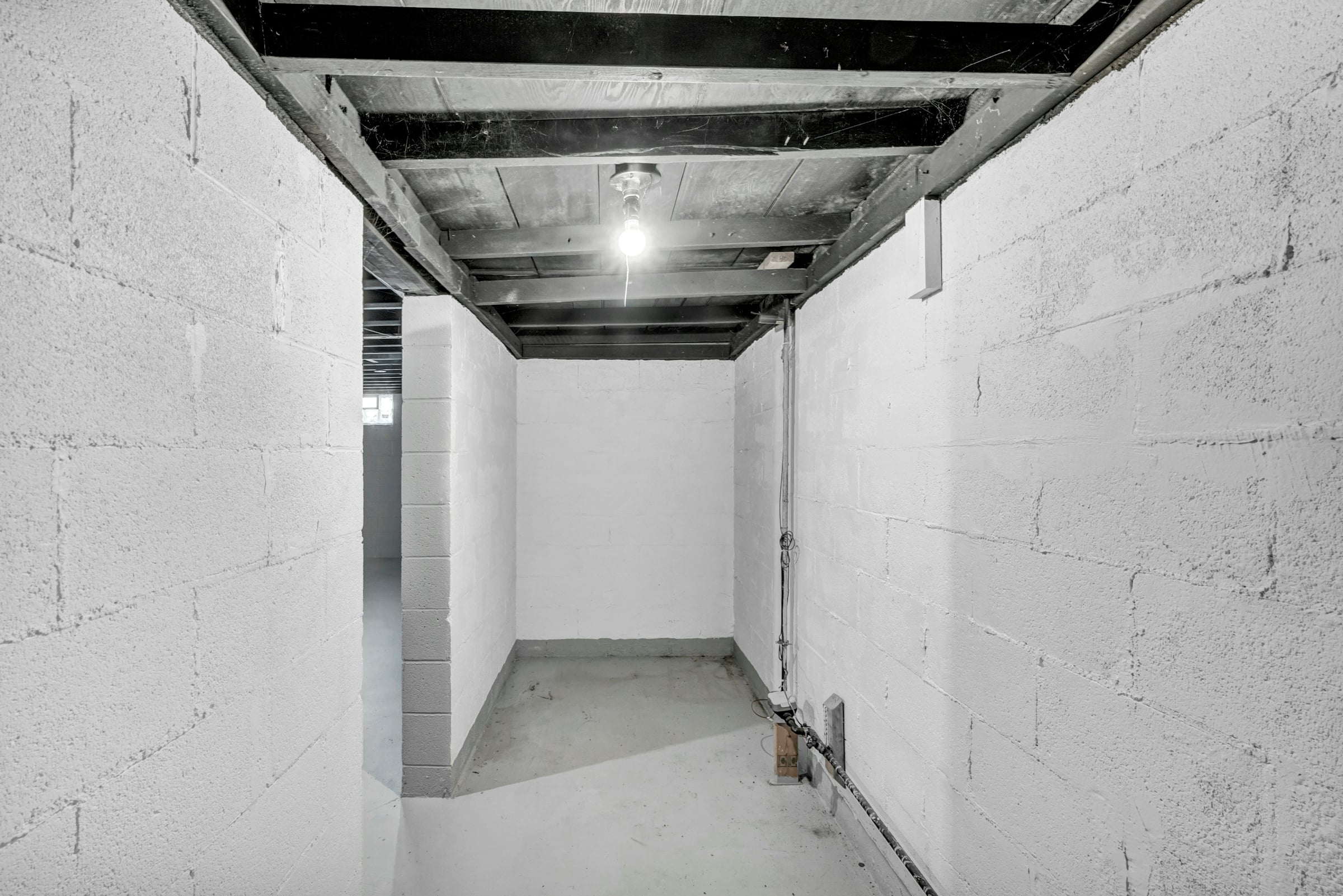
A sump pump is a pump in a pit that sends groundwater out of a basement before it spreads across the floor, and a buyer should see it run, check its age and ask what powers it in an outage. FEMA says to replace a pump that is more than 10 years old, and it gives a one-bucket test you can do at a showing or ask your inspector to do.
The Virginia seller disclosure statement will not do this work for you. The form (DPOR rev 7/2022, read in November 2026) does not mention sump pumps or basement water. This guide covers how a system works, what to ask, what to check, and what the Virginia disclosure law does and does not say. It is general information, not legal advice. Ask a Virginia real estate attorney about your contract.
How a sump system works
According to FEMA’s “Maintain your Sump Pump” page (shows a “last updated” label with no date), a sump pump removes groundwater that seeps into a basement through a sump pit and moves it out through drainage pipes. FEMA says pumps help most in homes that flood because of rain. The page also mentions a check valve and an inlet screen that needs cleaning.
A pump treats a symptom: water is reaching the foundation. FEMA’s Protect Your Home from Future Flooding page (dated July 18, 2018) pairs a pump with other steps: keep gutters, downspouts and splash pads clear so rain flows away from the house, and improve lot grading so stormwater drains away from the building. If water shows up in a crawl space rather than a basement, read our guide to a wet crawl space in older Richmond homes, because the questions differ.
Questions to put to the seller
- Has water ever entered the basement, and where, and when did you last see it?
- When was the pump installed, and do you have the model and any receipt? FEMA says to replace a pump over 10 years old.
- Does it run during heavy rain? FEMA lists never hearing the pump run, or hearing it switch on and off during rain, as signs to consider replacement.
- Is there a battery or other backup, and when was the battery last replaced?
- Where does the discharge pipe empty?
- Has the home had a flood insurance claim? See the repetitive loss rule below.
Ask for the answers in writing, and keep the paperwork. If a seller says a problem was fixed, ask who fixed it and when.
What to check at a showing and an inspection
- Find the pit and the pump. Look for the pit cover, the pump, the discharge pipe and the power cord. Note whether the cord plugs into an outlet or an extension cord.
- Run the bucket test. FEMA says to pour a bucket of water into the pit; the pump should turn on. Ask the seller’s permission first, or have your inspector do it.
- Look for stains and tide lines. Check the walls and floor near the pit for stains, powdery deposits or rust on stored items. Those show where water has been.
- Check the age label. Read the manufacture date or model number and compare it with the 10-year mark from FEMA.
- Read the ground outside. FEMA points to clear gutters, downspouts and splash pads, and to grading that slopes away from the house. Walk the outside during or right after rain if you can.
- Look at the plumbing. FEMA says a licensed plumber should install sewer backflow valves on pipes entering the building. Ask whether the home has one.
Send us the address before you make an offer
If you are weighing a specific home, send us the address. We will help you line up the water questions to ask the seller, the records to request and what to put on your inspector’s list.
Battery backup and power
A pump needs electricity, and heavy rain is when outages happen. The FEMA page from 2018 recommends a battery-operated model in case the power goes out. It does not describe a specific backup system, and the FEMA sump pump page we read does not discuss backup power, so we are not stating how long a battery lasts. Ask what the backup is, when its battery was last replaced, and read the label for run time.
Insurance matters here as well. A FEMA fact sheet on what flood insurance covers in a basement (January 2022) lists sump pumps among the covered building items in a basement, and lists generators among the exclusions. It defines a basement as an area with a floor below ground level on all sides. Whether a policy applies to a specific home is a question for an insurance agent.
What Virginia disclosure law says, and does not
| Rule | What the page says | Source |
|---|---|---|
| Condition | Owner makes no representations or warranties about condition; buyer advised to get a home inspection before settlement | Va. Code 55.1-703, page shown 11/3/2026 |
| Timing | Owner gives the disclosure before the contract is ratified | Va. Code 55.1-709, page shown 11/3/2026 |
| Late delivery | Buyer may terminate within 3 days of delivery in person or electronically, or 5 days after postmark if mailed | Va. Code 55.1-709 |
| Repetitive loss | Owner with actual knowledge discloses 2 or more NFIP claims over $1,000 paid within any 10-year period since 1978 | Va. Code 55.1-708.2, page shown 11/3/2026 |
| Form items | 17 numbered items; none name sump pumps or basement water | DPOR form rev 7/2022 |
Code of Virginia 55.1-703 also covers special flood hazard areas. The owner makes no representations about them and the buyer is advised to check flood maps, FEMA resources and whether flood insurance is required. It is the same for wastewater systems and dams.
On liability, 55.1-710 (page shown 10/16/2026) says an owner generally is not liable for errors or omissions in disclosure information if the problem was unknown to them, or came from a public or other required source, or they reasonably believed it was correct, and they were not grossly negligent. It also says an owner can satisfy a buyer’s request for information by providing a report from a licensed engineer, contractor, home inspector or similar expert on matters in that expert’s field. What this means for a particular water problem is a question for a Virginia real estate attorney.
The repetitive loss section, 55.1-708.2, is the one place the disclosure act speaks directly to flood claims. The duty applies to an owner with actual knowledge, so asking about past claims is still your job.
Check the local picture
Water problems vary from lot to lot, so look at the specific address, not the town. Check floodplain status with the locality, in Henrico County, Chesterfield County or the City of Richmond, and with FEMA flood maps. If you are shopping in Forest Hill, Tuckahoe or Midlothian, the steps above are the same. To browse homes first, use the property search.
If the inspection finds a water problem, a repair request or credit is a common next move. How credits work depends on your loan, which we explain in seller credits at Richmond closings. If you want us to run the process, first read what to know before signing a buyer representation agreement. Our buyer process page explains the steps.
Send us the address before you make an offer
Send us the address of a home you like and we will help you line up the water questions, the records to request and the inspector’s checklist.
Frequently asked questions
How often should a sump pump be cleaned?
FEMA says to clean the inlet screen more than once a year, and to do a yearly assessment. To clean it, turn off the breaker and unplug the pump, disconnect it from the discharge pipe, remove the pump and check valve, hose off debris and scrub the screen with a wire brush.
What does the check valve do?
FEMA’s page lists the check valve among the parts to inspect and reconnect when you service the pump. Ask your inspector to look at it with the rest of the system.
Does flood insurance cover a sump pump?
The January 2022 FEMA fact sheet on basements lists sump pumps among covered building items in a basement under the Standard Flood Insurance Policy. It lists generators, finished basement walls and flooring, and personal property such as couches and televisions as exclusions. Ask an insurance agent about a specific policy.
What is a repetitive loss disclosure?
Code of Virginia 55.1-708.2 says an owner with actual knowledge that the dwelling had two or more National Flood Insurance Program claims over $1,000 paid within any rolling 10-year period, counting from 1978, must disclose it on the Real Estate Board’s form.
Is a seller liable if the disclosure is wrong?
Code of Virginia 55.1-710 says an owner generally is not liable for errors or omissions if the problem was unknown to them, came from a public or required source, or they reasonably believed it correct, and they were not grossly negligent. Ask a Virginia real estate attorney about your situation.
Can I terminate if I get the disclosure after I sign?
Code of Virginia 55.1-709 says that if disclosures arrive after ratification, the buyer’s sole remedy is to terminate. The window ends at the earliest of several events, including three days after delivery in person or electronically, five days after the postmark if mailed, settlement or occupancy. Ask a Virginia real estate attorney how this applies.