When a builder says the house “passed inspection,” that usually means the county’s building inspector approved a stage against the Virginia building code. It does not mean someone working for you looked at the house. A phase inspection fills that gap: you hire an independent inspector to visit at set points while the house is still open, so they can see what drywall, concrete and paint will soon hide. This guide walks through what each visit covers in Richmond-area new construction, what the county is already checking, and how to write inspection access into the builder contract.
What the county inspects, and what it does not
Chesterfield, Henrico and Hanover each enforce the Virginia Uniform Statewide Building Code (USBC), which the state’s Department of Housing and Community Development publishes. Hanover’s Building Inspector’s Office also enforces it inside the Town of Ashland. The USBC’s inspection section (13VAC5-63-130) lists the minimum inspections a building official must conduct when they apply:
- footing excavations and reinforcement before concrete is placed;
- foundation systems during the phases needed to confirm code compliance;
- preparatory work before concrete is placed;
- structural members and fasteners before they are concealed;
- electrical, mechanical and plumbing materials and systems before they are concealed;
- energy conservation material before it is concealed;
- a final inspection.
The code also says the building official approves the work in writing or issues written notice of defective work, and that a certificate of occupancy is required before a building is occupied. Notice what that is: a check against the code’s minimums, performed on behalf of the locality. Henrico’s residential inspection page describes the required inspection matrices as the inspections that “must be performed to verify that your work complies” with the USBC, and says its summary is not a replacement for the code. We did not find language on any of the three county pages telling buyers whether to hire their own inspector, so treat the following as our reading, not county guidance: the county is not your advocate, does not walk the house with you, and does not look at cosmetic finish, product choices or whether the house matches your contract.
One more distinction. The USBC lets a building official accept reports from approved third-party inspectors, and Hanover requires those reports on a county form. Those are agencies approved under the official’s written policy, typically engaged by the builder or owner for code compliance. They are not the same as an inspector you hire for your own protection.
Stage by stage: what a third-party inspector checks
1. Footing and foundation (before the pour and before backfill)
The county’s footing inspection happens before concrete goes into the excavation, and Chesterfield’s required-inspections table also lists foundation, drainage and waterproofing, and poured wall inspections, depending on the project. Your inspector typically looks at things the county’s checklist may not stop to explain to you:
- footing size and depth matched to the plans, reinforcement placement, and whether the excavation is clean and free of standing water;
- forms that are level and square, anchor bolt locations, and sleeves or penetrations for plumbing;
- after the walls are formed or poured, waterproofing or damp-proofing, drain tile, and the planned grade around the house.
Chesterfield’s table notes that waterproofing and drainage are required when the interior grade is lower than the exterior grade, and that a foundation inspection is not required if the structure is supported by proper posts or piers. On a sloped lot, ask where water will go once the yard is graded. This is also the stage where soil conditions matter, which is why Hanover posts a separate shrink-swell soils policy on its building inspections page.
2. Pre-drywall (framing, rough-ins, insulation and house wrap)
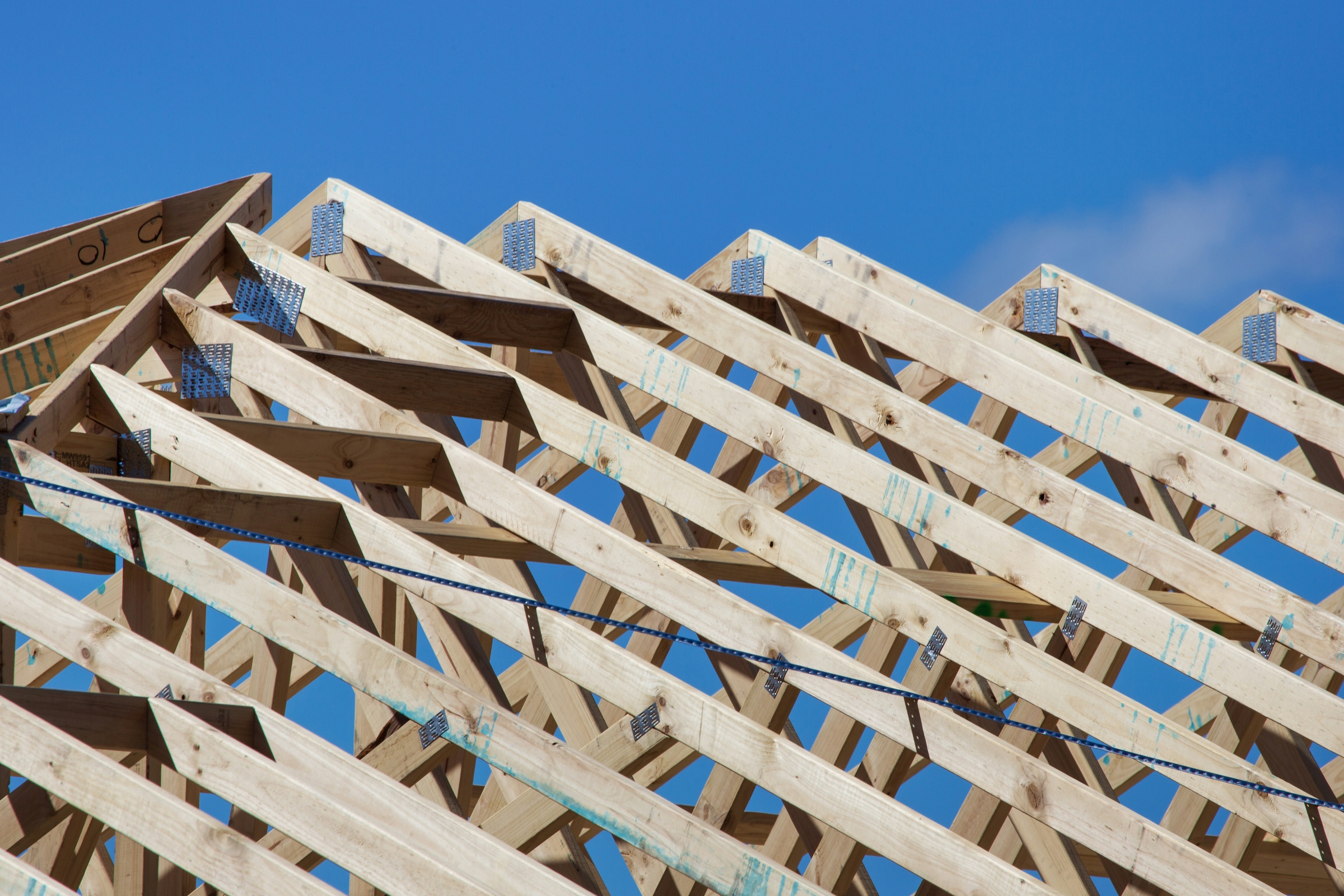
This is the visit that earns the fee, because everything is visible and still fixable. The USBC lists structural members and fasteners, then electrical, mechanical and plumbing systems, then energy conservation material, as separate pre-concealment inspections. A third-party inspector usually walks the whole house in one pass and checks:
- Framing: studs, headers over openings, nailing, bracing, and any lumber that is cracked, notched or cut for a pipe.
- House wrap and windows: laps that shed water downward, tape at seams, and flashing around windows and doors.
- Rough electrical: boxes at the planned heights, wires secured and protected where they pass through framing.
- Rough plumbing: supply and drain lines supported, no sags in drain lines, and the pipes pressure-tested before closing the walls.
- Rough mechanical: duct runs connected, sealed and supported, with the equipment where the plans show it.
- Insulation: batts filling the cavity without gaps or compressed corners, and air sealing at penetrations.
Hanover’s building inspections page also says single-family dwellings require a Residential Energy Certificate and a blower door test. Ask the builder for a copy of both at closing.
3. Final inspection and the pre-closing walk
The county’s final inspection confirms that the permitted work complies with the code and that defective work has been corrected. After that, the building official can issue the certificate of occupancy. Ask to see it before you close. Your own final walk is where you test everything yourself, ideally with your inspector present:
- every outlet, switch, fixture, appliance and window, plus the GFCI and smoke alarm tests;
- hot water at each tap, leaks under sinks, toilets that flush and refill correctly;
- heating and cooling in both modes, and airflow at each register;
- roof, flashing, gutters and downspouts, and where the finished grade sends rain;
- paint, trim, tile, flooring and cabinet defects, written on a punch list with a date by which the builder will fix each item.
The punch list should say who fixes what and by when. Do not treat a verbal promise as a plan; see our new construction contract guide for what to confirm before signing.
4. The 11-month inspection
Virginia implies warranties into the sale of a new dwelling. Under Code of Virginia § 55.1-357, the warranty runs one year from the transfer of title or your taking possession, whichever comes first, except that the foundation warranty runs five years. Before suing, you must send the builder written notice by certified mail, overnight delivery or hand delivery with a receipt, and the builder gets a reasonable time, not more than six months, to cure. The builder’s own express warranty may use different deadlines and a required notice procedure, which is why our 1-2-10 warranty and Virginia law guide says to submit your list before month twelve.
Schedule the inspection around month 10 or 11. An inspector will look at settlement cracks, drywall nail pops, caulk and grout failures, door and window operation, roof and flashing, grading and drainage, and the attic and crawl space. Send the report as a single written list to the builder and keep a receipt.
Want the dates in order? Ask for a Richmond closing-timeline checklist
We can send you a new-construction closing-timeline checklist that lines up the county inspection stages, your inspector’s visits, the final walk and the warranty deadline against your closing date. Ask us for the closing-timeline checklist and tell us the builder and the county.
Writing inspection rights into the builder contract
Many builders limit buyer visits to scheduled walk-throughs, for safety and insurance reasons. That is a reasonable concern, and you can address it in the contract instead of arguing on site. Ask for these terms in writing before you sign:
- the right to bring a licensed or certified inspector at named milestones (footing or foundation, pre-drywall, final) with a stated notice period, such as 48 hours, and a builder representative present if needed;
- access to the county’s approved plans and inspection approvals for your lot;
- a deadline for the builder to respond to a written inspection report, and to correct items before the next stage covers them up;
- a clear rule that the builder, not you, schedules re-inspections for corrected work and gives you the county’s final approval and certificate of occupancy before closing;
- no waiver of your right to inspect, and no “as is” language, unless an attorney has explained it. Under § 55.1-357, an as-is sale that waives the implied warranties must be conspicuous, in capital letters and specific about what is waived.
If the builder’s sales office tells you that you do not need an agent, read our posts on whether you need your own agent for new construction and working with a buyer’s agent on a new build to see who represents whom. For cost planning, read how to choose upgrades without overspending and Richmond new construction under $500,000.
This post is general information, not legal advice. Contract terms, notice deadlines and warranty rights depend on your contract and facts. Have a Virginia real estate attorney review a builder contract before you sign it.
Where to find an inspector, and where these builds happen
Our local Richmond vendors page lists service providers; ask any inspector how many framing-stage inspections they have done and whether they carry a sample report. New homes are concentrated in the western and southern growth corridors, so you will most often deal with Chesterfield County, Henrico County or Hanover County inspection offices. Areas such as Midlothian, Short Pump and Hanover all see new builds. The county sites show which inspections your permit needs: Chesterfield’s residential permits and inspections page notes a not-ready fee if the work is incomplete when the inspector arrives and a re-inspection fee after the third inspection of the same type, while Henrico’s residential inspections page says inspections are requested through its Build Henrico portal.
Start with the new-construction closing-timeline checklist
Browse new construction homes in Richmond, then ask us for the closing-timeline checklist that lines up the inspection stages and warranty deadline for your builder. Our buyer page explains how we work with new-build buyers.
Phase inspection questions
Does the county inspection replace a private inspection on a new build?
No. The Virginia building code requires a building official to conduct minimum inspections to verify code compliance and to approve work or give written notice of defects. That is a check against code minimums done for the locality. A phase inspector you hire reports to you, and can look at workmanship, plan matches and finish quality that a code inspection does not address.
How many third-party inspections should I schedule?
Most buyers who want full coverage schedule three visits: before the foundation is covered, at pre-drywall, and at the final walk. Add a fourth around month 10 or 11 of the warranty year. If you can only afford one, make it pre-drywall, because framing, wiring, plumbing and insulation are all visible then.
What if the builder will not allow my inspector on site?
Ask for the access terms before you sign, because it is much harder afterward. If the builder allows only escorted walk-throughs, ask for scheduled milestone visits with notice and a builder representative present. If the builder refuses any independent inspection, treat that as a decision point and have a Virginia real estate attorney review the contract.
What is the blower door test and the energy certificate on a Hanover new home?
Hanover’s building inspections page says single-family dwellings require a Residential Energy Certificate and a blower door test. A blower door test measures how much air leaks through the house envelope. Ask the builder for a copy of both at closing; the certificate is posted at the heating equipment, utility room or another approved location.
Should I have the final walk before or after the certificate of occupancy?
Ask to see the county’s final approval and certificate of occupancy before closing. The Virginia building code requires a final inspection and a certificate of occupancy before a building is occupied, so a builder who cannot show one may not be ready to close. Do your final walk close to closing so you can confirm that punch list items were fixed.
How long do I have to make a warranty claim on a new Virginia home?
Under Code of Virginia 55.1-357, the implied warranty runs one year from transfer of title or possession, whichever comes first, and five years for the foundation. You must give written notice before suing, and the builder has up to six months to cure. Any action must be brought within two years after the breach, and sending notice tolls the limitation period for six months. Your express builder warranty may set different deadlines.
Can failed county inspections delay my closing?
They can. The building code says defective work must be corrected and reinspected before work that would hide it proceeds, and a certificate of occupancy comes after the final inspection. Chesterfield’s page also mentions a not-ready fee if work is incomplete when the inspector arrives and a re-inspection fee for third and later inspections of the same type. Ask your builder for the current inspection status.
Are the builder’s third-party reports the same as mine?
No. The building code lets the building official accept reports from approved third-party inspectors for code compliance, and Hanover requires them on its own form. Those inspectors work under the official’s written policy. An inspector you hire for yourself is chosen by you and reports to you.