Short answer: ice dams are uncommon in the Richmond area, but roof leaks after snow and ice are not, and a buyer can check for the signs in about an hour. Look for ceiling and attic stains near the eaves, gutter and soffit damage, and a roof that was replaced with the required eave underlayment. The National Weather Service lists Richmond’s normal annual snowfall at about 8.8 inches (1991 to 2020 normals, Richmond airport, NWS Wakefield climate records, as of November 2026), so one big storm tends to reveal a roof’s weak spots all at once.
This guide is for buyers with a contract, a winter showing, or a spring inspection. It covers what an ice dam is, why roofs here still get hurt by snow, and what to ask for.
What an ice dam is, and why Richmond is not Buffalo
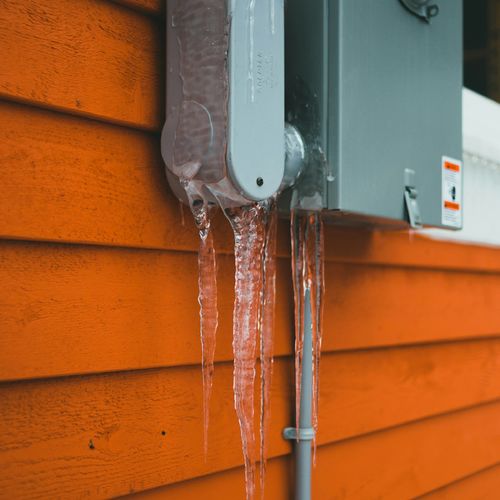
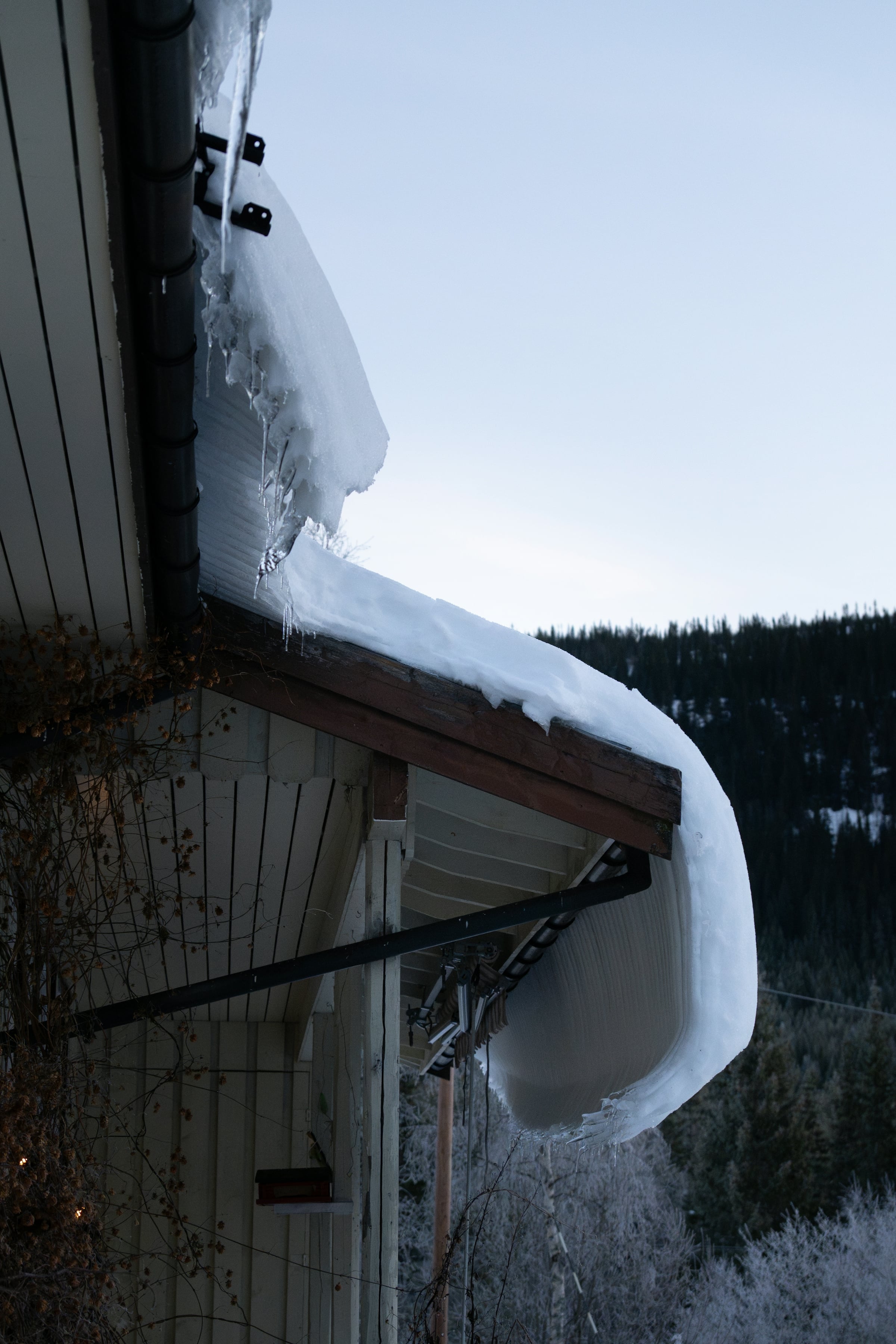
An ice dam forms when snow on a roof melts from heat leaking out of the house, runs to the cold edge of the roof, and refreezes there. The ice then blocks the water that follows, and the water backs up under shingles. It needs snow that stays on the roof for days and freezing weather.
The same NWS table shows how rare that is here. January is the snowiest month, at a normal 3.7 inches, and the largest one-day snowfall on the record, which runs from 1897, is 19.9 inches on January 24, 1940. Dams are the exception here. When they happen, the cause is usually a leaky ceiling plane and weak attic insulation.
What the local design numbers say
Local codes assume snow will fall. Henrico County’s building design criteria page (as of November 2026) lists a residential ground snow load of 20 psf, a winter design temperature of 17°F, and an ice barrier requirement of yes. These are Henrico figures. The City of Richmond, Chesterfield and Hanover publish their own, so ask the building office in the locality where you are buying.
| Item | Value | Source and place |
|---|---|---|
| Normal annual snowfall | 8.8 inches | NWS, Richmond airport, 1991-2020 normals |
| Snowiest month, normal | 3.7 inches in January | NWS, Richmond airport, 1991-2020 normals |
| Largest one-day snowfall | 19.9 inches, Jan 24, 1940 | NWS, Richmond records since 1897 |
| Residential ground snow load | 20 psf | Henrico design criteria |
| Ice barrier required | Yes | Henrico design criteria |
“Ice barrier required” is a code item for roof coverings. It is not a promise that every roof on the street has one. A roof installed years ago may predate the rule, and a roof replaced without a permit may skip it. Ask for the re-roof permit and the roofer’s invoice.
What to look for in an inspection
A home inspector in Virginia works under the licensing rules of the Department of Professional and Occupational Regulation, and the report is a visual look, not a guarantee. Here is where to point their attention, and yours.
- Ceilings below the roofline. Rust-colored rings, bubbled paint or fresh patches near exterior walls. Patches that are newer than the paint around them deserve a question.
- Attic sheathing and framing at the eaves. Dark staining, rusted nail tips and compressed insulation can mean water or condensation. Our guide to attic insulation and ventilation explains the airflow side.
- Roof penetrations. Plumbing, dryer and roof vents that are not sealed, and chimney and wall flashing, are common leak points.
- Gutters and downspouts. Sagging, detached or clogged gutters hold ice and pull on the fascia. See our guide to gutters, downspouts and lot grading.
- The ceiling-to-wall line inside. Hairline cracks and stains where the ceiling meets exterior walls.
If it is winter, the roof may be covered. Our winter inspection guide explains what cannot be tested in cold weather and what to schedule for a follow-up visit.
Want new listings in your areas, so you can check roofs early?
Tell us the areas you are watching, in the City of Richmond, Henrico, Chesterfield or Hanover, and we will set up a saved search that sends new listings as they hit the market. You then use the checks above on each showing.
Where to look by area
Older roofs sit in all parts of the region, so do not guess by address. Browse by area, then check each roof on its own.
- In the City of Richmond, start at the city hub or a community page such as Windsor Farms.
- In Henrico, see the county hub and Short Pump.
- In Chesterfield, see the county hub and Bon Air.
- In Hanover, see the county hub and Hanover.
To see what is on the market now, open the property search. If you need a lender estimate before you offer, the preferred lenders page is a place to start.
A simple order of operations
First, ask for the roof’s age and any repair or permit records before you tour. Second, look at the ceilings and the eaves from the street and the driveway. Third, ask the inspector to open the attic and photograph the eave area, not only the center. Fourth, ask for a written note on flashing, vents and gutters. This costs little and tells you whether the next storm is a worry or a footnote. If you are buying in the dead of winter, add a line to your offer that lets you re-check the roof after the snow clears.
Using what you find
Under Virginia Code section 55.1-703 (as of November 2026), the owner gives the buyer a disclosure statement but makes no warranty about the property’s condition, and the statute tells the buyer to do whatever due diligence they consider necessary, such as a home inspection. The Real Estate Board’s disclosure page says the same in plain terms. So the leak history is yours to ask about. Put questions in writing, get the answers, and ask for permit and repair records.
If the inspection finds a stain or a failing roof, you have choices: ask the seller to repair with receipts, ask for a credit, call a licensed roofer for a written estimate, or step away. Which fits depends on the contract’s inspection terms and your lender.
Saved search for the areas you are watching.
We send new listings in the City of Richmond, Henrico, Chesterfield or Hanover as they appear, so you can check each roof early.
Frequently asked questions
Does homeowner insurance cover ice dam damage?
Policies differ. We did not find a Virginia public source with a clear rule, so ask the insurer whether ice, wind-driven snow and interior water damage are covered, and ask for a written answer before you close.
How do I tell if a ceiling stain is old or still active?
A dry stain with a defined ring can be old. A damp one, or one that has grown, is active. A home inspector may use a moisture meter, and some bring an infrared camera. Ask for readings in the report, and ask the seller when it was repaired.
Should I get a roofer as well as a home inspector?
If the inspector flags the roof, yes. A written estimate from a licensed roofing contractor gives you a number to negotiate with. Check any contractor’s license on the Virginia Department of Professional and Occupational Regulation lookup before you rely on their word.
Is the roof’s age on the disclosure form?
Not as a required item. The Residential Property Disclosure Act makes the owner state no warranty on the condition of the property, per section 55.1-703, so ask directly for the roof’s age, any permits and repair invoices.
Can I ask the seller to clear snow before an inspection?
You can ask, but a seller cannot always safely reach the roof, and clearing can damage shingles. A better request is a rescheduled inspection after melt, or a roofer’s visit once the roof is visible.
Do extra layers of shingles matter?
A second layer adds weight and can hide decking problems. Henrico’s 20 psf residential ground snow load is a design figure for the structure, not a rule about layers. Ask the inspector to note how many layers they can see at the edge.
Where can I check whether a re-roof was permitted?
Call the building office in the locality, such as Henrico’s Permit Center. Chesterfield, the City of Richmond and Hanover each have their own office.
What if the seller says there has never been a leak?
Ask for that in writing, then verify with the attic inspection, the ceiling readings and any repair records. Someone’s memory is not a record.