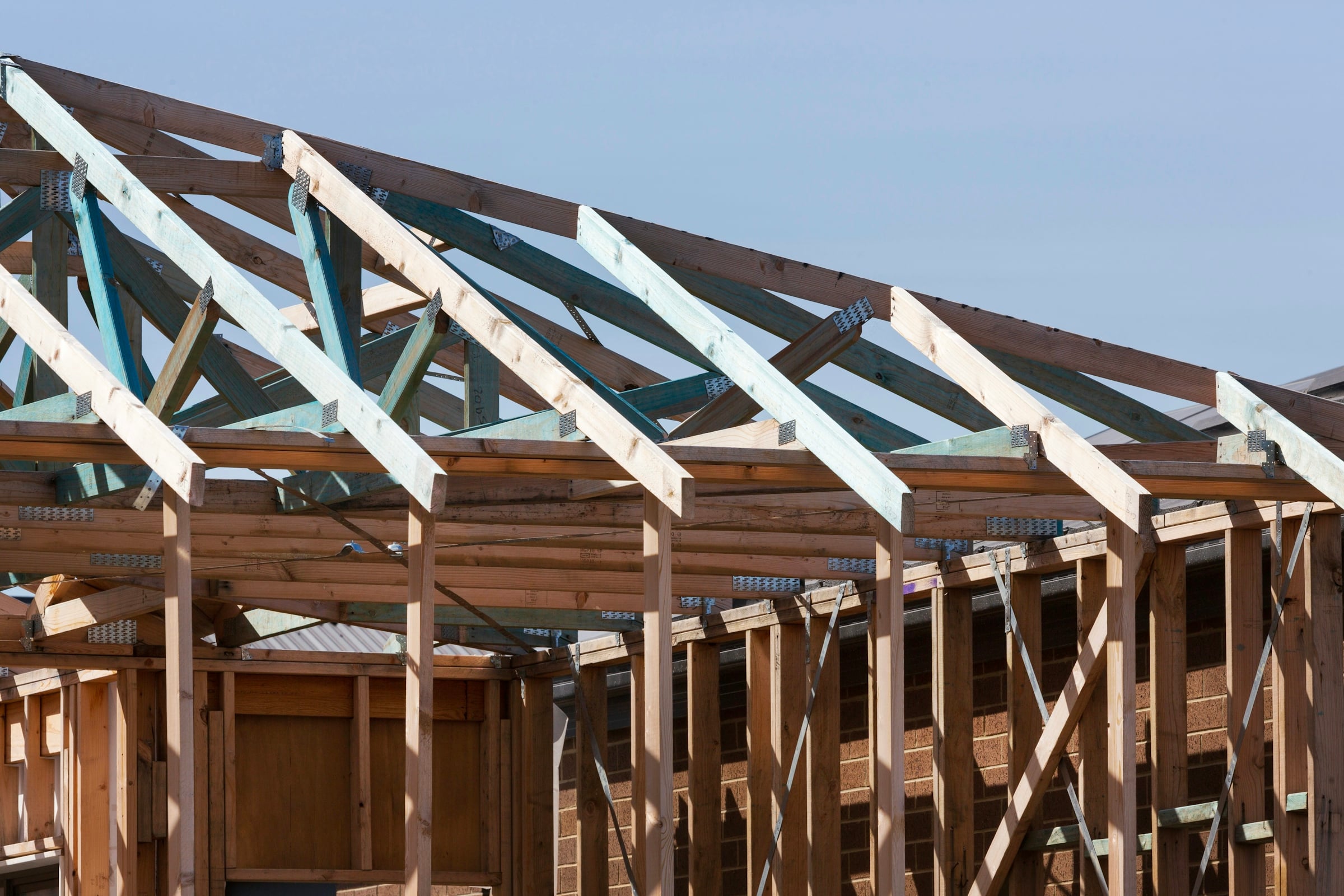
Most people who build on a lot choose between two loan paths: one loan that closes once and turns into your mortgage when the house is done, or a separate construction loan followed by a mortgage. Fannie Mae calls the first a single-closing construction-to-permanent loan and the second a two-closing transaction. The one-close path means one set of documents and one closing. The two-close path lets you shop for the construction loan and the mortgage separately.
This guide walks through how those loans work, how draws and inspections release the money, what a lender looks at, and what the permit and utility steps look like in the Richmond area. It uses Fannie Mae’s published rules and the building pages of Chesterfield County and Henrico County. Your own lender may add rules on top of these.
One loan or two: what actually differs
With a single-closing loan, Fannie Mae’s process guide says the lender approves you and sets both the construction and permanent rates before the one closing. Only the rate, loan amount, term and amortization type can change at conversion, and a change beyond the allowed limits sends the file back through underwriting.
With two closings, you close once on the construction loan and again on a mortgage when the house is finished. That is the path when you already have a construction loan, possibly from a different lender. The cost of that flexibility is a second round of approval at the end, so your income and credit have to hold up twice.
| Item | Fannie Mae single-closing rule |
|---|---|
| Longest single construction period | 12 months |
| Longest total construction period, with extensions | 18 months, no exceptions |
| Longest permanent term after conversion | 30 years |
| Age of the appraisal at the note date | Effective date no more than 4 months earlier |
| Eligible loan purposes | Purchase or limited cash-out refinance |
Source: Fannie Mae Selling Guide, section B5-3.1-02. If your build will run past 18 months, Fannie Mae’s guide says the loan must be handled as a two-closing transaction. Our preferred lenders page is a place to start.
Compare building with buying a finished new home
If you are weighing a build against a new home that is already built, we will set up a saved search for new construction in the areas you name, so you can compare timelines and layouts side by side.
How draws and inspections release the money
A construction loan does not hand you a lump sum. Fannie Mae’s single-close process guide describes three phases. Before closing, the lender approves the contractor and reviews the project, then underwrites you. During construction, the lender releases draws following the construction contract and a draw schedule, and inspections before each draw confirm the work is on schedule. The lender holds back the money not yet drawn.
At completion the lender collects three items: an appraisal update and completion report (Form 1004D), lien waivers that protect the lender’s first-lien position, and a Certificate of Occupancy. Then the loan converts to permanent terms. The document that matters most to you is the draw schedule in your construction contract, because it sets when your builder gets paid and what has to be finished first.
These lender inspections are separate from the county’s building inspections. The lender is checking progress for payment, and the county is checking the work against the building code.
What lenders look at before they say yes
- The builder. Under Fannie Mae’s process the contractor is underwritten and accepted before closing, so expect to give your lender your builder’s details early.
- The plans and contract. The project is reviewed, and the appraisal is an as-completed value, meaning what the finished house is expected to be worth.
- You. The loan is underwritten on the permanent terms. Fannie Mae’s guide says the lender must use credit, income and employment documents no more than four months old at the note date.
- The lot. Whether you own it or are buying it changes how the loan is classified. Fannie Mae’s construction-to-permanent FAQ says that a borrower who owns the lot and wants the deal treated as a purchase must have deeded the lot to the builder before applying. Ask your lender which treatment fits your situation before you sign anything.
Run your own numbers early with our mortgage calculator, then take the plans and a draft contract to a lender. The estimate you get from a lender will be more useful than any rule of thumb.
Permits in Chesterfield and Henrico
Each locality has its own list. These are the items its building page names for a new house.
- Chesterfield County (residential project requirements): application, plot plan, construction plans, engineered soil reports, an Agreement in Lieu of an Erosion and Stormwater Management Plan, and fees. Separate electrical, gas, mechanical and plumbing permits follow as the work requires. Permits are valid for six months from the date of last activity.
- Henrico County (permit application requirements): application, plot plan, foundation and floor plans, framing and roof plans, elevations, and a soil report if the county’s soils policy requires one. Lots must fall at least 6 inches in 10 feet away from the foundation.
Building rules differ in Hanover, Goochland and Powhatan, so ask each county’s building inspections office for its current list before you price a lot there.
Water, sewer, well and septic come before the permit
Where the lot gets its water and sewer can decide whether you can build at all. If public water and sewer reach the lot, you apply to connect. If not, you are looking at a well and a septic system, and the Virginia Department of Health reviews those. The Chesterfield Health District issues permits for private wells and sewage systems in Chesterfield County, and says the county requires septic tanks to be pumped every 5 years.
We cover how the two setups differ for owners in public water and sewer vs. well. Also read how to find easements and what they limit before you settle on a house location, since an easement can limit where the house and driveway can go. If you want land with room for a well and septic, our acreage search and the new construction search are good places to compare.
Timeline questions to settle before you sign
- How many months does the builder’s contract allow? Fannie Mae’s cap is 12 months for any one construction period and 18 in total.
- When does your rate lock start and how long does it last? Ask your lender, because the Fannie Mae pages do not set lock terms.
- What happens to the loan if permits or utilities delay the start?
- Who orders the soil report, the plot plan and the health department application, you or the builder?
- What is the draw schedule, and who inspects before each draw?
Compare building with buying a finished new home
Before you commit to a lot, we will set up a saved search for new construction in the areas you name, so you can see what finished homes are available and what timelines look like.
Frequently asked questions
Can I tear down an existing house and rebuild on the same lot?
Fannie Mae’s construction-to-permanent FAQ says borrowers may tear down an existing house on a lot they own and rebuild. Your lender will still need to approve the plans and the builder.
Can I change my loan term when the house is finished?
Fannie Mae’s FAQ says the final underwriting submission has to match the final loan terms, so a change such as moving from 30 years to 15 requires rerunning underwriting. Only the rate, loan amount, term and amortization type can be modified at conversion.
Will I have to qualify again at conversion?
Possibly. Fannie Mae’s FAQ says that if credit documents are more than 120 days old at conversion, you may need to update income, employment and credit documents. The limit stretches to 18 months when the loan-to-value ratio is 95% or less and underwriting returns an Approve/Eligible recommendation.
Does one building permit cover electrical and plumbing?
Not in Chesterfield. Chesterfield lists electrical, gas, mechanical and plumbing as auxiliary permits that come in addition to the building permit, as the scope of work requires.
Do I need a soil report?
Chesterfield asks for engineered soil reports from a soil scientist or geotechnical engineer with each set of plans. Henrico asks for a soil report if its soils policy requires one.
How do I schedule inspections in Chesterfield?
Chesterfield’s building inspection page says you can call the county inspection line any day of the week, or use its online portal. Inspections can be scheduled up to five business days in advance, and inspection hours are Monday through Friday, 8 a.m. to 4:30 p.m.
Can I get a permit refund if I change my mind?
Chesterfield says refunds are available in writing only if no inspections have been performed. The refund is the fee paid minus 25% or $57, whichever is greater.