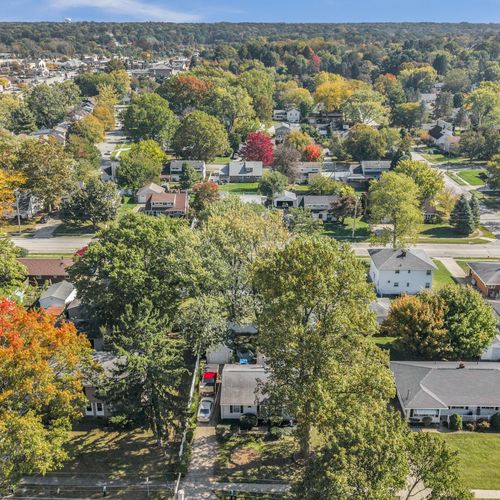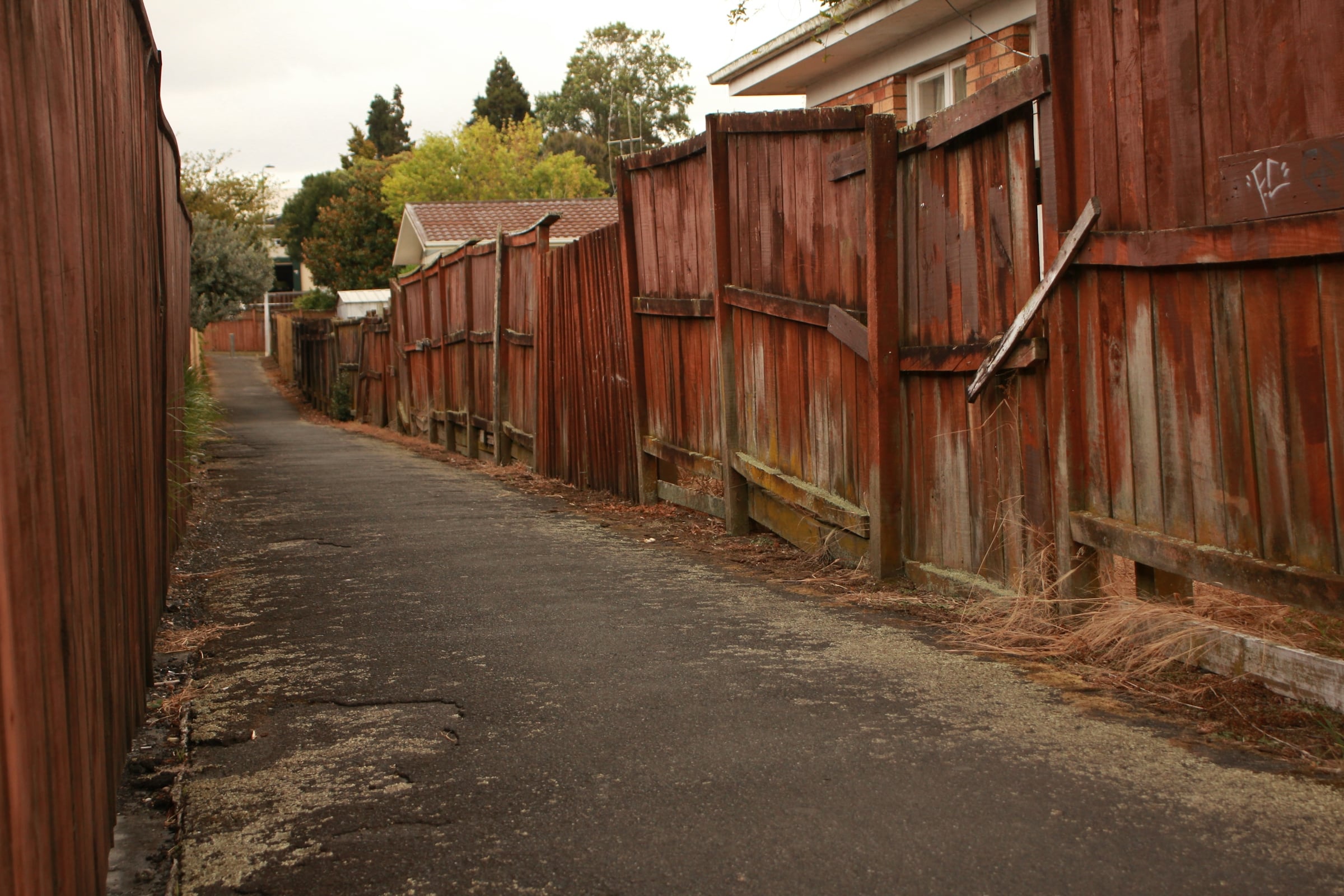
An alley behind a Richmond city house can solve your parking, but it only works if the alley is a legal, usable access for your lot. The checks are short: read the plat, confirm what the City says about that alley, and look at what is actually built along it.
This guide is for buyers looking at rowhouses and older lots with a rear garage or parking pad. It covers how alleys are treated under City rules, what to read on a survey, and what to ask when neighbors share the space. If you are searching in The Fan, Church Hill or North Side, the same questions apply. Browse current listings while you read.
Public alley or private strip: the first thing to settle
Not every alley is the same kind of land. Some are public rights-of-way that belong to the City. Others sit on private deeds, with neighbors holding rights to cross them. The plat and the title tell you which one you have. The listing does not.
The Code of Virginia treats a public right-of-way as something only the local governing body can end. Under Va. Code 15.2-2006, the governing body must publish notice twice, hold a hearing, and notify the landowners along the right-of-way before it discontinues one. An appeal must be filed within 60 days of the ordinance in the circuit court for the locality. In plain terms, a public alley does not vanish because a neighbor fences it.
On maintenance, the City of Richmond lists alley maintenance as a Public Works service, but that does not tell you whether the City maintains the alley behind a particular house. Ask the City about that specific alley before you write the offer.
What City zoning says about alley access
Richmond’s zoning ordinance, in the September 2021 version posted on rva.gov, pushes driveways toward the alley. In the R-1 through R-8 residential districts, each district’s rules bar a street-facing driveway on a dwelling lot “when alley access is available to serve such lot.” One example is § 30-402.8 for R-1. Front-yard driveways for single-family and two-family homes are also capped at nine feet wide in that text.
The practical reading: if the lot has a real alley behind it, the City’s own rules may expect parking to be reached from the rear. That makes the alley part of the home’s value to you, not a bonus. It also means you cannot count on adding a street-side curb cut later.
The City is rewriting this code. The Code Refresh third draft was released on August 17, 2026, per Richmond BizSense, and no council vote date had been set in that report. Ask zoning staff which text governs the address you are buying before you rely on any section number.
Want a second pair of eyes on the survey?
Send us the address and the survey or plat from the listing. We will check where the alley is drawn, whether the garage or fence crosses a line, and which easements show up, then tell you what to ask the seller. Our buyer process shows where this check fits.
Reading the survey and plat for an alley lot
Pull the recorded plat and any current survey. A survey is also recommended by the City in its accessory structure guide to confirm property lines, easements and underground utilities. Then work through this table.
| What to look at | What it tells you | Checkable fact |
|---|---|---|
| Alley label on the plat | Whether the strip is drawn as a dedicated alley or part of a lot | Recorded plat in the Richmond Circuit Court land records |
| Alley width | Whether a vehicle can turn into the garage | Dimension printed on the plat or survey |
| Garage or fence position | Whether the structure sits on your lot or crosses the line | Distance from rear line shown on the survey |
| Easements | Who may cross or lay utilities on the strip | Recorded easements listed in the title report |
| Last closing or vacation ordinance | Whether any part of the alley was closed and deeded to adjoiners | Ordinance recorded under the City’s name per Va. Code 15.2-2006 |
Our guide to finding easements on a Richmond property shows where to look in the land records. If the alley is a shared surface with neighbors, a written use agreement should be in the title chain. A verbal “we all use it” is not a right you can sell later.
Parking, garages and what the City asks for
If the home has a rear garage, ask whether it is permitted. The City’s accessory structure guide says an accessory building of 256 square feet or less does not need a building permit, but a Certificate of Zoning Compliance is still required, and a structure in a City historic area needs Commission of Architectural Review approval. Setbacks vary by district. For accessory buildings the guide lists rear-yard distances such as 10 feet in R-1, 5 feet in R-5, and 5 feet in R-6 and R-7. The guide does not give a separate alley setback, so do not assume one.
No windows or doors are allowed within 3 feet of a lot line in that guide, which matters if a garage was built tight to the alley. Ask the seller for permits or the Certificate of Zoning Compliance. Our post on off-street parking in Richmond-area neighborhoods covers what to confirm when a listing says “parking”.
Deliveries, trash and emergency access
Ask Public Works for the collection location and day at that address, and look at the alley in person on collection day.
On emergency and refuse access, the City’s own alley closing guidelines are useful. They say agencies reviewing a closure request look at current and future use, utilities, emergency and refuse access, and traffic. So a narrow, blocked or gated alley is a question for the City, not just a nuisance. Stand in the alley and ask:
- Can a delivery van pull in without blocking the garages across from it?
- Are there poles, gates, overhead wires or parked cars that narrow the clear width?
- Is there a second way out at the far end, or does it dead-end?
- Who clears debris and snow, per the seller and the neighbors?
Shared-use agreements and neighbor consent
If the strip is private or semi-private, ask for the recorded agreement, not a summary. Look for who may use it, whether the use runs with the land, who pays for repairs, and what happens if one owner stops paying. Your lender and title company will want to see it too. Our preferred lenders can tell you what they need for an alley-access lot.
Neighbor consent matters in another way. The City’s alley closing guidelines require written consent from every owner whose land touches the closed area, and from people who use the area as their main access. That is the process a neighbor would follow to take the alley out of service, so it is worth asking whether anyone has applied.
Next step
Pick two or three alley-access homes and compare them with the table above. When you have addresses, send them to us and we will check the plat and survey with you.
Send us the address for a survey check
We will look at the alley, easements and rear structures on the survey and list the questions to put to the seller. For the full process, see buy with us.
Frequently asked questions
Can the City close an alley, and what does it cost?
Yes, through a City Council ordinance. Per the City of Richmond’s right-of-way closing guidelines, the applicant files a letter of request with the Director of Public Works, a $300 non-refundable fee, and a surveyor’s plat. The City says review averages six to eight weeks, though schedules vary. Ask a Virginia real estate attorney about your situation.
Who gets the land if an alley is closed?
Per the City’s guidelines, adjoining owners with a legal interest pay their proportional share of the assessed value, typically out to the halfway point of the closed area, and the Law Department deeds each share by quitclaim deed. If an adjoiner does not pay within one year of adoption, the closing becomes void.
Can a closing leave a lot without street access?
The City says it will not recommend a closing that leaves a parcel without direct, adjoining access to an established public street, and that such a closing cannot take effect.
Do I need a permit to build a garage at the back of the lot?
The City’s accessory structure guide says buildings of 256 square feet or less need no building permit but still need a Certificate of Zoning Compliance. Fees listed are $50 for 100 square feet or less and $100 for more, and permits typically arrive within 10 business days of payment. For larger garages, ask the Building Code office.
Is approval needed in a historic district?
The City’s guide says placing an accessory building or structure in a City historic area also requires Commission of Architectural Review approval. Check whether the address is in a historic area before you plan a garage.
How tall can a rear garage be?
In the City’s accessory structure guide, an accessory building cannot exceed 20 feet in a residential district, cannot exceed the main building’s footprint, and must stay within lot coverage limits. A building up to 12 feet tall may reach the rear and side lines in certain districts if it is within 30 feet of the rear line.
How long can a neighbor challenge an alley vacation?
Under Va. Code 15.2-2006, an appeal must be filed within 60 days of the ordinance’s adoption, in the circuit court for the locality where the right-of-way lies.
Where do I find a recorded plat?
Recorded plats are kept in the Circuit Court land records for the locality. Your title company or attorney can pull the plat that matches the lot, and we can help you read what it shows.