Buying a Home From an Estate or Heirs in Richmond VA: What Buyers Should Expect
Slower timelines, no disclosures, and a title search that actually matters
Buying a home from an estate or from heirs in Richmond VA means dealing with a seller who is a legal representative rather than a person who lived in the house. The practical consequences are consistent: the timeline is longer because authority to sell has to be established through the local circuit court clerk, decisions may require several heirs to agree, the property is often sold as is with little or no disclosure because the personal representative genuinely does not know the answers, condition issues are common in a home owned by the same family for forty years, personal property is frequently left behind, and title needs a genuinely careful search. Buyers searching estate sale homes Richmond VA, buying a house from an estate Virginia, probate real estate Richmond, executor sale Virginia, and as is home purchase Richmond should plan for a purchase that rewards patience and thorough inspection. The Mission Realty Team represents buyers in these transactions across Richmond, Henrico, Chesterfield, Goochland, Hanover and Powhatan, and we always recommend involving a Virginia real estate attorney early. This article is general information, not legal advice.
Table of Contents
- Who Actually Has Authority to Sell the House
- Why Estate Transactions Move So Slowly
- Multiple Heirs and the Consensus Problem
- Disclosures, As Is Sales and Virginia’s Exemptions
- Condition Issues in a Long-Owned Home
- Title, Personal Property and Structuring Your Contingencies
- Frequently Asked Questions
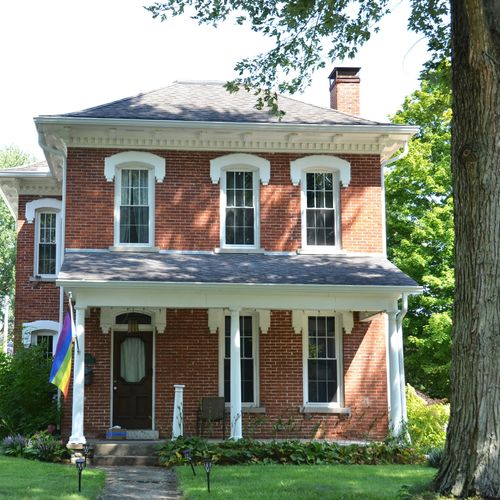
Somewhere on almost every street in Richmond’s older neighborhoods there is a house that has not changed hands since the 1970s. Sooner or later one of those houses comes to market because the owner has died, and the people selling it are an adult child in another state, a court-appointed representative, or a group of siblings who have not agreed on much in twenty years. If you are shopping in Bellevue, Lakeside, Highland Springs, Westover Hills, older Midlothian or the established parts of Hanover, you will encounter these listings.
Estate purchases can be genuinely good buys. The seller is often motivated by the need to settle an estate rather than by getting the last dollar, the home has frequently been maintained in a basic way for decades, and there is rarely a competing renovation flipper bidding on a house full of 1968 wallpaper. But the transaction behaves differently from a normal resale, and buyers who expect it to behave normally get frustrated and sometimes walk away from a house they should have bought.
What follows is a plain description of what changes. None of it is legal advice, and we say this early and will say it again: the Mission Realty Team recommends that every buyer in an estate transaction have a Virginia real estate attorney review the contract, the seller’s authority documents and the title work. The stakes are simply higher than in an ordinary sale.
Who Actually Has Authority to Sell the House?
This is the first question, and it is not a formality. A deed signed by someone without authority creates a title problem that can surface years later. In Virginia, the person with authority is usually one of a small number of roles, and each one is established differently.
If the deceased person left a will naming someone to administer the estate, that person qualifies as executor through the clerk of the circuit court in the city or county where the deceased lived. In the Richmond area that means the Richmond Circuit Court clerk, or the Henrico, Chesterfield, Goochland, Hanover or Powhatan clerk’s office. If there was no will, the court appoints an administrator instead. Virginia commonly uses the umbrella term personal representative for both. The clerk issues documentation of the qualification, and that document is what a title company will want to see.
If the property was held in a trust, the trustee sells it under the terms of the trust instrument rather than through probate, which is usually faster and cleaner. And in some cases the property passed directly to heirs by operation of law or by survivorship, in which case the heirs themselves are the owners and all of them must sign. That last scenario is where transactions most often stall.
Why Do Estate Transactions Move So Slowly?
Almost every delay in an estate purchase traces back to one thing: the seller cannot simply decide. A homeowner selling their own house can agree to a repair credit over the phone in ten minutes. A personal representative may need to consult a probate attorney, notify beneficiaries, document that the decision was reasonable, and in some circumstances obtain court involvement. Each step adds days.
There are also sequencing requirements. The estate may need to be opened and the representative qualified before a contract can be signed at all. Creditor claim periods, inventories and accountings filed with the commissioner of accounts run on their own schedules. If the estate needs to sell the house to pay debts or taxes, the representative may be waiting on information before committing to a price.
Practically, this means your normal 30 to 45 day financed closing may need to be 45 to 60 days, and your response times on offers and repair requests should be written generously. A 24 hour response deadline that works fine with an ordinary seller can kill an estate deal, because the representative physically cannot get four siblings and an attorney on the phone in a day.
Multiple Heirs Who All Have to Agree
When title has already passed to several heirs, every one of them is a seller. Four siblings means four signatures on the deed, four people who have to consent to a price reduction, and four people who may have different views about whether the house should be sold at all. One sibling living out of state who wants to cash out quickly and one who grew up in the house and is not emotionally ready are a common combination.
You will sometimes see this reflected in odd negotiating behavior: a counteroffer that seems irrational, a repair request refused for no economic reason, or a long silence. Usually the explanation is that consensus has broken down internally, not that anyone is negotiating against you. Understanding this changes your approach. Patience and a clean, simple offer often perform better than aggressive pressure.
It also creates a real risk you should size up honestly. If any required signer refuses to sign at closing, the transaction does not happen, and your remedies are limited and slow. Heirs scattered across several states, an heir who cannot be located, or an heir who is a minor or under a guardianship all add complexity. Your attorney should be looking at exactly who must sign well before your contingency deadlines pass.
Disclosures, “As Is” Sales and Virginia’s Exemptions
Virginia is largely a buyer beware state. The Virginia Residential Property Disclosure Act generally requires a seller to give the buyer a disclosure statement telling the buyer that the seller makes no representations about the condition of the property and that the buyer is responsible for exercising due diligence. It is a notice of caveat emptor rather than a detailed condition report like the ones used in some other states.
On top of that, the Act contains exemptions, and transfers by executors, administrators, trustees and certain court-supervised transactions are among the categories that can fall outside the ordinary requirement. Whether a specific estate sale is exempt is a legal question about that transaction, and it is one your attorney should answer rather than your agent. What matters for planning purposes is the practical outcome: in an estate sale you will typically receive very little written information about the house, and you should not expect any.
There is a related and important honesty point. When a personal representative says they do not know when the roof was replaced, they usually genuinely do not know. They may never have lived in the house. They cannot tell you whether the basement has ever flooded, whether the sewer line has backed up, or whether the crawl space was ever encapsulated, because nobody living can. This is not evasiveness. It is the defining feature of the transaction, and it shifts the entire burden of discovery onto your inspection.
Condition Issues in a Home Owned by One Family for Decades
Long ownership produces a distinctive pattern. The house has usually been maintained just enough to remain livable and rarely upgraded. Expect original or very old mechanical systems, a water heater well past its expected life, a furnace or heat pump that works but is undersized or inefficient, and electrical service that was adequate for 1965 usage rather than for a modern household with a heat pump, an electric range and two EV chargers.
In Richmond specifically, the recurring items in older estate homes are crawl space moisture and inadequate vapor barriers, cast iron or clay sewer laterals with root intrusion, galvanized supply plumbing, knob-and-tube remnants in pre-1940 houses, aluminum branch wiring in mid-1960s houses, original single-pane windows, and roofs at or past the end of their service life. Add deferred exterior items: rotted trim, failed caulk, grading that has settled toward the foundation over fifty years, and gutters that discharge next to the house.
There is also often a long vacancy before the sale. A house that sat empty for eight months with the HVAC off in a Richmond summer can develop humidity and mold issues it never had while occupied. Plumbing that has not run in months can reveal leaks the moment water pressure returns. Turning everything on and letting it run is part of a proper inspection here, not an optional extra.
Title, Personal Property and How to Structure Your Contingencies
Title deserves genuine attention in an estate purchase. The kinds of issues that surface include old unreleased deeds of trust from a mortgage paid off in 1994, judgments or liens against the deceased or against an heir, unpaid real estate taxes, missing or unknown heirs with a potential claim, deeds from decades ago with defective descriptions, and boundary or easement problems on properties where no survey has been done in fifty years. A thorough title search and, in most cases, an owner’s title insurance policy are worth every dollar here.
Personal property is the practical annoyance. Estate homes routinely come with contents: furniture, decades of stored items, a garage full of tools, sometimes a vehicle. Do not assume it will be gone. Write into the contract exactly what condition the property must be in at closing, whether the seller is required to remove all personal property and debris, and what happens if they do not. Alternatively, some buyers negotiate to take the contents, which can be a genuine benefit or an expensive disposal problem depending on what is in there.
On contingencies, the guiding principle is that you need more time and clearer exit rights than in a normal purchase, and you need them written down. Give yourself a longer inspection period so specialists can be scheduled. Consider a walk-through inspection contingency rather than a repair-request negotiation, since a representative may be unwilling or unable to authorize repairs. Confirm your financing contingency accounts for a possibly extended settlement date. Ask your attorney about language addressing the seller’s authority to convey, court approval if applicable, and the removal of personal property. The Mission Realty Team drafts around these issues routinely, but the contract language itself should be blessed by counsel.
| Issue | Why it differs in an estate sale | What the buyer should do |
|---|---|---|
| Seller authority | Signer is a representative, trustee or group of heirs | Get authority documents to your attorney and settlement agent early |
| Timeline | Decisions require consultation, court steps may apply | Write longer deadlines and watch your rate lock |
| Disclosures | Representative often has no knowledge; exemptions may apply | Replace disclosure with thorough, specialist inspection |
| Condition | Decades of deferred maintenance plus possible vacancy | Sewer scope, HVAC, electrical and moisture evaluations |
| Title | Old liens, unreleased deeds of trust, unknown heirs | Thorough search plus owner’s title insurance |
| Personal property | Contents frequently remain in the home | Specify removal obligations in the contract |
Frequently Asked Questions About Buying a Home From an Estate in Richmond VA
What does it mean when a house is being sold by an estate in Virginia?
It means the owner has died and the property is being sold by a legal representative of the estate rather than by the person who lived there. That representative is usually an executor named in a will, an administrator appointed when there was no will, or a trustee if the home was held in trust. Virginia commonly refers to executors and administrators together as personal representatives, and they qualify through the clerk of the circuit court in the locality where the deceased lived. The practical difference for you as a buyer is that the seller has legal duties to the estate and its beneficiaries, which shapes how quickly and flexibly they can act.
Who has the legal authority to sign the deed in a Richmond estate sale?
It depends on how the property is held, which is exactly why you should confirm it before writing an offer. If the estate is in probate, the qualified executor or administrator typically signs in that capacity, supported by documentation from the circuit court clerk. If the home is in a trust, the trustee signs under the trust’s authority. If title has already passed to heirs, every heir who owns an interest must sign. Have a Virginia real estate attorney and your settlement agent verify the chain of authority rather than relying on assurances.
How long does it take to buy a house from an estate in Richmond VA?
Plan for longer than a normal purchase, often 45 to 60 days from contract to closing rather than 30 to 45. The delays come from the representative needing to consult beneficiaries and counsel, from any court steps that apply, and from coordinating signatures among heirs who may live in different states. If the estate has not yet been opened or the representative not yet qualified when the home is listed, the front end can add weeks that nobody can forecast precisely. Build slack into your rate lock and any lease you are trying to end.
Do estate sales in Virginia require court approval?
Some do and many do not, and the distinction is a legal question specific to the estate. A will may grant the executor express power to sell real estate without further court involvement, in which case no approval is typically needed. Other situations, including certain administrations without a will, sales needed to pay estate debts, or partition matters among heirs who cannot agree, can involve the court or a commissioner. Ask the listing agent whether any court approval is expected and have your attorney confirm, because it directly affects your timeline.
Are estate homes always sold as is in Richmond?
Very often, though “as is” is a contract term rather than an automatic legal status. Representatives commonly insist on as is terms because they have no personal knowledge of the property and do not want to make representations they cannot support. In practice this means you should expect no repairs, no condition warranties and very limited information. As is does not mean you cannot inspect. It means your inspection is for your own decision-making rather than as the opening of a repair negotiation, and your leverage is your right to walk away.
Does the seller have to give me a property disclosure in a Virginia estate sale?
Not necessarily, because the Virginia Residential Property Disclosure Act contains exemptions that can cover transfers by executors, administrators, trustees and certain court-supervised sales. Even when a disclosure statement is provided, Virginia’s version is primarily a notice that the buyer must exercise due diligence rather than a detailed condition report. Whether a specific transaction is exempt is a legal determination, so ask your Virginia real estate attorney. Either way, plan your purchase on the assumption that you will learn about the house from your own inspectors.
What inspections should I get when buying an estate home in Richmond VA?
Start with a full general home inspection and then add specialists based on the age of the house. In Richmond’s older estate inventory we routinely recommend a sewer lateral camera scope, a licensed HVAC evaluation, an electrician’s review of the panel and service capacity, a wood-destroying insect inspection, and a crawl space or basement moisture assessment. A structural engineer is worth the money if the inspector flags foundation movement, sloping floors or cracked masonry. Radon and, for pre-1978 homes, lead testing are also reasonable additions.
Can I negotiate repairs with an executor or administrator?
Sometimes, but expect less flexibility than with an ordinary seller. A representative may be reluctant to authorize repairs because doing so means spending estate money and taking on responsibility for work quality, and they may need beneficiary agreement first. A price reduction or a closing cost credit is often easier for an estate to say yes to than actual repair work. Where multiple heirs are involved, any concession has to clear all of them, which is why simple requests outperform long lists.
What title problems are common when buying from heirs in Virginia?
The recurring ones are unreleased deeds of trust from loans that were actually paid off years ago, judgments or tax liens against the deceased or against an individual heir, unpaid real estate taxes, missing or previously unknown heirs with a potential ownership claim, and old deeds with defective or ambiguous property descriptions. Properties that have not been surveyed in decades can also reveal boundary encroachments, fence lines in the wrong place, or undocumented easements. A thorough title search plus an owner’s title insurance policy is the standard protection.
Who is responsible for removing the furniture and belongings left in the house?
Whoever your contract says is responsible, which is why this needs to be written down explicitly. Estate homes frequently still contain furniture, stored boxes, garage contents and occasionally a vehicle at the time of contract. Specify that the seller must deliver the property free of all personal property, trash and debris, broom clean, and address what happens at the final walkthrough if they have not. Some buyers negotiate to keep the contents instead, which can be a real bonus or an expensive junk removal bill depending on what remains.
Are estate homes cheaper than other homes in Richmond?
Sometimes, but not automatically, and we would not build a strategy on the assumption. Estates are often motivated by the need to settle rather than to maximize, and the condition and lack of information narrow the buyer pool, which can help on price. On the other hand, a well-located home in Bellevue, Forest Hill or Lakeside will still attract competition regardless of who is selling. For current pricing on any specific estate listing, ask the Mission Realty Team to pull comparable sales rather than relying on general assumptions.
Can I get a mortgage on an estate property in Virginia?
Yes, in most cases financing works normally, as long as the home meets your loan program’s condition standards. The complication is condition rather than the estate itself: an FHA or VA appraisal can flag peeling paint, missing handrails, an inoperable heating system or a bad roof as items requiring repair before closing, and an estate may be unwilling to make them. Conventional financing is often more forgiving. Renovation loan products exist for homes needing substantial work, so talk to your lender about the specific property early.
Should I hire a real estate attorney to buy a home from an estate in Richmond?
Yes, and we recommend it in every estate transaction without exception. A Virginia real estate attorney can verify who has authority to convey, review the qualification or trust documents, evaluate whether court approval is required, examine the title work, and draft or review contract language covering authority, personal property removal and an extended settlement date. Real estate agents cannot give legal advice and should not try to. The Mission Realty Team works alongside counsel on these purchases rather than in place of counsel.
What happens if one heir refuses to sign at closing?
The sale generally cannot be completed, because a co-owner cannot be forced to convey their interest by the other owners’ agreement alone. Your practical remedies are limited, slow and expensive, which is why this risk deserves attention before you spend money on due diligence. Confirm early that every required signer has signed the listing agreement and consented to the sale. If the situation involves an heir who cannot be located, a minor, or someone under a guardianship, your attorney needs to be involved from the beginning.
How do I find estate and probate listings in the Richmond area?
Most of them come to market as ordinary MLS listings, often with language like sold as is, estate sale, or no disclosures in the remarks. There is no reliable public feed of pre-market probate properties, and services that promise one are frequently selling stale data. The most practical approach is to have a local agent watch for the signals in new listings across the neighborhoods you are targeting. Call the Mission Realty Team at (804) 601-4960 and we will set up a search that surfaces these as they appear.
Thinking About an Estate Purchase in Richmond?
The Mission Realty Team represents buyers in estate and heir transactions throughout Richmond, Henrico, Chesterfield, Goochland, Hanover and Powhatan, and we will tell you honestly when the unknowns outweigh the opportunity. Call us at (804) 601-4960 or visit our office at 3701 Cox Rd, Richmond VA 23233 to talk through a specific property.