Living in Chester, Virginia: Schools, Parks, Prices & What Buyers Need to Know in 2026
A full look at northeastern Chesterfield County’s old railroad town – housing stock, schools, corridors and commutes
Living in Chester, Virginia means living in an old railroad village in northeastern Chesterfield County that has grown into a full suburban community without losing its historic core. Chester’s appeal is a genuine village center around Chester Village Green, a housing stock that runs from early-1900s homes through mid-century brick ranches to current new construction, Chesterfield County Public Schools with Thomas Dale High School serving the area, the Chester Library, and interchange access to both I-95 and I-295 for commuting north to Richmond or south to the Tri-Cities. Buyers searching Chester VA homes for sale, living in Chester Virginia, Chesterfield County neighborhoods, Thomas Dale High School district, and Chester VA real estate should understand that price here is driven by structure – age, lot size, which corridor you are on, school attendance zone, and new versus resale – rather than by the Chester name itself. The Mission Realty Team can give you current figures for any specific street, since published numbers go stale fast.
Table of Contents
- Where Chester Is and How It Got Here
- The Historic Village Core and Chester Village Green
- Housing Stock: Four Distinct Eras on One Map
- Schools: Chesterfield County Public Schools and Thomas Dale
- Parks, the Library and Everyday Amenities
- The Route 10 and Ironbridge Road Corridors
- Commuting: I-95, I-295 and Route 288
- Fort Gregg-Adams, Battlefields and Regional Context
- What Actually Drives Price in Chester
- Frequently Asked Questions
Chester is one of those places that buyers either overlook entirely or fall for immediately, and the difference usually comes down to whether they have driven through the village core. From I-95 or from the Route 10 commercial strip, Chester reads as ordinary suburban Chesterfield County. Two blocks off the highway it reads as a small town with a green, older commercial buildings, churches, and streets of houses that predate the interstate by half a century.
Both readings are accurate, and that duality is the honest description of Chester. It is a census-designated community in the northeastern corner of Chesterfield County, positioned between Richmond to the north and the Tri-Cities of Petersburg, Colonial Heights and Hopewell to the south. It has an old center and new subdivisions, walkable blocks and heavy arterial traffic, brick ranches and vinyl-sided colonials.
This guide covers what actually matters when you are deciding whether to buy here: the housing eras and their inspection implications, how the school situation works and why you must verify it yourself, the corridors and what living on each one is like, the commuting picture in both directions, and the structural factors that set price. The Mission Realty Team works Chester regularly and we will tell you plainly where the tradeoffs sit.
Where Chester Is and How It Got Here
Chester sits in the northeastern quadrant of Chesterfield County, in the corridor between the James River to the east and the county’s interior to the west, roughly midway between downtown Richmond and Petersburg. Chesterfield County is the largest jurisdiction in the Richmond metro by population, and Chester is one of its older established communities rather than one of its recent growth areas.
The town exists because of the railroad. When rail construction connected Richmond and Petersburg in the mid-nineteenth century, the line ran through what became Chester, and a village grew up around the station the way villages did along rail lines across Virginia. That origin explains the settlement pattern you still see: a compact core near the historic rail alignment, commercial buildings facing a main street rather than a parking lot, and older residential blocks arranged around it in a loose grid.
The area also carries significant Civil War history because of its position between the two cities. The corridor south of Richmond saw substantial fortification and fighting, and several preserved sites sit within a short drive of Chester. What followed in the twentieth century was ordinary suburbanization – the interstate arrived, Route 10 became a commercial arterial, and subdivisions filled in the farmland around the old village in waves that you can still read in the housing.
The Historic Village Core and Chester Village Green
The village core is Chester’s differentiator and the reason it holds appeal that comparable suburban areas do not. Around the intersection of the historic main street and the old rail alignment you get a genuine center: older brick commercial buildings, local businesses and restaurants, churches with real presence on the street, and blocks you can actually walk.
Chester Village Green anchors the modern version of that center. It is a mixed-use development that added retail, office and residential space around a central green space, deliberately built to reinforce the village pattern rather than replace it with another strip center. The green hosts community events and gives the core a gathering place, which is more than most Chesterfield communities have. For buyers who want suburban space without living in a place with no center at all, this is the argument for Chester specifically.
Be realistic about the scale. This is a village core, not an urban district. You will not find the density of the Fan or Carytown, the grocery options are along the arterials rather than in the core, and you will still drive for most errands. What you get is a place with an identity, a walkable few blocks, and a genuine sense that the community existed before the subdivisions did.
Housing Stock: Four Distinct Eras on One Map
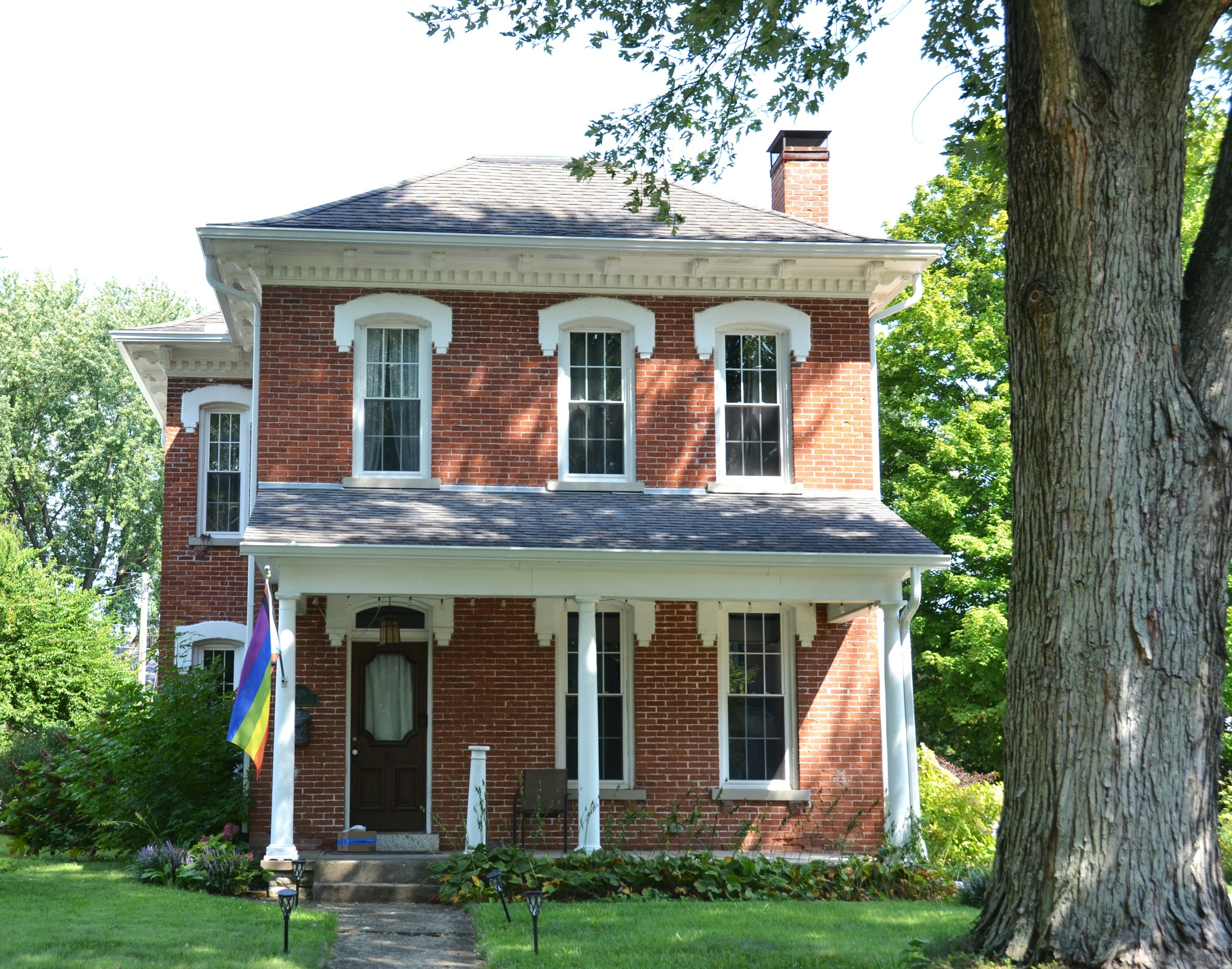
Chester is unusual in Chesterfield for containing four clearly separated building eras within a few miles, and understanding them is the most useful thing a buyer can do here. The oldest layer is early-1900s housing in and near the village core – frame homes, some bungalows and foursquares, modest lots, deep front porches. These are the character homes in Chester and they behave like older city housing in terms of maintenance.
The second layer is mid-century, and it is the largest. Brick ranches and Cape Cods built from roughly the late 1940s through the 1960s and into the 1970s fill the streets around the core and along the older secondary roads. They tend to sit on generous lots with mature trees, have solid masonry construction, one-story or one-and-a-half-story layouts, and one to two bathrooms. For many buyers this is the sweet spot in Chester: real yards, real construction, and floor plans that renovate well.
The third layer is late-century subdivisions from the 1980s and 1990s – two-story colonials and split-levels on curvilinear streets, often with attached garages and sometimes with a homeowners association. The fourth is current and recent new construction, both infill and larger subdivisions, which brings modern layouts, better insulation and warranties along with smaller lots and HOA structures. Each layer has a different maintenance profile, a different insurance picture, and a different resale audience.
Schools: Chesterfield County Public Schools and Thomas Dale
Chester is served by Chesterfield County Public Schools, one of the larger public school divisions in Virginia. The high school serving the Chester area is Thomas Dale High School, which is located in Chester and is a long-established part of the community, with the feeder middle and elementary schools that support it drawn from the surrounding neighborhoods.
Here is the part we want to be direct about, because it causes more buyer frustration in Chesterfield than almost anything else. Attendance boundaries change. The county redraws zones in response to enrollment growth, new construction and capacity at individual buildings, and a boundary that held for a decade can shift. Listings, third-party school-rating websites and even well-intentioned neighbors are frequently out of date, and a real estate agent cannot guarantee a school assignment.
So verify it yourself, directly with Chesterfield County Public Schools, for the specific street address you are considering, before you write an offer. Ask about the current assignment, whether any boundary review is underway, and how specialty center and program admission works, since Chesterfield operates specialty programs that are not tied purely to your home address. If schools are a primary driver of your purchase, put that verification ahead of everything else on your due diligence list. The Mission Realty Team will walk you through the process, but the county is the only authoritative source.
Parks, the Library and Everyday Amenities
The Chester Library, part of the Chesterfield County Public Library system, sits in the Chester area and functions as a real community hub – programming for children, meeting space, and the practical services that make a suburban community feel served rather than just built. For families it is one of the more used amenities in the area.
Chesterfield County maintains an extensive park system, and Chester has several local options. Chester Linear Park follows an old rail alignment and gives the area a walking and jogging path that is genuinely pleasant and unusual for a suburban community. Goyne Park provides athletic fields and playground facilities. Point of Rocks Park, toward the eastern edge of the area near the Appomattox River, offers boardwalk and trail access into riverine terrain that most Chesterfield residents do not realize is there.
Further afield but easily reachable, Pocahontas State Park in central Chesterfield is one of the largest state parks in Virginia and offers extensive hiking and mountain biking trails, a lake, and camping. Henricus Historical Park, on the James River in the Chester and Enon area, interprets one of the earliest English settlements in Virginia and is a legitimately interesting local resource rather than a tourist afterthought. Day-to-day retail, groceries, medical offices and restaurants are concentrated along the arterials, which we cover next.
The Route 10 and Ironbridge Road Corridors
Route 10 is Chester’s spine. Through the Chester area it carries the West Hundred Road and East Hundred Road names, and to the west, as it heads toward Chesterfield Courthouse, it is Iron Bridge Road. This is the road that connects Chester to I-95, to the Hopewell area to the east, and to the county seat to the west, and it carries the bulk of the area’s commercial development – grocery stores, pharmacies, restaurants, medical offices and shopping centers.
Living near Route 10 is a genuine tradeoff and we treat it as one. Convenience is high: most errands are minutes away and you rarely have to plan around a long drive for basics. Traffic and noise are the cost. The corridor gets congested at peak hours and around the interstate interchange, and homes fronting or backing onto it live with steady traffic sound. That does not make them bad buys, but it should be reflected in what you pay and it will be reflected when you resell.
The Ironbridge Road direction opens up the rest of Chesterfield, including the courthouse area and the county’s central and western growth corridors. If your work is in western Chesterfield or your family is spread across the county, that access matters. Our practical advice is to buy one or two streets off the arterial rather than on it. You keep nearly all the convenience and lose most of the noise, and that differential is one of the more reliable value patterns in Chester.
Commuting: I-95, I-295 and Route 288
Chester’s location on the I-95 corridor is its main practical selling point and its main practical complaint, which is a fair summary of life near any interstate. The Route 10 interchange puts you onto I-95 quickly, and from there downtown Richmond is a straightforward drive north and the Tri-Cities are close to the south. For households where one person works in Richmond and the other in Petersburg, Colonial Heights or Hopewell, Chester splits the difference better than almost anywhere else in the metro.
I-295 arcs around the eastern and northern side of the Richmond metro and meets I-95 south of Chester, which gives you a bypass route toward eastern Henrico, Richmond International Airport and the northern side of the metro without going through downtown. Route 288 begins near Chester and arcs west and north around the metro toward I-64 in Goochland County, which is the route to use for the western office corridors and Short Pump. Having three limited-access options rather than one is genuinely valuable and is something most Chesterfield communities cannot claim.
Now the honest part. I-95 through this stretch is a major national freight and travel corridor, and it has bad days. Incidents, construction and holiday volume can turn a routine commute into a long one with no warning, and there is no rail transit alternative from Chester. Anyone whose job requires reliable arrival times should test the drive repeatedly at real hours before committing, and should know the surface-street workarounds. Mission Realty Team clients who commute north often find that leaving fifteen minutes earlier changes the experience entirely.
Fort Gregg-Adams, Battlefields and Regional Context
Chester’s position between Richmond and the Tri-Cities gives it two kinds of regional connection that matter to specific buyers. The first is military. Fort Gregg-Adams, the Army installation south of Chester in the Petersburg area, is a substantial regional employer and generates steady demand from service members, civilian employees and contractors. Its commute from Chester is short and manageable, which makes Chester a common landing spot for military households, including those who want to stay in one house through more than one assignment.
The second is historical. Several units of Richmond National Battlefield Park sit in Chesterfield County within a short drive of Chester, including the Drewry’s Bluff site overlooking the James River and Parker’s Battery. These are National Park Service sites with interpretation and trails, and they are quiet, uncrowded places to walk. Combined with Henricus Historical Park nearby, the area has more accessible history than most suburban communities of its size.
More broadly, Chester functions as a hinge between two labor markets. The Richmond metro to the north offers health care at VCU Health and HCA facilities, finance, state government, corporate headquarters and the western office corridors. The Tri-Cities to the south offer manufacturing, logistics, port-adjacent distribution and the installation. Living in Chester keeps both accessible, and for dual-career households pointed in opposite directions that is the whole argument.
What Actually Drives Price in Chester
We are not going to publish price figures here, and the reason is straightforward. Numbers in a blog post are stale within weeks, and stale numbers on a licensed brokerage’s website mislead buyers and sellers in both directions. What we can do, which is more durable and more useful, is explain the structural factors that determine what a Chester home is worth relative to another Chester home.
Five factors do most of the work. Age and era is the first: early-1900s core housing, mid-century brick ranches, 1980s and 1990s colonials and new construction each occupy a different tier and appeal to a different buyer. Lot size and character is second, and it is often underweighted – the mid-century sections frequently have larger, more mature lots than newer subdivisions built at higher density, which matters to a meaningful share of buyers. Third is corridor position: distance from Route 10, whether you front an arterial, and which interchange you use.
Fourth is school attendance zone, which moves price in Chesterfield whether or not a given buyer has children, because it affects the size of the resale pool. Fifth is new versus resale, which is not just about age but about what comes with it – warranty coverage, modern energy performance and HOA dues on one side, larger lots, established landscaping and no dues on the other. Condition and updates sit on top of all five. Ask the Mission Realty Team for current, address-specific figures at (804) 601-4960 and we will pull live comparables rather than pointing you at a number someone published last year.
| Housing era in Chester | Typical characteristics | Main advantage | Main thing to inspect |
|---|---|---|---|
| Early 1900s, village core | Frame homes, bungalows, porches, smaller lots | Character and walkable blocks | Electrical, plumbing, crawl space, roof age |
| Late 1940s to 1970s | Brick ranches and Cape Cods, generous mature lots | Solid construction, real yards | HVAC age, windows, wiring, insulation levels |
| 1980s and 1990s | Two-story colonials and split-levels, garages | Familiar family floor plans | Roof and siding cycle, original systems, HOA rules |
| 2000s to current new build | Modern layouts, higher density, HOA common | Warranty, energy performance | Grading and drainage, builder record, dues and covenants |
| Any era near Route 10 | Close to retail and the interchange | Maximum convenience | Traffic noise, resale impact, driveway access |
| Any era on well and septic | More common on outlying streets | No utility bill for water | Septic and well inspection, lender requirements |
Frequently Asked Questions About Living in Chester, Virginia
Is Chester, Virginia a good place to live?
For buyers who want suburban space with a real community center and strong interstate access, yes. Chester offers a historic village core around Chester Village Green, an unusually wide range of housing eras from early-1900s homes to new construction, established Chesterfield County services including parks and the Chester Library, and quick access to I-95, I-295 and Route 288. The tradeoffs are I-95 traffic, congestion on the Route 10 corridor and car dependence for most errands. Whether that trade works depends on your commute and how much you value a walkable core.
Where is Chester, VA located?
Chester sits in the northeastern corner of Chesterfield County, roughly midway between downtown Richmond to the north and the Tri-Cities of Petersburg, Colonial Heights and Hopewell to the south. It is positioned along the I-95 corridor with the James River to its east and the rest of Chesterfield County to its west. That middle position is the main structural reason people choose it, particularly households where two workers commute in opposite directions.
What high school serves Chester, Virginia?
Thomas Dale High School, part of Chesterfield County Public Schools, is located in Chester and serves the area. Its feeder middle and elementary schools are drawn from the surrounding neighborhoods. Attendance boundaries in Chesterfield are adjusted over time in response to enrollment growth and building capacity, so confirm the current assignment for your specific street address directly with Chesterfield County Public Schools before you buy. No agent, listing or rating website can guarantee a school assignment.
How do I verify which schools a Chester address is zoned for?
Contact Chesterfield County Public Schools directly with the exact street address and ask for the current elementary, middle and high school assignment. Also ask whether any boundary review is underway that could affect the neighborhood, and how specialty center and program admission works, since Chesterfield operates programs that are not tied purely to your home address. Do not rely on the school information in an MLS listing or on a third-party rating site, because both are frequently out of date. Two houses in the same subdivision can be zoned differently.
What kind of houses are in Chester, VA?
Four fairly distinct eras. Early-1900s frame homes, bungalows and foursquares sit in and near the historic village core on smaller lots. Brick ranches and Cape Cods from roughly the late 1940s through the 1970s form the largest layer and often sit on generous, mature lots. Two-story colonials and split-levels from the 1980s and 1990s fill curvilinear subdivision streets. Recent and current new construction adds modern layouts, warranties and usually an HOA on smaller lots.
How much do homes cost in Chester, Virginia?
Prices move month to month, so we do not publish figures that go stale and mislead people. What we can tell you is what drives price structurally in Chester: building era, lot size and character, distance from the Route 10 corridor, school attendance zone, and whether the home is new construction or resale, with condition and updates layered on top. For current, address-specific numbers and live comparables, call the Mission Realty Team at (804) 601-4960 and we will pull them for the exact streets you are considering.
Why is Chester called a railroad town?
Because that is how it started. When rail construction connected Richmond and Petersburg in the mid-nineteenth century, the line ran through what became Chester, and a village grew up around the station the way villages did along rail alignments across Virginia. That origin still shapes the settlement pattern you see today, with a compact commercial core facing a main street rather than a parking lot, and older residential blocks arranged around it. Chester Linear Park follows an old rail alignment through the area.
What is Chester Village Green?
Chester Village Green is a mixed-use development in the historic core that added retail, office and residential space around a central green space. It was built to reinforce the existing village pattern rather than replace it with another strip center, and the green functions as a gathering place and event space for the community. For buyers who want suburban living without living somewhere that has no center at all, the Village Green is a significant part of Chester’s appeal. It is a village core in scale, not an urban district.
What parks are in Chester, VA?
Chesterfield County maintains several parks in and near Chester. Chester Linear Park follows an old rail alignment and provides a walking and jogging path through the area. Goyne Park offers athletic fields and playground facilities. Point of Rocks Park, toward the eastern edge near the Appomattox River, provides boardwalk and trail access into riverine terrain. Pocahontas State Park in central Chesterfield is a short drive away and offers extensive trails, a lake and camping. Check current hours and facilities with Chesterfield County directly.
How long is the commute from Chester to downtown Richmond?
It is a straightforward drive north on I-95 from the Route 10 interchange, and outside of incidents it is a routine suburban commute. The honest caveat is that I-95 through this stretch is a major national freight and travel corridor with genuinely bad days, and there is no rail transit alternative from Chester. Construction, incidents and holiday volume can add substantial time with no warning. Drive your actual route at your actual departure time at least twice before you buy, and learn the surface-street workarounds.
Is Chester VA close to Fort Gregg-Adams?
Yes, Fort Gregg-Adams sits south of Chester in the Petersburg area and the commute is short and manageable. The installation is a substantial regional employer and generates steady housing demand from service members, civilian employees and contractors, which makes Chester a common landing spot for military households. If you are relocating on orders, talk to a lender about VA loan specifics early and plan how your contract timeline interacts with your report date rather than improvising it.
Are there Civil War sites near Chester, Virginia?
Yes. Several units of Richmond National Battlefield Park sit in Chesterfield County within a short drive, including the Drewry’s Bluff site overlooking the James River and Parker’s Battery. These are National Park Service sites with interpretation and walking trails, and they tend to be quiet and uncrowded. Henricus Historical Park, on the James River in the Chester and Enon area, interprets one of the earliest English settlements in Virginia. The corridor between Richmond and Petersburg saw substantial fortification and fighting.
What is Route 10 in Chester and what is it like to live near?
Route 10 is Chester’s main arterial, carrying the West Hundred Road and East Hundred Road names through the area and becoming Iron Bridge Road as it heads west toward Chesterfield Courthouse. It holds most of the area’s grocery stores, pharmacies, restaurants, medical offices and shopping centers. Living near it means high convenience and real traffic noise, especially around the interstate interchange at peak hours. Our practical advice is to buy one or two streets off the corridor, which keeps nearly all the convenience and removes most of the noise.
Is Chester on public water and sewer or well and septic?
Both exist in the Chester area, and sometimes on adjacent streets, so you have to confirm it for the specific property. Public water and sewer is common in the more built-up sections, while well and septic appears more often on outlying streets and larger lots. Well and septic is entirely manageable but it changes your inspection list, may add lender requirements, and creates long-term maintenance obligations you should budget for. Ask before you write an offer, not during your inspection period.
What are the downsides of living in Chester, VA?
The honest list is short and specific. I-95 traffic and noise affect the eastern side of the area and anyone whose commute depends on the interstate. Route 10 gets congested at peak hours, and homes fronting the corridor live with steady traffic sound. Most errands require driving, since the walkable core is small and the retail is on the arterials. And construction quality varies widely across four building eras, so a careful, era-appropriate inspection matters more here than in a community built all at once.
Thinking About Buying in Chester?
The Mission Realty Team knows Chester street by street and building era by building era, and we serve Richmond, Henrico, Chesterfield, Goochland, Hanover and Powhatan. Our office is at 3701 Cox Rd, Richmond VA 23233. Call us at (804) 601-4960 for current Chester pricing, live comparables and an honest read on any specific street.