Buying a Home With Solar Panels in Richmond VA: Owned vs Leased and What It Means at Closing
One question determines everything: does the seller own the system, or does somebody else?
A house with solar panels on the roof is not one thing. It is four completely different transactions wearing the same hat, and which one you are in depends entirely on how the system is held. If the seller owns it outright, the panels are simply part of the property and may add appraised value. If it was financed with a loan, there may be a lien or a UCC filing that has to be paid off or subordinated, and that can hold up title. If it is leased or under a power purchase agreement, the buyer generally has to qualify for and formally assume the agreement with the provider, and starting that process late is one of the more reliable ways to blow a closing date. Buyers searching buying a house with solar panels, assuming a solar lease, solar panel UCC lien, transferring a solar PPA and does solar add value should also look hard at roof age under the array, net metering with the local utility, HOA architectural rules, and how the insurer treats the system. The single most useful thing you can do is demand the solar paperwork the day the contract is ratified. The Mission Realty Team are real estate agents, not attorneys, lenders or solar contractors.
Table of Contents
- The One Question That Determines Everything
- Owned Systems: The Simple Case
- Financed Systems, Liens and UCC Filings
- Leases and Power Purchase Agreements
- The Documents to Demand on Day One
- The Roof Underneath the Array
- Net Metering and the Utility Relationship
- HOA, Architectural Review and Insurance
- How Appraisers Actually Treat Solar
- Frequently Asked Questions
Solar arrays have become common enough on Richmond-area roofs that most buyers will eventually tour a house with panels. The listing will mention low power bills, the seller will speak enthusiastically about their production numbers, and the whole thing will feel like a straightforward bonus feature. Sometimes it is. Sometimes it is a third-party contract with a credit qualification, a twenty-year term and an escalating payment that you are being asked to inherit.
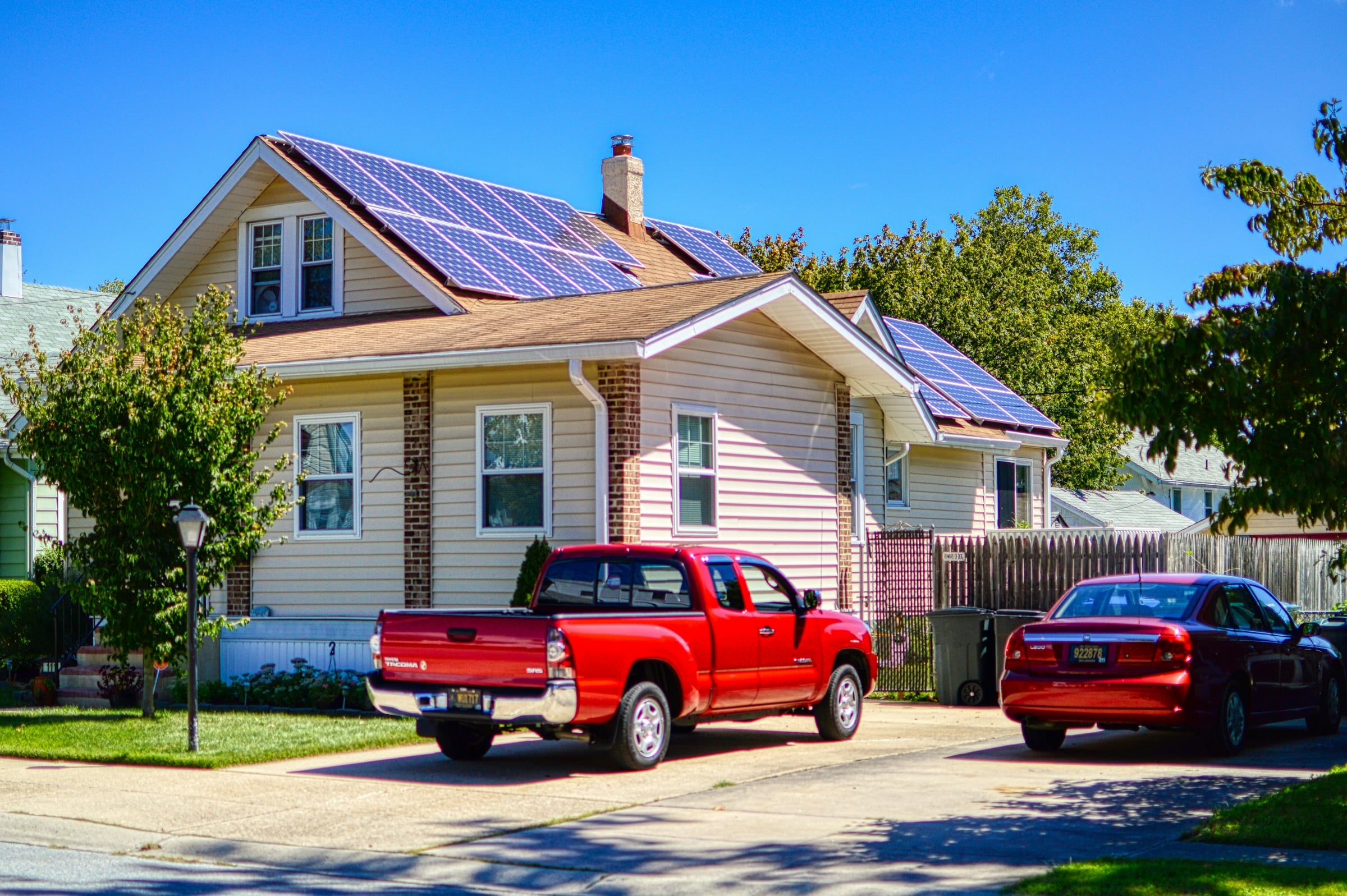
The reason this catches people out is that solar on a roof looks identical regardless of who owns it. You cannot tell by looking. A system the seller paid cash for and a system under a power purchase agreement with a national provider present the same photograph and the same electric bill. The difference only appears in the paperwork, and the paperwork is frequently the last thing anybody asks for.
This article walks through the four ownership structures, what each one does to your closing, what documents to demand and when, and the physical and regulatory questions that sit alongside the contract questions. The Mission Realty Team works throughout Richmond, Henrico, Chesterfield, Goochland, Hanover and Powhatan. We are licensed real estate agents. We are not attorneys, lenders, insurers, appraisers, roofers, electricians or solar contractors, and this article is not legal, tax or engineering advice. Several of the items below need one of those professionals, and we will say which.
What Is the One Question You Must Ask First?
How is the solar system held? Owned outright, financed with a loan, leased, or under a power purchase agreement? Ask it at the showing. Ask it again in writing. Everything downstream depends on the answer, and a seller or listing agent who cannot answer it immediately is a signal in itself.
Owned outright. The seller bought it, paid for it, and owns it. The panels are a fixture of the property and convey with the house. This is the cleanest scenario by a wide margin.
Financed with a loan. The seller owns the equipment but borrowed to buy it. There may be a secured interest recorded against the property or a UCC financing statement filed on the equipment, and that has to be dealt with at closing. Who pays it off, and when, is a negotiation.
Leased. A third party owns the equipment and the homeowner pays a monthly lease payment to use it. The lease runs with the system, and the buyer typically has to qualify for and assume it, or the seller must buy it out.
Power purchase agreement, or PPA. A third party owns the equipment and the homeowner buys the electricity it produces at an agreed rate, often with an annual escalator. Functionally similar to a lease from a buyer’s perspective, with the same assumption requirement.
What Happens When the System Is Owned Outright?
This is the scenario buyers hope for. The equipment belongs to the seller free of any financing, and it conveys with the real estate the way a furnace or a built-in oven does. There is no third party to qualify with, no agreement to assume, and no lien to clear.
An owned system may add to appraised value, and appraisers do have methodology for valuing solar as a contributory feature. Whether and how much value is recognized depends on the appraiser, on whether there are comparable sales of solar homes in the area, and on the system’s characteristics. We cover the appraisal question in more detail further down, because it is the part buyers most often misunderstand.
Even with an owned system there is real diligence to do, and it is easy to skip because the contract picture is simple. Ask for the original installation contract and the permit records, the equipment specifications, the inverter model and age, the manufacturer warranty documents for panels and inverter, the workmanship warranty from the installer and whether that installer is still in business, and the monitoring account access and historical production data.
Pay particular attention to the inverter. Panels typically carry long manufacturer warranties, but the inverter is the electronic component that converts the output for household use, and it generally has a shorter service life than the panels. An owned system with an aging inverter carries a replacement cost that nobody in the transaction may mention. Ask its age and ask what replacement involves.
What About a Financed System With a Lien or UCC Filing?
This is where closings quietly get delayed, and the reason is that the problem lives in the title search rather than in the property inspection.
When a homeowner finances a solar installation, the lender may protect its position in one of several ways. There may be a deed of trust or other secured interest recorded against the real property. There may be a UCC financing statement filed covering the solar equipment as personal property or as a fixture. Either can appear during the title examination, and either has to be resolved before or at closing.
The usual resolutions are that the seller pays off the balance at closing from proceeds, or the lien is released, or in some cases the lender agrees to subordinate its position, or the buyer agrees to assume the loan if the lender permits it. Which of these is available depends entirely on the specific lender and the specific documents. What matters is that somebody identifies the filing early enough for the payoff or release to be processed, because obtaining a payoff statement and a recorded release from a solar lender is not always a fast process.
Practically, this means asking about financing at the same time you ask about ownership, and telling your settlement agent or closing attorney about the solar system as soon as you are under contract so the title work accounts for it. Do not wait for the title commitment to surprise everyone. The legal effect of any particular filing, and what has to happen to clear it, is a question for a Virginia real estate attorney or your settlement agent, not for us.
How Do Solar Leases and Power Purchase Agreements Work for a Buyer?
This is the structure that most often kills or delays a closing, and buyers routinely underestimate it because the monthly payment looks modest.
Under a lease or a PPA, a third-party provider owns the equipment on the roof. The homeowner either pays to lease the system or pays for the power it produces, typically under a long-term agreement that may run twenty years or more, and often with an annual escalator that increases the payment over time. When the house sells, the agreement does not simply disappear. The provider has an interest in the equipment on that roof.
The usual path is that the buyer applies to assume the agreement, and the provider runs a credit qualification. If the buyer qualifies and the assumption package is completed and executed, the agreement transfers and the buyer takes over the payments and the remaining term. If the buyer does not qualify, or refuses to assume, then either the seller buys out the agreement, which can be expensive, or the deal falls apart.
The timing is the trap. Provider assumption processes involve applications, credit review, document packages and coordination between the provider, the seller, the buyer and the settlement agent, and they move on the provider’s schedule rather than yours. Starting that process in the final two weeks before closing is how buyers end up asking for extensions or losing the house. Start it the day the contract is ratified.
Read the agreement itself, and have a Virginia real estate attorney read it with you. The terms that matter most are the remaining length of the agreement, the current payment and the escalator, any production guarantee and what happens if the system underperforms, the transfer or assumption provisions and any transfer fee, what happens at the end of the term, who is responsible for maintenance and repairs, and what the removal and roof-work provisions say.
Which Documents Should You Demand on Day One?
Ratification day is the day to send this list. Not after the inspection, not after the appraisal. Every item below can take longer to obtain than you expect, and several of them determine whether the transaction is viable at all.
The governing contract. The complete purchase agreement, installation contract, loan agreement, lease or PPA, including all exhibits and amendments. Partial documents are not adequate, because the terms that matter are frequently in the exhibits.
The transfer or assumption package. If it is a lease or PPA, request the provider’s transfer packet and their stated timeline immediately, along with the transfer fee and the qualification requirements. Get the provider’s contact information and confirm who initiates the process.
Payoff or lien information. If financed, request the current payoff amount and the lender’s release process, and get this into your settlement agent’s hands.
Monitoring and production data. Access to the monitoring portal and historical production figures. This is how you tell whether the system is actually performing, and a system with degraded or missing production data deserves a technical evaluation.
Warranty documents. Panel manufacturer warranty, inverter warranty, installer workmanship warranty, and any roof penetration warranty. Confirm whether warranties transfer to a new owner and whether any transfer step is required.
The interconnection agreement. The agreement with the electric utility that permits the system to connect to the grid, along with any net metering documentation and the utility account history.
Permits and inspections. The locality’s building and electrical permits and final inspection sign-offs for the installation.
What About the Roof Underneath the Array?
Here is the physical reality that contracts do not address. Solar panels are mounted to a roof, and roofs wear out on their own schedule regardless of what the panels are doing. If the array was installed on a roof that was already partway through its life, you now have a mismatch between the two.
When that roof needs replacing, the panels have to come off and go back on. That is a separate scope of work from the roofing itself, it involves the solar contractor as well as the roofer, and on a leased or PPA system the provider’s agreement may govern who may touch the equipment and under what conditions. Removal and reinstallation is a real cost that sits on top of the roof replacement cost, and the amount depends on system size, roof complexity and who performs the work. Get quotes locally rather than relying on any number you read online, including here.
The diligence is straightforward. Establish the roof’s age and the array’s installation date, and note the gap. Have a roofer evaluate the roof, understanding that they cannot see what is under the panels. Ask the general home inspector to note any evidence of leaking around penetrations, staining in the attic beneath the array, or damaged flashing. Ask whether there is a roof penetration warranty from the installer and what it covers.
Ask one more question that buyers usually miss: does the lease or PPA say anything about roof work? Some agreements address removal and reinstallation, notice requirements, approved contractors and cost responsibility. Knowing that before you own the house is considerably better than discovering it when a storm takes shingles off.
How Do Net Metering and the Utility Relationship Work?
Net metering is the arrangement under which a customer with an on-site generating system receives credit for excess electricity sent back to the grid. Virginia has net metering provisions, and the practical mechanics are administered by the electric utility serving the property.
We are deliberately not going to quote rates, credit values, program caps or crediting rules here, because those are set by regulation and utility tariff and they change. What we will tell you is what to verify and with whom. Contact the electric utility serving the specific address, confirm that the system is properly interconnected and enrolled, confirm what net metering arrangement applies to that account, and ask what has to happen when the account changes hands. Some utilities require a new interconnection or net metering application when ownership transfers, and you do not want to discover that after closing.
Ask the seller for the utility account history covering the period the system has been operating. Bills across a full year tell you far more than a single summer month, because production varies seasonally and household consumption varies more than people expect. Combined with the monitoring data, that history is the only honest way to estimate what your own bills might look like.
Be careful with the seller’s savings claims. A seller’s electric bill reflects the seller’s household: their thermostat habits, their occupancy, their appliances, their electric vehicle if they have one. Your bill will not be their bill. Treat their numbers as evidence that the system produces power, not as a forecast of your own cost.
What Do HOA Rules and Insurance Add to This?
Two more parties have opinions about the panels on your roof, and both are worth checking before closing.
Homeowners associations and architectural review. If the property is in an association, the governing documents may address solar installations, and there may be an architectural review process. Virginia law addresses community association restrictions on solar energy collection devices, but the specifics of what an association may and may not restrict, and what applies to a particular community, are legal questions. Request the association’s governing documents and any architectural approval on file for the existing installation, and confirm whether the installation was approved through the required process. If the array went up without the approval the documents required, that is a matter for an attorney rather than for optimism.
Insurance. Tell your insurance agent about the solar system before you finalize coverage, and do it early. The questions that matter are whether the array is covered under the dwelling policy or requires separate treatment, how coverage differs depending on whether you own the equipment or a third party owns it, whether the presence of the system affects your premium or your coverage limits, and what the policy says about damage to or caused by the equipment. On a leased or PPA system, ask who is required to insure the equipment and what the agreement requires of you.
We are not insurers and cannot tell you how your carrier will treat a particular system. What we can tell you is that this conversation goes badly when it happens the week of closing and goes fine when it happens in week one. Add it to the same day-one list as the solar documents.
How Do Appraisers Actually Treat Solar Panels?
Buyers frequently assume that solar automatically adds value equal to what it cost, and sellers frequently assume the same. Appraisal does not work that way, and the distinction between ownership structures matters enormously here.
An owned system can be recognized as a contributory feature of the property, and there is established appraisal methodology for valuing residential solar. Whether an appraiser assigns value, and how much, depends on the available market evidence, the appraiser’s competency with solar valuation, the system’s characteristics and age, and the specific assignment. In an area with few comparable sales of solar homes, supporting a value adjustment is harder.
A leased or PPA system is a different animal entirely, because the seller does not own the equipment. Third-party-owned solar is generally not treated as contributory value to the real estate in the way an owned system can be, and the associated payment obligation may be treated as a factor in its own right. Lenders and appraisers have their own guidance on this, and it varies by loan program.
The practical consequence for a buyer is this. Do not pay a premium for a leased system on the theory that solar adds value. You are not buying equipment. You are agreeing to a payment obligation in exchange for power at a contracted rate, and whether that is a good deal depends on the rate, the escalator and the remaining term rather than on the presence of panels. On an owned system, treat any value contribution as a question for the appraiser rather than an assumption.
| How the system is held | Who owns the equipment | What has to happen at closing | Main buyer risk |
|---|---|---|---|
| Owned outright | The seller, free and clear | Nothing beyond normal conveyance | Aging inverter, unpermitted install |
| Financed with a loan | The seller, subject to a lender’s interest | Payoff, release, subordination or assumption | Title delay if found late |
| Leased | A third-party provider | Buyer qualifies for and assumes the lease | Long obligation, assumption timing |
| Power purchase agreement | A third-party provider | Buyer qualifies for and assumes the PPA | Escalating rate, assumption timing |
Frequently Asked Questions About Buying a Home With Solar Panels in Richmond VA
Should I buy a house with solar panels?
Yes, if the system is owned outright and the paperwork checks out, and only after careful analysis if it is leased or under a power purchase agreement. An owned system is simply part of the property and may add appraised value. A third-party-owned system means you are agreeing to a long payment obligation that you must qualify to assume, and its value to you depends on the rate, the escalator and the remaining term rather than on the panels being there. Ask how the system is held before you do anything else, and get the actual document rather than the seller’s recollection.
What happens to solar panels when you buy a house?
It depends entirely on how the system is held, and there are four possibilities that behave completely differently. An owned system conveys with the real estate like a furnace. A financed system may carry a lien or UCC filing that has to be paid off, released or subordinated at closing. A lease or power purchase agreement generally requires the buyer to qualify for and formally assume the agreement with the third-party provider. The panels look identical in all four cases, which is exactly why the paperwork matters more than the photograph.
Can you take over someone else’s solar lease?
Usually yes, but only if the provider approves you, and the process takes longer than most buyers expect. The provider typically requires an application and a credit qualification, then issues a transfer or assumption package that has to be completed and executed by the seller, the buyer and often coordinated with the settlement agent. That sequence moves on the provider’s schedule, not yours. Request the transfer packet and the provider’s stated timeline the day the contract is ratified rather than in the final two weeks.
What is the difference between a solar lease and a power purchase agreement?
In a lease you pay a monthly amount to use the equipment, and in a power purchase agreement you pay for the electricity the system produces at a contracted rate. From a buyer’s standpoint they behave very similarly: a third party owns the equipment on the roof, the agreement typically runs a long term, there is often an annual escalator, and you generally have to qualify for and assume the agreement to buy the house. The differences that matter are in the specific terms, so read the actual agreement including every exhibit, and have a Virginia real estate attorney read it with you.
Do solar panels add value to a home?
An owned system can be recognized as a contributory feature, but there is no automatic value equal to what it cost, and a third-party-owned system is treated very differently. Appraisers have established methodology for valuing residential solar, and whether they assign value depends on available market evidence, the system’s characteristics and age, and the specific assignment. In an area with few comparable sales of solar homes, supporting an adjustment is harder. Do not pay a premium for a leased system on the theory that solar adds value, because you are not buying equipment.
Can a solar loan or lien delay a home closing?
Yes, and it is one of the more common quiet delays in a solar transaction. When a homeowner finances an installation the lender may record a secured interest against the property or file a UCC financing statement covering the equipment, and either can surface during the title examination. Resolving it means obtaining a payoff statement and a recorded release, or a subordination, or lender approval of an assumption, and none of that is guaranteed to be fast. Tell your settlement agent about the solar system as soon as you are under contract so the title work accounts for it.
What is a UCC filing on solar panels?
It is a financing statement filed by a lender to give public notice of its security interest in the solar equipment. It is a routine tool in equipment lending, but on a home purchase it means there is a third-party claim connected to something physically attached to the house you are buying, and it usually has to be cleared before or at closing. The practical steps are to identify it early, get the payoff figure and the lender’s release process, and let your settlement agent or closing attorney handle the mechanics. The legal effect of any particular filing is a question for an attorney rather than for your agent.
What if I do not qualify to assume the solar lease?
Then the seller generally has to buy out the agreement, or the transaction does not happen. A buyout can be expensive depending on the remaining term, and sellers are frequently unaware of the figure until they ask the provider for it. This is why the qualification process needs to start immediately after ratification rather than late in the transaction, so that everyone has time to negotiate a solution or walk away cleanly. Discuss with your agent and your attorney how your contract handles the possibility before you are relying on it.
How do you replace a roof that has solar panels on it?
The panels have to be removed and reinstalled, which is a separate scope of work from the roofing itself and involves a solar contractor alongside the roofer. That removal and reinstallation is a real cost on top of the roof replacement, and the amount depends on system size, roof complexity and who performs the work, so get local quotes rather than relying on any published figure. On a leased or power purchase agreement system, the provider’s agreement may govern who is permitted to touch the equipment and under what conditions. Check what the agreement says about roof work before you own the house.
Do solar panels transfer with the house in Virginia?
An owned system transfers with the property as part of the real estate, while a leased or power purchase agreement system remains the property of the third-party provider and the agreement must be assumed or bought out. A financed system belongs to the seller but carries the lender’s interest, which must be resolved. There is no single answer, which is why the ownership structure is the first question to ask on any solar home. Get the governing document rather than a verbal answer, because sellers genuinely misremember what they signed years earlier.
How does net metering work for a Virginia home with solar?
Net metering is the arrangement under which a customer with an on-site generating system receives credit for excess electricity sent back to the grid, and Virginia has net metering provisions administered through the electric utility serving the property. The specific credit mechanics, program terms and any caps are set by regulation and utility tariff and they change, so verify current details directly with the utility serving that address rather than relying on an article. Also confirm that the system is properly interconnected and enrolled, and ask what has to happen when the account changes hands. Some utilities require a new application on transfer.
Does homeowners insurance cover solar panels?
It varies by carrier and by how the system is held, so raise it with your insurance agent in the first week rather than the week of closing. The questions worth asking are whether the array is covered under the dwelling policy or needs separate treatment, how coverage differs when a third party owns the equipment, whether the system affects your premium or your limits, and what the policy says about damage to or caused by the equipment. On a leased or power purchase agreement system, also ask who is required to insure the equipment and what the agreement obligates you to carry. We are real estate agents and cannot tell you how a particular carrier will respond.
Can a homeowners association stop you from installing solar panels in Virginia?
Virginia law addresses community association restrictions on solar energy collection devices, but what a particular association may and may not restrict is a legal question that depends on the governing documents and the circumstances. For a buyer, the more immediate issue is whether the existing array was approved through whatever architectural review process the association required. Request the governing documents and any architectural approval on file for the installation. If the panels went up without the approval the documents called for, take that to an attorney rather than assuming it will not matter.
How long do solar panels and inverters last?
Panels are generally the long-lived component and typically carry lengthy manufacturer warranties, while the inverter is the electronic component that converts the output for household use and generally has a shorter service life. That distinction is the one buyers most often miss on an owned system, because an aging inverter represents a replacement cost that nobody in the transaction may mention. Ask the inverter’s age and model, ask what replacement involves, and ask whether the manufacturer and workmanship warranties transfer to a new owner and whether any transfer step is required. Get current pricing from a local solar contractor.
What documents should I ask for when buying a house with solar panels?
Send the list on ratification day, because several items take longer to obtain than buyers expect. Ask for the complete governing contract with all exhibits and amendments, the provider’s transfer or assumption package and timeline if it is leased or a power purchase agreement, the payoff and release information if it is financed, monitoring portal access and historical production data, the panel, inverter and workmanship warranties, the interconnection agreement with the utility along with net metering documentation and account history, and the locality’s permits and final inspection sign-offs. A seller who cannot locate any of it after two weeks is telling you the paperwork trail is thin. The Mission Realty Team sends this list the day the contract is ratified.
Looking at a Richmond Home With Solar Panels?
The Mission Realty Team works with buyers across Richmond, Henrico, Chesterfield, Goochland, Hanover and Powhatan, and on a solar home we start the paperwork trail the day the contract is ratified rather than the week before closing. We are real estate agents, not attorneys, lenders, insurers, appraisers, roofers or solar contractors, so we will tell you which of those you need and when. Call us at (804) 601-4960 or stop by 3701 Cox Rd, Richmond VA 23233 and we will help you get the right answers before your contingencies expire.