Living in Forest Hill, Virginia: Schools, Parks, Prices & What Buyers Need to Know in 2026
A hilly, wooded Southside neighborhood where you can walk from a front porch into riverside singletrack
Forest Hill is a neighborhood on Richmond’s Southside, south of the James River, developed roughly from the 1910s through the 1940s on the wooded bluffs above the water. Its defining feature is Forest Hill Park, a large city park with a stone-lined lake, mature woods, open lawns and a Saturday farmers market, connected directly to the James River Park System’s trail network. Being able to leave a front porch on foot and be on genuine riverside singletrack within minutes is unusual for a city of Richmond’s size, and it is the single biggest reason this neighborhood holds the affection it does. The housing mix runs from small frame bungalows and Cape Cods to substantial Tudors and Colonial Revivals, and it changes sharply block to block, which means the neighborhood serves a wide range of buyers rather than one. Westover Hills lies to the west and Woodland Heights to the east, and downtown Richmond is a short trip across the Lee Bridge or the Boulevard Bridge. Richmond Public Schools serves the area, and attendance zones should always be verified directly with the division. The honest tradeoff is the terrain: these are bluffs, the lots slope, and drainage, retaining walls, grading and basement or crawl space moisture deserve serious inspection attention. Buyers searching Forest Hill Richmond VA homes for sale, Southside Richmond real estate, Forest Hill Park neighborhood and James River Park homes will find the practical detail below. The Mission Realty Team serves Richmond, Henrico, Chesterfield, Goochland, Hanover and Powhatan.
Table of Contents
- What Forest Hill Actually Is and How It Came to Be
- Forest Hill Park: Lake, Woods and the Saturday Market
- The James River Park System at Your Doorstep
- Housing Stock: Bungalows, Capes, Tudors and Colonials
- The Terrain: Slopes, Drainage and Retaining Walls
- What an Older Forest Hill House Requires
- Schools and the Neighborhoods Around Forest Hill
- Bridges, Commuting and Road Access
- Shopping and Daily Amenities
- What Actually Drives Prices in Forest Hill
- Who Forest Hill Suits, and the Honest Tradeoffs
- Frequently Asked Questions
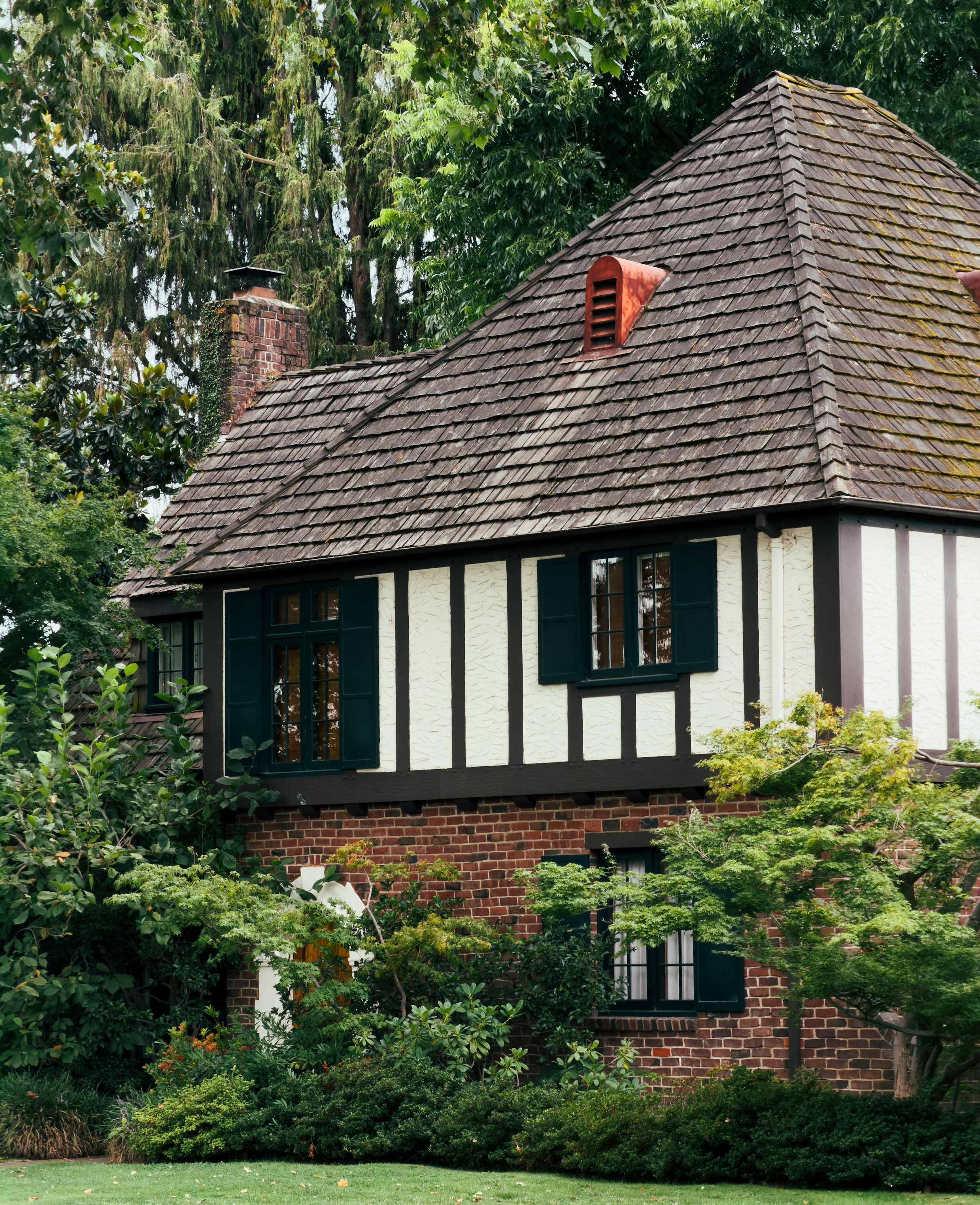
There is a specific moment that sells Forest Hill to people. You are walking down a street of stucco and half-timbered Tudors under a canopy so dense the pavement stays cool, the ground starts falling away toward the river, and then the pavement ends and a dirt trail begins. Ten minutes later you are standing on granite above the rapids of the James, still inside the City of Richmond, still a short walk from your own front door. Very few American cities offer that, and no amount of new construction can manufacture it.
Forest Hill grew up on the south bank of the James roughly between the 1910s and the 1940s, on land that had already been used for recreation. The streetcar companies that pushed south out of Manchester ran an amusement and picnic park out here in the late nineteenth century, which is why the core of the neighborhood is a large public park rather than a subdivision. Houses filled in around it over three decades, in whatever architectural language was current at the time, which is why one block can hold a modest 1920s frame bungalow and the next a substantial brick Colonial Revival.
The Mission Realty Team writes these neighborhood guides the way we would brief a client in the car. That means we will be specific about what makes value here and specific about what can cost you money, and it means we will not print price figures. Any median we published would be stale within weeks, and a stale number in a buyer’s head does real damage. When you want honest Forest Hill comparables, call us and we will pull them for the exact streets you are considering.
What Forest Hill Actually Is and How It Came to Be
Forest Hill sits in the City of Richmond on the south side of the James River, generally between Forest Hill Avenue and the river, with Westover Hills to the west and Woodland Heights to the east. It is a city neighborhood, which means City of Richmond tax rates, city services and Richmond Public Schools, not a county jurisdiction. It is also physically distinct from the flat grid neighborhoods across the river, because the land here rolls and drops toward the water.
The area’s development followed the streetcar lines that crossed the James into the old city of Manchester and pushed south and west. Recreation came first: the wooded high ground above the river was used as a trolley-era picnic and amusement destination before it became a residential neighborhood, and the lake, stone walls and old stonework in the park are remnants of that period. When residential development took over, the street layout followed the topography rather than a rigid grid, giving Forest Hill curving streets, irregular lots and long views down hillsides.
The result reads as older and more established than the individual houses might suggest. Mature hardwoods, stone retaining walls and sidewalks that rise and fall with the grade produce a coherent sense of place that buyers from flatter, newer parts of the region notice immediately.
Forest Hill Park: Lake, Woods and the Saturday Market
Forest Hill Park is the anchor and it earns that role. It is a large city park with a stone-lined lake, mature woods threaded with walking trails, open lawn areas, playgrounds and courts, and historic stonework and a stone house dating from well before the neighborhood around it. It is big enough to absorb a lot of use without feeling crowded and old enough that the trees are full grown, which is a combination newer suburban parks cannot offer for another fifty years.
The Saturday farmers market held in the park is genuinely a regional draw rather than a neighborhood curiosity. It pulls vendors and crowds from across Richmond, and for residents it functions as a weekly social institution as much as a place to buy vegetables. If you buy near the park, plan for market-day traffic and parking on Saturday mornings, and consider that many residents regard it as a feature rather than a nuisance.
Day to day the park is simply used: dog walking, running loops, youth sports, birthday parties at the shelters. A large, well-used public park at the center of a neighborhood tends to stabilize values over decades, because it is a permanent amenity that cannot be built over.
The James River Park System at Your Doorstep
This is the amenity that makes Forest Hill nationally unusual. The James River Park System is a long, narrow city park that follows both banks of the James through the middle of Richmond, and Forest Hill sits directly against its south-bank section. The Buttermilk Trail runs along the south side below the neighborhood, threading through woods above and beside the river, and it connects toward the Reedy Creek area and the wider trail network. The North Bank Trail runs along the opposite side and is reachable by way of the river’s pedestrian crossings.
What that means practically is that mountain biking, trail running, river access, climbing on the rocks and flatwater or whitewater paddling are all things residents do on a weekday evening rather than on a planned trip. Richmond’s whitewater through the city is a genuine rarity, and living on the bluff above it changes how households use their free time. Buyers who ride or run seriously often narrow their entire home search to a handful of Southside and Northside neighborhoods for exactly this reason.
There are practical considerations. Trailheads draw non-resident visitors, so streets nearest the entrances see outside traffic on nice weekends, and rear lots adjoining park land trade privacy for deer, tree fall risk and stormwater arriving from uphill.
Housing Stock: Bungalows, Capes, Tudors and Colonials
Forest Hill’s housing is more varied than most Richmond neighborhoods of its era, because it filled in over roughly three decades rather than in one burst. At the modest end you will find frame and brick bungalows and small Cape Cods, one or one and a half stories, with front porches, dormers and compact floor plans. At the substantial end there are brick and stucco Tudor Revivals with steep slate or shingle roofs, arched entries and half-timbering, along with two-story Colonial Revivals with symmetrical facades and center halls.
That range is a real advantage for buyers. In many neighborhoods, if the housing type does not fit your budget, the neighborhood is simply out. Here a first-time buyer looking at a small Cape and a move-up buyer looking at a larger Tudor may be shopping two streets apart. It also means comparable sales analysis requires more care than usual, because the house next door may not be a comparable at all.
Interiors follow their eras. Expect plaster walls, hardwood floors, real trim, defined rooms, small original kitchens and, in the bungalows, small closets. Many houses have been renovated at least once, and the quality of that work varies enormously. Attic and basement conversions are common, and in a neighborhood built on slopes, walk-out lower levels and tuck-under garages appear frequently and need their own scrutiny.
The Terrain: Slopes, Drainage and Retaining Walls
Every neighborhood has a signature risk, and in Forest Hill it is water moving downhill. The neighborhood sits on bluffs above the James and is notably hilly, so rainfall does not simply soak in where it lands. It runs, and it runs toward whatever is downslope, which is frequently somebody’s foundation. This is the single most important thing to understand before buying here, and it is where we spend most of our time with clients during inspections.
Start with grading. The ground should fall away from the foundation on all sides, and on a sloped lot that often requires deliberate swales, French drains or regraded beds. Look at where downspouts discharge, because a downspout dumping at the corner of a foundation on a hillside lot is a slow-motion problem. Inside, check basement and crawl space walls for efflorescence, staining lines, active seepage and previously patched cracks, and ask directly whether the lower level has ever taken on water.
Then look at retaining walls, which are everywhere here and genuinely expensive to replace. Assess whether a wall is leaning, bowing, cracked at the joints or losing material at its base, and whether there is drainage behind it. Old stone walls can be charming and sound, or charming and failing. Have a structural engineer look at anything ambiguous, because a wall failure can take a driveway with it.
What an Older Forest Hill House Requires
Beyond terrain, this is early twentieth century housing and it carries the systems profile of its age. Electrical service is the first item: look for undersized panels, ungrounded outlets and remnants of early wiring in attics and crawl spaces, along with the partial rewires that make a house look modern at the outlet while original circuits remain behind the plaster. On plumbing, original galvanized supply lines lose pressure as they corrode internally and cast iron waste lines fail at the joints, so ask what has been replaced and what has not.
Have the sewer lateral camera-scoped. In older Richmond neighborhoods with large mature trees, root intrusion and offset joints in the line between the house and the main are common and the repair is expensive, and it does not show up in a standard home inspection. Then work through the envelope: roof age and layer count, chimney and flashing condition, the state of original wood windows, and whether the slate or tile roof on an older Tudor has been maintained or simply patched.
Crawl spaces need attention for the same reasons they do everywhere in Richmond, with the slope adding urgency: standing water, torn vapor barriers, insulation falling out of the joists, fungal growth and termite evidence. Houses built before 1978 also carry the federal lead-based paint disclosure requirement, which should shape how you plan any renovation.
Schools and the Neighborhoods Around Forest Hill
Forest Hill is inside the City of Richmond, so Richmond Public Schools is the division serving the neighborhood. Southside families have historically been zoned to George Wythe High School, and Richmond Public Schools also operates specialty and application programs, including Open High School, Richmond Community High School and Franklin Military Academy, while the regional Maggie L. Walker Governor’s School for Government and International Studies admits students by application from participating divisions across the region.
Verification is not optional here. Richmond has redrawn attendance boundaries more than once, has opened and repurposed buildings, and applies zoning by street address rather than by neighborhood name. Confirm the current elementary, middle and high school assignment for the exact address with Richmond Public Schools before you write an offer, and confirm again if you are buying ahead of a school year that has not begun. We do not publish school ratings or test scores in these guides, because those numbers change annually and are a poor substitute for touring a building and talking to families in it.
The neighborhoods immediately around Forest Hill matter to your search. Westover Hills to the west has more 1930s through 1950s housing and its own park frontage along the river. Woodland Heights to the east is an older streetcar-era grid with bungalows and Foursquares closer to the Manchester side. Stratford Hills and the Reedy Creek area extend the pattern further west and south. Together these form a connected band of established Southside housing, which supports values across all of it and gives you more options if Forest Hill proper is thin on inventory.
Bridges, Commuting and Road Access
Forest Hill’s commute is one of its quiet strengths. Downtown Richmond is a short trip across the river, most often over the Lee Bridge, which carries the Belvidere Street corridor, or over the Boulevard Bridge, which lands you near Byrd Park and Carytown on the north side. Outside peak hours the drive downtown is frequently under fifteen minutes and can be under ten from the eastern edge of the neighborhood. The Manchester Bridge is another option depending on where you are headed.
Two practical notes on the bridges. The Boulevard Bridge is a toll crossing, which is a small recurring cost and a real convenience, and it is worth knowing before you assume it into your daily route. Because the neighborhood depends on bridges, incidents or maintenance on one crossing push traffic to the others, and a normally quick commute can lengthen noticeably on those days. Residents learn all three routes.
For regional trips, Forest Hill Avenue runs west toward Chesterfield County and connects to Chippenham Parkway, which links to Powhite Parkway, Route 288 and Interstate 95, putting the western suburbs and points south within reach without crossing downtown. GRTC operates bus service on the Southside corridors, and bike commuting is realistic for confident riders, though the hills are a genuine factor here.
Shopping and Daily Amenities
Forest Hill is not a dense commercial district and it should not be evaluated as one. What it has is a small cluster of neighborhood businesses near the Forest Hill Avenue and 42nd Street area, with coffee, casual restaurants and a handful of shops that residents can reach on foot or with a two-minute drive. That is enough to give the neighborhood a center of gravity without turning it into a destination strip.
For full grocery shopping, pharmacies and hardware, residents drive along Forest Hill Avenue, toward Stratford Hills and Midlothian Turnpike, or across the river. Carytown, with its independent shops and restaurants, is a short trip over the Boulevard Bridge, and the museums along Arthur Ashe Boulevard are equally close. Manchester’s growing restaurant and brewery scene sits just to the east, and downtown is a bridge away. The practical upshot is that Forest Hill households enjoy city amenities without living in a commercial corridor.
Everyday life here leans on the outdoors rather than on retail, and a great deal of what residents do on a weekend requires no shopping at all. If your priority is walking to a full grocery store or a nightlife strip, be honest with yourself early, because other Richmond neighborhoods will deliver that and this one will not.
What Actually Drives Prices in Forest Hill
We do not publish median sale prices, days on market or year-over-year percentages for Forest Hill, and it is worth explaining why rather than simply declining. Those numbers move constantly, an article freezes them at one moment, and buyers who anchor to a stale figure either overpay out of anxiety or dismiss a fairly priced house. What does not go stale is the structure of value, and in Forest Hill that structure is unusually easy to read on the ground.
Six things move price here. First, distance and quality of walk to Forest Hill Park and to a James River Park trailhead, which is the neighborhood’s core amenity. Second, the lot: how steep it is, whether there is usable level yard, how the driveway works, and whether retaining walls are sound or a looming expense. Third, systems modernization, because a house with updated electrical, replaced supply plumbing, a newer roof and documented drainage work sits in a different category from one that has been maintained but not modernized.
Fourth, architectural type and square footage, since the range from small Cape to substantial Tudor is wide and the buyer pools differ across it. Fifth, the specific block, including canopy, street traffic and proximity to trailhead parking. Sixth, school zoning and renovation quality, particularly in kitchens, bathrooms and finished lower levels.
Who Forest Hill Suits, and the Honest Tradeoffs
Forest Hill suits people who will actually use the park and the river. Runners, riders, paddlers, dog owners and families who want their children outdoors get the most out of this neighborhood, and they tend to stay for decades. It also suits buyers who want architectural character, a short commute downtown and a genuine social center, and it serves a wide range of budgets because the housing stock is so varied.
The tradeoffs are concrete. The terrain is the big one: sloped lots mean drainage risk, retaining wall expense, harder yard work and steeper walks than a flat grid neighborhood. Systems are old or recently replaced with little in between. Renovation quality varies house to house, so two similar-looking properties can be far apart in near-term cost. Trailhead traffic and Saturday market traffic are real on the streets nearest the park. And you are dependent on bridges to reach downtown, which is usually fine and occasionally not.
If you want a level lot, a two-car garage and a twenty-year-old house with modern systems, western Henrico or Chesterfield will serve you better. If you want to live on a wooded bluff above the James, walk to a farmers market on Saturday and be on a trail in ten minutes, Forest Hill is one of the best places in Virginia to do it. The Mission Realty Team will tell you plainly which of those two buyers you are after one tour, and we will point out the drainage problem on the pretty house before you fall in love with it.
| Factor | Forest Hill (Southside Richmond) | What it means for a buyer |
|---|---|---|
| Jurisdiction | City of Richmond | City tax rates, city services, Richmond Public Schools |
| Main building era | Roughly 1910s through 1940s | Character housing with century-old systems |
| House types | Frame and brick bungalows, Capes, Tudors, Colonial Revivals | Wide range of size and price within one neighborhood |
| Terrain | Wooded bluffs above the James, notably hilly | Drainage, grading and retaining walls are the key risks |
| Signature amenity | Forest Hill Park with stone-lined lake and Saturday market | Permanent, heavily used neighborhood center |
| River access | James River Park System trails directly below | Trail running, mountain biking and paddling from home |
| Adjacent neighborhoods | Westover Hills, Woodland Heights, Stratford Hills, Reedy Creek | Connected band of established Southside housing |
| Schools | Richmond Public Schools | Verify current zoning with the division for the exact address |
| Downtown access | Lee Bridge, Boulevard Bridge, Manchester Bridge | Short commute; learn a backup crossing |
| Boulevard Bridge | Toll crossing | Small recurring cost, meaningful convenience |
| Regional access | Forest Hill Avenue to Chippenham and Powhite Parkways | Airport and western suburbs without crossing downtown |
| Typical inspection focus | Grading, retaining walls, basement seepage, sewer lateral, wiring, roof | A drainage-first inspection strategy is essential |
| Pre-1978 housing | Nearly all of it | Federal lead-based paint disclosure applies |
| Main tradeoff | Hilly lots with water-management risk and older systems | Budget for the first three years of ownership |
Frequently Asked Questions About Living in Forest Hill, Richmond VA
Is Forest Hill a good neighborhood in Richmond VA?
Yes, Forest Hill is one of the most sought-after neighborhoods on Richmond’s Southside, largely because of its park and river access. It combines a large city park with a stone-lined lake and a Saturday farmers market, direct access to the James River Park System’s trail network, and a housing mix that runs from small Capes to substantial Tudors. The honest caveat is the terrain, since these are bluffs above the river and sloped lots carry real drainage and retaining wall risk. The Mission Realty Team can walk you through which streets and which lots handle water well before you write an offer.
Where is Forest Hill in Richmond, Virginia?
Forest Hill is on Richmond’s Southside, south of the James River, generally between Forest Hill Avenue and the river. Westover Hills lies to the west and Woodland Heights to the east, with Stratford Hills and the Reedy Creek area extending further west and south. It is inside the City of Richmond rather than in Chesterfield County, which determines its tax rates, services and school division. Downtown Richmond is a short trip across the Lee Bridge or the Boulevard Bridge.
What is Forest Hill Park in Richmond?
Forest Hill Park is a large City of Richmond park at the center of the neighborhood, with a stone-lined lake, mature woods, walking trails, open lawns, playgrounds and historic stonework including a stone house that predates the surrounding houses. The high ground here was used as a trolley-era picnic and amusement destination before the neighborhood was built around it, which is why the park came first. A Saturday farmers market in the park draws vendors and crowds from across the city and functions as a weekly social institution for residents. Expect market-day traffic and parking on Saturday mornings if you buy near an entrance.
Can you walk to the James River from Forest Hill?
Yes, and that is the neighborhood’s signature feature. The James River Park System runs along the south bank directly below Forest Hill, and the Buttermilk Trail threads through the woods above and beside the river, connecting toward the Reedy Creek area and the broader trail network. Residents run, ride, climb and paddle on weekday evenings rather than making a planned trip of it. The North Bank Trail on the opposite side of the river is reachable by way of the river’s pedestrian crossings.
What kind of houses are in Forest Hill Richmond?
Forest Hill’s housing runs from small frame and brick bungalows and Cape Cods to substantial brick and stucco Tudor Revivals and two-story Colonial Revivals. Because the neighborhood filled in over roughly three decades from the 1910s through the 1940s, the architecture changes sharply block to block and sometimes house to house. Interiors typically have plaster walls, hardwood floors, real trim, defined rooms and small original kitchens, with many homes renovated at least once at widely varying quality. Because of the slopes, walk-out lower levels and tuck-under garages are common and need their own scrutiny.
Are Forest Hill Richmond homes prone to water problems?
Sloped lots in Forest Hill do carry real water-management risk, which is why drainage should lead your inspection rather than come last. The neighborhood sits on bluffs above the James and is notably hilly, so rain runs downhill toward whatever is below it, which is frequently a foundation. Check that the ground falls away from the house on all sides, look at where downspouts discharge, and examine basement and crawl space walls for staining lines, efflorescence, active seepage and patched cracks. Ask the seller directly whether the lower level has ever taken on water, and get an engineer’s opinion on anything ambiguous.
Do I need to worry about retaining walls in Forest Hill?
Yes, retaining walls are common throughout Forest Hill and replacing a failing one is genuinely expensive. Assess whether a wall is leaning, bowing, cracked at its joints or losing material at the base, and whether there is any drainage or weep provision behind it. Old stone and dry-laid walls can be entirely sound or quietly failing, and the difference is not always obvious from a photograph. Driveways cut into hillsides, tuck-under garages and stepped front walks belong on the same list, and a structural engineer is worth the fee on any wall you are unsure about.
What schools serve Forest Hill in Richmond VA?
Richmond Public Schools is the division serving Forest Hill, and Southside families have historically been zoned to George Wythe High School. The division also operates specialty and application programs, and the regional Maggie L. Walker Governor’s School for Government and International Studies admits students by application from participating divisions. Richmond assigns schools by street address and has redrawn attendance boundaries more than once, so verify the current elementary, middle and high school assignment for the exact address with the division before you write an offer. We do not publish school ratings or test scores because they change annually and are no substitute for touring a building yourself.
How much do homes cost in Forest Hill Richmond VA?
Mission Realty does not publish median or average sale prices for Forest Hill, because any figure we printed would be stale within weeks and stale numbers cause buyers to overpay or to dismiss fairly priced houses. What drives price here is legible on the ground: walking distance and walk quality to the park and to a river trailhead, the slope of the lot and whether there is usable level yard, the condition of retaining walls and driveway, the extent of systems modernization, architectural type and square footage, and renovation quality. For current comparables adjusted for slope and condition, call the Mission Realty Team at (804) 601-4960.
How long is the commute from Forest Hill to downtown Richmond?
Most Forest Hill addresses are a short trip to downtown, frequently under fifteen minutes and sometimes under ten from the eastern edge of the neighborhood. The usual crossings are the Lee Bridge, which carries the Belvidere Street corridor, and the Boulevard Bridge, which lands near Byrd Park and Carytown. The Manchester Bridge is a third option depending on your destination. Because the neighborhood depends on bridges, an incident or maintenance on one crossing pushes traffic to the others, so learn all three routes before you need them.
Is the Boulevard Bridge in Richmond a toll bridge?
Yes, the Boulevard Bridge is a toll crossing between Richmond’s Southside and the Byrd Park and Carytown area on the north side. For Forest Hill residents it is often the most convenient route to the Museum District, Carytown and points north, and the toll is a small recurring cost rather than a significant expense. It is worth knowing before you assume the bridge into your daily commute and budget. Many households use it selectively and take the Lee Bridge for downtown trips.
What is there to do near Forest Hill Richmond?
Most of what residents do here is outdoors and close to home: the park, the lake loop, the Saturday market, and the James River Park trails for running, riding, climbing and paddling. Beyond that, Carytown’s independent shops and restaurants and the museums along Arthur Ashe Boulevard are a short trip over the Boulevard Bridge, and Manchester’s restaurants and breweries are immediately east. Downtown Richmond and its restaurant scene are one bridge away. The neighborhood itself has a small cluster of coffee shops and casual restaurants rather than a commercial strip.
Where do Forest Hill residents shop for groceries?
Forest Hill residents drive for full grocery shopping, most often west along Forest Hill Avenue, toward the Stratford Hills and Midlothian Turnpike corridors, or across the river to the north side. The neighborhood’s own commercial cluster near Forest Hill Avenue and the 42nd Street area is oriented toward coffee, casual restaurants and small shops rather than supermarkets. That is a fair trade for most buyers here, but if walking to a full grocery store is a priority you should compare Forest Hill directly against Woodland Heights, Bellevue or the Museum District. Be honest about that requirement early in your search.
Is Forest Hill Richmond good for families?
Forest Hill works well for families who want their children outdoors, with a large park, playgrounds, youth sports, trails and a walkable social center in the Saturday market. The housing stock includes both modest starter homes and larger four-bedroom Tudors and Colonials, so families often move up within the neighborhood rather than leaving it. The practical considerations are school zoning, which must be verified by address with Richmond Public Schools, and the terrain, since steep lots mean less level yard for play in some cases. Tour several streets, because the amount of usable flat yard varies dramatically here.
What are the downsides of living in Forest Hill Richmond?
The main downsides are the terrain and the age of the housing. Sloped lots mean drainage risk, potential retaining wall expense, harder yard maintenance and steeper walks than a flat grid neighborhood offers. Systems in these homes are either old or recently replaced with little in between, and renovation quality varies enough that two similar-looking houses can be far apart in near-term cost. Trailhead and Saturday market traffic are real on streets near the park, and reaching downtown depends on bridges that occasionally back up. If you want a level lot and a twenty-year-old house with modern systems, western Henrico or Chesterfield suits you better.
Thinking About Buying in Forest Hill?
The Mission Realty Team knows Forest Hill’s streets, its slopes and its drainage problems, and we will tell you honestly when a beautiful house sits on a lot that is going to cost you money. We do not publish price figures that go stale within weeks, so ask us for current comparables instead. Call us at (804) 601-4960 or stop by 3701 Cox Rd, Richmond VA 23233 for a current list of Forest Hill and Southside homes. We serve Richmond, Henrico, Chesterfield, Goochland, Hanover and Powhatan.