Living in Rockville, Virginia: Schools, Parks, Prices & What Buyers Need to Know in 2026
A genuine Goochland crossroads – choosing land, quiet and dark skies over convenience, and knowing exactly what that costs
Rockville is a small rural crossroads community in eastern Goochland County, near the Hanover County line, and it is one of the more honestly rural places you can buy within a reasonable drive of Richmond. There are no subdivisions to speak of. What you find instead is farmland, woods, small working farms and scattered residential parcels along two-lane roads, which means buyers here are almost always choosing land and quiet over convenience, and they should know that is the trade they are making. Everything is a drive. Route 271 and Route 623 are the local roads, I-64 handles the longer trips, and Short Pump and Innsbrook in western Henrico are the practical destination for groceries, medical appointments, shopping and most commutes. Goochland County Public Schools serves the area and attendance boundaries should be verified with the county rather than assumed. Well and septic are the norm, which puts perc testing, the drainfield reserve area, well yield and laboratory water quality testing squarely into your due diligence, along with the specific property standards that FHA, VA and USDA lenders apply. Parts of Goochland fall within USDA-eligible rural areas, which surprises many buyers and can matter a great deal to a qualifying borrower. Fire and EMS rely heavily on volunteers and response times are longer than in the suburbs. Rural broadband varies enormously and must be verified by exact address. Agricultural land use taxation can affect a parcel’s assessment and carries roll-back exposure if the use changes. Older rural houses and their outbuildings need a broader inspection than a suburban house does. The honest tradeoff is acreage, privacy, dark skies and a low cost per acre set against a real service and convenience penalty, private utility responsibility and very thin, slow-moving inventory. Buyers searching Rockville VA homes for sale, Goochland County land, rural homes near Short Pump and USDA eligible homes Richmond VA will find the practical detail below. The Mission Realty Team serves Richmond, Henrico, Chesterfield, Goochland, Hanover and Powhatan, and we do not publish price figures that go stale.
Table of Contents
- What Rockville Actually Is
- The Land and the Drive-Everywhere Reality
- Housing Stock: Older Rural Houses and Scattered Newer Builds
- Outbuildings and What to Check on an Old Rural Property
- Well and Septic: Perc, Reserve, Yield and Water Quality
- Financing: FHA, VA and USDA Rural Eligibility
- Broadband, Power and Emergency Response
- Schools: Goochland County Public Schools
- Getting Around: Route 271, Route 623 and I-64
- Shopping, Parks and Daily Amenities
- What Actually Drives Price in Rockville
- Who It Suits, and the Honest Tradeoffs
- Frequently Asked Questions
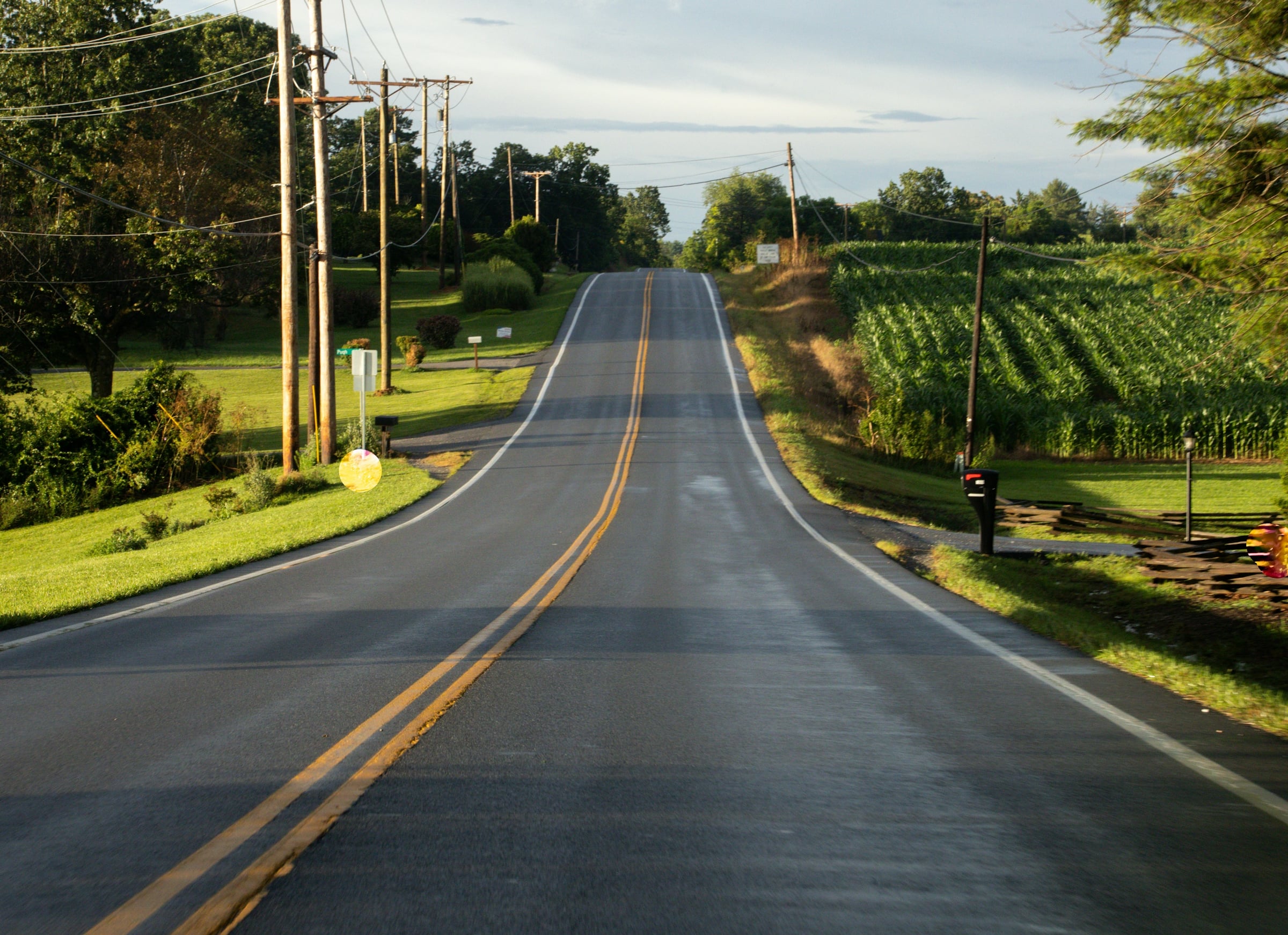
Rockville does not announce itself. There is no entrance monument, no amenity centre and no sales office. You come over a rise on a two-lane road with a double yellow line running to the horizon, utility poles marching along one shoulder, a mailbox on a post, a crop field on the right, and that is the place. Buyers who love it usually know within about four minutes.
That is worth saying at the outset because Rockville is not a compromise version of suburbia further out. It is a different product entirely. People buy here because they want acreage, quiet, a night sky with actual stars in it and a low cost per acre, and they accept in exchange that a gallon of milk is a round trip and that they own their own water supply. When that trade is made deliberately, people tend to stay a long time. When it is made casually, they do not.
The Mission Realty Team works eastern Goochland regularly, and the due diligence on a rural parcel is a different exercise from a suburban purchase. This guide covers what Rockville is, what the housing and land involve, how the private utilities and rural financing actually work, and where the honest tradeoffs land.
What Is Rockville, and Where Exactly Is It?
Rockville is a small unincorporated crossroads community in the eastern part of Goochland County, Virginia, sitting near the Hanover County line north and east of the county’s more travelled corridors. It is a locality and a postal designation rather than a town, with no local government of its own, so county services and county rules are what apply.
The settlement pattern is the thing to understand. This is not a place where a developer laid out streets and lots. Land here has been divided over generations along existing roads, which produces a scatter of parcels of very different sizes rather than a subdivision with a uniform product. Two neighbouring properties may be entirely different propositions: one a small residential lot with a modest house, the next a working farm of substantial acreage.
Because of that, a Rockville address by itself tells you very little. What matters is the specific parcel: how much land, what the road frontage is, what the zoning permits, whether there are easements or rights of way, what utilities serve it and what the soils will support. Every one of those is a document you can obtain, and every one of them should be obtained.
The Land and the Drive-Everywhere Reality
The landscape is Piedmont farmland and mixed hardwood and pine woods, gently rolling, with creek bottoms that stay wet and rises that drain well. Some parcels are open and in cultivation or hay, some are timbered, most are a mix. Views are longer than you get in the suburbs simply because there is less in the way, and the quiet at night is genuine rather than relative.
The dark skies deserve a mention because they are an amenity buyers rarely think to value until they experience them. Away from street lighting and commercial glare, the night sky here is properly dark, and people who care about that do not go back to a subdivision.
The counterweight, and we want to be direct about it, is a service and convenience penalty that is real and permanent. There is nothing within walking distance. There is no transit. A forgotten ingredient is a twenty minute round trip at best. Deliveries take longer and some services will quote you extra for the distance or decline the address. Household vehicle mileage goes up substantially, which shows up in fuel, tires, maintenance and time. None of this is a reason not to buy here, but all of it should be in your arithmetic before you do.
Housing Stock: Older Rural Houses and Scattered Newer Builds
There is no dominant era here. The housing runs from genuinely old farmhouses through mid-century rural ranches and Capes to manufactured and modular homes to recent one-off custom builds on newly divided parcels. Because nothing was built in volume, houses do not come in matched sets, and comparing them is a judgement exercise rather than a lookup.
On the older houses, plan an inspection around age rather than treating it as a general walkthrough. Look hard at foundation, sill and floor framing condition, roof and chimney, electrical service capacity and any knob-and-tube or fabric-insulated wiring, plumbing that has been extended in stages, insulation that may be minimal or absent in walls, and window condition. Additions on rural houses were frequently built to the standards of their own decade, or to no standard at all, so ask what was permitted and what was not. Homes built before 1978 may contain lead-based paint, which triggers a required federal disclosure.
Heating deserves a specific question. Out here you will encounter propane, heat pumps, wood stoves and oil systems both current and abandoned. Operating costs differ substantially, propane means a tank that may be owned or leased, any oil tank needs clear documentation, and wood stoves should be checked for clearances and a sound flue because your insurer will ask.
Outbuildings and What to Check on an Old Rural Property
Outbuildings are one of the genuine pleasures of a rural property and one of its more reliable sources of unbudgeted expense. Barns, equipment sheds, corn cribs, workshops, detached garages, chicken houses and smokehouses all turn up, and they are almost always in worse condition than the house because nobody prioritised them.
Check structure first: sills sitting on or in the ground, rotted posts, sagging ridgelines, racking, and foundations that were never really foundations. Then the roof, since a leaking roof on a barn destroys the frame beneath it faster than most owners expect. Then wiring, which on farm outbuildings is frequently improvised, undersized, run in unsuitable cable or simply unsafe, and which is a real fire risk. Ask whether each building is on its own circuit and what feeds it.
Also ask the unglamorous questions. Is old fuel, oil, pesticide or fertiliser stored anywhere, and was there ever a farm fuel tank? Is there an abandoned well, and has it been properly closed? Is there an old dump or burn area? Does any building have asbestos siding or roofing, which is common on mid-century farm structures and changes how you handle demolition? A seller often genuinely does not know, which is why you look.
Well and Septic: Perc, Reserve, Yield and Water Quality
Assume a private well and an on-site septic system. Public water and sewer do not reach most of this area, and that makes you the utility, which is entirely manageable and requires you to know what you have.
For an existing house, the septic questions are the tank, the drainfield and the reserve. Have the tank pumped and inspected rather than accepting a visual glance at a lid, obtain the health department permit and as-built drawing showing where the components actually are, and confirm that a designated reserve drainfield area exists and has not been built over, paved, fenced into a paddock or planted with trees. That reserve area is your insurance policy for the day the original field fails, and losing it is expensive.
For vacant land, everything starts with a soil evaluation and perc testing. Those results determine whether the parcel can support an on-site system at all, and if so what size, which in turn effectively sets how many bedrooms your house can have. Buyers regularly fall in love with a beautiful parcel and discover that the soils will only support a small system, or none. Where conventional systems will not work, alternative engineered systems can often make a site viable, but they cost more up front and carry ongoing operating, monitoring and maintenance obligations.
On the well, establish yield, quality and equipment condition. Yield is gallons per minute the well actually produces, which matters for a large household, irrigation or animals. Quality means a laboratory test, not a taste test, and rural Virginia wells commonly show elevated iron, manganese, hardness, low pH, sediment or bacteria, all treatable with the right equipment. Ask for the well construction record and depth, and the age of the pump and pressure tank.
Financing: FHA, VA and USDA Rural Eligibility
Rural financing has a wrinkle that works in buyers’ favour and a set of requirements that catches people out, and both deserve attention.
The favourable part is USDA. The United States Department of Agriculture operates a guaranteed rural housing loan program that can allow eligible borrowers to finance a primary residence with no down payment, subject to income limits and to the property being located in a designated rural area. Parts of Goochland County fall within USDA-eligible areas, which surprises a great many buyers who assume the program is only for genuinely remote places. Eligibility is determined by address against USDA’s own mapping, and both the area maps and the income limits are revised periodically, so check the current official determination for the specific address rather than relying on anything you read here or elsewhere.
The requirements part applies across the government-backed programs. FHA, VA and USDA loans all carry property condition standards, and on a rural property those standards touch things a suburban buyer never thinks about: the water supply and its testing, separation distances between the well and the septic system and property lines, the functionality and safety of the septic system, safe and adequate access to the property, and the general condition of the dwelling. Peeling paint on a pre-1978 house, an unsafe electrical panel or an inoperable well can all stop a closing.
The practical advice is simple. Tell your loan officer at the outset that the property is rural and on well and septic, ask what documentation they will require, and schedule those items early. Almost every rural closing that goes badly does so because a lender requirement surfaced ten days before settlement instead of forty.
Broadband, Power and Emergency Response
Rural broadband is the single most common shock for buyers moving out here, and coverage maps are not reliable at this level of detail. Availability changes road by road and sometimes address by address. Verify service directly with providers for the exact street address, ask the sellers in writing what provider and plan they use and what speeds they actually see, and ask about indoor cell signal too. If anyone works remotely or attends school online, settle this before you write an offer.
Power is delivered along lines that run through trees, so outages during ice storms and summer thunderstorms tend to last longer than in town. A generator is common and sensible out here, and remember that a well pump needs electricity, so no power means no running water unless you have planned for it.
Fire and EMS coverage in this part of Goochland depends substantially on volunteer companies, and combined with distance that means longer response times than in Henrico or Richmond. The crews are dedicated and well trained; the arithmetic of distance is simply different. It also affects insurance, because carriers price partly on distance to a responding station and to a water source, so obtain an actual homeowners insurance quote for the specific address early in your process rather than assuming a suburban rate.
Schools: Goochland County Public Schools
Rockville is served by Goochland County Public Schools, a small county division. Small divisions have genuine strengths: children are known rather than anonymous, teachers and families tend to know each other, and the community around the schools is real. The honest tradeoff is that the range of course offerings, specialty programs and extracurricular options is narrower than in a large suburban division like Henrico or Chesterfield.
Bus rides are a practical consideration that suburban buyers underestimate. Goochland is geographically large with a dispersed population, so the ride to and from school can be long, and the stop may be at the end of your driveway or out on the main road. Ask about the actual route and timing for your specific address, not for the area generally.
We do not publish attendance boundaries or school ratings here, and boundaries do change. Because Rockville sits close to the Hanover County line, some buyers arrive assuming they will be in Hanover’s division when they will not be. Confirm the current elementary, middle and high school assignment for your exact address directly with the county, and verify which county the parcel is actually in, since that sets both your school division and your tax rate. Independent and private schools in the Richmond area are within commuting distance and are used by a number of families out here.
Getting Around: Route 271, Route 623 and I-64
The local network is straightforward and thin. Route 271 and Route 623 are the roads that carry you through and out of the area, connecting to the larger county routes and toward the Hanover County line. Interstate 64 is the piece that makes the location work regionally, putting Richmond, the airport, Ashland and Charlottesville within reasonable reach once you get to an interchange, and the drive to that interchange is part of every trip you take.
For most residents the practical destination in both directions is east: the Short Pump corridor along Broad Street and the Innsbrook office park area in western Henrico. That is where the jobs, the full-service groceries, the medical offices and the retail are, and it is the trip you will make several times a week. Ashland in Hanover County is another useful option for errands depending on where exactly you are.
The driving itself is different from suburban driving. Roads are two-lane, unlit and sometimes without shoulders, farm equipment moves slowly on them in season, and deer are a genuine hazard at dawn and dusk. Secondary rural roads are cleared later than primary routes after snow, so plan for the occasional day when getting out is a real question.
Shopping, Parks and Daily Amenities
Local amenities are minimal by nature: a convenience store or two, local services along the main roads, and the general fabric of a rural crossroads. There is no grocery anchor, no shopping centre and nothing walkable. Goochland Courthouse handles county business, and the county provides recreation programs and park facilities, though they are spread across a large area.
Outdoor life here is mostly on your own land and on the county’s roads: gardening, hunting, dogs, walking, cycling on low-traffic lanes, and managing whatever acreage you have. The James River corridor through Goochland offers public access for paddling and fishing at county park facilities, and the wider Richmond region’s parks and trails are a drive away rather than around the corner. For anything organised, from youth sports to a gym to a specialist appointment, you are heading east.
What Actually Drives Price in Rockville?
Mission Realty does not publish median sale prices, days on market or inventory figures on this site. Those numbers go stale within weeks, and on rural parcels where only a handful of comparable sales exist in a year they are close to meaningless anyway. What is genuinely useful is knowing which factors move the number.
Acreage matters, but composition matters as much. Open, well-drained, usable land is worth more per acre than wet bottomland or scrub, and road frontage, a pond, merchantable timber, long views and real privacy from neighbours all carry weight. Whether the parcel can be divided under current zoning is significant to some buyers and irrelevant to others, but it does affect value.
On the improvements, the house’s age, size, condition and level of updating drive price much as they would anywhere, with the important addition that a documented strong well with good water and a properly sized septic system with an intact reserve area is worth real money compared with unknown or marginal systems. Sound, powered outbuildings are an asset; failing ones are a deduction. Distance to I-64 and to the employment and shopping in western Henrico affects desirability. Broadband availability at the address has become a genuine value factor. Floodplain, easements and rights of way move the number, as does whether the parcel is enrolled in land use taxation.
On that last point, Virginia’s land use taxation program allows qualifying agricultural, horticultural, forest or open space land to be assessed on use value rather than full market value, lowering the annual tax bill while the qualifying use continues. Goochland participates and many parcels here are enrolled. The consequence for a buyer is that changing the use, subdividing or developing can trigger roll-back taxes covering prior years, so ask whether the parcel is enrolled and exactly what you must do to keep it that way.
Who Rockville Suits, and the Honest Tradeoffs
Rockville suits people who want land for a reason. Gardeners and small-scale growers, people who keep animals, hunters, woodworkers and anyone needing shop and equipment space, people who want to ride or run dogs on their own ground, and people who simply want to step outside at night and see the sky. It suits buyers whose budget goes further per acre than anywhere closer in, and buyers who like a small school division. It also suits a specific commuter: someone working in the Short Pump or Innsbrook corridor, or working from home with verified internet.
It suits other people badly, and we would rather say so plainly than let you discover it. If you want walkability, restaurants, or spontaneous errands, this is the wrong place. If you are unwilling to take responsibility for your own water and wastewater, do not buy on well and septic. If your household schedule is already full of evening activities, the driving will grind you down. If reliable high-speed internet is essential and unverified, do not proceed on hope. If longer emergency response times are unacceptable for a health reason, weigh that seriously. And if you dislike maintenance, understand that land and old outbuildings are maintained continuously, not occasionally.
The last honest point is about the market. Inventory here is very thin and moves slowly. Good rural parcels are often held in families for decades, and the ones that do come up sometimes need work a suburban buyer would find daunting. Patience is part of the strategy, and so is being genuinely ready when something appears: pre-approved with a lender who understands rural property, inspection team identified, and clear about what you will and will not accept on wells, septic and structures. The Mission Realty Team will have that conversation honestly, including telling you when we think a property is not worth what it is asking.
| Factor | What it is in Rockville | What to check |
|---|---|---|
| Location | Rural crossroads community in eastern Goochland County, near the Hanover line | Confirm which county the parcel is actually in; it sets schools and taxes |
| Character | Farmland, woods, small farms and scattered residential parcels, not subdivisions | Work from the plat and parcel record, not the listing |
| Land | Gently rolling Piedmont, mixed open and wooded, creek bottoms that stay wet | Walk it and watch where water goes; ask about mapped floodplain |
| Housing | No dominant era: old farmhouses, mid-century ranches, manufactured and modular, one-off custom builds | Age-specific inspection; confirm permits were issued and closed |
| Heating | Propane, heat pumps, wood stoves, current and abandoned oil systems | Tank owned or leased; documentation on any oil tank; flue and clearances |
| Outbuildings | Barns, sheds, workshops, cribs, usually less maintained than the house | Sills, posts, roof, improvised wiring, asbestos siding, old fuel storage |
| Water | Private well is the norm | Yield in gallons per minute, lab water test, pump and tank age, treatment |
| Wastewater | On-site septic is the norm | Pump and inspect, health department permit and as-built, intact reserve area |
| Vacant land | Soil evaluation and perc testing govern what can be built | Perc results effectively set bedroom count; engineered systems cost more |
| USDA | Parts of Goochland fall within USDA-eligible rural areas | Check the current official eligibility determination by exact address |
| Lender standards | FHA, VA and USDA all apply property condition standards | Water testing, well and septic separation, safe access, dwelling condition |
| Broadband | Varies road by road and sometimes address by address | Verify with providers by exact address; ask sellers what they actually get |
| Emergency services | Heavy reliance on volunteer fire and EMS; longer response times | Get a real insurance quote for the specific address early |
| Schools | Goochland County Public Schools, a small division | Verify current boundaries and the bus route by exact address |
| Main roads | Route 271, Route 623, I-64 for longer trips | Two-lane and unlit; deer, farm equipment, later snow clearing |
| Shopping | Minimal locally; Short Pump and Innsbrook are the destinations, Ashland an option | Plan weekly; total up household mileage in hours and dollars |
| Taxes | Land use taxation may apply to qualifying agricultural or forest parcels | Ask about enrollment and roll-back exposure if the use changes |
| Main tradeoff | Acreage, privacy, dark skies and low cost per acre versus a real convenience penalty, private utilities and very thin, slow inventory | Test the daily reality, then decide |
Frequently Asked Questions About Living in Rockville, Goochland County VA
Where is Rockville, Virginia?
Rockville is a small unincorporated crossroads community in eastern Goochland County, near the Hanover County line, west and north of Richmond. It is a locality and postal designation rather than a town, so it has no local government of its own and county rules and services apply. Route 271 and Route 623 are the local roads, and Interstate 64 handles the longer trips once you reach an interchange. The Short Pump and Innsbrook areas of western Henrico are the practical destination for shopping, medical appointments and most commuting.
Is Rockville, VA a good place to live?
Yes, if you want land and quiet and are clear-eyed about the convenience penalty. It offers acreage, real privacy, genuinely dark skies and a lower cost per acre than anywhere closer to Richmond, within a manageable drive of western Henrico employment. The honest counterweights are that everything is a drive with no walkable amenities, you own and maintain your own well and septic system, broadband varies by address, fire and EMS rely on volunteers so response times are longer, and inventory is very thin and slow-moving. People who choose it deliberately tend to stay a long time.
Are there subdivisions in Rockville?
Essentially no, and that is the defining characteristic of the area. Rather than platted subdivisions with uniform lots, land here has been divided over generations along existing roads, which produces a scatter of parcels of very different sizes and types. Two neighbouring properties can be entirely different propositions, one a modest residential lot and the next a working farm on substantial acreage. That means a Rockville address by itself tells you very little, and everything depends on the specific parcel, its acreage, zoning, easements, utilities and soils.
How much does land cost in Rockville, VA?
Mission Realty does not publish price figures for Rockville, because they go stale quickly and because on rural parcels where only a handful of comparable sales occur in a year a single number is close to meaningless. What drives value is composition as much as acreage, so open well-drained usable land, road frontage, a pond, merchantable timber, long views and real privacy all matter, as does whether the parcel can be divided under current zoning. A documented strong well and a properly sized septic system with an intact reserve area add real value, and broadband availability has become a genuine factor. Call the Mission Realty Team at (804) 601-4960 for current comparables in the acreage range you are considering.
What schools serve Rockville, Virginia?
Rockville is served by Goochland County Public Schools, a small county division. Small divisions have real strengths, including children who are known rather than anonymous and a genuine community around the schools, with the tradeoff that course offerings, specialty programs and extracurricular options are narrower than in a large division like Henrico or Chesterfield. Because Rockville sits close to the Hanover County line, some buyers wrongly assume they will be in Hanover’s division, so confirm which county the parcel is actually in. Verify the current elementary, middle and high school assignment for your exact address directly with the county, and ask about the bus route while you are on the phone.
Is Rockville in Goochland County or Hanover County?
Rockville is in eastern Goochland County, though it sits close enough to the Hanover County line that buyers regularly get this wrong. The distinction is not academic: it determines your school division, your real estate tax rate, which county’s zoning and permitting apply, and which government you deal with for everything from building permits to land use taxation. Always confirm the jurisdiction on the actual parcel record rather than relying on a listing description, a mailing address or a mapping application. Your agent can pull this from the county assessment records in a few minutes.
Do homes in Rockville have well and septic?
Almost always yes, because public water and sewer do not reach most of this area. That makes you the utility, which is manageable but requires real due diligence. On the septic system, have the tank pumped and inspected rather than accepting a look at the lid, obtain the health department permit and as-built drawing, and confirm that a designated reserve drainfield area exists and has not been built over, paved, fenced into a paddock or planted with trees. On the well, establish the yield in gallons per minute, get a laboratory water quality test, and ask for the construction record along with the age of the pump and pressure tank.
What is a perc test and why does it matter for land in Goochland?
A perc test, properly a soil evaluation, determines whether a parcel’s soils will support an on-site septic system and what size system they will carry. On vacant land this is the single most consequential piece of due diligence, because the result effectively sets how many bedrooms your house can have, or whether you can build at all. Soils vary substantially within one parcel, so a good result in one spot says nothing about another. Where conventional systems will not work, alternative engineered systems can often make a site viable, but they cost more to install and carry ongoing operating, monitoring and maintenance obligations.
Is Rockville, VA in a USDA eligible area?
Parts of Goochland County do fall within USDA-eligible rural areas, which surprises many buyers who assume the program only applies to remote locations. The USDA guaranteed rural housing program can allow eligible borrowers to finance a primary residence with no down payment, subject to household income limits and to the property being in a designated area. Eligibility is determined by specific address against USDA’s own mapping, and both the maps and the income limits are revised periodically. Check the current official determination for the exact address with USDA or a participating lender rather than relying on any article, including this one.
What do FHA, VA and USDA lenders require on a rural property?
All three carry property condition standards, and on a rural property those standards touch items a suburban buyer never considers. Expect attention to the water supply and its testing, separation distances between the well, the septic system and property lines, the functionality and safety of the septic system, safe and adequate legal access to the property, and the overall condition of the dwelling. Peeling paint on a pre-1978 house, an unsafe electrical panel or an inoperable well can all delay or stop a closing. Tell your loan officer at the very beginning that the property is rural and on well and septic, and get the required items scheduled early rather than late.
Is there high-speed internet in Rockville?
It depends entirely on the exact address, and provider coverage maps are not reliable at this level of detail. Availability changes road by road and sometimes property by property, so a house two miles from a well-served address can have completely different options. Verify service directly with the providers for the specific street address, ask the sellers in writing which provider and plan they use and what speeds they actually see, and ask about indoor cell signal too, since thick-walled rural houses can have poor coverage where the carrier map looks fine. If anyone works or studies remotely, resolve this before you write an offer.
What should I check on an old farmhouse or barn in Goochland?
Plan a broader inspection than you would for a suburban house, and do not overlook the outbuildings. On the house, look hard at foundation, sill and floor framing condition, roof and chimney, electrical service capacity and any knob-and-tube or fabric-insulated wiring, plumbing extended in stages, insulation levels and window condition, plus the lead-based paint disclosure that applies to pre-1978 homes. On barns and sheds, check sills sitting in the ground, rotted posts, sagging ridgelines, roof condition and improvised or undersized wiring, which is a real fire risk. Ask about old fuel or chemical storage, farm fuel tanks, abandoned wells, burn or dump areas and asbestos siding or roofing.
What is agricultural land use taxation in Virginia?
It is a program under which qualifying agricultural, horticultural, forest or open space land is assessed on its use value rather than its full market value, which reduces the annual real estate tax bill while the qualifying use continues. Goochland County participates in this kind of program and many parcels in the Rockville area are enrolled, which is one reason tax bills on large rural parcels can look surprisingly modest. The consequence for a buyer is that changing the use, subdividing or developing the land can trigger roll-back taxes covering prior years. Ask specifically whether the parcel is enrolled, what the qualifying use is, and exactly what you must do to maintain it.
How long is the commute from Rockville to Richmond?
Most residents reach the Short Pump and Innsbrook areas of western Henrico in roughly twenty to thirty minutes and downtown Richmond in roughly thirty-five to fifty minutes, depending on the exact address and the hour. Getting to Interstate 64 is part of every longer trip, so the drive to the interchange should be counted rather than ignored. Local roads are two-lane and unlit, farm equipment moves slowly on them in season, deer are a genuine hazard at dawn and dusk, and secondary rural roads are cleared later than primary routes after snow. Time your real commute from the actual driveway at your actual hours, and separately time the grocery run.
What are the downsides of living in Rockville, VA?
The three main ones are the convenience penalty, private utility responsibility and thin inventory. Nothing is within walking distance and there is no transit, so a forgotten ingredient is a twenty minute round trip and household mileage rises substantially in fuel, tires, maintenance and time. You own the well and the septic system, which means testing, maintenance and occasional five-figure repairs that a municipal customer never thinks about, and power outages last longer because lines run through trees. Fire and EMS rely heavily on volunteers so response times are longer, broadband must be verified rather than assumed, and good rural parcels are often held in families for decades so the right property may not come up on your timeline.
Thinking About Buying in Rockville?
The Mission Realty Team works Rockville and eastern Goochland, and on a rural parcel the questions that decide the deal are not the ones you ask in a subdivision – what the perc results actually allow, whether a reserve drainfield area exists and is still clear, what the well yields and what the lab says about the water, whether the address falls in a USDA-eligible area, what broadband is genuinely available at that exact address, and what condition the outbuildings are really in. We do not publish price figures that go stale within weeks, so ask us for current comparables on the acreage and house type you are considering. Call us at (804) 601-4960 or stop by 3701 Cox Rd, Richmond VA 23233 for a current list of Rockville and Goochland County homes and land. We serve Richmond, Henrico, Chesterfield, Goochland, Hanover and Powhatan.