Living in Stratford Hills, Virginia: Schools, Parks, Prices & What Buyers Need to Know in 2026
Richmond’s river-bluff neighborhood – what a steep wooded lot, a mid-century house and world-class river access actually mean for a buyer
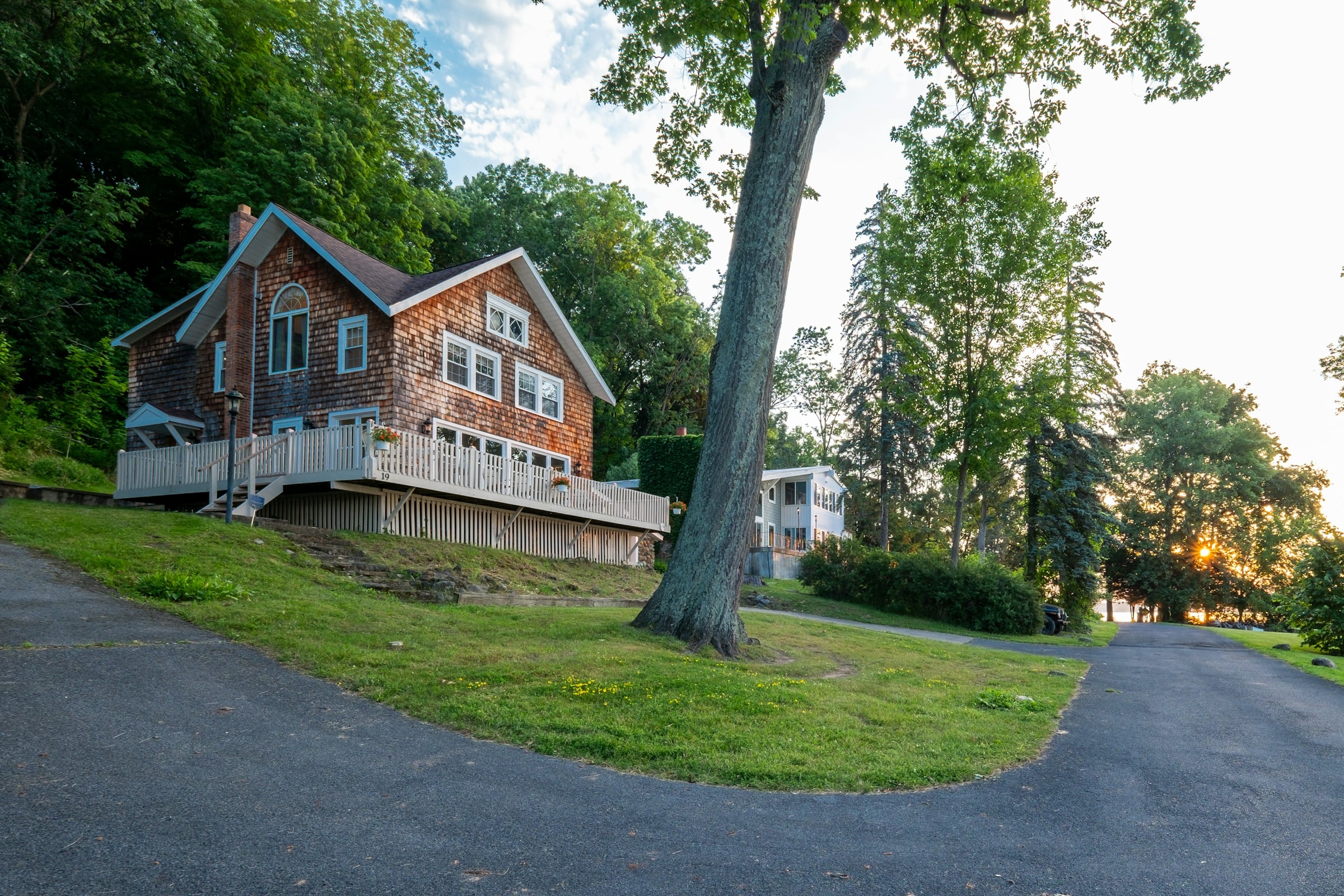
Stratford Hills is a neighborhood in the City of Richmond, on the Southside, west of Forest Hill and spread across the wooded bluffs above the James River. The name is not decorative. This is genuinely hilly ground, and the topography explains almost everything about the place: winding streets that follow contours rather than a grid, heavily wooded lots with a dense hardwood canopy, and mid-century houses that step down their sites rather than sitting flat on them. The housing is predominantly 1950s through 1970s, a mix of split-levels, period contemporaries and brick ranches, which means buyers are shopping for character and setting and inheriting mid-century systems and floor plans at the same time. The defining amenity is river access. Stratford Hills sits alongside some of the best units in the James River Park System, including the Pony Pasture and Huguenot Flatwater areas, with the Buttermilk and North Bank trails reachable downstream, which makes this one of the strongest neighborhoods in Richmond for paddling, swimming, running and riverside mountain biking. Commuting works through the Huguenot Bridge into the West End, or via Chippenham Parkway and the Powhite Parkway, which is tolled. Richmond Public Schools serves the area and current attendance zones must be verified with the division. Shopping is concentrated at the Stratford Hills Shopping Center and along Forest Hill Avenue. The honest tradeoff is that hillside living carries real maintenance risk – drainage and grading, retaining walls, crawl space and basement moisture, slope movement, large trees close to structures and a driveway that can be a problem in ice – alongside dated layouts and limited walkability. Buyers searching Stratford Hills Richmond homes for sale, Southside Richmond river neighborhoods, Pony Pasture homes and mid-century homes Richmond VA will find the practical detail below. The Mission Realty Team serves Richmond, Henrico, Chesterfield, Goochland, Hanover and Powhatan, and we do not publish price figures that go stale.
Table of Contents
- What Stratford Hills Actually Is
- The Topography: Bluffs, Ravines and Canopy
- Housing Stock: 1950s Through 1970s
- The Real Cost of a Steep Wooded Lot
- What to Inspect in a Mid-Century House Here
- The James River Park System at Your Door
- Schools: Richmond Public Schools
- Getting Around: Huguenot Bridge, Chippenham and the Powhite
- Shopping and Daily Amenities
- What Actually Drives Price in Stratford Hills
- Who Stratford Hills Suits, and the Honest Tradeoffs
- Frequently Asked Questions
Most Richmond neighborhoods can be summarized by their building era. Stratford Hills has to be summarized by its ground. Drive in off Forest Hill Avenue and the street starts to bend and fall away almost immediately, the pavement dropping toward the river through a tunnel of oak and tulip poplar, driveways climbing off to one side and disappearing down to the other. Houses sit above you and below you rather than beside you. It reads far more like a wooded river town than like a city neighborhood four and a half miles from downtown.
That setting is the reason people buy here, and it is also the reason a Stratford Hills inspection report tends to be longer than average. Steep, wooded, mid-century lots are wonderful to live on and unforgiving of neglect. Water has to go somewhere, retaining walls have a service life, and a hundred-year-old oak leaning over a 1961 roof is an asset and a liability in the same breath.
The Mission Realty Team works this corridor regularly, and the questions we ask on a Stratford Hills showing are not the questions we would ask in a flat subdivision. This guide covers what the neighborhood is, what the housing involves, what the hillside costs to maintain, and where the honest tradeoffs land.
What Is Stratford Hills, and Where Exactly Is It?
Stratford Hills is a residential neighborhood inside the City of Richmond, on the south side of the James River, west of the better-known Forest Hill and Westover Hills neighborhoods. Its northern edge runs down toward the river and Riverside Drive, and its western side approaches the Chesterfield County line, beyond which you are into Bon Air. Forest Hill Avenue is the spine that carries you in and out.
It was developed largely in the postwar decades, when Richmond pushed west along the south bank and builders started working ground that earlier generations had left alone because it was too steep to plat conveniently. That timing matters. By the 1950s and 1960s, builders had the equipment and the architectural vocabulary to build into a slope rather than flatten it, which is why the neighborhood is full of houses that engage their hillsides instead of ignoring them.
The result is a neighborhood that feels considerably more remote than it is. You are inside city limits, on city water and sewer, and also on a lot where you may not be able to see your neighbor’s house through the trees in July.
The Topography: Bluffs, Ravines and Canopy
The James River cuts a real valley through Richmond, and on the south bank west of downtown it has carved bluffs and a series of feeder ravines running down to it. Stratford Hills sits on that terrain. Streets curve because they are following contours. Cul-de-sacs end because the ground ran out. Some lots fall away thirty or forty feet from the street to the rear property line, and a few back directly onto wooded ravines that will never be built on because nobody could build there.
The tree canopy is the second half of the picture. This is mature hardwood forest that was thinned rather than cleared, and it includes very large specimen oaks, tulip poplars, beeches and hickories, many of them older than the houses. In summer the streets are shaded almost continuously, which measurably reduces cooling load and makes the neighborhood noticeably cooler than open subdivisions a few miles west.
For a buyer, the practical translation is that no two lots here behave the same way. One house sits on a gentle shoulder with a level backyard and good sun. Two doors down, another has a driveway you would not want to attempt in freezing rain and a back door that opens onto a retaining wall. You cannot evaluate Stratford Hills from a listing photo set. You have to walk the ground, ideally in the rain.
Housing Stock: 1950s Through 1970s Split-Levels, Contemporaries and Ranches
Stratford Hills is a mid-century neighborhood, and the three dominant types are the split-level, the period contemporary and the brick ranch. Split-levels are especially common because the form suits a slope perfectly: you enter at grade on one side, go up half a flight to the bedrooms and down half a flight to a family room and garage that are partly below grade on the uphill side. On a hillside this is efficient design rather than a compromise.
The contemporaries are the neighborhood’s most distinctive housing. Richmond had a genuine appetite for modern residential design in this period, and you will find houses here with low-pitched or shed roofs, exposed post-and-beam framing, deep overhangs, clerestory windows and large glazed walls facing the woods. Some are architect-designed. Well-kept examples are sought after by a specific kind of buyer and can be slow to appear on the market.
The brick ranches are the workhorse of the neighborhood. Solid masonry, hardwood floors under the carpet in many cases, generous room sizes by the standards of the era, and floor plans that are more compartmentalized than modern buyers expect. Kitchens are frequently closed off from living space, primary bathrooms are small or absent, and closets are modest. Some have been opened up and renovated. Many have not.
The Real Cost of a Steep Wooded Lot
Hillside lots concentrate a specific set of expenses, and they are the ones that surprise people who have only owned on flat ground. Drainage and grading come first. On a slope, every roof, driveway and patio surface is feeding water somewhere, and the only question is whether it has been managed deliberately. Properly, that means gutters and downspouts carried well away from the foundation, swales or French drains intercepting uphill sheet flow, and a positive grade at the perimeter. Where it has not been managed, you get a chronically wet crawl space, efflorescence and staining on basement walls, and eventually foundation problems. Correcting drainage on a steep lot is real excavation work, not an afternoon with a downspout extension.
Retaining walls are the second cost, and they are the one buyers most often overlook. Many properties here rely on walls to hold a driveway, a terrace or a yard in place, and those walls have finite lives. Older dry-stacked stone, timber cribbing and unreinforced block walls all eventually lean, bulge or fail. Replacing a substantial engineered retaining wall is a five-figure project, and if the wall is holding up your driveway it is not optional. Ask who owns each wall, whether it sits on a property line, and whether anything has moved.
Trees are the third. The canopy is a genuine amenity and it is also a standing liability. Large mature hardwoods within striking distance of a roof need periodic assessment for deadwood, cavities, root plate condition and lean. Removal of a very large tree in a tight hillside position, where a crane cannot easily reach and everything must come out in pieces down a steep driveway, is expensive. Budget for arborist visits as an ordinary cost of ownership here, and get a written opinion on any tree that concerns you before closing.
What to Inspect in a Mid-Century House Here
Beyond the site itself, houses of this vintage have a predictable list. Electrical service is near the top: original mid-century panels were sized for a very different set of appliances, and some homes still have undersized service, obsolete panel brands that insurers question, or a scattering of ungrounded two-prong outlets. Aluminum branch wiring appears in some houses built in the mid to late 1960s and can affect insurability, so raise it with your insurance agent early rather than at closing.
Plumbing and HVAC follow. Original galvanized supply lines and cast iron drain and waste lines are at or past the end of their useful lives, and cast iron stacks in particular fail from the inside where you cannot see it. Heating systems vary widely across the neighborhood, and homes here may have anything from a converted oil system to baseboard electric to a modern heat pump. If there is or was an oil tank, buried or otherwise, get clear documentation on it.
Then the envelope. Look hard at roof age and at the flashing details on the low-slope and shed roofs that the contemporaries often have, because those assemblies are less forgiving than a steep gable. Original single-pane windows are common and large glazed walls are expensive to replace. Check for moisture in crawl spaces, the condition of any vapor barrier, and whether encapsulation has been done properly or just partially. Homes built before 1978 may contain lead-based paint, which triggers a required federal disclosure.
The James River Park System at Your Door
This is the neighborhood’s headline asset and it is not exaggerated. The James River Park System is a city-run network of largely undeveloped riverfront parkland running through Richmond, free to enter, and Stratford Hills sits directly alongside some of its best sections. Pony Pasture Rapids, reached off Riverside Drive, is the classic Richmond river spot: flat rocks, shallow pools, class I and II rapids, sunbathers, dog walkers and tubers all summer. Huguenot Flatwater, upstream near the Huguenot Bridge, is the calm-water put-in used by paddlers, rowers and anglers.
Downstream, the same park system carries the Buttermilk Trail along the south bank and the North Bank Trail on the opposite side, which together form the backbone of Richmond’s riverside singletrack. These are the trails that give the city its outdoor reputation, and from Stratford Hills you can reach them in a few minutes by car or connect on a longer run or ride. Riverside Drive itself is a well-loved cycling and running route, narrow and winding under the trees along the bluff.
Practically, if paddling, trail running, swimming, fishing or mountain biking is part of how you actually spend your time, very few addresses in the Richmond region compete with this one. The river is not a view amenity here. It is a place you use on a Tuesday evening.
Schools: Richmond Public Schools
Stratford Hills is inside the City of Richmond, so it is served by Richmond Public Schools rather than by Henrico or Chesterfield County. Huguenot High School is the division’s comprehensive high school serving this part of the city’s south side, and elementary and middle assignments in this area are made by the division’s zoning. Richmond Public Schools also operates citywide specialty and application-based programs that are open to students across the division regardless of neighborhood, which is a meaningful part of the picture for city families and is easy to miss if you are only looking at zoned assignments.
We will not publish attendance boundaries or ratings here, and you should be skeptical of any real estate site that does. Richmond Public Schools has redrawn zones and changed feeder patterns before, and the only reliable answer is a current one for your exact address. Contact Richmond Public Schools directly, or use the division’s official lookup tool, and confirm the assignment for the specific parcel before you make an offer if schools are part of your decision. Private and independent school options across the metro are also within a reasonable drive from this part of Southside.
Getting Around: Huguenot Bridge, Chippenham and the Powhite
Stratford Hills has better road access than its wooded seclusion suggests. The Huguenot Bridge is the key piece: it crosses the James just upstream of the neighborhood and puts you onto Huguenot Road heading north into the West End, which makes destinations around Stony Point, Regency, Tuckahoe and the Route 6 and Patterson Avenue corridors much closer than they look on a map. For anyone working in western Henrico, that single crossing is often the reason they end up here.
Chippenham Parkway, Route 150, runs just east of the neighborhood and connects south and east across Southside toward Midlothian Turnpike, Route 60, Hull Street Road and eventually I-95. The Powhite Parkway, Route 76, provides the fast route into downtown Richmond, and it is a toll road, so factor the daily cost of tolls into your commute budget rather than treating the trip as free. Further downstream, the Boulevard Bridge, known locally as the Nickel Bridge, is a small-toll crossing that drops you into the Museum District and is a useful alternate route.
Within the neighborhood, expect to drive. Streets are narrow, winding, often without sidewalks, and steep in places, which is charming and also means walking to anything other than a park is not really the point. Forest Hill Avenue carries the traffic and can back up at peak times. Cycling on the neighborhood streets and on Riverside Drive is popular but the roads are narrow and sight lines are short, so it suits confident riders more than families with young children.
Shopping and Daily Amenities
Day-to-day errands run through the Stratford Hills Shopping Center and the wider Forest Hill Avenue corridor, which together cover groceries, pharmacy, hardware, restaurants, personal services and the ordinary business of a week without requiring a long trip. It is a practical, unglamorous set of amenities, and for most residents that is enough.
For a larger selection, Stony Point Fashion Park is a short drive, the Route 60 and Midlothian Turnpike corridor including Chesterfield Towne Center is west and south, and Carytown and downtown Richmond are a manageable trip across the river. Forest Hill Park and its Saturday farmers market are close by and are a genuine community anchor for this part of Southside.
What Actually Drives Price in Stratford Hills?
Mission Realty does not publish median sale prices, days on market or inventory figures on this site, because those numbers go stale within weeks and a stale figure is worse than no figure. What we can do, and what is genuinely more useful, is tell you which structural factors separate a higher price from a lower one on this particular terrain.
The biggest single driver is the lot and how usable it is. A property with a level or gently sloping usable yard, a manageable driveway, sound retaining walls and good sun commands a premium over an otherwise identical house on a steep lot with a difficult approach. Proximity and relationship to the river matter next: a genuine river view, a lot backing to park land or protected ravine, and short walking distance to a park access point all carry weight. Privacy from the canopy and from lot depth is valued here in a way it is not in a subdivision.
After the site, it is the condition of the expensive systems and the extent of updating. A mid-century house with new roof, updated electrical service, replaced plumbing, a modern heat pump, addressed drainage and a renovated kitchen and baths sits in a completely different bracket from an original one on the same street. Architectural distinction is a real factor too, since a well-preserved period contemporary attracts a specific and motivated buyer pool. Street and section matter, square footage and bedroom and bathroom count matter, and whether the property is in the city or across the Chesterfield line affects both taxes and schools.
Who Stratford Hills Suits, and the Honest Tradeoffs
Stratford Hills suits people who genuinely use the outdoors. Paddlers, trail runners, cyclists, anglers, mountain bikers and dog owners get more real value per dollar here than almost anywhere else in the city. It suits buyers who want privacy, mature trees and a house that feels like it is in the woods while staying inside city limits with city services. It suits people who appreciate mid-century architecture and are willing to work with it rather than fight it. And it suits West End commuters who like the idea of crossing one bridge instead of sitting on a parkway.
It suits some people much less well. If you want a level fenced backyard for young children or a dog, many lots here will frustrate you. If you want to walk to a coffee shop, you are in the wrong neighborhood. If you want open-plan modern living without renovating, the stock mostly does not offer it. If you are risk-averse about maintenance, the combination of slope, walls, trees and mid-century systems will feel like a lot of exposure. And if your budget has no contingency, a hillside property is the wrong place to have none.
The fair summary is that Stratford Hills gives you canopy, privacy and river access that are close to impossible to replicate at this distance from downtown Richmond, and asks you to accept hillside maintenance risk, dated floor plans and car dependence in return. That is a good trade for the right buyer and a poor one for the wrong buyer, and the Mission Realty Team will tell you honestly which side of that line we think you fall on.
| Factor | What it is in Stratford Hills | What to check |
|---|---|---|
| Location | City of Richmond, Southside, west of Forest Hill, on the bluffs above the James | Confirm city versus Chesterfield County line for taxes and schools |
| Terrain | Genuinely hilly, bluffs and feeder ravines, winding contour streets | Walk the lot, ideally in the rain; note driveway grade |
| Tree canopy | Mature hardwood, large specimen oaks, poplars and beeches | Arborist opinion on any large tree near the house; budget for removal |
| Housing eras | Predominantly 1950s through 1970s | Age-specific inspection list, not a generic walkthrough |
| Housing styles | Split-levels, period contemporaries, brick ranches | Structural walls in split-levels; low-slope roof details on contemporaries |
| Site risks | Drainage and grading, retaining walls, crawl space and basement moisture, slope movement | Structural engineer where slope, walls or cracks are involved |
| Systems | Electrical service size, aluminum branch wiring in some 1960s homes, galvanized and cast iron plumbing, varied heating | Insurability questions early; documentation on any oil tank |
| Utilities | City water and sewer, city services | Confirm on the specific parcel rather than assuming |
| Parks | James River Park System: Pony Pasture, Huguenot Flatwater; Buttermilk and North Bank trails downstream | Nearest access point and whether you can reach it on foot or bike |
| Schools | Richmond Public Schools; Huguenot High School serves this part of the south side | Verify current attendance boundaries by exact address with the division |
| Main roads | Forest Hill Avenue, Huguenot Bridge, Chippenham Parkway (150), Powhite Parkway (76) | Powhite is tolled; Boulevard Bridge carries a small toll too |
| Shopping | Stratford Hills Shopping Center, Forest Hill Avenue corridor | Stony Point and Route 60 for larger selection |
| Walkability | Recreational rather than errand walkability; few sidewalks | Be clear which kind of walkability you actually want |
| Main tradeoff | Privacy, canopy and river access versus hillside maintenance risk, dated layouts and car dependence | Price the deferred site and system work before you offer |
Frequently Asked Questions About Living in Stratford Hills, Richmond VA
Where is Stratford Hills in Richmond, VA?
Stratford Hills is a neighborhood inside the City of Richmond on the Southside, west of Forest Hill and Westover Hills, spread across the wooded bluffs above the James River. Forest Hill Avenue is the main road in and out, Riverside Drive runs along its northern edge near the river, and its western side approaches the Chesterfield County line near Bon Air. It sits roughly four to five miles from downtown Richmond, though the wooded, hilly setting makes it feel considerably more remote than that. The Huguenot Bridge just upstream gives it direct access across the river into western Henrico.
Is Stratford Hills a good neighborhood in Richmond?
Yes, for buyers who want privacy, mature tree canopy and genuine river access and are prepared for hillside maintenance. It is one of the strongest neighborhoods in the city for outdoor recreation because the James River Park System is effectively at the door, and the mid-century housing on large wooded lots offers a kind of seclusion that is rare inside city limits. The tradeoffs are real: steep lots, dated floor plans, aging mechanical systems and almost no errand walkability. Whether it is a good fit depends far more on how you spend your weekends than on anything else.
What kind of houses are in Stratford Hills?
The housing is predominantly mid-century, built from roughly the 1950s through the 1970s, with split-levels, period contemporaries and brick ranches dominating. Split-levels are especially common because the form works well on a slope, letting the house step down its lot instead of requiring a flat pad. The contemporaries are the most distinctive stock, with low-pitched or shed roofs, exposed framing, deep overhangs and large glazed walls facing the woods, and well-preserved examples attract a specific buyer pool. Brick ranches make up much of the rest, solid but with compartmentalized floor plans and modest closets by modern standards.
How much do homes cost in Stratford Hills, Richmond VA?
Mission Realty does not publish price figures for Stratford Hills because they go stale within weeks and a stale number is worse than none. What we can tell you is what drives price here structurally: how usable the lot actually is, driveway grade, the condition of retaining walls, whether there is a river view or a backing onto park or protected ravine, the extent of updating to roof, electrical, plumbing and HVAC, architectural distinction in the contemporaries, and the specific street and section. Two houses of identical size on the same street can sit in different brackets purely because one has a level yard and a manageable approach. Call the Mission Realty Team at (804) 601-4960 and we will pull current comparable sales for the streets and house types you are considering.
What schools serve Stratford Hills in Richmond?
Stratford Hills is served by Richmond Public Schools, the City of Richmond’s division, not by Henrico or Chesterfield County schools. Huguenot High School is the division’s comprehensive high school serving this part of the city’s south side, and elementary and middle school assignments are set by division zoning. Richmond Public Schools also runs citywide specialty and application-based programs open to students across the division, which is an important part of the picture for city families. Attendance boundaries and feeder patterns do change, so verify the current assignment for your exact street address directly with Richmond Public Schools before you make an offer.
Is Stratford Hills in the City of Richmond or in Chesterfield County?
Stratford Hills is inside the City of Richmond, though its western edge runs close enough to the Chesterfield County line that buyers regularly get this wrong. The distinction matters in two concrete ways: your real estate tax rate is set by the city rather than the county, and your school division is Richmond Public Schools rather than Chesterfield County Public Schools. Being in the city also means city water and sewer, city trash collection and city police and fire service. Always confirm the jurisdiction on the actual parcel record rather than relying on a listing description or a mapping app.
What are the problems with buying a house on a steep wooded lot?
The main risks are water management, retaining walls and trees, and all three can be expensive to correct. On a slope, every roof and paved surface sends water somewhere, so poorly managed drainage shows up as a wet crawl space, staining on basement walls and eventually foundation movement, and fixing it properly means real excavation rather than a downspout extension. Retaining walls holding a driveway, terrace or yard have finite lives, and replacing a substantial engineered wall is a five-figure project that is not optional if it is holding up your access. Large mature trees near the house need periodic professional assessment, and removing a big one from a tight hillside position where a crane cannot reach is costly.
How close is Stratford Hills to Pony Pasture?
Pony Pasture Rapids is immediately adjacent to the neighborhood, reached off Riverside Drive along Stratford Hills’ northern edge. It is one of the best-known units of the James River Park System, with flat sunning rocks, shallow pools, class I and II rapids and heavy use by swimmers, tubers, dog walkers and anglers through the summer. From many Stratford Hills streets it is a short walk or a two to three minute drive. Parking at the access point fills early on warm weekends, which is one of the quiet advantages of living close enough to arrive on foot or by bike.
Can you walk to the James River from Stratford Hills?
From much of the neighborhood, yes, though the walk involves hills and mostly lacks sidewalks. The northern portions closest to Riverside Drive are within comfortable walking distance of James River Park System access, including the Pony Pasture area and the Huguenot Flatwater put-in used by paddlers and rowers. From streets further up the bluff it is more of a hike or a short drive. If direct walking access to the river is a priority, tell your agent that explicitly, because it varies substantially street by street and is one of the factors that genuinely affects value here.
How long is the commute from Stratford Hills to downtown Richmond?
Most residents reach downtown Richmond in roughly fifteen to twenty minutes outside peak hours, typically via the Powhite Parkway or across the Boulevard Bridge. The Powhite, Route 76, is the fast route and it is a toll road, so build the daily toll cost into your commute budget rather than treating the trip as free. The Boulevard Bridge, known locally as the Nickel Bridge, carries a small toll and drops you into the Museum District, which is often the better route for destinations in the Fan or near VCU. Peak-hour times are longer and Forest Hill Avenue can back up, so drive your actual route at your actual hour before you commit.
Is the Powhite Parkway a toll road?
Yes, the Powhite Parkway is tolled, and that is a routine part of the commuting math for Southside Richmond residents. It is the quickest connection from this part of the city into downtown, and many Stratford Hills households use it daily, which turns tolls into a real monthly line item rather than an occasional cost. The Boulevard Bridge also carries a small toll. Untolled alternatives exist, including Chippenham Parkway and the Huguenot Bridge depending on your destination, but they are not always faster, so it is worth timing both and comparing total cost.
Is Stratford Hills walkable?
Not in the errand sense, and buyers should be clear about that before falling for the setting. There is no village center or commercial strip you can stroll to, streets are narrow and winding with few sidewalks, and the terrain is steep enough that walking with groceries is not realistic from most of the neighborhood. What Stratford Hills offers instead is recreational walkability, meaning quiet shaded streets, Riverside Drive and direct access to river trails. If you want to walk to a coffee shop, neighborhoods like Bellevue, Forest Hill or the Fan will serve you far better.
What should I inspect in a 1960s house in Richmond?
Focus on the systems that were sized and built for a different era rather than treating it as a generic walkthrough. Electrical service capacity is first, along with obsolete panel brands that some insurers question and aluminum branch wiring, which appears in a number of homes built in the mid to late 1960s and can affect insurability. Then plumbing, where original galvanized supply lines and cast iron drain and waste lines are at or past the end of their lives and often fail from the inside. Finally the envelope and mechanicals: roof and flashing age, original single-pane windows, crawl space moisture and vapor barrier condition, heating system type and any past or present oil tank, plus the lead-based paint disclosure that applies to homes built before 1978.
Does Stratford Hills have an HOA?
Most of Stratford Hills consists of conventionally platted mid-century subdivisions without the mandatory homeowners association and monthly dues structure you would find in a modern planned community. That said, individual sections can carry recorded covenants and restrictions from their original plats, and some small pockets in the wider area may have their own arrangements, so this is not something to assume either way. Ask for the recorded documents affecting the specific parcel during your due diligence, and read anything that governs exterior changes, additions or tree removal. Your agent should obtain and review these with you before your contingency period ends.
Is Stratford Hills good for families with children?
It can be excellent for outdoorsy families and frustrating for others, and the deciding factor is usually the lot. Families whose children swim, paddle, bike and run will find the river access and trail network hard to beat anywhere in Richmond, and the quiet low-traffic streets appeal to many parents. The complications are that many lots lack a level fenced yard suitable for young children or a dog, sidewalks are largely absent, and there is nowhere to walk to independently. School assignment through Richmond Public Schools should be verified for your exact address with the division, and the Mission Realty Team can help you sort which streets have the level usable yards that families most often want.
Thinking About Buying in Stratford Hills?
The Mission Realty Team works Stratford Hills and the whole Southside river corridor, and on a hillside lot we ask a different set of questions than we would on flat ground – where the water actually goes, who owns and maintains the retaining walls, what the driveway grade means in an ice storm, which mature trees are close enough to the house to matter, and whether a mid-century home has had its electrical service, HVAC, roof and plumbing brought up to date. We do not publish price figures that go stale within weeks, so ask us for current comparables on the specific street you are considering. Call us at (804) 601-4960 or stop by 3701 Cox Rd, Richmond VA 23233 for a current list of Stratford Hills and Southside Richmond homes. We serve Richmond, Henrico, Chesterfield, Goochland, Hanover and Powhatan.