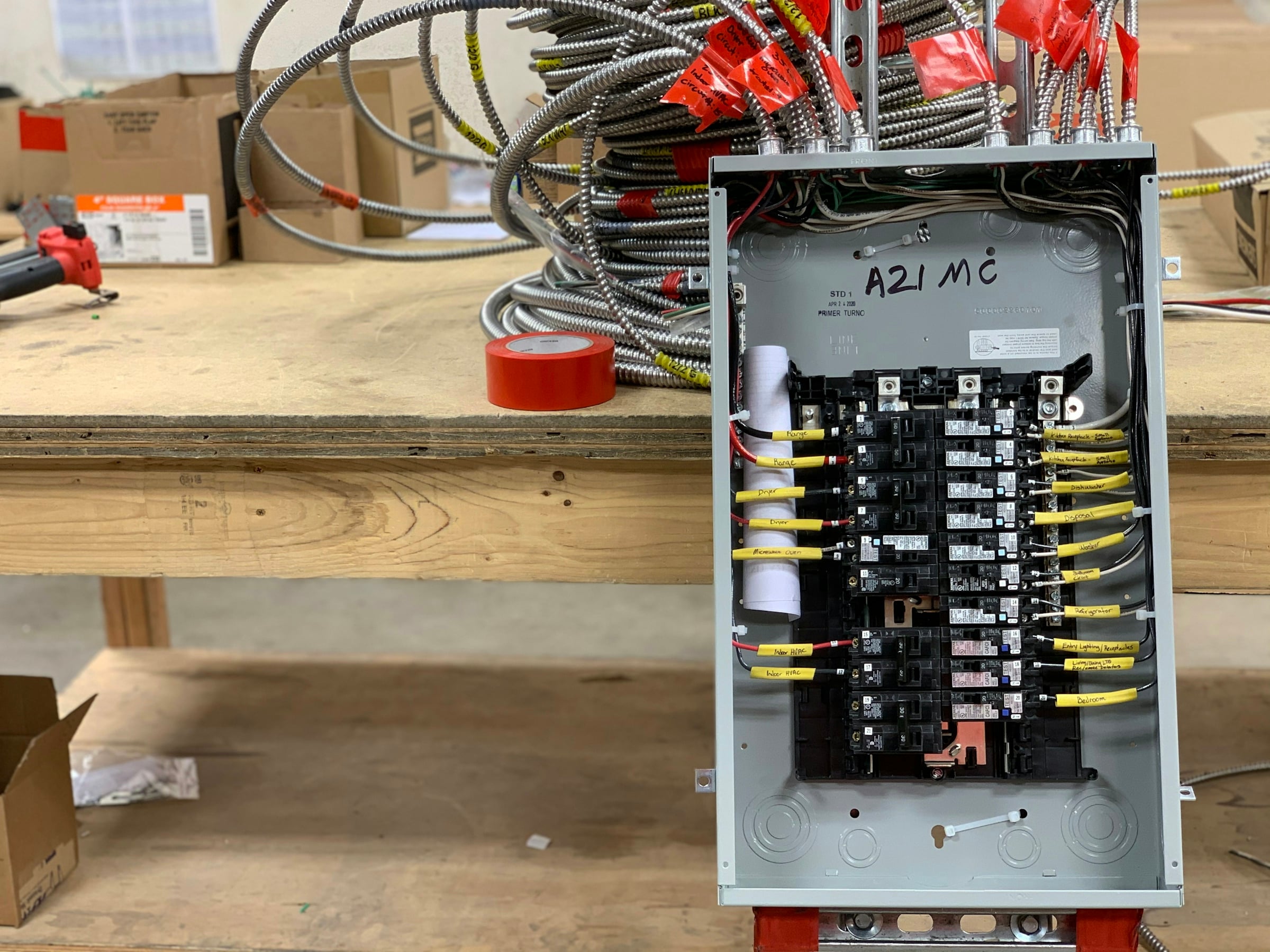
When a Richmond-area inspection report calls out the electrical panel, the finding usually has one of five labels: Federal Pacific, Zinsco, fuse box, split-bus, or 60-amp service. None of them automatically makes a house unsafe or unsellable. Each one usually leads to an electrician’s evaluation, an insurance question and a conversation about who pays. Here is what each label means and how buyers and sellers usually resolve it.
The five panel findings inspectors write up most
Federal Pacific Electric (FPE) Stab-Lok breakers
FPE is the name buyers hear most, and it is also the one most often overstated. Here is the documented record. In June 1980, Reliance Electric, then the parent of FPE, told the U.S. Consumer Product Safety Commission that many FPE circuit breakers did not fully comply with Underwriters Laboratories requirements, and CPSC testing confirmed that the breakers failed certain UL calibration tests. In March 1983 the agency closed its investigation of FPE Stab-Lok breakers because the data available did not establish a serious risk of injury. That was not a recall, and it was not a clean bill of health either: the CPSC notice says the Commission closed the matter without deciding whether the breakers were safe, citing the multimillion-dollar cost of gathering more data.
That unresolved status is why many inspectors recommend an electrician’s evaluation when they see an FPE panel, and why some insurers ask about the brand. The investigation focused mainly on two-pole residential breakers made before Reliance acquired FPE in 1979.
Zinsco and Sylvania-Zinsco panels
Zinsco panels, also sold under the Sylvania-Zinsco name, are the other brand that turns up regularly. We did not find a CPSC recall or closed-investigation notice to cite for them, so we will not repeat hazard claims we cannot source. In practice, inspectors note them as an older design and refer them to an electrician, who looks for breakers that are discolored, loose on the bus bar, or running hot.
Fuse boxes
A fuse panel is not unsafe simply because it uses fuses; fuses protect circuits just as breakers do. The CPSC’s own safety advice applies to both: make sure each circuit is protected by a fuse or breaker of the proper size, and find out why a fuse blows instead of simply replacing it. Inspectors write up fuse boxes because of what they tend to travel with: limited capacity, and sometimes an oversized fuse installed where the wire is rated for less.
Split-bus panels
A split-bus panel has no single main breaker. To shut off power to the whole house, you switch off several breakers in the upper section, and one of those feeds the lower section. Inspectors flag them because shutting everything off takes several steps and there is little room to add circuits.
60-amp service
This one is about capacity, not a defect. A 60-amp service was normal for homes wired before central air, heat pumps, electric ranges and EV chargers were common. If you plan to add any of those, expect an electrician to recommend a load calculation and possibly a service upgrade, which also involves the electric utility.
The wiring that often comes with an old panel
Knob-and-tube wiring is the early twentieth century system of individual conductors run on ceramic knobs and through ceramic tubes. It has no ground wire, and its insulation can become brittle with age or when buried in attic insulation. It mainly appears in older houses, the same stock covered in our guide to buying a historic home in Richmond. Some insurers will not write a policy on a house with active knob-and-tube circuits until an electrician documents its condition or it is replaced.
Aluminum branch wiring is a different era. According to the CPSC’s publication Repairing Aluminum Wiring, homes built before 1965 are unlikely to have aluminum branch circuits, while cables installed from 1965 to the mid-1970s may. A CPSC-sponsored survey found that pre-1972 homes wired with aluminum were 55 times more likely than copper-wired homes to have at least one outlet connection reach “Fire Hazard Conditions.” The CPSC recognizes three permanent fixes: rewiring with copper, pigtailing with COPALUM crimp connectors installed by trained electricians, or, where COPALUM is unavailable, AlumiConn connectors. That guidance does not cover the larger aluminum conductors used for service entrance cables, dryers and ranges.
Where these systems tend to show up around Richmond
Year built is the best predictor, so we think about this by housing-stock era rather than by address. Neighborhoods where much of the housing dates from the 1950s through the 1980s are where FPE, Zinsco, split-bus panels and aluminum branch wiring are most likely to appear on a report. That includes large parts of Bon Air in Chesterfield County, Lakeside, Highland Springs and Tuckahoe in Henrico County, and Westover Hills in the City. That is a statement about when the houses were built, not about any particular home: plenty of houses in each of those areas were rewired or upgraded years ago.
Fuse boxes and knob-and-tube wiring are more of a pre-war story, so they show up in older sections of the City of Richmond. When you search Richmond-area listings, check the year built and any “updated electrical” note in the listing before you tour.
What insurers and lenders tend to ask
Insurance is where an old panel most often becomes a deadline problem. Some insurers ask for the panel brand, service amperage and wiring type on the application, and some will decline to write a policy, or will write it only on condition that the panel be replaced, when the answer is FPE, Zinsco, fuses or knob-and-tube. Practices vary by company. The practical move is to call your agent as soon as the inspection report arrives, give them the exact brand and amperage, and ask in writing what they need. Our guide to how homeowners insurance is priced in Richmond explains the other factors underwriters weigh, and the same timing logic applies to an older roof, covered in roof age, insurance and financing.
What to do if the inspection finds one
1. Get a licensed electrician in during the inspection period. A general home inspector identifies the panel; a licensed electrician evaluates it. Ask for a written opinion that says whether they recommend repair, breaker replacement, a full panel replacement or a service upgrade. Our home inspection guide for Richmond buyers covers how that timeline usually runs, and what a home inspector won’t cover explains which specialists to line up in the same window.
2. Confirm the permit path. Replacing a panel or upgrading service requires an electrical permit from the locality, pulled by the contractor. In Henrico that is an electrical permit through Build Henrico; Chesterfield covers electrical permits in its residential permits and inspections process; in the City it runs through Richmond Permits and Inspections. If a seller does the work, ask for the permit number and the passed final inspection before closing.
3. Choose how to handle the cost. There are three usual routes: a repair request, where the seller hires the electrician before closing; a closing credit, so you control the work afterward; or a lower price. Our guide to seller concessions in Richmond explains the limits lenders put on credits. A credit only helps if your insurer will bind coverage before the work is done, so settle that question first.
What drives the cost. We did not find a primary source for typical replacement prices that we would stand behind, so we are not quoting one. The price depends on whether amperage increases, whether the meter base and service entrance also change, utility coordination, how many circuits move, what current code requires once permitted, and wall repair around the panel. Get at least two written quotes from licensed electricians; our local Richmond vendors list is a starting point.
Have your agent flag panel issues before the inspection deadline
When you buy with Mission Realty, we read the listing, the disclosures and the inspection report for panel and wiring red flags early, so the electrician and the insurance call happen while you still have time to negotiate.
If you are the one selling
Sellers who know about an FPE or Zinsco panel, a fuse box or knob-and-tube circuits can get the same electrician evaluation before listing and decide on their own schedule whether to replace or price it in. Our seller services include weighing those two options.
Buying a 1950s to 1980s house? Get the panel question answered on time
Buy with us and your agent will flag panel and wiring issues from the listing forward, before the inspection deadline passes.
Questions buyers ask about old panels
Can an electrician just replace the breakers in an FPE or Zinsco panel instead of the whole panel?
That is a call for a licensed electrician who has opened the panel. Replacement breakers marketed as compatible exist for some older panels, but whether they fit that specific panel and whether they satisfy your insurer are separate questions. Get the electrician’s recommendation in writing, then ask your insurance agent whether a breaker-only repair meets their requirement before you rely on it.
How can I tell what brand of panel a house has?
Look for the manufacturer’s label on the inside of the panel door or the dead front cover, and the brand name or the words Stab-Lok printed on the breakers themselves. A listing photo of the open panel door often shows it. Do not remove the panel cover yourself; that part of the job belongs to the inspector or electrician.
Does a fuse box mean the house also has knob-and-tube wiring?
No. They are separate systems. Many fuse panels feed ordinary sheathed cable, and some houses have knob-and-tube circuits connected to a newer breaker panel. An electrician can check visible wiring in the basement, crawl space and attic to tell you which circuits, if any, are still knob-and-tube.
Will replacing an old panel raise a home’s value?
Do not expect a dollar-for-dollar return. What a documented, permitted replacement does is remove an objection that can cost a seller time, a credit or a buyer whose insurer will not bind coverage. For buyers, it is one less item to negotiate.
How long does a panel replacement take from start to finish?
Ask the electrician for a timeline that includes permit issuance, any utility disconnect and reconnect, the work itself and the locality’s final inspection. The work day is usually the short part; scheduling the permit, the utility and the inspection is what stretches the calendar, which matters if the repair has to be finished before closing.
Is 100-amp service enough for a Richmond house?
It depends on the loads. A 100-amp service can be enough for a modest house with gas heat and a gas range, and tight for an all-electric house with a heat pump, electric range, dryer and an EV charger. A licensed electrician can run a load calculation based on what you actually plan to install.
If the listing already discloses an old panel, should I get the electrician before I make an offer?
You can, but most buyers bring the electrician in during the inspection period, when access is arranged and the findings can still shape the repair request. If the disclosure worries you, get an insurance quote before you write the offer so you know whether the panel will be a condition of coverage.