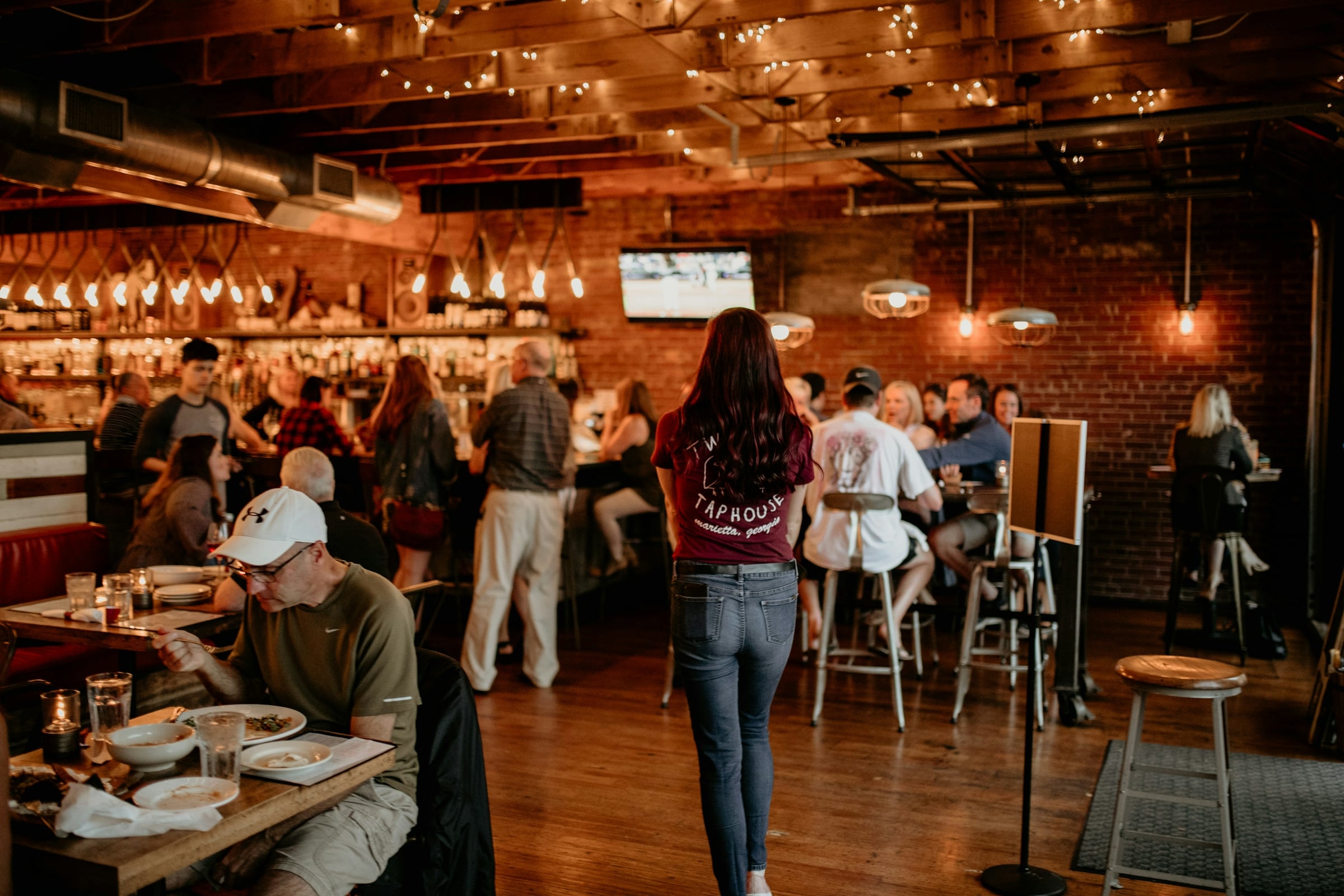
We will be straight about what this post is. Being able to walk to a taproom does not decide where anybody should buy a house, and we have the numbers to know that lifestyle roundups pull readers who are not house hunting. Schools, commute, lot, price. Those decide it.
What this is good for is the tiebreaker. You have two neighborhoods you like equally and one of them means you are not driving on a Friday evening. Here are seven, grouped by the kind of place they are, with the actual trade-off for each.
The converted industrial districts
Scott’s Addition
The obvious answer, and it is obvious for a structural reason. Scott’s Addition was a 1920s warehouse and light-manufacturing district, which happens to be an exact description of what a production brewery needs: high ceilings, floor drains, heavy power, loading access and cheap square footage. Add a zoning framework that lets manufacturing operate a tasting room and the cluster becomes almost inevitable. It has the highest concentration of taprooms, cideries and related producers in the region inside a normal walking radius.
Wrong for anyone who needs a yard, a garage or reliable street parking on a weekend. The residential stock here is overwhelmingly apartments and condominiums, and if you are buying one of those, read our post on what the condominium resale certificate has to tell you before you commit.
Manchester
The same story, one river crossing south and about fifteen years behind. Manchester has the warehouse stock, the conversions and an increasing number of places to walk to, with more space and lower density than Scott’s Addition. It is the pick if you want the industrial-district character without the Saturday night crowd on your street. Wrong for anyone who wants an established, finished neighborhood; large parts of it are still actively changing, and the block you buy on may not look like this in three years.
The established city neighborhoods
The Fan and the Museum District
Not a brewery district as such, but the walking is the best in the city and the taprooms are inside the radius rather than at the center of it. The Fan and the Museum District give you rowhouses, mature street trees and a genuine grid, which is a very different daily life from a converted warehouse. Wrong for anyone who needs off-street parking, and for anyone whose budget assumes city prices are uniformly lower than county prices, because these two are not.
Church Hill
Church Hill has the historic district, the views and a walkable commercial spine, and its drinking and eating options have grown steadily without the neighborhood turning into a destination district. That balance is the appeal. Wrong for buyers who want level ground and a driveway, and for anyone unprepared for historic district review on exterior work.
Carytown and Shockoe Bottom
Two different answers to the same question. Carytown is a retail strip with housing wrapped around it, which means everything is walkable and nothing is quiet. Shockoe Bottom is denser, more nightlife-weighted and has the best interstate access on this list. Wrong for, respectively, anyone who values a quiet street, and anyone buying for a family with young children.
The one suburban option
Lakeside, Henrico County
The quiet answer and, for a lot of buyers, the right one. Lakeside is an older Henrico neighborhood with a real neighborhood commercial strip, deep lots, mature trees and a short run into the city. You get somewhere to walk to on a Friday without any of the density costs the city districts impose. Wrong for anyone who wants the density itself, or who expects a mid-century Henrico ranch to have an open-plan interior without a renovation.
We will set the saved search across these seven
If this is your tiebreaker, the practical step is a live search across exactly these areas at your price band, which is not something a portal filter will do for you. Tell us the budget and we will cover Scott’s Addition, Manchester, the Fan, the Museum District, Church Hill, Carytown, Shockoe Bottom and Lakeside, and send you new listings the morning they hit. Set it up here, or look at what is currently on the market first.
Check before you go, and check before you buy
We have deliberately not listed individual businesses. Taprooms open and close on a timescale faster than any blog post stays accurate, and a roundup naming twenty places is wrong within a season. Richmond BizSense and RVAHub both cover openings and closings as news, and Virginia ABC holds the license records, which is the only genuinely authoritative answer to whether a given place is still trading.
If you are buying on one of these blocks rather than just visiting, two practical checks. Stand on the street at 10pm on a Saturday, and look at where people park. Parking pressure, not noise, is the complaint we actually hear from owners in the denser districts. Richmond’s zoning and permitting information sits with Planning and Development Review, which is where to check what the lot behind your candidate house is allowed to become.
What these neighborhoods cost
Closed sales, August 2026
| Area and type | Median sold price | Year over year | Days on market | Months of supply |
|---|---|---|---|---|
| Richmond City, single family | $403,500 | down 5.3% | 26 | 1.4 |
| Richmond City, condo and townhouse | $355,000 | up 16.4% | 45 | 3.2 |
| Henrico County, single family | $425,000 | up 7.9% | 18 | 1.6 |
| Richmond Metro, single family | $450,000 | up 3.7% | 22 | 1.8 |
| Median price per square foot | [DATA NEEDED: median price per square foot, August 2026, by area] | |||
Closed sales, August 2026, from Central Virginia Regional MLS, published in the Richmond Association of REALTORS housing reports, current as of 10 September 2026. City-wide and county-wide medians, not neighborhood figures. The Fan and Lakeside are both inside these numbers and do not trade remotely alike.
The row that matters for this particular list is the second one. Most of what you can buy in Scott’s Addition and much of Manchester is attached housing, and attached homes in the city took 45 days to sell against 26 for detached, with more than twice the months of supply. That is a slower, more negotiable market than the headline city number suggests, and it is a real advantage if these districts are where you want to be. Before you write an offer, read what we published on who insures what in a Richmond condo and the rental caps that may apply.
If walkability itself is the real requirement rather than the beer, the better list is where you can walk to a grocery store, which is the errand people actually run every week.
Questions about living near the taprooms
Why did Richmond breweries cluster in particular neighborhoods?
Building stock and zoning, not coincidence. Production brewing needs high ceilings, floor drains, three-phase power, loading access and cheap square footage, which is a description of a 1920s warehouse district. Add a zoning framework that permits manufacturing with a tasting room attached and you get Scott’s Addition.
Does a brewery next door hurt or help a home’s value?
Both, depending on the block and the buyer. Walkable amenity generally supports value; what a specific buyer weighs against it is evening noise, weekend parking pressure and the delivery traffic that a production facility generates on a weekday morning. Stand on the street on a Saturday night before you decide.
Which is the single best neighborhood for this?
Scott’s Addition, and it is not close. It has the highest concentration of taprooms in the region within an ordinary walking radius. The honest counterpoint is that it is also the neighborhood where the trade-offs are sharpest: limited residential parking, limited yards and a stock that is mostly apartments and condominiums.
Can I check whether a specific place is still open before I visit?
Please do, and do not rely on any blog for it including this one. Openings and closings move monthly. Richmond BizSense and RVAHub both cover them as news, and Virginia ABC publishes current license records, which is the most authoritative source for whether a business actually still holds a license.
Is this a good reason to choose a neighborhood?
On its own, no. The measured reality is that lifestyle amenity is a tiebreaker, not a decision. It should sort two neighborhoods you already like for schools, commute, lot and price. If it is doing more work than that in your decision, you are buying a night out rather than a house.
What about parking on brewery blocks?
This is the complaint we actually hear from owners, more often than noise. In the denser districts, weekend overflow parking is a real and recurring friction. Ask specifically about residential permit parking on the block you are considering, because it varies street by street.
Are there suburban options?
Yes, though the model is different. Suburban taprooms tend to sit in retail centers rather than converted warehouses, which means the walk is from a nearby subdivision rather than from your front door, and the parking problem largely disappears.
What is the quietest option on this list?
Lakeside, comfortably. You get a genuine neighborhood taproom scene at a Henrico price, on lots big enough that nobody is sitting outside your bedroom window, and the commute into the city is short.
Get the saved search for these eight areas
Send us a price band and we will run a live search across Scott’s Addition, Manchester, the Fan, the Museum District, Church Hill, Carytown, Shockoe Bottom and Lakeside, hand-checked against every new listing. Set up the search, or talk to an agent who works these neighborhoods.