Buying Under $300K in Richmond VA: Compromises, Condo Options and How to Win the Offer
What’s still available, where to look, and what compromises to expect at this price point
Buying under $300,000 in the Richmond area is still possible, but it is a narrow slice of the market: Central Virginia Regional MLS single-family data for July 2026 puts the median sales price at $430,000 across the entire MLS and $460,000 for the Richmond metro area, so this budget sits below the median sale in every reported locality. In practice it reaches smaller, older housing stock – often two- to three-bedroom homes of roughly 1,000 to 1,600 square feet, or attached townhomes and condos – in areas including Southside Richmond, Brookland Park and Highland Park, Highland Springs, Chester and Ettrick, Manchester and Scott’s Addition, and further out toward Colonial Heights, Hopewell and Petersburg. Low-down-payment and renovation loan programs matter most at this level: FHA at 3.5% down, some conventional programs at 3%, VA and USDA at 0% down for eligible borrowers, and FHA 203(k) or HomeStyle financing for homes needing work. Confirm current terms with a lender. The Central Virginia Regional MLS figures cited here cover single-family homes only, so they do not describe the condo and townhome market. Source: Central Virginia Regional MLS single-family data for July 2026, current as of August 10, 2026. Contact the Mission Realty Team at (804) 601-4960 for current figures on a specific neighborhood or price range.
Table of Contents
Buying under $300,000 in the Richmond area is still possible, but it is the part of the market that asks the most of a buyer. You will be choosing between size, condition and location rather than getting all three, and you will need to move quickly when the right home appears.
This guide covers what the housing stock at this level actually looks like, which areas and property types to consider, what compromises to plan for, and how the loan programs designed for this price range work.
A note on numbers: the only market statistics cited here come from Central Virginia Regional MLS single-family reporting for July 2026, at the county and metro level. There is no published, verified data at the neighborhood, ZIP code, subdivision or price-band level, and none for condos or townhomes, so you will not find neighborhood medians, price per square foot or inventory counts in this post. Contact the Mission Realty Team at (804) 601-4960 for current figures on a specific neighborhood or price range.
What Does Under $300,000 Actually Buy in the Richmond Area?
Start with the context. Central Virginia Regional MLS single-family data for July 2026 puts the median sales price at $430,000 across the entire MLS, $460,000 for the Richmond metro area, $450,000 in the City of Richmond, $440,000 in Chesterfield County and $475,000 in Henrico County. Source: Central Virginia Regional MLS single-family data for July 2026, current as of August 10, 2026. A budget under $300,000 therefore sits well below the median sale in every reported area, which is the honest starting point: you are shopping a narrow slice of what is available.
What that slice contains is generally smaller, older housing stock – often two- to three-bedroom homes of roughly 1,000 to 1,600 square feet, commonly a mid-century ranch, a cape, a bungalow or an attached townhome or condo. Those figures describe the homes, not the market. Detached homes at this level are more likely to be found in Southside Richmond, eastern Henrico and the older parts of Chesterfield, or further out toward Colonial Heights, Hopewell and Petersburg.
Condition is the other variable. Some homes at this level are simply small and well kept. Others are priced where they are because they need a roof, an HVAC system or a full kitchen. Both are legitimate purchases, but they call for very different budgets and very different loan products.
Which Richmond Area Neighborhoods Still Have Homes Under $300K?
These are the areas Richmond-area buyers at this level look at most. We describe them by what they offer rather than by a price, because no verified neighborhood or ZIP code level price data exists.
Southside Richmond (23224). Older detached homes and bungalows, city services, reasonable access to downtown and to the Southside commercial corridors. Housing stock varies block to block, so tour widely.
Brookland Park and Highland Park (23222). North Side neighborhoods with early twentieth-century architecture, an active commercial strip along Brookland Park Boulevard, and a mix of renovated and untouched homes on the same street.
Highland Springs, eastern Henrico. Modest detached homes on flat lots with county services and schools, straightforward access to I-64 and Route 60.
Chester and Ettrick, Chesterfield County (including 23831). Older detached homes, some larger lots, and proximity to Virginia State University in Ettrick. Commutes into the city are longer but the trade is more space.
Colonial Heights, Hopewell and Petersburg. The furthest out of the practical options, with the most detached square footage for the money and the longest drive to Richmond employment centers.
Condos and Townhomes Under $300K in the Richmond Area
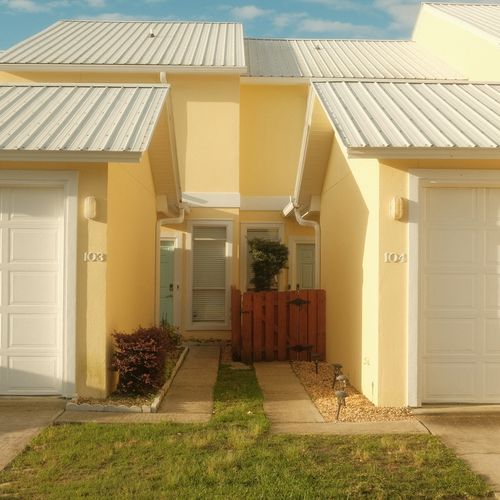
Attached homes do more work than detached homes at this budget, because they get you into more central locations for less. Condos in Manchester and around Scott’s Addition put you within walking distance of restaurants and transit, and suburban townhomes in communities such as Brandermill and Hampton Park offer newer construction, low exterior maintenance and community amenities.
The trade-offs are structural rather than cosmetic. You will have shared walls, an association with rules about renovations, rentals, parking and pets, and a monthly fee. Fees vary enormously with what they cover: an association that maintains roofs, siding and grounds costs more than one that only cuts grass, and a condo fee that includes water, trash, structural insurance and amenities is typically the highest of all. A few hundred dollars a month is common, but we do not publish an average because no verified data exists for it.
Financing attached homes has its own wrinkles. Condo projects need to meet lender or agency approval requirements, and issues such as high rental concentration, pending litigation or thin reserves can make a specific building difficult to finance. Ask early, before you fall for a unit.
What Compromises Should Buyers Expect Under $300K?
Being specific about compromises is what separates buyers who close from buyers who look for a year. The realistic list at this level:
- Square footage. Expect smaller rooms, fewer of them, and less storage. A finished attic or basement, where it exists, may not be permitted or conditioned space.
- Age and systems. Older roofs, older HVAC, original windows, and sometimes knob-and-tube wiring, galvanized supply lines or a cast iron sewer line.
- Parking and garages. Street parking or a driveway rather than a garage is normal, particularly in the city neighborhoods.
- Kitchens and baths. Often original or lightly updated. This is the most common place buyers plan their own work.
- Location. Either a longer commute or a block that is still in transition. Both are real choices, not failures.
- Association rules and fees if you go the attached route.
What you should not compromise on is the inspection. A full home inspection, plus a sewer scope and radon test where appropriate, costs a fraction of what a surprise costs, and it gives you a documented basis to renegotiate or walk.
Fixer-Uppers Under $300K: Where the Renovation Opportunities Are
If you are willing to take on work, the sub-$300,000 range is where renovation opportunities concentrate, particularly in the older city neighborhoods such as Church Hill, Highland Park and parts of Southside where the underlying architecture is worth restoring.
The financing exists for exactly this. The FHA 203(k) program and Fannie Mae’s HomeStyle Renovation loan both let you finance the purchase price and the cost of the work in a single mortgage, based on the value of the home after improvements. Each has its own requirements around licensed contractors, scope documentation, draw schedules and eligible improvements, and they take longer to close than a standard loan. Confirm current program terms and timelines with a lender before you write an offer that depends on one.
Do your scoping during the inspection period, not after closing. Get real contractor bids on the big items – roof, HVAC, electrical service, plumbing, foundation and any structural work – and add a contingency for what you cannot see behind plaster. Cosmetic work is forgiving; structural and mechanical work is not.
How to Win a Home Under $300K in a Low-Supply Market
Winning at this level is about readiness rather than aggression, because well-priced homes here do not sit for long. Months of supply for the Richmond metro area was 1.8 in July 2026, against a traditional balance point of roughly six months, so the market as a whole still favors sellers. Source: Central Virginia Regional MLS single-family data for July 2026, current as of August 10, 2026.
Get fully underwritten before you tour, not merely pre-qualified. Know which loan product you are using – FHA at 3.5% down, a 3% conventional program, VA at 0% down for eligible borrowers, USDA at 0% down in eligible rural areas, or a renovation loan – and make sure your agent knows too, because the loan type affects what the property must satisfy at appraisal.
Be flexible on the things that cost you nothing: closing date, rent-back, personal property, and the seller’s preferred settlement agent. Be firm on the inspection. And set up instant alerts so you are seeing new listings the day they appear rather than the weekend after.
Finally, get your paperwork in order early – two years of returns, recent pay stubs and statements, and documentation for any gift funds. Buyers lose homes at this level to slow document gathering more often than to money.
| Area | Typical housing stock | What you trade |
|---|---|---|
| Southside Richmond (23224) | Older detached homes and bungalows, city services, city access | Variable condition block to block, mostly street or driveway parking |
| Brookland Park and Highland Park (23222) | Early twentieth-century architecture, walkable commercial strip, renovation potential | Uneven housing stock, older systems, work needed on many homes |
| Highland Springs, Henrico County | Modest detached homes, flat lots, county schools and services | Fewer walkable amenities, dated interiors |
| Chester and Ettrick, Chesterfield County (23831) | Older detached homes, some larger lots, near Virginia State University in Ettrick | Longer commute into the city, more driving for errands |
| Manchester and Scott’s Addition condos | Central, walkable, close to restaurants and transit, low exterior maintenance | Monthly condo fee, shared walls, association rules, project financing rules |
| Suburban townhomes such as Brandermill and Hampton Park | Newer attached construction, community amenities, low maintenance | Association fee and rules, smaller footprint, less privacy |
| Colonial Heights, Hopewell and Petersburg | The most detached square footage for the money, larger lots | The longest drive to Richmond employment centers |
| Verified market context | July 2026 median single-family sales price was $430,000 across the entire MLS, $460,000 for the Richmond metro area, $450,000 in the City of Richmond, $440,000 in Chesterfield County and $475,000 in Henrico County, so this budget sits below the median sale everywhere reported. The Central Virginia Regional MLS figures cited here cover single-family homes only, so they do not describe the condo and townhome market. Source: Central Virginia Regional MLS single-family data for July 2026, current as of August 10, 2026. | |
Frequently Asked Questions About Homes Under $300K in Richmond VA
Can you still buy a house under $300,000 in the Richmond area in 2026?
Yes, but it is a narrow slice of the market and it takes flexibility. Central Virginia Regional MLS single-family data for July 2026 shows a median sales price of $430,000 across the entire MLS and $460,000 for the Richmond metro area, with $450,000 in the City of Richmond and $440,000 in Chesterfield County, so a sub-$300,000 budget sits well below the median sale everywhere reported. Expect to look at smaller homes, attached homes, homes needing work, or locations further out. Source: Central Virginia Regional MLS single-family data for July 2026, current as of August 10, 2026.
What neighborhoods in the Richmond area have homes under $300K?
Buyers at this level most often look at Southside Richmond, the Brookland Park and Highland Park area, Highland Springs in eastern Henrico, Chester and Ettrick in Chesterfield County, and further out toward Colonial Heights, Hopewell and Petersburg. Attached homes in Manchester and Scott’s Addition and townhomes in communities such as Brandermill also come into range. We describe these areas by what they offer rather than by a price, because no verified price data exists at the neighborhood or ZIP code level. Contact the Mission Realty Team at (804) 601-4960 for current figures on a specific neighborhood or price range.
How big are homes under $300,000 in the Richmond area?
Typically smaller and older: often two- to three-bedroom homes of roughly 1,000 to 1,600 square feet, frequently a mid-century ranch, a cape, a bungalow or an attached townhome or condo. Those are descriptions of the housing stock, not market statistics. Square footage on any specific home should be verified against the county assessment record rather than the listing.
Are condos cheaper than houses under $300K in the Richmond area?
Attached homes generally get you into a more central location for less than a detached house of comparable size, which is why condos in Manchester and Scott’s Addition and townhomes across the suburbs feature heavily at this level. The trade-off is a monthly association or condo fee, shared walls, and rules about renovations, rentals and pets. The Central Virginia Regional MLS figures cited here cover single-family homes only, so they do not describe the condo and townhome market.
Is it hard to buy a house under $300,000 in the Richmond area right now?
It is competitive, mostly because supply is tight overall. Central Virginia Regional MLS single-family data for July 2026 shows 1.8 months of supply for the Richmond metro area, 1.5 months in the City of Richmond and in Henrico County, and 2.3 months across the entire MLS, against a traditional balance point of roughly six months. There is no verified supply or days-on-market data broken out by price band, so we cannot quantify this segment specifically. Source: Central Virginia Regional MLS single-family data for July 2026, current as of August 10, 2026.
What down payment assistance is available for homes under $300K in Virginia?
Virginia Housing runs first-time buyer loan programs and down payment assistance options, and some localities and employers offer their own programs. Eligibility depends on income limits, purchase price limits, credit and homebuyer education requirements, and the terms change. Confirm what you qualify for directly with Virginia Housing or a participating lender before you make plans around it.
Do homes under $300,000 in the Richmond area need repairs?
Frequently, yes, at least in part. At this level you are usually buying an older home, so expect to look closely at the roof, HVAC, water heater, electrical panel, plumbing supply lines and any sign of moisture in a crawl space or basement. Get a full inspection, and consider a sewer scope and a radon test on older properties. Budget for the systems, not the cosmetics.
What should I expect from HOA and condo fees on attached homes?
It varies enormously with what the fee covers. Townhome associations that maintain the exterior, roofs and common grounds cost more than ones that only cut the grass, and condo fees that include water, sewer, trash, insurance on the structure and amenities are typically the highest. A few hundred dollars a month is common, though we do not publish an average because there is no verified data on it. Ask for the current fee, the budget, the reserve study and the last two years of meeting minutes before you commit.
Are there new construction homes under $300,000 in the Richmond area?
It is limited, and where it exists it is usually attached product – townhomes and villas – or detached homes further from the city. Availability changes constantly and builder incentives come and go, so ask for a current list rather than relying on any published figure. Contact the Mission Realty Team at (804) 601-4960 for current figures on a specific neighborhood or price range.
How fast are homes selling in the Richmond area?
Central Virginia Regional MLS single-family data for July 2026 shows median days on market of 19 for the Richmond metro area, 17 in the City of Richmond, 16 in Henrico County, 21 in Chesterfield County and 25 across the entire MLS. Days on market is not published broken out by price band, so we cannot say how quickly sub-$300,000 homes specifically go under contract. Source: Central Virginia Regional MLS single-family data for July 2026, current as of August 10, 2026.
What school districts serve the more affordable Richmond area neighborhoods?
Depending on where you look, homes at this level fall within Richmond Public Schools, Henrico County Public Schools or Chesterfield County Public Schools, and further south within the Colonial Heights, Hopewell or Petersburg city divisions. Attendance zones are assigned by address and change from time to time, so verify the current zone for the exact address with the division directly.
Can first-time buyers get a loan for homes under $300,000 in the Richmond area?
Yes, and this is the price band where low-down-payment programs matter most. FHA financing allows as little as 3.5% down, some conventional programs go to 3% for qualified buyers, VA-eligible borrowers can finance with 0% down, and USDA loans allow 0% down in eligible rural areas, which includes parts of the outer counties. Private mortgage insurance on a conventional loan can generally be removed once you reach 20% equity. These are program rules rather than quotes – confirm current terms, limits and rates with a lender.
Are fixer-uppers a good option under $300K in the Richmond area?
They can be, if you go in with an accurate scope and a real budget. Renovation financing exists for exactly this situation: the FHA 203(k) program and Fannie Mae’s HomeStyle Renovation loan both let you finance the purchase and the work in a single loan, with their own rules about contractors, draws and eligible improvements. Get contractor bids during your inspection period rather than after closing, and confirm program terms with a lender.
Do investors compete with first-time buyers for homes under $300K?
In practice, yes – the lower end of the market attracts both owner-occupants and investors, particularly for homes needing work. We do not publish a figure for the share of purchases made by investors, because there is no verified local data on it. What helps is being genuinely ready: full pre-approval, flexible timing, a clear scope of what you will accept, and an agent watching new listings closely. Contact the Mission Realty Team at (804) 601-4960 for current figures on a specific neighborhood or price range.
Find the Right Home Under $300K in the Richmond Area
The Mission Realty Team works with buyers at this level every week, and we will tell you plainly what your budget reaches in each part of the region and which loan programs fit. Contact the Mission Realty Team at (804) 601-4960 to get started.