Nobody publishes a clean list of “mid-century neighborhoods” for the Richmond area. The MLS has no reliable style tag that separates a 1958 brick ranch from a 1988 one, so this roundup leans on checkable proxies: when subdivisions were platted and built out, which house types dominate the streets, and what the public property record says about year built. We looked for areas where much of the housing stock dates from roughly 1945 to 1975.
How the list is ordered: grouped by locality (the City of Richmond, then Chesterfield County, then Henrico County) and alphabetical inside each group. It is not a ranking.
What “mid-century” usually means on a Richmond street
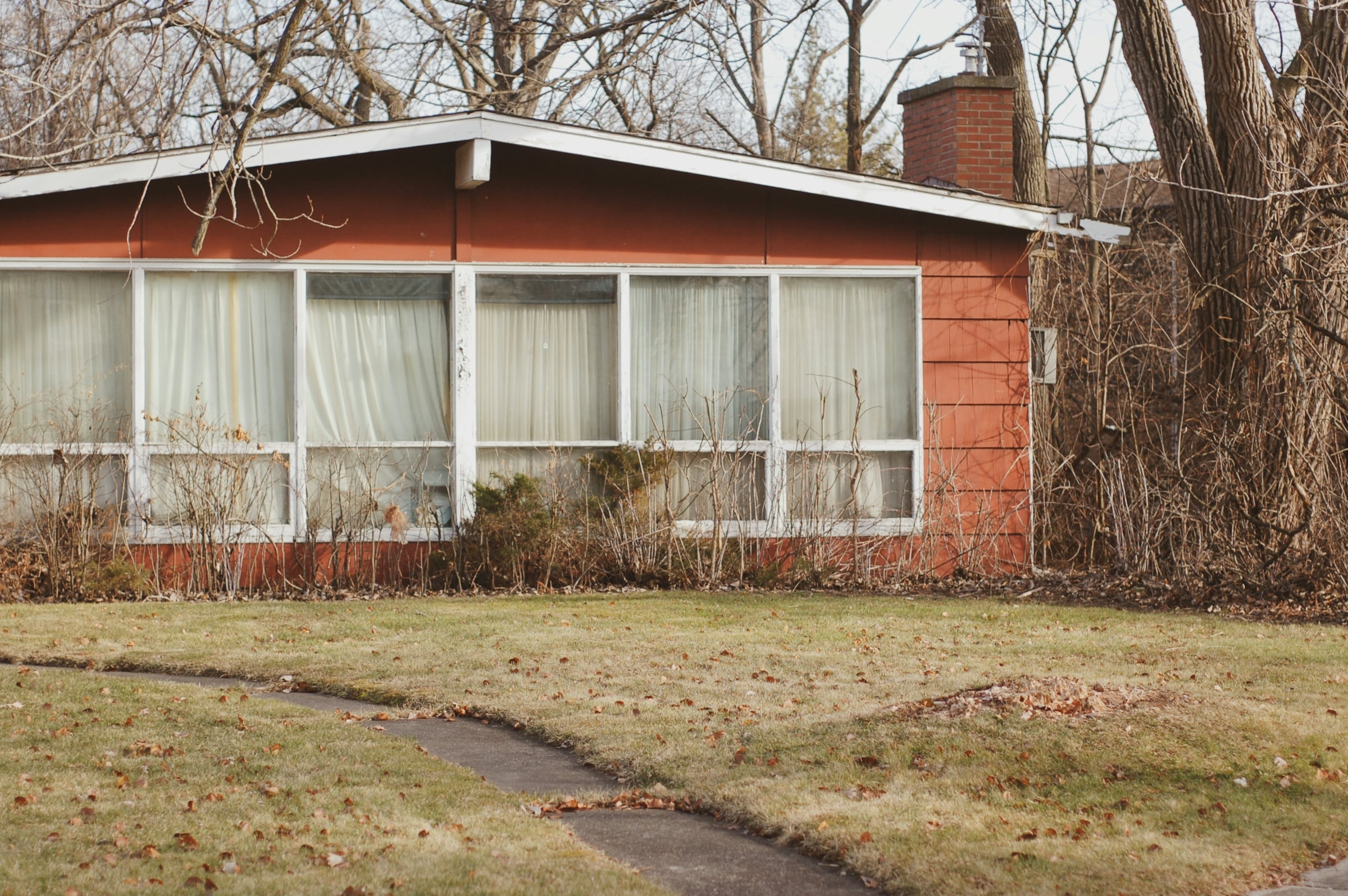
The late 1940s brought small brick and frame Cape Cods. The 1950s and early 1960s were the era of the one-story brick ranch, usually on a crawl space. By the mid-1960s the split-level and the bi-level took over on sloping lots, and by the 1970s two-story colonials were crowding both out. True modernists, with low-slope roofs, clerestory windows, post-and-beam framing and walls of glass, do exist around Richmond, but they tend to appear one or two to a street inside otherwise conventional subdivisions, not as whole enclaves.
If what you really want is pre-war character (Victorians, Colonial Revival, 1920s bungalows), our guide to historic neighborhoods for character home lovers is the better starting point. If the appeal of a ranch is simply one-floor living, see our list of neighborhoods for single-story living, which includes newer options.
City of Richmond: the South Side streets near the James
Stratford Hills
Much of Stratford Hills was built in the 1950s and 1960s, when this part of the South Side was still in Chesterfield; the city annexed it in 1970. Expect brick ranches, split-levels on the hillier streets and a noticeable share of contemporary houses tucked onto wooded lots, making it one of the better city bets for a genuine modernist. The James River Park System‘s riverside access is a short drive or bike ride away, which is a large part of the appeal.
Wrong for: buyers who want a flat, gridded, sidewalk-lined street. Many blocks are hilly and curving, and sidewalks are inconsistent.
Westover Hills
Westover Hills developed over several decades, from the 1920s into the 1950s, so it is a mixed bag rather than a pure mid-century district. Sections of the neighborhood have post-war brick ranches and Cape Cods alongside older cottages and Tudor-influenced houses, and Forest Hill Park sits just to the east. It suits a buyer who wants post-war houses with an older neighborhood’s tree canopy.
Wrong for: someone who wants a consistent 1950s streetscape. You will pass a 1928 house and a 1955 house on the same block, and prices reflect the neighborhood’s popularity more than the age of any one house.
Chesterfield: Bon Air’s post-war rings
Bon Air
Bon Air started as a Victorian-era resort village, and that older core is what most people picture. The larger story for mid-century buyers is the ring of subdivisions that grew around it from the 1950s through the 1970s: brick ranches, split-levels and early two-story colonials on lots that are often larger and more wooded than anything comparable inside the city. Building continued into later decades, so check year built house by house.
Wrong for: buyers who want to walk to shops and restaurants. Most of Bon Air is car-dependent, and the historic core is a small part of the whole.
Henrico: ranch belts to the west, north and east
Tuckahoe
Large parts of the Tuckahoe area were subdivided in the 1950s and 1960s as Richmond’s West End pushed past the city line. The typical house is a brick ranch or a split-level on a generous lot, with a growing number of 1970s colonials as you move west. Renovation is heavy, so the same floor plan can be a tired estate sale on one block and a gut rehab on the next.
Wrong for: entry-level budgets. Tuckahoe’s location keeps prices high, and some original ranches are bought for their lots rather than their houses.
Lakeside
Just north of the city line, Lakeside has a large stock of post-war brick ranches and Cape Cods, much of it built from the late 1940s into the 1960s, with Lewis Ginter Botanical Garden anchoring the area. Houses here tend to be compact, which is exactly why many first-time buyers look here for a mid-century house that is still within reach.
Wrong for: buyers who need a big two-car garage, a finished basement or 2,500 square feet. Compact footprints and small lots are the norm.
Laurel
Laurel, in the west-central part of the county, mixes 1950s to 1970s ranches and split-levels with later construction. It is less consistent than Lakeside or Tuckahoe, but practical for a split-level with a garage at prices below the West End.
Wrong for: buyers chasing a strong neighborhood identity or a walkable village center. Much of Laurel is organized around commuter roads rather than a main street.
Highland Springs
Highland Springs in eastern Henrico dates to the early 1900s, but much of its housing was built in the post-war decades, and side streets hold long rows of modest brick ranches. It is usually the most affordable pick on this list and is convenient to Richmond International Airport, which is why it shows up on our list of neighborhoods a short drive from the airport.
Wrong for: buyers sensitive to aircraft noise. Parts of the area sit near approach paths; read our guide to the quietest neighborhoods away from highway, rail and flight paths before you commit.
Get a saved search for these seven neighborhoods
We will set up a saved search pre-filtered to Stratford Hills, Westover Hills, Bon Air, Tuckahoe, Lakeside, Laurel and Highland Springs, limited to homes built from 1945 to 1975, so new listings reach your inbox the day they hit the market. Start it on our buy with us page, or browse everything that is live now on our property search.
What a 50- to 75-year-old house usually needs
Solid brick, hardwood under the carpet and simple roof lines are the appeal. The systems behind the walls are what you budget for, along with single-pane windows and thin attic insulation.
Electrical. Many houses of this era were built with 60- or 100-amp service and two-prong, ungrounded outlets. Some houses from roughly the mid-1960s to the mid-1970s were wired with aluminum branch circuits, which can be made safe with approved connectors but which some insurers ask about.
Plumbing. Galvanized steel supply lines corrode from the inside and reduce water pressure; cast iron drain lines crack; and the sewer lateral to the street may be clay or bituminous fiber pipe. A sewer scope is one of the add-on inspections covered in our guide to what a Richmond home inspector will not cover.
Crawl spaces. The brick ranch on a crawl space is the signature Richmond mid-century house, and crawl spaces are where moisture, wood rot and termites show up. Our explainer on the wood-destroying insect report and crawl spaces covers what to ask for.
Asbestos-era materials. Nine-inch floor tiles, pipe and duct wrap, some textured ceilings and some siding from this period can contain asbestos. It is usually a risk only when disturbed, so the rule is to test before you renovate; the EPA’s page on protecting your family from asbestos exposure explains what homeowners should and should not do.
Heating oil. Many houses built before natural gas lines reached their street heated with oil, and some still have a buried tank. See our guide to buying a home with a buried oil tank.
For a broader view of how old-house costs add up, read buying a historic home in Richmond and what it really costs.
Check the build year yourself before you book a showing
Listings sometimes call anything with a low roof “mid-century modern.” The free public assessment record is a better check.
In the city, the City of Richmond Assessor of Real Estate offers a property search that shows year built, finished square footage and assessment history for any parcel. In Henrico, the county’s Real Estate Assessment Division maintains the land book and links to its online property lookup. Chesterfield publishes similar parcel records through the county website; search the address there for any Bon Air house.
One caution: year built is the original construction date, so a 1956 house with a 2004 addition still reads 1956, and records on heavily rebuilt houses can be wrong. If the date matters, ask for permits and compare the house with its neighbors on the same plat.
What these neighborhoods’ localities looked like in August 2026
These figures are locality-wide, not neighborhood figures. Treat them as market context, not a price for any one street.
Single-family detached homes, August 2026, locality-wide
| Locality | Median sold price | Year-over-year | Days on market | Months of supply |
|---|---|---|---|---|
| City of Richmond (city-wide) | $403,500 | -5.3% | 26 | 1.4 |
| Henrico County (county-wide) | $425,000 | +7.9% | 18 | 1.6 |
| Chesterfield County (county-wide) | $453,975 | +0.9% | 22 | 1.9 |
| [DATA NEEDED: median price per square foot, August 2026, by area] | ||||
Source: CVR MLS, via the Richmond Association of REALTORS August 2026 sortable single-family statistics (report index at rarealtors.com/housingreports). Month: August 2026. Year-over-year change is for median sales price.
With under two months of supply in all three localities, well-kept houses still move quickly. If a house needs systems work, ask one of our preferred lenders whether a renovation loan fits.
Your saved search for mid-century homes, ready when you are
Tell us which of these seven neighborhoods interest you and we will set up a saved search limited to houses built from 1945 to 1975, with contemporaries flagged when we spot them. Start on our buy with us page.
Mid-century house questions buyers ask us
Are Richmond-area mid-century ranches usually on a slab or a crawl space?
Most brick ranches built here from the late 1940s through the 1960s sit on a vented crawl space, with some houses on sloping lots getting a partial basement. Slab-on-grade ranches exist but are less common. A crawl space is not a problem in itself, but ask the inspector to go in and report on moisture, vapor barrier, insulation and any wood damage.
Is aluminum wiring a deal breaker on a 1960s or 1970s house?
Usually not. Aluminum branch wiring was used in some houses built roughly from 1965 to 1973. The common fix is to add approved copper-to-aluminum connectors at outlets, switches and splices, done by a licensed electrician. Some insurers ask about it on the application, so get the electrician’s written report before you bind coverage.
Will a 60-amp or 100-amp electrical panel stop me from getting a mortgage?
Lenders rarely reject a loan over amperage alone, but inspectors flag undersized or outdated panels, and some insurers decline older fuse boxes or certain panel brands. Many buyers negotiate a 200-amp service upgrade. Get a licensed electrician’s written quote during your inspection period.
What is bituminous fiber sewer pipe and why does it matter?
Bituminous fiber pipe, often called Orangeburg after a common brand, was a tar-impregnated wood fiber pipe used for sewer laterals from roughly the 1940s into the 1970s. Over decades it can flatten, blister and let roots in. A camera sewer scope is the only practical way to know what is under the yard before closing.
Do local historic district rules apply to these neighborhoods?
For most streets named here, no local design review applies. National Register listing does not by itself restrict what a private owner does with private money; design review applies only in locally designated districts. Ask the city or county planning office before planning exterior changes.
How often do true mid-century modern houses come up for sale?
Not often. Across the Richmond area, architect-designed contemporaries with low-slope roofs and large glass walls appear only a handful of times a year, and the good ones sell quickly. A saved search that watches for words like contemporary, modern and post-and-beam in listing remarks is the most reliable way to catch them.
Should I replace original single-pane windows right away?
Not necessarily. Original steel or wood windows can often be repaired and paired with storm windows for less than replacement, and many mid-century buyers want the original look. Replacement makes sense when frames are rotted or sashes will not operate. Price both options.