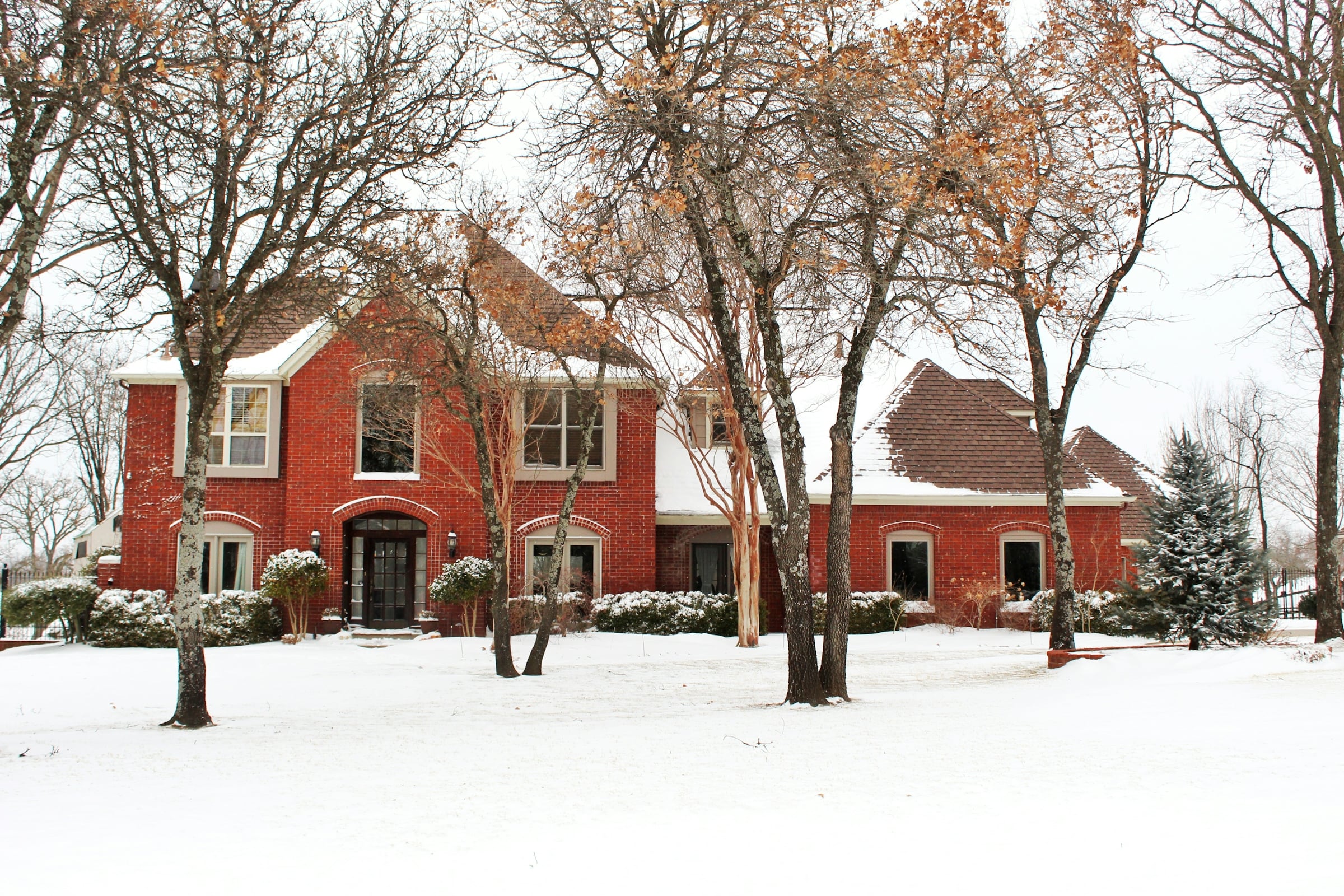
Yes, a winter listing in the Richmond area takes longer to sell, and the monthly numbers show it. In the Richmond Metro single-family data, the days on market figure for January 2026 was 37, against 22 days in August 2026. What the same numbers do not show is a clean winter price penalty. Compared with the same month a year earlier, median prices in November 2025 through February 2026 moved between -1.2% and +1.3%. This guide lays out those figures, says what they cannot prove, and covers the practical work of listing a house between November and February.
Richmond Metro single-family, winter months versus August 2026
| Month | Closed sales (vs year earlier) | Days on market (vs year earlier) | Median sales price (vs year earlier) | Months of supply (vs year earlier) |
|---|---|---|---|---|
| November 2025 | 749 (-6.4%) | 29 (+16.0%) | $424,725 (-1.2%) | 1.6 (-5.9%) |
| December 2025 | 862 (-2.5%) | 33 (+3.1%) | $428,000 (+0.7%) | 1.2 (-14.3%) |
| January 2026 | 563 (-1.1%) | 37 (+15.6%) | $401,750 (+0.4%) | 1.1 (-21.4%) |
| February 2026 | 686 (+10.1%) | 35 (+2.9%) | $420,515 (+1.3%) | 1.1 (-21.4%) |
| August 2026 (summer comparison) | 871 (-9.0%) | 22 (+4.8%) | $450,000 (+3.7%) | 1.8 (-5.3%) |
City of Richmond only (locality-wide), same months
| Month | Closed sales | Days on market | Median sales price (vs year earlier) | Months of supply |
|---|---|---|---|---|
| November 2025 | 152 | 25 | $395,000 (-12.2%) | 1.8 |
| December 2025 | 157 | 30 | $395,000 (-1.2%) | 1.2 |
| January 2026 | 119 | 38 | $359,900 (-1.9%) | 1.3 |
| February 2026 | 149 | 32 | $405,000 (+4.1%) | 1.3 |
| August 2026 | 163 | 26 | $403,500 (-5.3%) | 1.4 |
Source: Central Virginia Regional MLS, via the Richmond Association of REALTORS sortable monthly statistics, single-family tables published by ShowingTime for November 2025 (current as of 10 December 2025), December 2025 (10 January 2026), January 2026 (10 February 2026), February 2026 (10 March 2026) and August 2026 (10 September 2026). Richmond Metro is the MLS’s own grouping of localities, and the City of Richmond row is city-wide, not a neighborhood. Each month’s “vs year earlier” percentage compares with the same month the year before. Months of supply is active inventory relative to the monthly sales pace. [DATA NEEDED: median price per square foot, by month. Not published in the free sortable tables.]
Reading the five months side by side
Three patterns are visible in the table. First, selling takes longer in January and February. Metro days on market ran 29 in November, 33 in December, 37 in January and 35 in February, then fell to 22 in August. In the City of Richmond the January figure was 38 days against 26 in August. Second, volume dips in January: 563 Metro closings, the lowest of the five months, against 871 in August. Third, inventory stays tight even in the slow months. Months of supply was 1.1 in both January and February, below August’s 1.8, so a well-priced listing in winter faced fewer competing listings than a summer one would.
The price figures need more care. The January 2026 Metro median of $401,750 is $48,250 below August’s $450,000, but those are different months with different mixes of homes selling. Closings in January typically reflect contracts signed weeks earlier, and a month with more large houses or more new construction closing will pull the median up regardless of season. The cleaner signal is the year-over-year column: in all four winter months the Metro median stayed within 1.3% of the year before. The tables show winter slows the pace of sale. They do not show that winter lowers the price a given house earns, and no Richmond data we can source isolates that effect. The same goes for buyer motivation: the tables do not measure it, so any claim that winter buyers are “more serious” is an assumption, not a statistic.
Two limits apply. This covers one winter, and the City of Richmond rows rest on 119 to 163 closings a month, which is enough to read direction but not to treat a single month as precise. For the county level, Henrico County and Chesterfield County have their own rows in each table, and you can see what actually closed near you on our recently sold properties page.
See what your house is worth before you pick a season
The most useful number for the winter decision is your own home’s likely price range and days on market now. Request a free home valuation and we will show the nearby sales it is based on, so you can compare waiting for spring against listing now.
Getting a house ready for November through February showings
A fall or winter listing has the same preparation list as any other, but with shorter daylight and cold-weather conditions to manage. Our staging guide covers the room-by-room work. For winter, put extra effort into lighting: turn on every lamp before a showing, replace burned-out bulbs and open blinds on the sunny side. Entry areas matter more when buyers are cold and wet from the walk to the door, so clear the walk and porch, give coats and shoes somewhere to go and keep a mat inside.
Heat is the cold-weather equivalent of a clean kitchen. Set the thermostat so the house feels comfortable on arrival, and have the furnace or heat pump serviced before listing; buyers and their inspectors will test it. FEMA’s winter weather guidance on Ready.gov recommends insulation, caulking and weather stripping to keep out cold, knowing how to keep pipes from freezing, and working smoke alarms and carbon monoxide detectors with battery backups, all of which are quick to check before you list. If you are vacant or traveling over the holidays, make sure the heat stays on and someone checks the house after a hard freeze.
Photos are another winter variable. Bare trees and gray skies can make a front exterior look flat, so schedule photography around the best daylight rather than the first available slot, and make sure interior photos match what buyers will see in person. Our fall guides, a seller’s fall timeline and prepping for a fall 2026 listing, carry the checklist into the cold months. A pre-listing inspection is worth considering in winter too, because it lets you fix the furnace, roof or plumbing items a buyer’s inspector would otherwise raise. Whether your street is in Church Hill, Short Pump or Bon Air, the steps are the same: see the Church Hill, Short Pump and Bon Air pages to see current listings alongside yours.
Holiday timing and pricing decisions
The calendar splits the winter market into two windows. Listings that go live in early November reach buyers before Thanksgiving and the December holidays; listings that go live after New Year’s reach buyers in the weeks before the spring market. A house that goes live in the week before a major holiday may get fewer showings that week, which is one reason to let your agent set the launch date around your showing availability rather than a fixed rule. The table suggests the slowest pace of sale was January, so a listing that sits through the holidays is likely to need a pricing review in the new year.
That review should be data-driven. Our guide on when to cut the price on a Richmond listing explains how to read showing activity and days on market, and the post on listing status explains the difference between coming soon, active, under contract and pending, which matters if you want to prepare the home but delay launch past a holiday week. If a purchase of your own depends on the sale, talk through financing early with one of our preferred lenders.
When waiting until spring makes sense
Waiting is reasonable if the house needs work you cannot finish before December, if the yard or curb appeal is a large part of the sales case, or if you do not need to move on a fixed date. Listing in winter is reasonable if you have a job relocation or purchase deadline, if the home shows well indoors, or if low inventory in your price range is working in your favor: Metro months of supply sat at 1.1 in January and February. The deciding facts are your own timeline and your home’s condition, which is why the valuation is the right first step. If you want to talk through the selling process more broadly, see selling with Mission Realty.
Get the free home valuation, then decide on timing
Whether you list in November or wait for spring, start with a free home valuation so the decision rests on nearby sales and your home’s actual condition.
Winter selling questions
Which winter month was slowest in the Richmond Metro data?
January 2026, at 37 days on market and 563 closed sales, the fewest of the five months in the table. February was close at 35 days. For comparison, August 2026 showed 22 days.
Was inventory lower or higher in winter than in summer?
Lower. Richmond Metro months of supply was 1.1 in January and February 2026 and 1.2 in December 2025, against 1.8 in August 2026. Months of supply compares active listings with the monthly sales pace, so it is a measure of competition, not a count of homes.
Did winter prices fall compared with the year before?
Not in the Metro data. The median was 1.2% below the prior year in November 2025, then 0.7%, 0.4% and 1.3% above it in December, January and February. The City of Richmond was more volatile, from -12.2% in November to +4.1% in February, on smaller monthly samples.
Should I keep my house on the market through the holidays?
That depends on whether you can keep it show-ready and accessible. Our listing status guide covers coming soon, active, under contract and pending, which helps if you want to pause launch for a holiday week without losing the preparation work.
Do I need to winterize a vacant house I am trying to sell?
Ready.gov advises learning how to keep pipes from freezing and keeping out the cold with insulation, caulking and weather stripping. Keep the heat on, and have someone check the property after a hard freeze, because a burst pipe can end a sale.
How can I tell whether my listing needs a price change in January?
Compare your showings and days on market with the Metro figure of 37 days for January 2026 and with recent nearby closings. A listing with few showings in the first few weeks usually points to price or condition, and our price-cut guide explains how to read the signals.
Is it easier to get a pre-listing inspection in winter?
It is usually possible, and it is useful because heating, plumbing and roof items are exactly what winter buyers’ inspectors check. Snow or ice on a roof can limit what an inspector can see, so ask the inspector how weather affects their report.
Where can I find the monthly reports myself?
The Richmond Association of REALTORS housing reports page links the sortable single-family and condo/townhouse tables for each month, published through ShowingTime. Change the month in the table address to see past months.