Published October 30, 2026 | Written by the Mission Realty Team.
If you want to live near CarMax Park and the Boulevard, expect more activity on game days and event days, and choose a block with that in mind. This guide names five Richmond areas on or near that corridor, ties each one to a public record, and says plainly who each is wrong for. We have no measured noise or traffic data for any of them, and we do not make up any.
What the City and the team say about the ballpark
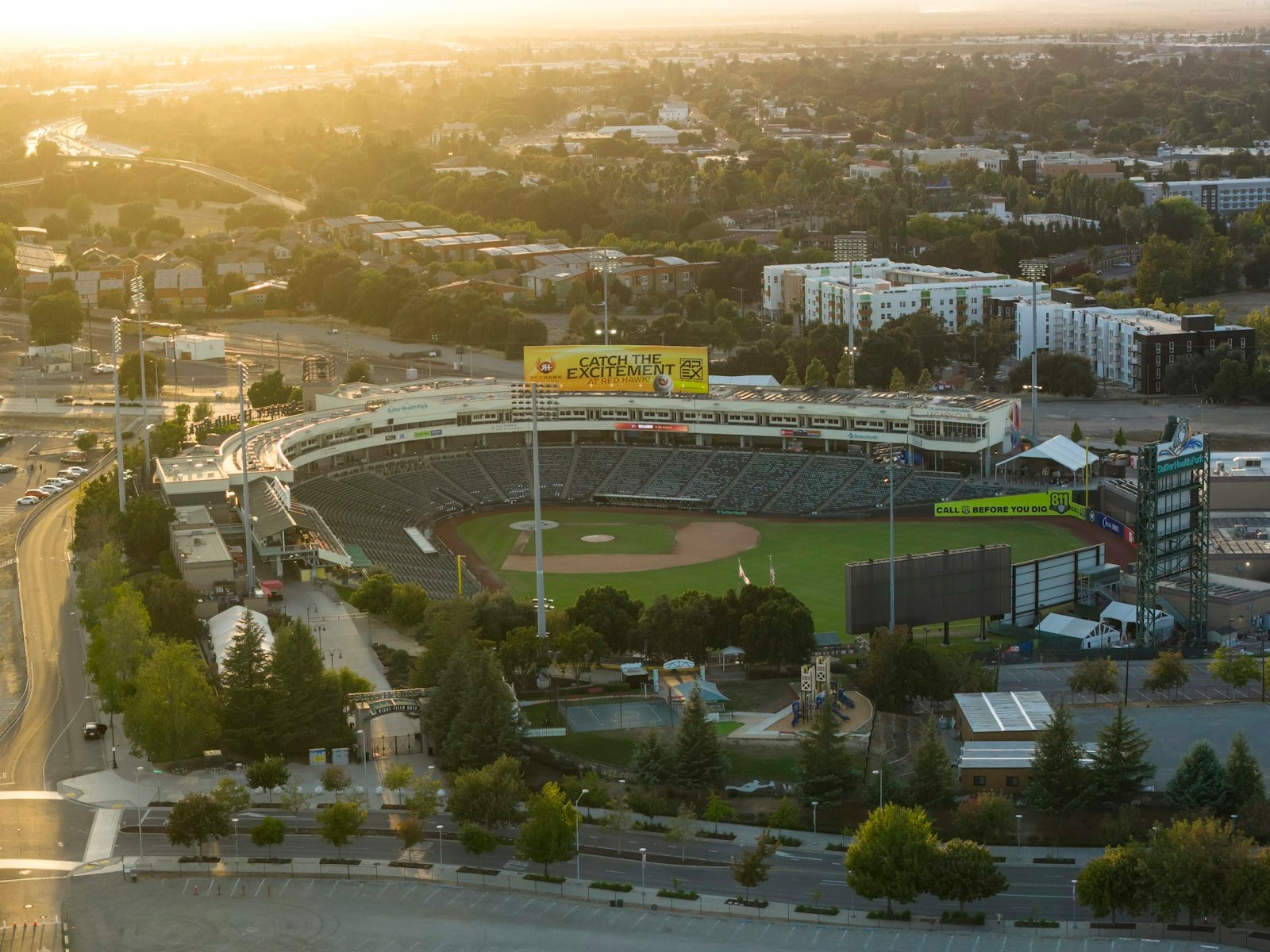
The City of Richmond announced the ribbon-cutting on April 8, 2026. The release says CarMax Park holds 10,000 fans, has 26 premium suites, and is designed for concerts, festivals and community events as well as baseball. In other words, the calendar is not limited to home games. Our post on the Flying Squirrels 2026 award and CarMax Park attendance covers the baseball side, and the WinterWorld guide shows what an off-season event looks like.
The team’s parking page, dated April 6, 2026, lists lots entered from Arthur Ashe Boulevard, Hermitage Road and Robin Hood Road, charges $10 per car, and says GRTC Pulse has stops near the park. Ride-share drop-off is in the Red Lot. That is the team’s own plan for where cars go. It does not tell you what happens on neighborhood streets, which is why we suggest visiting at game time before you buy.
What is planned around the ballpark
You may hear about new apartments, offices and a hotel. The City’s release is the source we trust for that. It says the first phase of the Diamond District includes The Doma, a 274-unit multifamily building, a trophy office building, a structured parking garage, a 180-key hotel, more than 30,000 square feet of retail and 163 affordable units. It also says residents will see construction of a new street grid and infrastructure in the months after opening. A later plan amendment changed the mix, so read it before you assume the release is the final word. We do not say what will be built next to any particular neighborhood below, because none of these sources does.
Tell us which of the five you want and we will set up a saved search in our property search. Our buyer team can also check a specific address against the park, the street grid and the parking rules.
Five areas, in order of how directly the records tie them to the corridor
1. Scott’s Addition
The state’s Scott’s Addition Historic District record says the district is located just west of Arthur Ashe Boulevard and is one of the larger early-20th-century industrial and commercial districts in the city. The City says parking enforcement returned on January 5, 2026, after the Greater Scott’s Addition Association board voted on August 5, 2025. According to the City announcement, most residential blocks still have free, unlimited parking, while some commercial corridors have timed zones, and the City plans to evaluate results in 2027. For a longer look, see our Scott’s Addition guide.
Wrong for: a buyer who wants a quiet residential street with a yard. The state describes the district as industrial and commercial, so check each block, and ask about guest parking before you make an offer.
2. The Museum District and the Boulevard
The Boulevard Historic District record describes a divided thoroughfare from Broad Street to Byrd Park, lined with porticoed apartment houses and porch-fronted town houses, with the Virginia Museum of Fine Arts and the Virginia Museum of History and Culture on the former Lee Camp grounds. If you want to walk to museums and be on a main road, this is the record to read.
Wrong for: someone who wants a side street with little through traffic. A divided road may carry more traffic than a block off it, so stand on the street at rush hour before you decide.
3. West of the Boulevard
This area has no page of its own in our community directory. The West of the Boulevard Historic District record says the district takes its name from its eastern boundary and covers about sixty-nine blocks with more than 1,700 contributing buildings. It describes tree-shaded streets lined mostly with attached two-story brick town houses with front porches, most built between 1910 and 1930. We have flagged it as a page we need to add.
Wrong for: a buyer who wants a detached house on a large lot. Attached town houses are the core of the district.
4. The Fan
The Fan Area Historic District record calls it a residential neighborhood of nearly a hundred city blocks, built as an outgrowth of demand for better housing around the turn of the 20th century. A separate extension record covers the 1100 through 2700 blocks of West Cary Street. The record places it west of the city’s commercial core. We did not find an official walking distance to the ballpark, so measure the route yourself.
Wrong for: someone who needs off-street parking. Many older city blocks rely on street parking, so confirm what a specific address has.
5. Carver
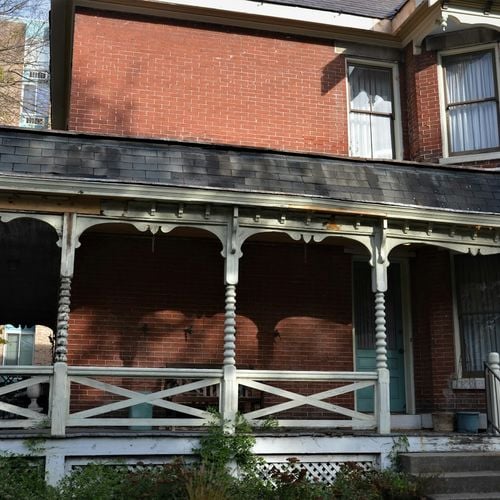
The Carver Residential Historic District record describes brick dwellings built in the 1840s and 1850s and later brick row houses, double houses and frame houses from the 1880s through the 1900s. We include it because buyers looking at the Boulevard and downtown often ask about it, but no source we read gives its distance to CarMax Park. Treat it as a historic-home option, not as a ballpark-adjacent one.
Wrong for: a buyer whose main goal is a short trip to the ballpark. Check the map before you rely on it.
What we could not verify
Three things buyers ask about are not in any public source we read. First, noise: no sound measurements for these neighborhoods turned up, so any claim that an area is loud or quiet on event days would be a guess. Second, spillover parking: the team’s page describes its own lots, and the City’s Scott’s Addition release describes timed zones in commercial corridors, but neither reports how many cars park on residential streets after a game. Third, walking time: only the Scott’s Addition record gives a location relative to Arthur Ashe Boulevard, so for the other four areas we leave distance to you and a map.
That gap is useful to know. If an agent or a listing tells you an address is “steps from the ballpark” or “quiet even on game days,” ask what that is based on. A fair answer is a visit at the right hour, not an adjective. We would rather you test one block on a game night than trust a paragraph from us.
How to test an address before you buy
- Visit on a home-game evening and on a non-game day, at the same hour, and compare.
- Ask the seller or listing agent about parking at that address, including whether street parking is regulated.
- Read the City’s release and the plan amendment above for what is planned, and send us the address if you want help checking what is being built nearby.
- Ask your lender how the purchase and any repairs would be financed. Our featured lenders page is a starting point.
Frequently asked questions
Is there noise data for homes near CarMax Park?
We did not find any public noise measurements for the surrounding neighborhoods. The City says the park is designed for concerts, festivals and other events as well as baseball, so visit at event time.
How many fans can CarMax Park hold?
The City of Richmond’s April 2026 release says 10,000, with 26 premium suites.
Where do fans park?
The team’s parking page lists lots entered from Arthur Ashe Boulevard, Hermitage Road and Robin Hood Road, at $10 per car, with GRTC Pulse stops nearby and ride-share drop-off in the Red Lot.
What does the City say will be built in the Diamond District?
The City’s release lists a 274-unit multifamily building called The Doma, an office building, a parking garage, a 180-key hotel, more than 30,000 square feet of retail and 163 affordable units. A later plan amendment changed the mix.
Did parking rules change in Scott’s Addition?
Yes. The City says enforcement resumed January 5, 2026. Most residential blocks have free, unlimited parking, while some commercial corridors have timed zones.
Which of these areas has historic district status?
Each has a state register record we link above: Scott’s Addition, the Boulevard, West of the Boulevard, the Fan and Carver. A register listing is not the same as a City-designated local historic district.
How do I check what is being built near an address?
Send us the address and we will look at the public plans for you. The City’s release is a good starting point for the Diamond District itself.
Does this guide tell me which area is best?
No. We rank the areas only by how directly the public records tie them to the corridor, and we say who each one is wrong for.
Tell us which of these areas you want and we will set up a saved search in our property search. Start with our buyer services or compare lenders on our featured lenders page.