Published October 30, 2026 | Written by the Mission Realty Team.
If you want an attached 19th-century townhouse in Richmond, the public records point first to Church Hill, Jackson Ward, Oregon Hill, the Fan, Union Hill and Carver. Manchester belongs on the list only if you want the same era in detached form. Every pick below rests on a Virginia Department of Historic Resources (DHR) register record or the City of Richmond’s Old and Historic Districts list, not on sales data, so there are no price claims here.
Neighborhoods are listed alphabetically, treating the Fan as F. That is not a ranking, and the records do not support one.
How to read “Victorian” in Richmond records
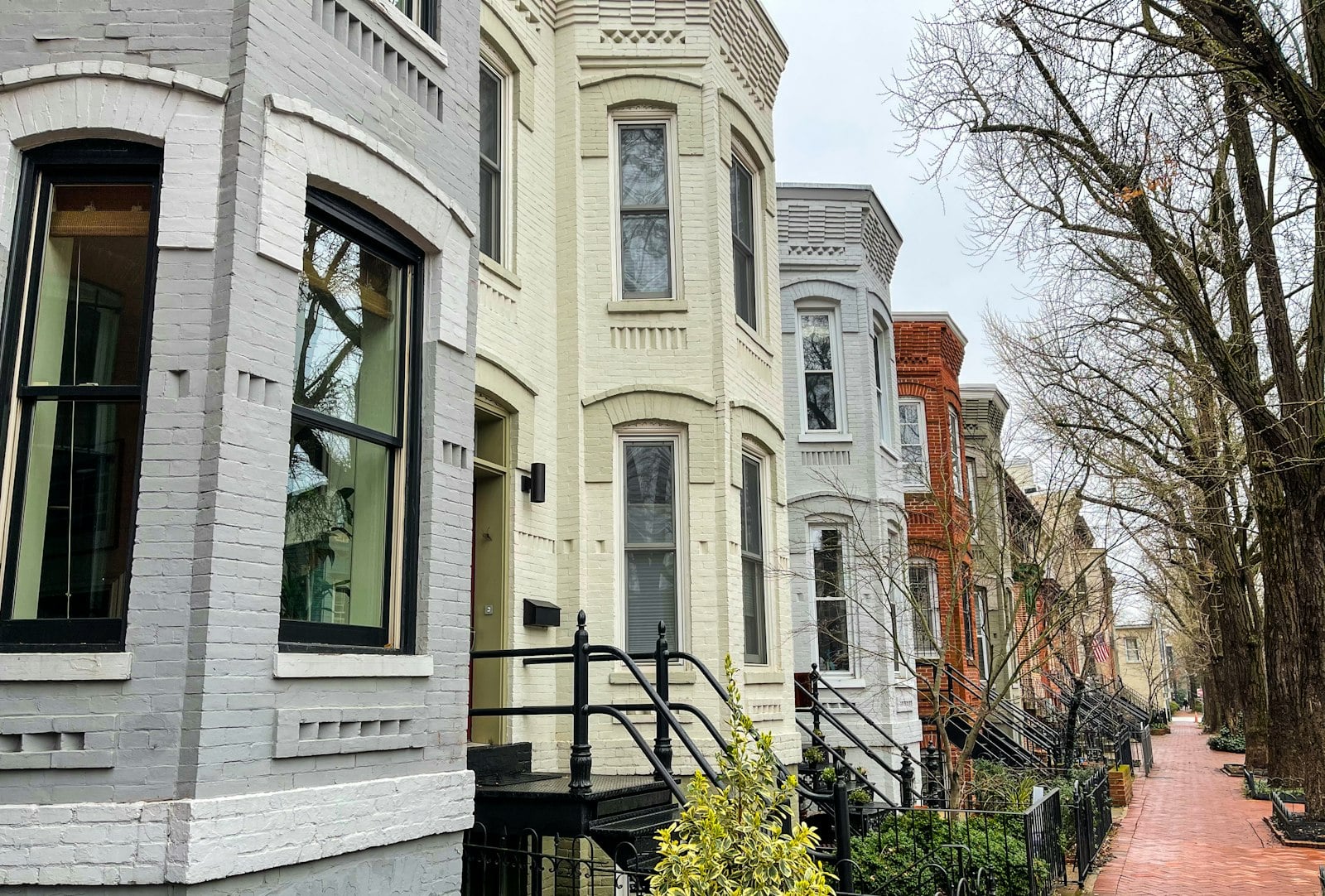
Victorian names an era, not a single style. The DHR pages we read use style names instead: Italianate, Queen Anne, Second Empire and Federal, plus plain descriptions such as town houses and row and double houses. Italianate, Queen Anne and Second Empire all fall within the Victorian era, so they are the labels to search for in a listing description or a nomination form.
There are two layers of protection to separate. DHR lists districts on the Virginia Landmarks Register and the National Register, which opens the door to state tax credits. The City’s Old and Historic Districts flyer lists 14 districts where the Commission of Architectural Review (CAR) reviews exterior changes, including windows, siding, roofs, porches, doors, paint, additions and fences. The two sets of boundaries differ, so check both by address. Our broader guide to historic neighborhoods in Richmond covers more areas; this post stays with attached and row-style houses.
Carver: row and double houses next to Jackson Ward
DHR’s Carver Residential Historic District record (listed on the Virginia Landmarks Register in 2001 and the National Register in 2002, with a boundary increase in 2006) describes brick dwellings from the 1840s and 1850s, then frame dwellings, row and double houses and tenements built from the 1880s to the 1900s. It also notes the district sits next to Jackson Ward. Read the Carver community page for context.
Who it is wrong for: buyers who want a single-style streetscape. The record lists schools, churches and a laundry building alongside houses, and the City’s CAR flyer does not name a Carver district.
Church Hill: town houses in a variety of styles
The Church Hill North Historic District record (Virginia Landmarks Register 1996, National Register 1997) covers 25 blocks laid out in the 1780s, mostly 19th-century, lined with tightly spaced town houses in a variety of styles. DHR calls Italianate the dominant style and also names Queen Anne and Second Empire examples. A 2000 boundary increase added 288 buildings, mainly one- and two-story frame dwellings, attached and detached, mostly built from 1880 to 1900. The St. John’s Church Historic District sits alongside it, listed in 1970. The City’s flyer lists Church Hill North (adopted 2007), St. John’s Church (1957) and Chimborazo Park (1987) as Old and Historic Districts. See our Church Hill page.
Who it is wrong for: owners who want to change exteriors without review. In a City district, CAR reviews those changes first.
Save a search for Church Hill, the Fan, Jackson Ward, Oregon Hill, Carver and Manchester and we will send new listings as they appear. You can start on our property search, then ask our buyer team to check an address against the district maps.
Fan: blocks of town houses, a few detached surprises
DHR’s Fan Area Historic District record (Virginia Landmarks Register August 1985, National Register September 1985) says the district was built as entire blocks of town houses for a new urban middle class. It counts over two thousand buildings across nearly a hundred city blocks and credits uniform heights and setbacks, compatible materials and consistent tree planting rather than one style, with lively rooflines and many porch types. DHR describes it as turn-of-the-20th-century and does not use the word Victorian. A 2011 update added row houses that the 1985 nomination had omitted. A separate extension record exists for the edge of the district. Visit the Fan page.
The City’s flyer does not list a district named for the Fan as a whole. It does list Monument Avenue, West Grace Street and Boulevard districts, so rule those in or out for any specific address. Who it is wrong for: if you want a detached house on its own lot, the nomination describes blocks of town houses.
Jackson Ward: side-passage town houses and ironwork
DHR’s Jackson Ward Historic District record shows a Virginia Landmarks Register listing in 1976, a National Register listing the same year and National Historic Landmark designation in 1978. It describes mostly three-bay, side-passage town houses in various styles, many with locally made cast-iron porches, and calls the ironwork the state’s richest display. A 2005 expansion added 13 dwellings, five commercial buildings, a warehouse and a factory dating from 1870 to 1930. The City adopted a Jackson Ward Old and Historic District in 1987. Details live on our Jackson Ward page.
Who it is wrong for: owners planning quick porch, window or ironwork replacement, since exterior changes go through CAR.
Manchester: the same era, mostly detached
The Manchester Residential and Commercial Historic District record (Virginia Landmarks Register 2001, National Register 2002) counted 251 buildings at listing, 36 of them non-contributing. A 2006 boundary increase covers houses built from 1900 to 1929 in Craftsman, Colonial Revival, Italianate and Queen Anne styles. DHR describes two-story detached dwellings on Bainbridge, Porter and Perry streets and commercial buildings on Hull Street, and its page does not mention rowhouses. The City’s flyer does not list a Manchester district. Our Manchester page and our recent report on five Hull Street area properties headed to auction add current context.
Who it is wrong for: anyone who specifically wants attached rowhouses.
Oregon Hill: Italianate rowhouses in unified streetscapes
DHR’s Oregon Hill Historic District record (Virginia Landmarks Register December 1990, National Register February 1991) describes mostly simple Italianate rowhouses in unified streetscapes, antebellum and later, with growth beginning in the mid-19th century and continuing through the 1860s and 1870s. The City’s flyer does not list an Oregon Hill district, so confirm by address. Our Oregon Hill page has neighborhood basics.
Who it is wrong for: buyers who want ornate detailing. DHR’s own word for the houses is simple.
Union Hill: cottages and townhouses
The Union Hill Historic District record (Virginia Landmarks Register December 2001, National Register December 2002) describes picturesque cottages and townhouses, some streets that still have their original stone paving and some views of downtown. The City adopted a Union Hill Old and Historic District in 2009. Union Hill does not have its own page on our site yet, so start with Church Hill and Shockoe Bottom. Who it is wrong for: buyers who want only attached houses, since the record mixes cottages with townhouses.
What the records cannot tell you
Register listings do not report prices, condition, parking, rental rules or what is planned nearby. They also do not tell you whether a particular house is a contributing building, which is a separate finding. Before you offer, ask for the address-level answer: is it contributing, is it in a City district and has the seller done exterior work without approval. Our guides to buying a historic home and renovation-friendly older neighborhoods walk through inspections and design review, and our look at early 20th-century house styles covers the next era. For maps of listed districts, DHR publishes them on its historic tax credit page.
Frequently asked questions
Is the Fan a Victorian neighborhood?
DHR describes the Fan Area Historic District as turn-of-the-20th-century and credits its unity to uniform heights, setbacks, materials and tree planting rather than one architectural style. Its record does not use the word Victorian.
Which Richmond neighborhoods have Italianate rowhouses?
DHR names Italianate rowhouses in Oregon Hill, calls Italianate the dominant style in Church Hill North and lists town houses in Jackson Ward and Carver in various styles.
What is the difference between a DHR register listing and a City Old and Historic District?
DHR lists districts on the Virginia Landmarks Register and National Register. The City designates its own Old and Historic Districts, where the Commission of Architectural Review reviews exterior changes. DHR notes that register boundaries and locally designated boundaries can differ.
Do I need City approval to change the outside of a house in Church Hill?
Church Hill North, St. John’s Church and Chimborazo Park are on the City’s list of Old and Historic Districts. Exterior changes such as windows, siding, roofs, porches, doors and paint go to CAR for a Certificate of Appropriateness. Confirm your address with Planning and Development Review.
Are Oregon Hill, the Fan and Manchester City Old and Historic Districts?
The City’s flyer does not name districts for Oregon Hill, the Fan as a whole or Manchester. They are listed on DHR’s registers. Check the City maps by address, since districts named for streets can touch these areas.
Does Virginia offer a tax credit for rehabilitating a historic home?
Yes. DHR administers a state historic rehabilitation tax credit for certified historic structures, including owner-occupied homes. The rules and the application steps are on DHR’s tax credit page.
Why is Manchester on a rowhouse list?
It is included for its Italianate and Queen Anne houses from the same era. DHR describes detached dwellings there and does not mention rowhouses, so it is a fit only for buyers who want the era without the attached form.
Where can I see current listings in these neighborhoods?
Use our property search to filter by neighborhood, or ask our buyer team to set up a saved search.
Tell us which of these areas you want and we will set up a saved search in our property search, then check each address against the district maps with you. Start with our buyer services or compare lenders on our featured lenders page.