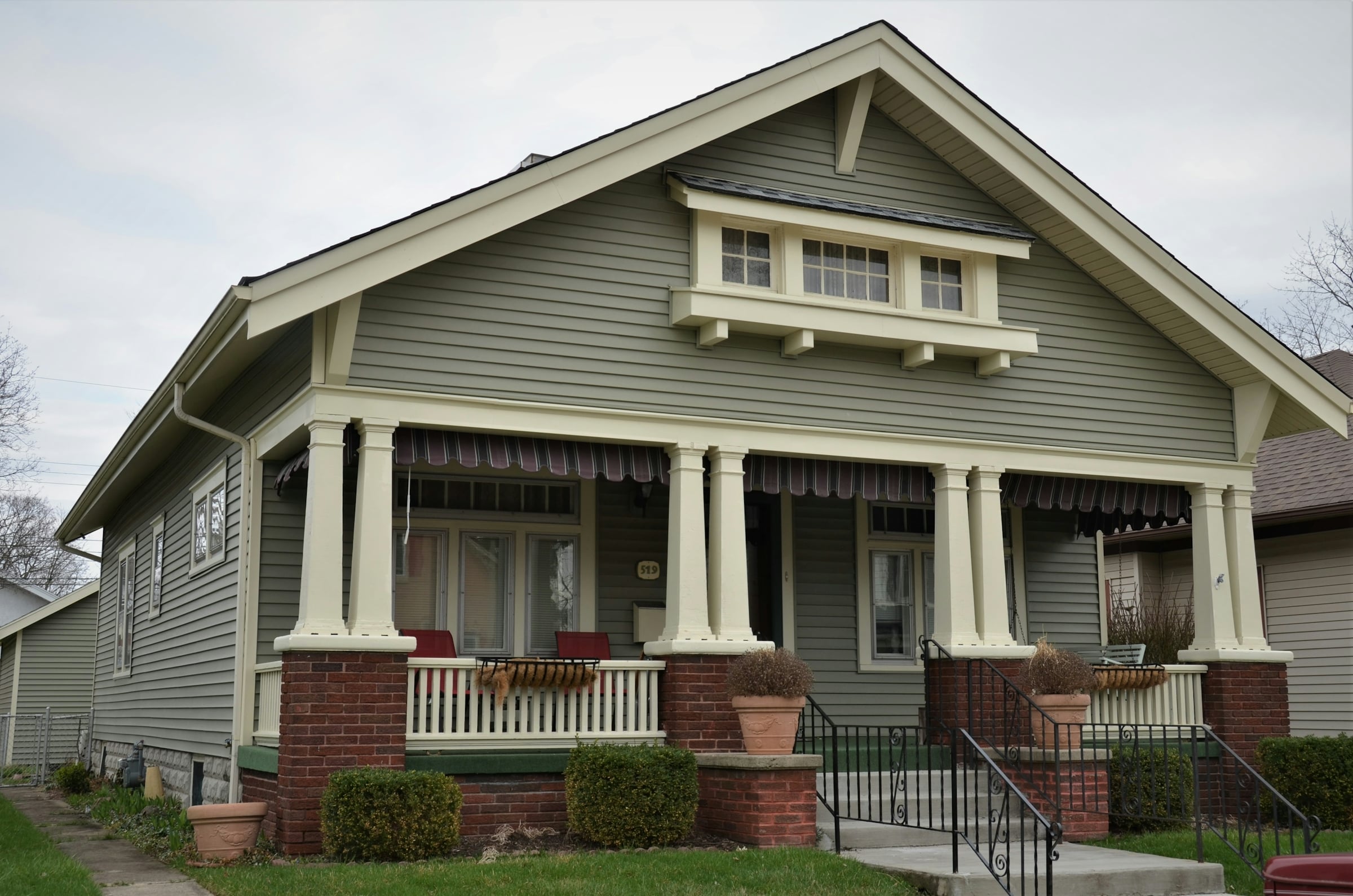
If you are hunting for a 1920s bungalow, a brick Tudor Revival with steep gables, or a streetcar-era house with a deep front porch, a generic list of “historic” Richmond neighborhoods does not get you very far. Architectural style is the better filter. This guide groups six Richmond areas by the early-20th-century styles that state and city records say you will find there. It is not a ranking, and I did not score anything. Each style statement comes from a Virginia Department of Historic Resources (DHR) page or a City of Richmond page I opened in early October 2026, and where I did not read a source, I say so rather than guess.
If your question is broader, such as which areas feel the most historic overall, start with our historic neighborhoods roundup and our guide to buying a historic home in Richmond. This one is for buyers who care about the house itself.
Six areas and the early-20th-century styles each one is known for
The order below runs from the Northside, through the Museum District and the Fan, to Church Hill, Windsor Farms and Forest Hill. It is not a ranking.
Ginter Park: the widest mix of revival styles on detached lots
DHR describes the Ginter Park Historic District as a streetcar suburb built from the 1890s into the 1930s on a grid plan with large grassy yards and tree-lined streets, made up of free-standing houses for middle and upper-middle-class families. The styles it lists are Colonial Revival, Tudor Revival, Dutch Revival, Italian Renaissance and Mission or Spanish Colonial Revival. If you want a detached house with a yard and several styles to choose from on one street, this is the place to start. Our Northside community page and the Ginter Park deep dive cover schools, parks and prices.
Wrong for: buyers who want newer construction or low upkeep. DHR describes detached houses and large yards, and both mean more to maintain than a townhome.
Museum District: attached brick townhouses with Tudor, Craftsman and Mediterranean touches
DHR’s description of the West of the Boulevard Historic District gives 1895 to 1943 as the period of significance, with most buildings going up between 1910 and 1930. It names Tudor, Craftsman and Mediterranean influences, notes that “modified Georgian predominates,” and describes mostly two-story attached brick townhouses with front porches, mixed with three-story apartment blocks. So this is the pick for porch-front brick rowhouse character, not for freestanding bungalows. See our Museum District community page and the Museum District deep dive.
Wrong for: anyone who wants a detached bungalow with its own yard. DHR describes the housing here as mostly attached townhouses and apartment buildings.
The Fan: rowhouses unified by setbacks, with a lot of porch variety
The Fan Area Historic District summary on DHR’s site gives 1885 to 1962 as the period of significance and describes predominantly townhouses and row houses across nearly 100 city blocks and more than 2,000 buildings. It says the district is held together by uniform heights, setbacks and building materials rather than one style, with lively rooflines and a multiplicity of porch types. That makes the Fan a good fit for buyers who like the look of a continuous streetscape. Start with the Fan community page and our Fan deep dive.
Wrong for: buyers who want a house on its own lot. DHR describes the district as predominantly row houses.
Church Hill: mostly 19th century, with some bungalow and Craftsman blocks
Church Hill is on this list as an honest counterpoint. DHR describes the Church Hill North Historic District as a “remarkably intact, mostly 19th-century” neighborhood, with Federal, Italianate and Greek Revival buildings and tightly spaced town houses. Its list of styles also includes Colonial Revival, Art Deco and Bungalow or Craftsman, so early-20th-century houses are there, but they are the minority. The City’s district materials also name Church Hill North as a City Old and Historic District, which brings design review into any exterior project. See the Church Hill community page and our Church Hill deep dive.
Wrong for: buyers who specifically want early-20th-century construction, or anyone unwilling to take exterior changes through city review.
Windsor Farms: English-inspired Tudor Revival, with a caveat
DHR’s page for Virginia House calls it a Tudor-styled mansion in Windsor Farms, completed in 1928 with architectural elements from Warwick Priory, a late-medieval English building. That is one landmark estate, not a description of a typical street. I could not open a DHR district page for the neighborhood itself, so I cannot tell you from a source I read what the ordinary houses look like. Read the individual listings carefully and compare them with our Windsor Farms community page and the Windsor Farms deep dive.
Wrong for: buyers who want a modest bungalow. The source I read describes a grand English-style estate, and I did not verify what the typical house looks like.
Forest Hill: the clearest bungalow and Tudor Revival pick
This is the best match for the title of this guide. DHR’s entry for the Forest Hill Historic District calls it a late 19th and early 20th century trolley-car neighborhood south of the James River. It describes “Victorian Queen Anne and Colonial Revival-style mansions” alongside modest, small-scale Craftsman-style bungalows and Tudor Revival dwellings, and says the district was added to the Virginia Landmarks Register on June 21, 2012 and the National Register on October 3, 2012. Our Forest Hill community page and the Forest Hill deep dive go into streets and amenities.
Wrong for: buyers who want every house on the street in one style. DHR lists Queen Anne mansions alongside bungalows, so streets vary house to house.
Want a saved search for these six areas?
Tell us which of Ginter Park, the Museum District, the Fan, Church Hill, Windsor Farms and Forest Hill you are watching, and what style you want, and we will set up alerts. Ask for a saved search for these six Richmond areas.
What to check before you fall for a 1920s house
Start with the address, not the neighborhood. According to the City’s Commission of Architectural Review page, the CAR was established in 1957, is the city’s official historic preservation body, and reviews all exterior changes to structures within City Old and Historic Districts, issuing Certificates of Appropriateness for projects it finds appropriate. It bases decisions on the Secretary of the Interior’s Standards and the Richmond Old and Historic Districts Handbook and Design Review Guidelines adopted in 1999. The page links an interactive map of the districts, and lists the CAR secretary at (804) 646-6304. Ask which district, if any, your address falls in before you plan windows, porches or paint.
Then plan for the age of the systems. Houses from this era often need a closer look at wiring, wood-destroying insects and crawl spaces. Our guides to old electrical panels and the wood-destroying insect report explain what inspectors flag, and houses built before 1978 bring lead paint questions that we cover in our pre-1978 lead paint disclosure guide. If you intend to renovate, read our roundup of renovation-friendly neighborhoods and talk to one of our preferred lenders early. Get an insurance quote before your inspection window closes, because age affects pricing; how homeowners insurance is priced in Richmond explains what moves a premium.
If you prefer ranch and split-level houses to prewar ones, see our mid-century homes roundup.
Median sales price, August 2026, city-level and metro-level
| Area (locality level) | Single-family median | Closed sales |
|---|---|---|
| Richmond City (city-level) | $403,500 | 163 |
| Richmond Metro (regional) | $450,000 | 871 |
City- and metro-wide figures, not neighborhood figures. None of the six areas above has a published neighborhood median here, so treat these only as context. Source: Central Virginia Regional MLS, via the Richmond Association of REALTORS sortable monthly statistics, August 2026 table, current as of September 10, 2026.
[DATA NEEDED: median price per square foot, August 2026, by area. Not published in the free sortable tables.]
Places I left off, and why
Westhampton and the Near West End are natural questions for this topic. I did not read a DHR or City page describing their early-20th-century styles for this guide, so I make no style claims about them. You can still browse our Westhampton and Near West End pages, or the City of Richmond hub for the rest.
This guide is general information, not legal advice. For questions about historic district rules or your contract, talk to a Virginia real estate attorney.
Want a saved search for these six areas?
We can watch Ginter Park, the Museum District, the Fan, Church Hill, Windsor Farms and Forest Hill for you and flag the styles you care about. Ask for a saved search for these six Richmond areas, or browse current listings and how we work with buyers.
Questions about early-20th-century homes in Richmond
Is a national or state register listing the same as being in a City Old and Historic District?
Not on the pages I read. DHR’s district pages describe register listings, such as Forest Hill’s June and October 2012 listings. The City’s CAR page says design review applies to City Old and Historic Districts. They are separate lists, so ask the CAR secretary at (804) 646-6304 about your specific address.
What does applying to the Commission of Architectural Review involve?
According to the CAR page, new applications for certificates of appropriateness can be submitted by email or through Microsoft OneDrive, and meetings follow the City’s Legistar calendar. The page also links administrative approvals and a color palette. I did not find a published turnaround time, so ask before you plan a closing-date renovation.
Why do so many early-20th-century Richmond blocks look alike?
Several districts here were built as streetcar or trolley suburbs. DHR describes Ginter Park as a streetcar suburb with grid-plan blocks and Forest Hill as a trolley car neighborhood, and the Fan page says its buildings share heights, setbacks and materials. For West of the Boulevard, DHR notes that developers built entire blocks during the peak years, which is one reason the rhythm repeats.
Is all of Windsor Farms Tudor Revival?
I cannot say from a source I read. DHR describes Virginia House as Tudor-styled, but that is one landmark estate. Check each listing, and use the Windsor Farms community page for context rather than assuming every house follows one style.
Do the median prices in this guide apply to these six areas?
No. The $403,500 city median and $450,000 metro median for August 2026 are city- and region-level single-family figures, not neighborhood numbers. For actual recent closings on a street you like, see our recently sold properties page at our recently sold homes.
When should I get an insurance quote on an older house?
Before your inspection period ends, so a surprise does not arrive after you have committed. The age of the home and its systems affects how insurers price it; our guide on how homeowners insurance is priced in Richmond lists what tends to raise a premium.