Living in Ginter Park, Virginia: Schools, Parks, Prices & What Buyers Need to Know in 2026
Richmond’s first planned streetcar suburb, its extraordinary architecture, and what a century-old house actually asks of you
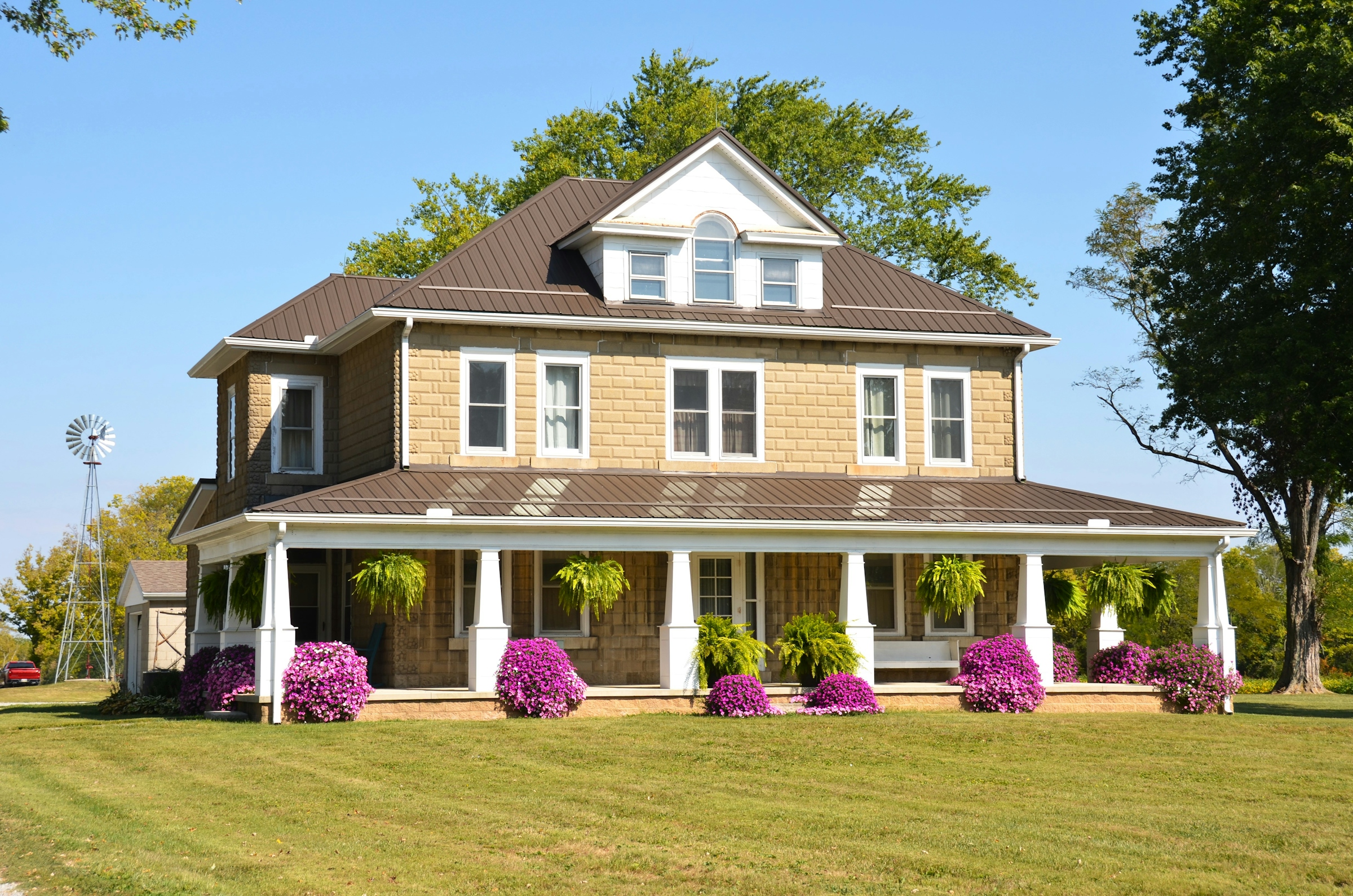
Ginter Park is a historic neighborhood in Richmond’s Northside and was the city’s first planned streetcar suburb, laid out and developed from the 1890s onward in a venture associated with the tobacco magnate Lewis Ginter. What makes it unusual is the scale of the architecture. Wide, heavily treed streets are lined with large Colonial Revival, Queen Anne and American Foursquare houses carrying deep full-width porches, and the effect is closer to a small college town than to a city neighborhood three miles from downtown. Side streets and the outer edges hold considerably smaller houses, which is what brings the area within reach for buyers who could not carry one of the landmark homes. Union Presbyterian Seminary and Virginia Union University anchor the area institutionally, and Ginter Park sits directly alongside Bellevue, Rosedale and the Brookland Park Boulevard corridor. Joseph Bryan Park, with its azalea garden, trail network and disc golf course, is close by, and Lewis Ginter Botanical Garden is a short drive north. Richmond Public Schools serves the neighborhood, and attendance zoning must be verified with the division because boundaries change. Downtown Richmond and the VCU Health campus are a short drive. The honest counterweight is maintenance: these are very large houses of a hundred years or more, with slate or metal roofs, original wood windows, plaster walls and minimal insulation, and heating and cooling one is a genuine line item. Buyers searching Ginter Park Richmond homes for sale, Northside Richmond real estate, historic Richmond homes and Bellevue Richmond neighborhoods will find the practical detail below. The Mission Realty Team serves Richmond, Henrico, Chesterfield, Goochland, Hanover and Powhatan.
Table of Contents
- What Ginter Park Actually Is
- The Architecture: Richmond’s First Planned Streetcar Suburb
- The Smaller Homes on the Side Streets and Edges
- Union Presbyterian Seminary and Virginia Union University
- The Neighbors: Bellevue, Rosedale and Brookland Park
- Parks and Recreation: Bryan Park and Lewis Ginter
- Schools: Richmond Public Schools
- Commuting and Road Access
- Shopping and Daily Amenities
- Owning a Very Large Century-Old House
- What Actually Drives Price in Ginter Park
- Who Ginter Park Suits, and the Honest Tradeoffs
- Frequently Asked Questions
Ginter Park surprises people. Buyers who have spent weeks touring the Fan and the Museum District arrive expecting Northside to be a step down, and instead find streets of houses considerably larger than anything they have seen, on lots several times the size, under a canopy of oaks and crape myrtles that has been growing for a century. It is one of the few places in Richmond where the first reaction is usually to ask whether the address is really where the listing said it was.
That reaction is fair, and it points at the central fact about the neighborhood. Ginter Park was not built up gradually the way most city neighborhoods were. It was planned, platted and marketed as a suburb aimed at buyers who wanted substantial detached houses with land around them. Those houses are still there, largely intact, and they are why people fall for the place.
They are also the reason some buyers should think carefully. A landmark Colonial Revival with a wraparound porch is a wonderful thing to own and a serious thing to maintain, and the Mission Realty Team walks buyers through both halves of that sentence.
What Is Ginter Park, and Where Exactly Is It?
Ginter Park is a residential neighborhood in the northern part of the City of Richmond, in the area universally known locally as Northside. It sits inland from the James, north of the downtown core, and is organized around a set of long avenues running roughly north and south – Brook Road, Chamberlayne Avenue and Hermitage Road among them – crossed by east-west streets including Seminary Avenue and Laburnum Avenue.
Because it is inside the city limits, Ginter Park is served by the City of Richmond for schools, policing, refuse collection, water and sewer, and it is taxed at the city’s real estate rate rather than a county rate. That distinction matters more than buyers new to the region expect, so have your monthly payment estimated both ways if you are also weighing Henrico options a mile or two north.
The neighborhood has no single hard boundary that everyone agrees on, which is normal for Richmond. The historic core of large houses shades outward into adjacent areas with quite different housing, and a listing may use “Ginter Park” more loosely than a preservationist would. Ask which section a specific address actually sits in, because the answer affects both house size and street feel.
Why Is the Architecture in Ginter Park So Unusual?
Ginter Park was Richmond’s first planned streetcar suburb, developed from the 1890s into the early 1900s in a venture associated with Lewis Ginter, the tobacco businessman and philanthropist whose name is also on the botanical garden north of the city. The premise was simple: an electric streetcar line made it practical to live well outside the crowded center and still get to work, so the land was platted with generous lots and wide, tree-planted streets.
What went up on those lots is the neighborhood’s defining feature. You will find large Colonial Revival houses with symmetrical facades and columned porticos, Queen Anne houses with turrets, bays, decorative shingle work and asymmetrical massing, and a great many American Foursquares – the boxy, hip-roofed, four-rooms-per-floor design that was the practical family house of the period. The signature element across all of them is the porch. Deep, full-width, often wrapping around a corner, frequently columned, and sized for actual furniture rather than decoration.
Interiors match the exteriors. Expect high ceilings, wide entry halls, heavy millwork, plaster walls, multiple fireplaces that were originally the heating system, and staircases meant to be seen. Many houses have back stairs, butler’s pantries or upper-floor servants’ rooms, which are usually the most interesting renovation opportunities in the house.
Are There Smaller, More Affordable Homes in Ginter Park?
Yes, and this is the part most buyers do not know about. The landmark houses on the principal avenues photograph well and get discussed, but they are not the whole housing stock. Side streets and the outer edges hold considerably smaller houses – modest Foursquares, bungalows, Cape Cods and frame cottages, some from the original development period and many filled in from the 1920s through the 1940s.
These bring Ginter Park within reach for buyers who cannot carry a five-bedroom landmark, and the advantage goes beyond price. A smaller house on a side street gives you the same trees, commute, park access and neighborhood with a fraction of the roof area, exterior paint, window count and conditioned volume.
How Do the Seminary and Virginia Union Shape the Neighborhood?
Two institutions anchor this part of Northside. Union Presbyterian Seminary, a graduate theological school with deep roots in the area, occupies a campus on Brook Road within the neighborhood, and its presence explains a good deal about the surrounding streets, including the name of Seminary Avenue. Virginia Union University, a historically Black university founded in the years after the Civil War, sits nearby on Lombardy Street with a distinctive stone campus that is among the more architecturally significant collections of buildings in the city.
The practical effect of anchor institutions is usually stability. Campuses do not relocate, they employ faculty and staff who often want to live nearby, they maintain their grounds, and they generate steady low-key housing demand that does not swing with the wider market. They also bring lectures, concerts and public events within walking or a short drive.
Campus adjacency brings ordinary tradeoffs worth checking address by address. Streets bordering a campus can see more parked cars and foot traffic at certain hours, and some blocks near institutional edges hold more rental housing than interior streets do. That is worth observing on a weekday evening visit rather than discovering after closing.
What Are the Surrounding Neighborhoods Like?
Understanding the neighbors is part of understanding Ginter Park. Immediately adjacent is Bellevue, a 1920s streetcar neighborhood of bungalows and Foursquares on a tighter grid with alleys, and the closest thing Northside has to a walkable village center thanks to the small commercial node at MacArthur Avenue with its restaurants, coffee shop and hardware store. Many Ginter Park residents treat it as their local main street.
Rosedale, toward Lakeside Avenue, continues the pattern with more brick Capes and mid-century ranches, functioning as a transition between the historic city neighborhoods and the postwar Henrico suburbs over the line. Buyers who want the Northside location with newer systems and a simpler house often look here.
To the south, Brookland Park Boulevard is a traditional commercial corridor that has seen sustained reinvestment, with independent restaurants and small businesses reopening in older storefronts. It is a genuinely useful amenity, and it is also a corridor still in the middle of its own change, so the blocks around it vary. That is the clearest example of a broader Northside truth: conditions shift meaningfully from one street to the next, and the neighborhood name on a listing tells you less than the specific block does.
What Parks and Recreation Does Ginter Park Have Nearby?
Joseph Bryan Park is the neighborhood’s main green space and a substantial one. Its best-known feature is the azalea garden, which draws regional visitors when it blooms in spring, and beyond that the park holds wooded trails, a stream valley, picnic shelters, athletic fields, a lake and a disc golf course with a real local following. For a city park it feels genuinely wooded rather than merely landscaped.
Lewis Ginter Botanical Garden is a short drive north, just over the Henrico line near Lakeside. It is one of the region’s premier attractions, with a domed conservatory, themed gardens, a children’s garden and a heavily attended winter lights display. Households here frequently hold a membership and treat it as a year-round amenity rather than an occasional outing.
Beyond those two, the City of Richmond operates neighborhood parks and community centers across Northside, and the James River Park System is a short drive south for river access and trails. What Ginter Park does not have is a pool or clubhouse, because it is a historic city neighborhood rather than a planned community.
What Schools Serve Ginter Park?
Ginter Park is inside the City of Richmond, so it is served by Richmond Public Schools, the city’s school division, rather than by Henrico or Chesterfield County schools. That is the single most important fact for a buyer comparing Northside to the counties just north of it, because a house a mile away across the city line falls under an entirely different division with different schools, different programs and different enrollment processes.
Attendance zoning is the part buyers most often get wrong. School attendance boundaries in Richmond have been redrawn more than once, and a boundary can run down the middle of a street. You should never rely on a listing description, a neighborhood website, a third-party school-rating site or an article like this one to tell you which schools a specific address is zoned to. Verify current attendance boundaries directly with Richmond Public Schools using the exact street address, and do it before you remove contingencies rather than after.
Richmond Public Schools also operates specialty and application-based programs alongside zoned neighborhood schools, and the region has options such as the Governor’s School that draw from multiple divisions. Independent and parochial schools are part of the picture for some households. Ask the division about current application timelines, because those deadlines fall earlier than most families expect.
How Is the Commute from Ginter Park?
Short, and this is one of the neighborhood’s strongest practical arguments. Ginter Park sits only a few miles north of downtown, and for most of it the drive to the central business district or the VCU Health campus is a matter of minutes rather than a highway commute. Chamberlayne Avenue and Brook Road run directly toward the city center, and Interstate 95 is close for trips further north or south.
For medical and state government workers this is close to ideal, since living in Northside means avoiding the interstate entirely on an ordinary day. Laburnum Avenue and Hermitage Road handle east-west movement, and I-64 and I-95 open up the Innsbrook and Parham office corridors, the airport and Hanover – though a commute out to Short Pump is a real drive and buyers working there should time it themselves.
Transit matters here in a way it does not across most of the region. GRTC runs local bus service along the main Northside corridors, and the Pulse bus rapid transit line on Broad Street is reachable from the southern side of the area. Sidewalks run through most of the historic streets – but Ginter Park is a streetcar suburb without its streetcar, and daily life still assumes a car.
Where Do You Shop and Run Errands?
Everyday shopping is a short-drive proposition with one walkable exception: the MacArthur Avenue node in adjacent Bellevue, with a handful of restaurants, a coffee shop and a neighborhood hardware store within an easy walk or bike ride. It is small and it is not a grocery run, but it is the kind of amenity that changes how a neighborhood feels day to day.
For groceries and general errands, Lakeside Avenue and the corridors just over the Henrico line hold the nearest full-service supermarkets and pharmacies. Broader retail is a short drive in several directions, with the Willow Lawn area to the west and larger centers further out for anything requiring a big-box store.
The overall pattern is comfortable rather than urban. You are close enough to reach downtown restaurants, breweries, museums and Scott’s Addition in a few minutes without living in the middle of them. Households that want to walk to a grocery store daily will find Ginter Park does not deliver that; households that want quiet, trees and a large porch with the city ten minutes away will find it delivers exactly that.
What Does It Really Cost to Maintain a Century-Old House Here?
This is the section that matters most, and it is the one most Ginter Park listings will not discuss. These houses are a hundred years old or more and many of them are very large, and the two facts compound. Every maintenance item scales with square footage, roof area, exterior surface and window count, so a task that is modest on a bungalow becomes a project on a four-thousand-square-foot Colonial Revival.
Roofs are the first thing to establish. Many houses of this era carry slate or standing-seam metal roofs, both of which can last extraordinarily long but require specialist repair rather than a general roofer, and a full slate replacement is one of the largest expenses in old-house ownership. Original wood windows are typically repairable and often better than replacements, but there may be dozens of them, and glazing, sash cord and storm window work is a recurring line item. Exterior paint on a large frame house with an elaborate porch is a substantial recurring cost on its own.
Systems need the same scrutiny. Expect to look for remnants of knob-and-tube wiring and undersized electrical service, galvanized steel or cast iron supply and drain plumbing nearing the end of its service life, aging boilers or furnaces, and plaster that may be sound or may be failing behind the paint. Balloon-framed walls of this era typically have little or no insulation, so heating and cooling a large old house is genuinely expensive and comfort can be uneven between floors. Crawl space moisture, drainage and grading deserve real attention, as does the sewer lateral, which is old in this part of the city and worth camera scoping.
What Actually Drives Prices in Ginter Park?
Mission Realty does not publish median sale prices, days on market or percentage changes on this site. Those figures go stale within weeks, and a number that was accurate when an article was written becomes actively misleading to the buyer who reads it three months later. What is durable, and far more useful, is understanding the structural factors that make one Ginter Park house cost more than another on the same afternoon.
Size and street are the two largest. The landmark houses on the principal avenues occupy a different tier entirely from the smaller houses on side streets and edges, and within the historic core the specific block carries a premium or discount that local agents can describe precisely. Lot size, depth and privacy matter, as does usable off-street parking, a garage or a carriage house, which is not universal here.
Condition and completed work are the next lever, and in a neighborhood of century-old houses they swing value hard. A house that has already had roof, electrical, plumbing, HVAC and kitchen work done is worth substantially more than one where all of it is still ahead of the buyer, and the gap is usually larger than people expect. Intact original detail adds value while unsympathetic remodeling subtracts it, and porch condition, drainage and any historic district review requirements all feed in.
Who Should Live in Ginter Park, and Who Should Not?
Ginter Park suits people who genuinely want an old house rather than merely tolerating one to get the neighborhood. That distinction sounds soft but it predicts satisfaction better than anything else. It also suits people who work downtown or at VCU Health and value a short commute, families who want a large house and yard inside city limits, and buyers who priced the Fan and found the same money buys considerably more here.
It suits fewer buyers who want a turnkey house with current systems, a single-level plan, an association handling exterior maintenance, or daily walkability to a grocery store. Anyone working in Short Pump should drive that commute first, and anyone wanting uniformity block to block will find Northside does not offer it.
The honest tradeoff, stated plainly, is this. Ginter Park offers architecture and space that would cost considerably more in Richmond’s better-known historic districts, on some of the most beautiful streets in the city, with real parks and a short commute. In exchange you accept the upkeep and operating cost of a large century-old house, block-to-block variation that demands careful shopping, and a city school division whose zoning you must verify yourself. For the right buyer that trade is not close, and the Mission Realty Team will tell you honestly which side of it you are on.
| Topic | Ginter Park detail | What it means for a buyer |
|---|---|---|
| Location | Richmond’s Northside, inside city limits | City services, city tax rate, city school division |
| Origins | Richmond’s first planned streetcar suburb, developed from the 1890s and associated with Lewis Ginter | Wide streets, generous lots, mature canopy by design |
| Signature housing | Large Colonial Revival, Queen Anne and Foursquare homes with deep porches | Exceptional space and detail; high upkeep and operating cost |
| Entry-point housing | Smaller Foursquares, bungalows and cottages on side streets and edges | Same neighborhood, far less roof, paint and conditioned volume |
| Institutions | Union Presbyterian Seminary and Virginia Union University | Stability and events; check parking and traffic on adjacent streets |
| Neighbors | Bellevue, Rosedale and the Brookland Park Boulevard corridor | MacArthur Avenue is the closest walkable commercial node |
| Parks | Joseph Bryan Park with azalea garden, trails and disc golf | Substantial wooded city park within walking or a short drive |
| Nearby attraction | Lewis Ginter Botanical Garden, a short drive north in Henrico | Year-round amenity many households hold a membership for |
| Schools | Richmond Public Schools | Verify current attendance boundaries by exact address with the division |
| Main roads | Brook Road, Chamberlayne Avenue, Hermitage Road, Laburnum Avenue, I-95 | Short drive downtown and to the VCU Health campus |
| Transit | GRTC local bus service; Pulse bus rapid transit reachable to the south | More transit-usable than most of the region, still car-dependent |
| Inspection priorities | Slate or metal roof, original windows, knob-and-tube remnants, galvanized or cast iron plumbing, plaster, insulation, crawl space, sewer lateral | Use a historic-house inspector and scope the sewer line |
| Pre-1978 homes | Federal lead-based paint disclosure applies | Plan for safe handling during any renovation work |
| Association | No HOA; historic city neighborhood | No dues or architectural review, no shared amenities either |
| Main tradeoff | Extraordinary architecture and value versus big-house upkeep and block-to-block variation | Shop street by street and price the deferred work before offering |
Frequently Asked Questions About Living in Ginter Park, Richmond VA
Is Ginter Park a good place to live in Richmond VA?
Yes, particularly if you want a large older house on a beautiful street with a short commute downtown. Ginter Park offers some of the most impressive residential architecture in Richmond, wide heavily treed streets, generous lots and quick access to downtown and the VCU Health campus. The tradeoffs are the upkeep and operating cost of century-old houses and genuine variation from block to block, so it rewards buyers who shop carefully rather than by neighborhood name alone. The Mission Realty Team can walk you through specific streets before you commit.
Where is Ginter Park in Richmond?
Ginter Park is in Richmond’s Northside, inside the City of Richmond limits and a few miles north of downtown. It is organized around long avenues including Brook Road, Chamberlayne Avenue and Hermitage Road, crossed by streets such as Seminary Avenue and Laburnum Avenue. It sits directly alongside Bellevue and Rosedale, with the Brookland Park Boulevard corridor to the south. Because it is in the city rather than Henrico County, it falls under city services, the city real estate tax rate and Richmond Public Schools.
What kind of houses are in Ginter Park?
Ginter Park is best known for unusually large early-1900s houses, principally Colonial Revival, Queen Anne and American Foursquare designs with deep full-width porches. Interiors typically feature high ceilings, wide halls, heavy millwork, plaster walls and multiple fireplaces, and many houses include back stairs or butler’s pantries reflecting how households of the period were organized. Side streets and the outer edges also hold much smaller Foursquares, bungalows, Cape Cods and cottages, many filled in from the 1920s through the 1940s. That mix is what makes the neighborhood accessible to a wider range of buyers than its landmark houses suggest.
Why was Ginter Park built, and who was Lewis Ginter?
Ginter Park was Richmond’s first planned streetcar suburb, developed from the 1890s onward in a venture associated with Lewis Ginter, a tobacco businessman and philanthropist. Electric streetcar service made it practical for the first time to live several miles from the city center and still commute to work, so the land was platted with wide tree-planted streets and generous lots aimed at buyers who wanted substantial detached houses. Ginter’s name is also attached to Lewis Ginter Botanical Garden, a short drive north of the neighborhood. That planned origin is exactly why the streets and lots here feel so different from neighborhoods that grew up piecemeal.
How much do homes cost in Ginter Park?
Mission Realty does not publish price figures for Ginter Park, because median prices and market statistics go stale within weeks and a stale number misleads buyers. What is durable is what drives price here: house size, the specific street and block, lot size and privacy, off-street parking or a garage, and above all how much of the roof, electrical, plumbing, HVAC and kitchen work has already been done. The gap between an updated historic house and an equivalent one still needing everything is often larger than buyers expect. Call the Mission Realty Team at (804) 601-4960 for current comparables on the exact streets you are considering.
What schools serve Ginter Park?
Ginter Park is inside the City of Richmond, so it is served by Richmond Public Schools rather than Henrico or Chesterfield County schools. That is a significant distinction, because a house a mile north across the city line falls under an entirely different division. Attendance boundaries in Richmond have been redrawn more than once and a boundary can run down the middle of a street, so you must verify the current school assignment for your exact address directly with Richmond Public Schools. Do not rely on a listing description, a school-rating website or this article for zoning.
Is Ginter Park in Henrico County or the City of Richmond?
Ginter Park is in the City of Richmond, not Henrico County. This confuses buyers because the Henrico line is close, and neighboring areas such as Lakeside and the Lewis Ginter Botanical Garden are in Henrico. The practical consequences are real: your school division, real estate tax rate, refuse collection, policing and permitting all follow the city rather than the county. If you are weighing Ginter Park against a Henrico option a mile or two north, have your monthly payment estimated both ways before you decide.
What parks are near Ginter Park?
Joseph Bryan Park is the main green space, and it is substantial. It includes a well-known azalea garden that draws regional visitors each spring, plus wooded trails, a stream valley, a lake, picnic shelters, athletic fields and a disc golf course with a real local following. Lewis Ginter Botanical Garden is a short drive north in Henrico, with a conservatory, themed gardens, a children’s garden and a heavily attended winter lights display. The James River Park System is a short drive south for river access and trails.
How long is the commute from Ginter Park to downtown Richmond?
Short – for most of the neighborhood it is a matter of minutes rather than a highway commute. Chamberlayne Avenue and Brook Road both run directly toward the city center, which makes the neighborhood especially convenient for people working downtown, in state government offices or at the VCU Health campus. Interstate 95 is close for trips further north or south, and I-64 opens up the western office corridors, though a commute out to Short Pump is a real drive. Time your own route at the hour you would actually leave rather than relying on any estimate.
What should I inspect in a Ginter Park house?
Treat the inspection as age-specific rather than general, and hire someone who genuinely knows historic houses. Establish the condition and remaining life of the roof, which on these homes is often slate or standing-seam metal and requires a specialist rather than a general roofer. Look hard at electrical service capacity and any knob-and-tube remnants, galvanized steel or cast iron supply and drain plumbing, HVAC age, plaster condition, crawl space moisture and grading, and add a camera scope of the sewer lateral, which is old in this part of the city. Homes built before 1978 carry a required federal lead-based paint disclosure, and lead and asbestos are realistic considerations at this age.
Is it expensive to heat and cool an old house in Ginter Park?
Yes, and buyers should budget for it honestly rather than hoping otherwise. Houses of this era were balloon-framed with little or no wall insulation, they have high ceilings and large volumes of conditioned air, and many have dozens of original single-glazed windows. The result is that utility bills on a large historic house run well above what the same family would pay in a modern build, and comfort is often uneven between floors. Air sealing, attic insulation, storm windows and zoned systems all help meaningfully, but they are improvements to plan and price rather than assume.
Is Ginter Park walkable?
Partly, and it sits in a middle position that is worth being clear about. Sidewalks run through most of the historic streets, the canopy makes walking genuinely pleasant, and the small commercial node at MacArthur Avenue in adjacent Bellevue puts a few restaurants, a coffee shop and a neighborhood hardware store within an easy walk or bike ride of much of the neighborhood. What you cannot generally do is walk to a full grocery store, so supermarkets and pharmacies mean a short drive toward Lakeside Avenue or nearby corridors. Ginter Park is more walkable than most of the Richmond region and less walkable than the Fan.
How does Ginter Park compare to the Fan district?
They offer different things for the money. The Fan is denser, more walkable and closer to restaurants and nightlife, with predominantly attached rowhouses on small lots. Ginter Park is quieter and greener, with large detached houses on generous lots, deep porches and yards, and a commute downtown that is only slightly longer. Many buyers find that the same budget buys considerably more house and land in Ginter Park, which is one of the main reasons people cross the river of traffic and look north. The upkeep of a large detached historic house is the counterweight.
Does Ginter Park have a homeowners association?
No. Ginter Park is a historic city neighborhood rather than a planned community, so there are no association dues, no mandatory architectural review board and no shared amenities such as a pool or clubhouse. That means more freedom over your own property and no monthly fee, but also no association handling exterior maintenance or common areas. Separately, historic district designations can carry their own review requirements for exterior work, so confirm with the City of Richmond whether any designation applies to a specific address and what it would require.
Who is Ginter Park best suited to?
It suits buyers who genuinely want an old house rather than merely tolerating one to get the location. People who work downtown or at VCU Health and value a short commute do well here, as do families wanting a large house and yard inside city limits, and buyers who priced the Fan and found their budget goes further in Northside. It suits fewer buyers who need turnkey systems, a single-level plan, an association handling maintenance, or daily walkability to a grocery store. The Mission Realty Team will tell you honestly which group you fall into before you write an offer.
Thinking About Buying in Ginter Park?
The Mission Realty Team works throughout Richmond’s Northside, from the grand Colonial Revivals on Seminary Avenue to the smaller houses on the side streets and the blocks toward Bellevue and Rosedale, and we will tell you honestly what a specific century-old house is going to ask of you. We do not publish price figures that go stale within weeks, so ask us for current comparables on the exact blocks you are considering instead. Call us at (804) 601-4960 or stop by 3701 Cox Rd, Richmond VA 23233 for a current list of Ginter Park and Northside homes. We serve Richmond, Henrico, Chesterfield, Goochland, Hanover and Powhatan.