Water should leave a house by three routes: off the roof into gutters, out through downspouts that discharge away from the walls, and across soil that slopes away from the foundation. If any one of those fails, water ends up at the foundation, and that is where basement and crawl space problems start. The best time to check is during or right after a rain, and you can ask your agent to schedule a second showing for that reason.
Here is what to look at, what published guidance says about slope and downspout distance, and what a Virginia home inspector covers.
How water is supposed to move
The Northern Virginia Soil and Water Conservation District, a Fairfax County conservation program, explains on its page Gutters and Downspouts: Wetness or Erosion Problems that wetness or erosion near foundation walls and the drip line can cause serious damage. It names clogged or undersized gutters, downspouts and sump pump pipes, and poor grading as common sources. Its guidance is that land around a house should slope away from the foundation, at a 5 percent grade for about 10 feet. That works out to roughly 6 inches of fall over 10 feet, which is a number you can check with a level and a tape.
The same page says to fill depressions near downspouts, clean gutters at least once a year (more often with trees close to the house), and look for streaks, watermarks or erosion along the drip line as signs of overflow.
A walk-around checklist for a showing
- Start at the roof edge. Look for sagging gutters, gaps at the seams, plants growing in them, and stains on the fascia or siding below.
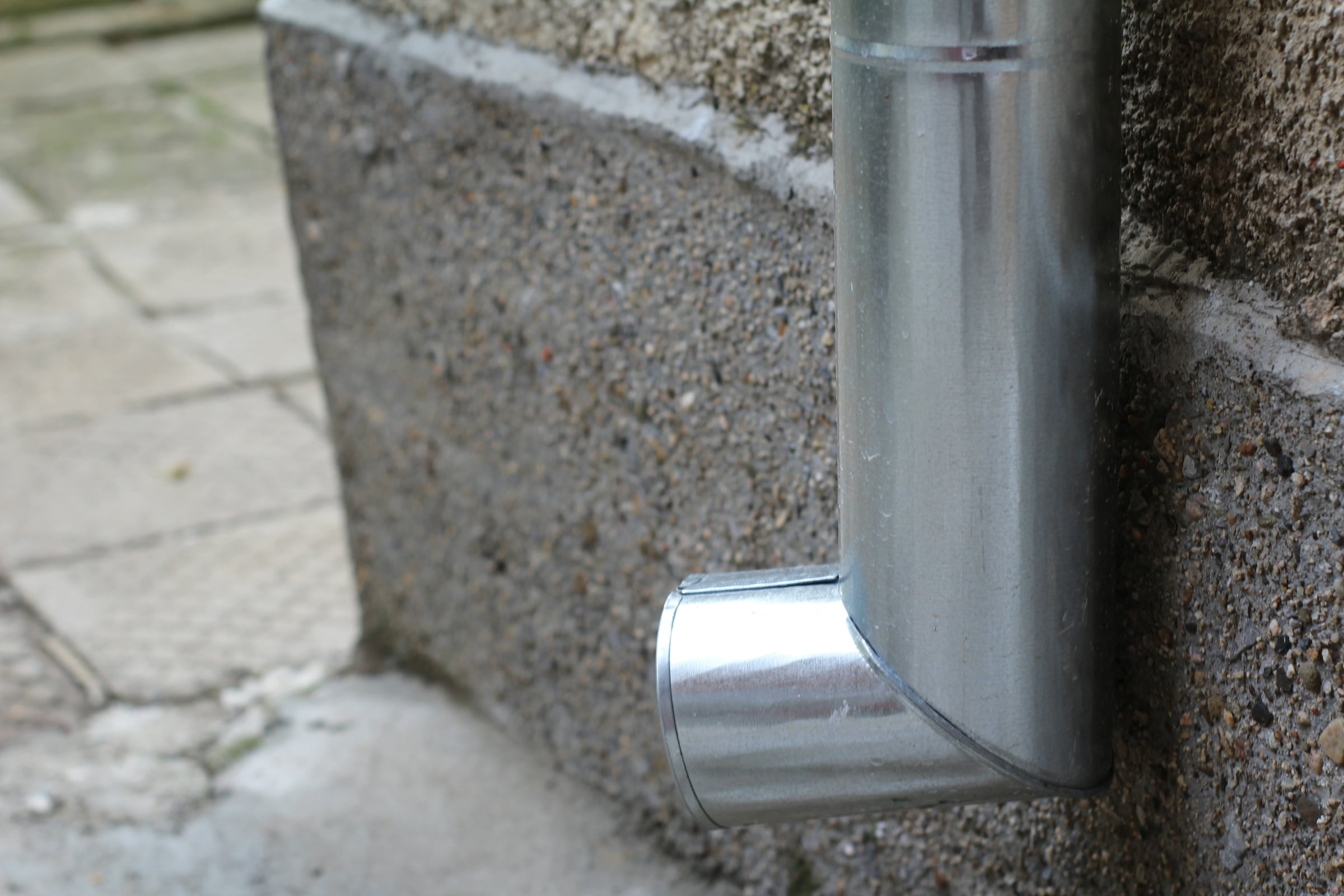
- Follow each downspout to the ground. Where does it end? Virginia Cooperative Extension’s fact sheet on rooftop disconnection (Publication 426-120, Virginia Tech, 2019) says to place downspout outlets at least 5 feet from any building. That guidance is written for a specific stormwater practice, so use it as a reference point, not a code requirement.
- Look for a splash block, extension or buried pipe. The conservation district page describes splash blocks and non-perforated corrugated pipe extensions as ways to carry water farther from the wall.
- Check the soil along the foundation. It should fall away from the house. Low spots, bare channels, or soil that sits against siding are worth a photo.
- Look at hard surfaces. Cracked or tilted patios, walks and driveways can tip water toward the house.
- Check the inside edge. In the basement or crawl space, look for stains, efflorescence (white mineral deposits), damp smells or a dehumidifier running in a corner.
| What you are checking | Published reference point | Source |
|---|---|---|
| Soil slope near the foundation | 5 percent grade for about 10 feet | Northern Virginia Soil and Water Conservation District |
| Gutter cleaning | At least once a year | Northern Virginia Soil and Water Conservation District |
| Downspout outlet distance | At least 5 feet from any building | Virginia Cooperative Extension, Pub. 426-120 |
| Roof area per disconnected downspout | Not more than 1,000 square feet | Virginia Cooperative Extension, Pub. 426-120 |
| Gravel band for undersized gutters | About 10 to 12 inches wide over landscape fabric | Northern Virginia Soil and Water Conservation District |
Get a saved search, then see the house in the rain
Tell us the areas you are watching and we will send new listings. When a home makes your short list, ask us to set a second look after a rain so you can see the gutters and soil working. You can also browse current listings.
What to look for after a rain
A dry day hides most drainage problems. During or soon after rain, watch for water spilling over a gutter edge, water pouring out of a seam, puddles that sit at the foundation, and downspouts that dump next to the wall. The conservation district page says that if gutters overflow in normal rain, larger gutters are an option, and where replacement is costly or hard to reach, a gravel band or dense ground cover can protect the soil beneath. Sellers and listing agents can tell you whether the gutters have been cleaned recently, but you can only verify the soil yourself. Take photos of each corner of the house and each downspout outlet, with a tape measure or your shoe in the frame for scale, so you can compare houses later.
Inside the house, water can show up differently. Look at the lowest floor, around floor drains, and under windows near ground level. Our guides to wet crawl spaces and sump pumps go deeper on what you find when exterior water gets in.
What a Virginia home inspector notes on drainage
Virginia’s home inspector standards, 18VAC15-40-130, list gutters and downspouts under roof drainage in (C)(2)(c), and grading, drainage, vegetation, trees and adjacent retaining walls under (C)(3)(f). Walkways, grade steps, patios and driveways fall under (C)(3)(e), though fences and privacy walls are excluded. Everything is limited to what is readily accessible and observable, and an item not inspected must be explained in the report.
The inspector can tell you a gutter is loose or the grade slopes toward the house. The inspector does not design a repair or predict how the house will behave in a storm season. For a structural or engineering question about a foundation, ask for a specialist inside your inspection period. Our Richmond home inspection guide shows how to line up that follow-up.
Lots that slope, and what to ask about
Some lots sit below the street or below a neighbor’s yard. Whether you tour in Forest Hill, Midlothian or anywhere else, notice where water from the street and the yard next door goes, and whether the lot is higher or lower than its neighbors. VCE’s fact sheet limits simple downspout disconnection to gentle slopes, under 2 feet of drop per 100 feet, to avoid erosion, so a steep side yard needs more than an extension pipe.
Ask the seller whether water has ever come in, whether gutters or grading were changed, and whether a downspout is tied to a buried pipe, since a blocked buried pipe is hard to see. If you plan to regrade or add drains, check the permit requirements with the locality.
Planning for the repair
Gutter cleaning, extensions and minor regrading are the kind of tasks owners often handle in stages, while a drain or foundation repair is a bigger decision. Run your target price and monthly payment with our mortgage calculator before you decide how much repair work you can take on, and ask a lender on our preferred lenders page about financing options.
Keep the rain test for every house on your list
Share your areas and we will send matching homes, and we can help you plan a showing after a rain so you can see how water leaves the lot.
Frequently asked questions
How often should gutters be cleaned?
The Northern Virginia Soil and Water Conservation District says at least once a year, and more often when trees are close to the house. Gutter guards can reduce how often cleaning is needed, but they do not remove the need to check.
What does water staining along the drip line mean?
The conservation district page says streaks, watermarks or erosion along the drip line suggest gutter overflow. It is worth asking whether the gutters are undersized, clogged or both.
How long should a downspout extension be?
Virginia Cooperative Extension’s rooftop disconnection fact sheet says outlets should be at least 5 feet from any building. Local needs vary with slope and soil, so ask your inspector about the specific lot.
Is a splash block enough?
The conservation district describes splash blocks as a way to direct water away from the foundation at the pipe outlet. If erosion keeps happening, it suggests stones no larger than a fist or a longer extension.
Can buried downspout pipes be a problem?
They can be, since you cannot see a blockage. The district describes non-perforated corrugated pipe as an option for carrying water farther, either on the surface or buried, but a buried line needs a clear outlet. Ask the seller who installed it and when.
What should I do if the yard slopes toward the house?
Photograph it and ask your inspector to note it. A 5 percent grade away from the house for about 10 feet is the reference in the district’s guidance. Get a quote from a grading or drainage contractor before you close, and keep the quote with your inspection file.
Does an ordinary home inspection check for flooding?
No. The Virginia standards cover grading, drainage and gutters as observed. They do not assess flood risk. Ask your insurance agent about flood coverage and check your locality’s flood maps.