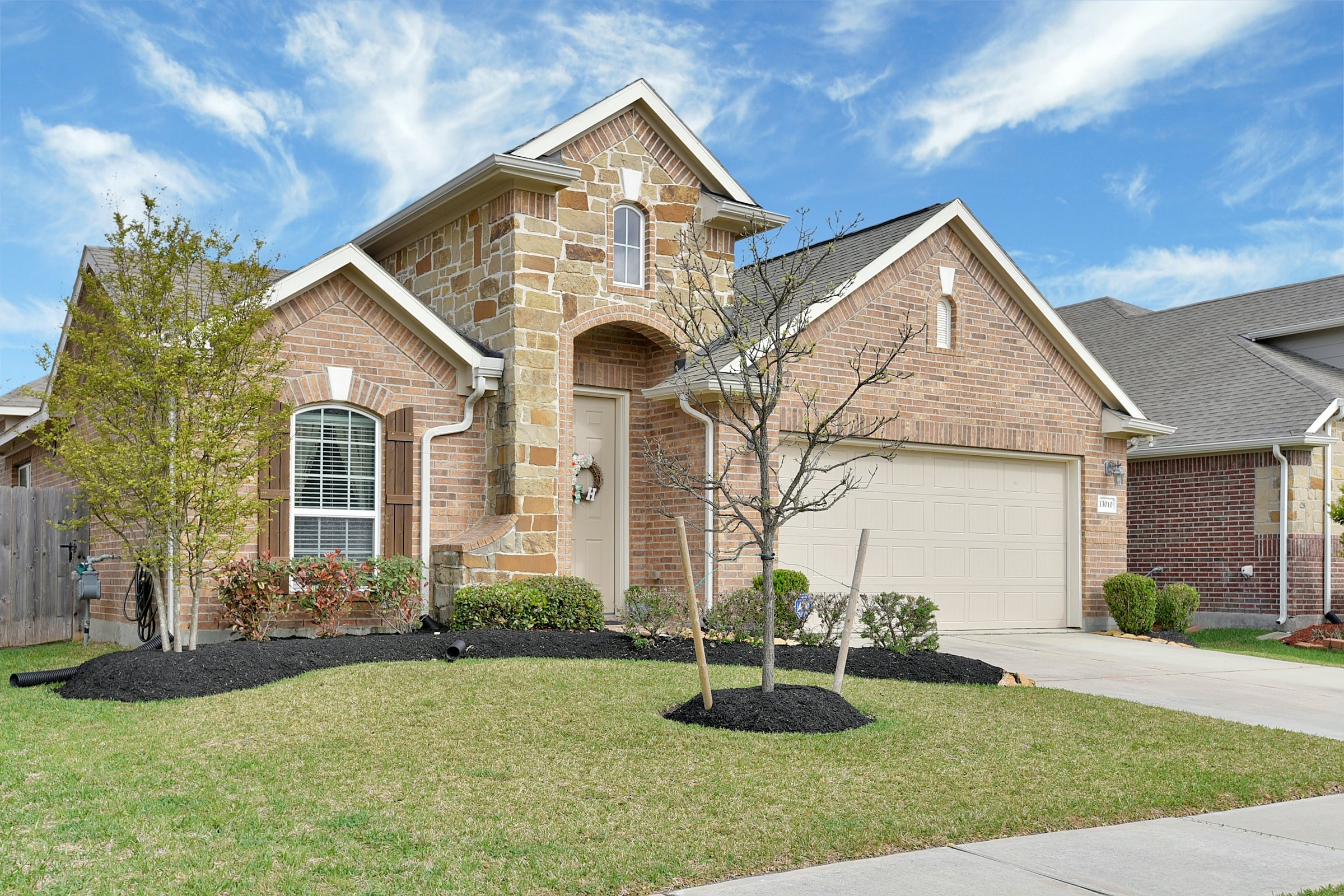
A builder incentive is a fixed pot of money, and how you take it decides what it buys: a closing cost credit lowers your cash at closing, a rate buydown lowers your payment, upgrades change the house, and a price cut lowers the loan. Your loan program caps how much of it can go toward closing costs and buydowns, the appraisal has to support the price, and an incentive tied to the builder’s preferred lender is optional, so you can still compare other lenders.
This guide compares the four options on one hypothetical home, then covers the limits, the lender question and the appraisal. We do not describe any builder’s current offer here. Offers change often, and the only reliable source is the written terms in front of you.
One incentive, four ways to spend it
Hypothetical example, not market data and not a rate quote. A $450,000 new home, a $15,000 incentive, a 30-year fixed loan with 10% down, and an illustrative 6.5% rate.
| How you take the $15,000 | What changes | What stays the same |
|---|---|---|
| Closing cost credit | Up to $15,000 less cash at closing, if your actual closing costs are that high | Loan of $405,000; principal and interest of $2,559.88 a month |
| Price reduction to $435,000 | Loan drops to $391,500; principal and interest falls to $2,474.55, or $85.33 a month less; down payment drops by $1,500 | You still pay your own closing costs |
| Rate buydown | Lower payment, for a few years (temporary) or for the life of the loan (permanent) | Price and loan amount |
| Upgrades | A different finished house | Price, loan, payment and cash to close |
Payment figures are principal and interest only, calculated on the stated hypothetical numbers.
No row wins for everyone. A buyer short on cash usually values the credit. A buyer who plans to stay many years may prefer a lower price or a permanent buydown. Run your own version in the mortgage calculator.
Closing cost credits and the caps your loan sets
To lenders, a builder is an interested party, and money it puts toward your costs is an interested party contribution. Each loan program limits those contributions.
| Loan type | Limit on interested party contributions | Source, as read November 2026 |
|---|---|---|
| Conventional (Fannie Mae), principal residence or second home, over 90% loan-to-value | 3% | Fannie Mae Selling Guide B3-4.1-02 |
| Conventional (Fannie Mae), 75.01% to 90% loan-to-value | 6% | Fannie Mae Selling Guide B3-4.1-02 |
| Conventional (Fannie Mae), 75% or less loan-to-value | 9% | Fannie Mae Selling Guide B3-4.1-02 |
| Conventional (Fannie Mae), investment property | 2% | Fannie Mae Selling Guide B3-4.1-02 |
| FHA | 6% of the sales price | HUD Handbook 4000.1 |
| VA | 4% of the home’s reasonable value for seller’s concessions; VA says it does not limit credits for the loan’s closing costs | VA funding fee and closing costs page |
The Fannie Mae Selling Guide section on interested party contributions names the builder or developer as an interested party and measures the cap against the lower of the sales price or the appraised value, not the loan amount. Contributions above the cap, or above your actual closing costs, are treated as sales concessions and subtracted from the price before your loan-to-value is figured. Fannie Mae also does not allow these funds to cover your down payment or required reserves.
The down payment matters here. In the hypothetical, 10% down puts the loan at 90% of value, so the cap is 6%, or $27,000. Put 5% down and the cap drops to 3%, or $13,500, so a $15,000 credit would not fully fit.
For FHA loans, the version of HUD Handbook 4000.1 posted on hud.gov allows interested parties to contribute up to 6% of the sales price toward origination fees, other closing costs, prepaid items and discount points, and counts buydowns in that 6%. That section shows a 2019 revision date, and HUD points readers to its online handbook for current effective dates, so have your lender confirm. For VA loans, the VA’s funding fee and closing costs page (last updated October 5, 2026) says sellers or builders may offer credits toward the buyer’s closing costs, that VA does not limit credits for the loan’s closing costs, and that seller’s concessions are limited to 4% of the home’s reasonable value from the VA Notice of Value. It lists credits for the VA funding fee, debt payoff and prepaid hazard insurance as concessions. Ask a VA lender how a builder-paid buydown is classified.
Price the incentive against a second loan offer
A Mission Realty lender partner can give you a Loan Estimate on the same home, so you can see what the builder’s incentive is worth next to an outside quote. We do not quote rates here.
Rate buydowns: temporary or permanent
A temporary buydown puts money in an account that tops up your payment for the first years. Your note rate never changes, and when the account runs out you pay the full payment. Our guide to seller-paid rate buydowns in Richmond walks through a 2-1 buydown year by year.
A permanent buydown uses discount points to lower the note rate for the life of the loan. It costs more per dollar of payment saved in the early years, but the savings do not expire. Our post on how mortgage points work covers the break-even math.
Either kind, paid by the builder or a lender tied to the builder, counts toward the Fannie Mae cap, and HUD’s 6% includes both. Ask for the rate and payment with and without the buydown, so you can see exactly what it buys.
Upgrades versus a lower price
Design center credits and upgrade packages change the house, not the loan. They make sense when you would have paid for those items anyway and they are hard to add later, such as structural options or extra electrical work. They make less sense for finishes you could change after closing for less.
A price cut works the other way. It lowers the loan, the payment and the down payment for as long as you own the home. It also keeps the contract price closer to what comparable sales support, which helps with the appraisal. Our guide to choosing upgrades without overspending goes room by room.
The preferred-lender incentive
Some incentives are offered on the condition that you use a lender the builder names. That is allowed, with conditions. Under the CFPB’s Regulation X rule on affiliated business arrangements, a company that refers you to an affiliated provider must give you a written disclosure of the relationship and an estimate of its charges, and generally may not require you to use that provider. The definition of required use in the same regulation says a package or discount for using certain providers must be optional, must be a true discount below prices otherwise generally available, and must not be made up by higher costs elsewhere.
In practice, that means you can take the incentive or decline it, and you can compare. The CFPB’s Owning a Home guide recommends getting official offers from more than one lender. Ask the preferred lender and one outside lender for Loan Estimates on the same day, then compare rate, points, lender fees and total cash to close. Our guide to reading and comparing Loan Estimates shows which lines to line up.
How incentives show up in the appraisal
Fannie Mae’s lender checklist tells lenders to give the appraiser all financing data and interested party contributions on the property and to make sure the value is adequately supported. So the appraiser sees the incentive. If a price has been held up by a large credit, and the appraisal comes in lower, the cap is figured on the lower value and you may need more cash to close. A lower contract price reduces that risk. Our post on appraisal gap coverage explains what happens if the value comes in short.
Incentives can also interact with real estate tax. A new home’s first-year bill often arrives after closing; see the partial-year assessment and the bill that comes after closing before you decide how to use a closing cost credit.
Your own agent or the builder’s team
You can negotiate incentives directly with the builder’s sales team, and many buyers do. The builder’s representatives know the community, the plans and the current terms. You can also bring your own agent, who represents only you, compares the offer against other communities and reviews the builder’s contract. Each choice has trade-offs, set out in do you need your own agent for new construction in Richmond.
Whichever you choose, the rest of our new-construction series covers the next steps: phase inspections, the final punch list and builder warranties and Virginia law. To compare communities, browse new construction homes around Richmond or our area guides for Chesterfield County, Henrico County, Hanover County and Powhatan County. If you want representation, start at buying with Mission Realty.
Check the incentive against a second Loan Estimate
Bring the builder’s written incentive terms. A Mission Realty lender partner can quote the same home so you can compare the credit, the buydown and the rate side by side.
Builder incentive questions we hear
Can a builder incentive pay my down payment?
Not on a Fannie Mae conventional loan. The Selling Guide says interested party contributions cannot be used for the down payment, financial reserves or the minimum borrower contribution. Ask your lender how the program you are using treats it.
What happens to a credit that is bigger than my closing costs?
Under Fannie Mae’s rules, financing concessions cannot exceed your actual closing costs. Anything above that is treated as a sales concession and subtracted from the price before your loan-to-value is calculated, which can change your down payment or mortgage insurance.
Do HOA dues paid by the builder count as an incentive?
On a Fannie Mae loan, an interested party may pay HOA assessments for up to 12 months after settlement, and that counts as an interested party contribution. Payments that run longer than 12 months are treated differently, so ask before you agree to them.
Is a lender credit from my own lender limited the same way?
Fannie Mae excludes a lender credit that comes from premium pricing from the interested party contribution limits, even if the lender is an interested party. A credit or incentive funded by the builder or an affiliated lender still counts.
Can I take the incentive and still use my own lender?
Only if the builder’s written terms allow it. The incentive itself may be tied to a named lender. What Regulation X requires is that any discount package be optional and a true discount, and that an affiliated relationship be disclosed in writing.
Should I ask for the incentive in writing?
Yes. Ask for the amount, what it can be used for, any lender or closing date condition, and what happens if your loan program caps it below the full amount. Put those terms in the purchase agreement or an addendum.
Does an incentive change my real estate tax?
Not directly. Real estate tax follows the locality’s assessment, not your contract price or credit. A new home’s assessment can change once it is complete, which is covered in our partial-year assessment guide.
Are upgrades financed in the loan?
Upgrades you pay for are usually part of the contract price, so they are financed with the home if the appraisal supports the price. Upgrades the builder gives as an incentive do not add to your loan, but they also do not lower your cash to close.