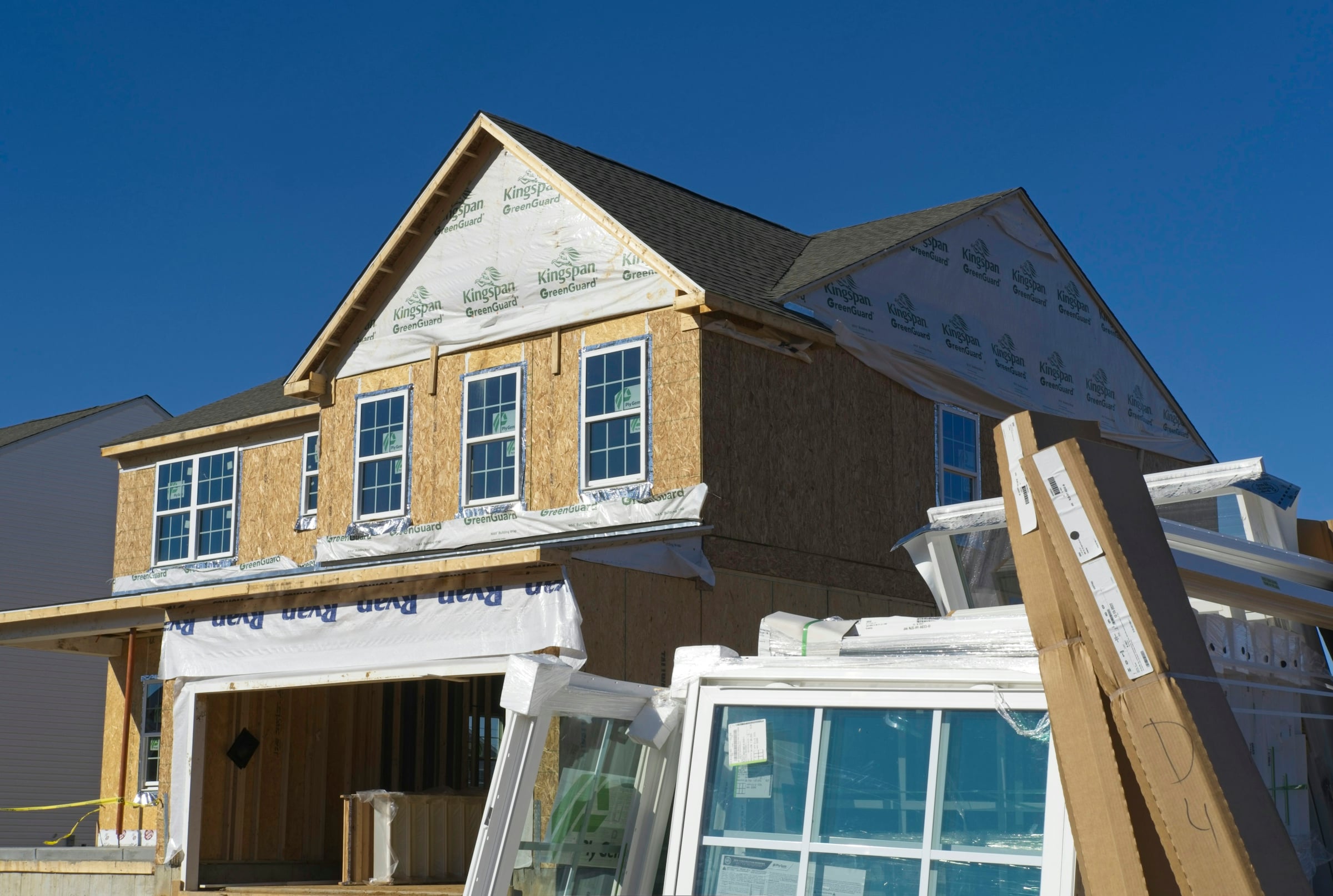
If you close on a brand-new home around Richmond, the real estate tax prorated at your closing may be based on the lot alone, because the house did not exist on January 1. A second, larger bill for the finished house can arrive weeks or months after you move in, and unless your contract or escrow planned for it, that bill is yours to pay.
Below: the Virginia rule, what each locality publishes, a worked example and the questions to ask before closing. It is part of our series on buying new construction around Richmond.
Why the closing number can be too low
Virginia localities value real estate as of January 1. On that date, a home finished in July was often a graded lot. That is what the year’s original bill taxes, and the settlement agent usually prorates from the most recent bill on record. On a new home, that may be land-only value.
Section 58.1-3292 of the Code of Virginia lets a county, city or town adopt an ordinance to assess new buildings once they are substantially completed or fit for use and occupancy, if that happens before November 1 of the year of completion. The statute splits that year’s tax into two pieces:
- tax on the completed building’s assessment, for the part of the year after it was substantially complete, and
- tax on the property as it stood on January 1, for the part of the year before.
Two more details matter. A partial assessment is not effective until its date and amount are recorded with the official who collects real estate tax. And if the assessment is made after September 1, the penalty for not paying by December 5 moves to February 5 of the next year, a sign these bills can land late in the year.
The statute only applies where the locality has adopted an ordinance, so the next section sticks to what each one publishes.
What each locality says on its own pages
We read each locality’s assessment and treasurer pages in November 2026.
Hanover County
Hanover is the most explicit. The county’s Tax Due Dates page lists supplemental billing for personal property and real estate tax on the 5th of each month, in addition to the June 5 and October 5 real estate installments. Its Tax Billing Information page says first, second and supplemental real estate bills are mailed 30 days before the due date. Neither page says which events trigger a supplemental bill, so ask the Treasurer whether a newly completed house on your parcel will be billed that way. Our Hanover County guide covers the area itself.
Henrico County
The Henrico Real Estate Assessment Division page says the county reassesses all real property effective January 1 each year, that tax bills are due June 5 and December 5, and that bills are typically sent directly to the mortgage company. It does not describe a new-construction, partial-year or supplemental assessment. The division’s listed phone number is 804-501-4300. Buying in Twin Hickory, Varina or elsewhere in Henrico County? Ask how a home finished mid-year is billed.
Chesterfield County
Chesterfield’s Treasurer page lists June 5 and December 5 as real estate due dates and notes that the second-half date will be observed on Monday, December 7, 2026, because December 5 is a Saturday. Neither that page nor the county’s Real Estate Assessments page that we read describes how a newly completed home is assessed mid-year. Buyers in Harpers Mill, Hallsley or other parts of Chesterfield County should ask the Assessor and Treasurer directly.
City of Richmond
The City values real estate as of January 1 and bills in two halves, due January 14 and June 14, as our proration guide linked below explains. The Assessor’s forms page includes an Assessment Value Change Review application for appealing a change in value caused by “a supplement, roll correction, or rehab.” That tells you supplements exist in the City of Richmond. The pages we read do not explain when one is issued for new construction or how it is billed.
The rates themselves differ by locality. Our 2026 real estate tax rates by locality lists them, and when real estate tax is due across the Richmond area covers each calendar.
A worked example of the gap
Illustration only. Hypothetical round numbers, not a locality’s actual values or rate. Your locality’s real rate is in our rate comparison above.
| Item | Hypothetical figure |
|---|---|
| Value on January 1 (lot only) | $100,000 |
| Value once the house is substantially complete | $450,000 |
| Tax rate | $0.85 per $100 |
| Substantially complete on | July 1 |
| Original bill for the year (lot only, full year) | $850.00 |
| Completed house, July 1 to December 31 (184 of 365 days) | $1,928.22 |
| Lot only, January 1 to June 30 (181 of 365 days) | $421.51 |
| Total tax for the year under the statute’s formula | $2,349.73 |
| Amount not on the original bill | $1,499.73 |
If the closing proration used the $850 land-only bill, about $1,500 of that year’s tax was never split. A full year at the completed value would be $3,825, so budget for next year too.
Our guide to prorations on a Richmond closing statement shows how the split normally works when the bill is known. The new-construction problem is that part of the bill is not known yet.
Four questions to ask before you close
- To the title company or settlement agent: Is the tax proration based on a land-only assessment? If so, does the contract call for a re-proration once the locality issues a bill for the completed house, and who holds the money if it does?
- To the builder: What does the purchase agreement say about real estate tax on the improvements for the year of completion? Has the locality already recorded a partial assessment for this parcel?
- To the locality: Has the commissioner of the revenue or assessor entered a value for the completed house, and when will a bill go out? Ask for it by parcel number.
- To your lender: What tax figure did you use to set my escrow deposit and monthly payment? Is it the land-only figure or an estimate for the finished house?
Get the Richmond closing-timeline checklist
What to ask and when, from contract to keys, including the tax and escrow questions above.
What it means for your escrow account
Your lender sets the monthly escrow deposit from a tax figure, and on a new home that may be the land-only bill. Two things can follow.
First, the supplemental bill may go to you, to the builder as former owner, or to your servicer. Do not assume escrow will catch it; ask the servicer in writing.
Second, once the full value is on the books, your escrow account may run short. In our hypothetical, the yearly tax rises from $850 to $3,825, so the monthly tax portion of the payment would rise from about $71 to about $319. Ask the lender to escrow on an estimate of the completed value from the start if you would rather avoid a jump later.
For a refresher on how escrow works, see our guide to escrow when buying in Richmond, and use the mortgage calculator with the full-value tax figure to see your real payment. A lender partner can rerun it with your numbers.
Where this fits with the rest of the build
The phase inspections post covers what to check before drywall, the punch list guide covers the final walk, and the builder warranty guide covers what is covered after closing. The next post in this series compares closing cost credits, rate buydowns and upgrades.
Some buyers handle this with the builder’s team and their lender; others want their own agent. Our post on whether you need your own agent for new construction sets out the pros and cons. If you want help, start at buying with Mission Realty.
Plan for the second tax bill before closing day
The Richmond closing-timeline checklist puts the proration, re-proration and escrow questions on the right dates, so a supplemental bill is a line in your budget instead of a surprise.
Questions buyers ask about new-construction tax bills
Is the supplemental bill a penalty or a mistake?
No. Under Code of Virginia section 58.1-3292, a locality that has adopted the ordinance taxes a new building for the part of the year after it is substantially complete. The bill covers value that did not exist on January 1, so it is a normal tax bill, not a fine.
What does substantially complete mean for this tax?
The statute uses the phrase substantially completed or fit for use and occupancy. It does not tie the date to a closing or to a move-in. Ask the assessor what date it used for your parcel, since that date drives how many days are taxed at the completed value.
What if my house was finished in November or December?
The statute covers buildings substantially completed before November 1 of the year of completion. A home finished after that date may simply show up at full value on the next January 1 assessment. Confirm with your locality how it handles late-year completions.
Who pays the supplemental bill, me or the builder?
That depends on your purchase agreement and on whether the settlement agent agreed to re-prorate when the bill arrives. Without a re-proration clause, the owner of record when the bill is due usually ends up paying it. Read the tax section of the builder’s contract before you sign.
Can I appeal the value on a supplemental assessment?
Localities have appeal routes. The City of Richmond’s Assessor lists an Assessment Value Change Review application for changes caused by a supplement. In other localities, ask the assessor’s office for the process and deadline that applies to a mid-year value.
Will my lender pay the supplemental bill from escrow?
Only if the servicer receives the bill and has enough in the account. Henrico says its regular bills typically go straight to the mortgage company, but a supplemental bill may be mailed differently. Ask your servicer in writing whether it has the bill and plans to pay it.
Does this affect a home I buy from the first resale owner?
Usually less so. By the time a new home resells, the full value is normally on the January 1 assessment, so the proration reflects it. If the house was completed in the same year as your purchase, ask the same questions you would on a new build.