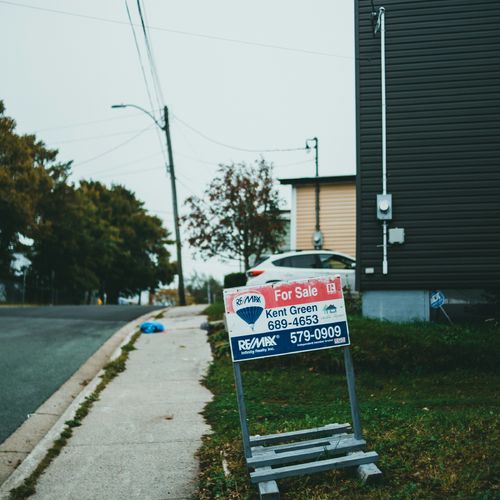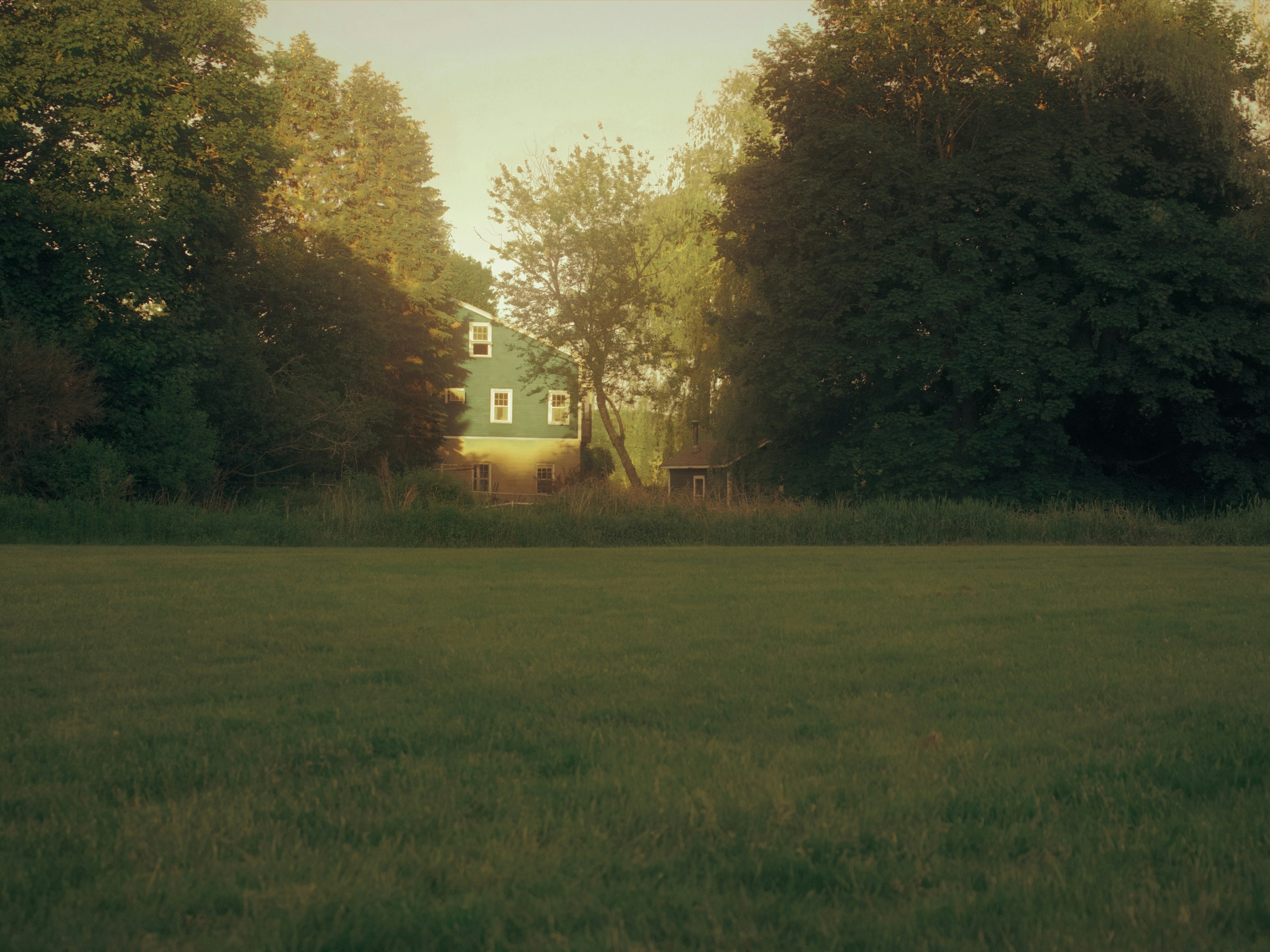
The trees behind the house are the amenity you are paying for and the risk you are not pricing. Here is how to tell which one you are getting.
Every subdivision has a last row of lots. They back to woods, a field, a creek or a berm, and they command a premium for privacy that buyers are usually happy to pay.
Sometimes that premium is durable. Sometimes the buyer has paid extra for a view that will be gone in four years. The difference is knowable before you write the offer, and it comes down to five questions.
This is part of our series on land use in the Richmond market, alongside how to check what is being built near a home and how rezonings and conditional use permits work.
1. Who owns it, and is it one parcel or twelve?
Pull the parcel record on the land itself, then on everything touching it. Two patterns tell you almost everything.
A single large parcel held by a family for forty years, still assessed as farmland, is the most common case in Hanover, Powhatan and Goochland. It will eventually sell, and when it does it will likely sell to a builder.
A cluster of parcels recently acquired by an LLC is a different animal entirely. Assembly is intent. If six adjoining parcels changed hands to the same entity over three years, the plan exists whether or not it has been filed.
2. What does the zoning already allow, without a hearing?
This is the question that decides most outcomes, and the answer is often worse than buyers assume.
By-right development requires no public hearing and no notice to neighbors. If the parcel is zoned for residential development at four units per acre, a builder can put four units per acre there through an administrative site plan process. Nobody will call you.
So the real question is never “is anything planned?” It is “what is the worst thing that is already permitted?” Ask that, look up the district’s permitted uses in the locality’s zoning ordinance, and price the house against that answer rather than against the trees.
3. What is the comprehensive plan designation?
Zoning is today. The comprehensive plan is the locality’s stated intention for the future, and it is the best single predictor of what a board will approve in ten years.
A parcel zoned agricultural but designated for suburban residential in the comprehensive plan is a rezoning waiting for a market cycle. A parcel zoned agricultural and designated rural conservation is far more likely to stay as it is, because an applicant asking for something inconsistent with the plan starts from a much weaker position.
Both Chesterfield and Henrico publish their comprehensive plan land use maps alongside their zoning maps. Look at both layers, always.
4. Is there a physical or legal constraint on building?
Some land cannot be developed regardless of zoning, and this is where a scary field becomes a permanent buffer.
Wetlands, floodplain and Chesapeake Bay Preservation Act resource protection areas all restrict what can be cleared and built. Steep slopes and poor soils constrain septic systems, which matters enormously outside sewer service areas. A parcel with no frontage on a public road has an access problem that can stall development for decades.
Conservation easements are the strongest protection available. A recorded easement permanently limits development and survives every future sale. If the land behind the house is under easement, the view is effectively guaranteed, and that is worth paying for.
Land use taxation is the weak cousin that buyers confuse with an easement. Virginia allows localities to assess qualifying agricultural, horticultural, forest and open space land at use value rather than fair market value under Section 58.1-3230 of the Code of Virginia. It reduces the owner’s tax bill while the land stays undeveloped, and rolling out of it triggers back taxes for a period of years. That is a speed bump, not a barrier. Never treat use-value assessment as protection.
Send us the address and we will look
We will pull the adjoining parcel records, the zoning and comprehensive plan designations and any recorded easement, then tell you plainly what we find. Including when the answer is that the field is safe.
5. Where would the traffic go?
If the land does develop, the new residents have to get out, and stub streets are the tell.
Walk your prospective subdivision and look for streets that end abruptly at the property line with a temporary barricade or a sign reading future road extension. Those are designed connection points, and they exist because the locality required the subdivision to be able to connect to whatever comes next.
A quiet cul-de-sac with a stub at the end is not a cul-de-sac. It is a future through street. That single observation changes the value of a lot more than any zoning designation, because it converts a low-traffic street into a collector.
Road plans live with the Virginia Department of Transportation in the Six-Year Improvement Program for larger projects and with the locality for local streets.
What the seller has to tell you
Very little. Virginia is a limited-disclosure state. Under the Virginia Residential Property Disclosure Act the seller provides a form stating the property is sold as is and directing the buyer to make independent inquiries, specifically including inquiries about adjacent parcels, zoning and proposed transportation projects.
The statute puts this on you by design. A seller who genuinely knows a 200-unit subdivision is coming is not required to volunteer it, though they cannot actively misrepresent it if asked directly. So ask directly, in writing, and ask whether they have received any land use notices as an adjoining owner.
How to price the risk once you know it
Three outcomes and three responses.
If the land is protected by easement or hard physical constraint, pay the privacy premium with confidence. This is the best version of the last-row lot.
If the land is developable by right at a density similar to the existing neighborhood, treat the premium as temporary. Assume houses eventually, decide whether you would still buy at that price with houses there, and offer accordingly.
If the land is developable at a materially higher intensity, commercial, industrial or high-density residential, the privacy premium is a liability rather than an asset. That is the case to walk away from, or to buy only at a price that reflects the future rather than the present.
For rural parcels the analysis extends to well, septic, soils and access, which we cover in buying land or acreage near Richmond. If acreage is what you want, start with Richmond area homes with acreage, where the adjoining-parcel question matters most of all.
Frequently asked questions
How can I find out who owns the land behind my house?
The locality’s real estate assessment lookup or parcel viewer. Search by address or map the area and click the adjoining parcels. Owner name, deed reference, acreage, assessed value and zoning are all public and free.
Does a conservation easement really last forever?
A perpetual conservation easement is recorded against the land, binds all future owners and is enforceable by the easement holder. Not all easements are perpetual, so read the recorded instrument for the term and the specific restrictions rather than assuming.
If land is taxed as farmland, is it protected from development?
No, and this is the most common misunderstanding. Use-value assessment under Section 58.1-3230 of the Code of Virginia reduces the tax bill while land remains in qualifying use. When it converts, the owner owes roll-back taxes for a limited period. It is a modest cost of development, not a restriction on it.
What is a stub street and why does it matter?
A street built to the edge of a subdivision and left unfinished so a future development can connect to it. Localities require them to avoid isolated street networks. If your street has one, it is likely to become a through street when the adjoining land develops, which changes traffic volume substantially.
Will the county notify me if someone applies to develop the land?
Only if you are an adjoining property owner of record when the application is filed, and only for actions requiring a public hearing such as a rezoning or conditional use permit. By-right development generates no notice at all.
Is a wooded lot behind me safer than an open field?
Slightly, and only for cost reasons. Clearing costs money, so wooded land is marginally less attractive to develop than cleared land. It is not a meaningful protection. Check for wetlands, floodplain and resource protection area designations, which are.
Can I buy the land behind my house to protect it?
Sometimes, and it is worth asking. Neighbors occasionally split a parcel among several adjoining owners, or a homeowners association buys it as common area. Both are cheaper than most people expect when the alternative is losing the buffer.
Should I ever pay a privacy premium at all?
Yes, when the protection is legal or physical rather than merely current. An easement, a floodplain or a locality-owned park behind you is worth real money. An unrestricted developable field is not, however nice it looks the day you tour.
Looking at a last-row lot?
This is exactly the check we run before our clients write an offer, and it takes us under an hour. See how we work with buyers or call (804) 601-4960.