Buying Land or Acreage Near Richmond VA: What to Check Before You Build
Perc tests, wells, power runs and easements – the due diligence that decides whether a pretty parcel is actually buildable
Buying land or acreage near Richmond VA means buying a set of unresolved questions rather than a finished product. Before you close on a parcel in Goochland, Powhatan, Hanover, Amelia, New Kent or Louisa County, you need to know the zoning district and what is permitted by right, the minimum lot size, whether the soil will support a permitted septic system, whether a well can produce adequate water, what it costs to run electric service to your building site, how you legally and physically reach the property, and whether wetlands, Resource Protection Areas or floodplain restrict where you can build. Perc testing and septic feasibility is the single most common deal-killer on rural Virginia land. Buyers searching land for sale near Richmond VA, Goochland County acreage, Powhatan land, buildable lots Hanover County, perc test Virginia and land loans Richmond VA should treat the contract period as an investigation rather than a formality. The Mission Realty Team writes land contracts with the contingencies that let you walk away when the answers come back wrong.
Table of Contents
- Zoning, By-Right Use and Minimum Lot Size
- Perc Testing and Septic Feasibility
- Wells and Water Yield
- Electric, Internet and the Real Cost of a Utility Run
- Access: Road Frontage, Private Roads and Easements
- Wetlands, Resource Protection Areas and Floodplain
- Soil, Slope and Finding a Building Envelope
- Timber, Mineral Rights and Land Use Taxation
- Land Loans vs Construction Loans
- Frequently Asked Questions
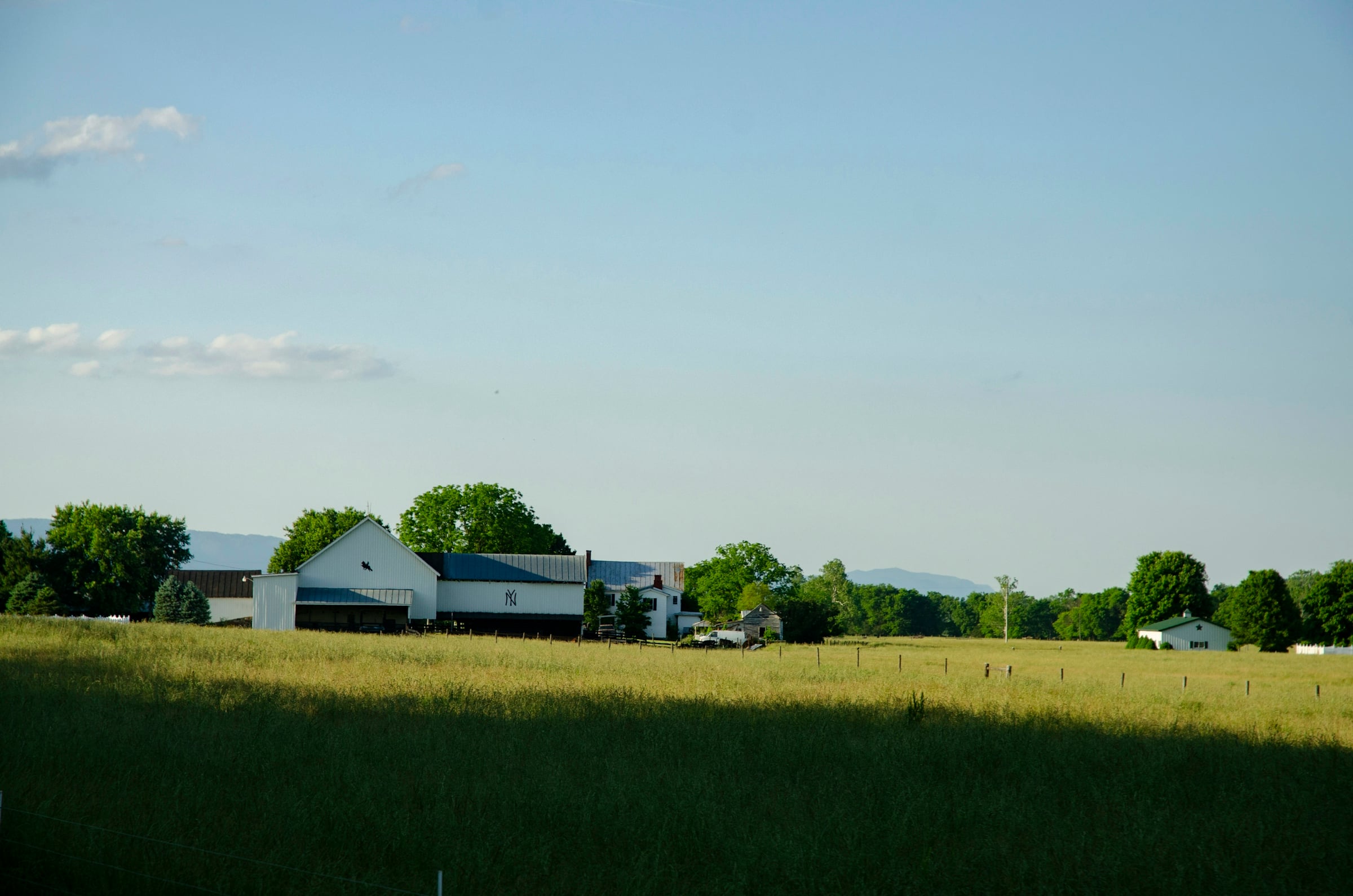
Drive west on Route 6 into Goochland, southwest on Route 60 into Powhatan, north up Route 301 into Hanover, east on Route 249 into New Kent, or further out toward Amelia and Louisa, and you move from subdivisions into working farmland, pine plantation and rolling Piedmont pasture. There is still real acreage for sale out here.
What surprises first-time land buyers is how different this is from buying a house. Buy a house and the hard questions are already answered: it has power, it has water, it has septic or sewer, and somebody already proved you could legally build on the lot. Raw land settles none of that. You are buying the right to find out, and the contract period is when you find out. Every check below is governed by the specific county and, for wells and septic, by the Virginia Department of Health district office serving it, so verify everything with the county the parcel sits in. The Mission Realty Team helps buyers sequence these investigations so you are not paying for a survey before you know whether the soil works.
What Does the Zoning Actually Allow You to Do?
Start with the zoning district, because it governs everything else. Rural land around Richmond is typically zoned in some form of agricultural or general rural district, though names vary by county. What you want from the county planning department is the list of uses permitted by right versus those needing a conditional use permit. By right means you can do it without asking the board of supervisors. A single-family dwelling is usually by right in agricultural districts, but a second dwelling, an accessory dwelling unit, a home business with customer traffic, an event venue, a short-term rental or a manufactured home may not be.
Then check minimum lot size and setbacks. Agricultural zoning here commonly carries a substantial minimum acreage per dwelling, which matters enormously if you intend to divide the parcel or put two houses on it. Ask how many divisions the parent parcel is entitled to and whether it has already used them. A fifty-acre tract that cannot legally be split is a different asset than one that can.
Perc Testing and Septic Feasibility: The Number One Deal-Killer
If you take one thing from this article, take this. Outside the water and sewer service areas of Richmond, Henrico and inner Chesterfield, a new house needs an onsite sewage disposal system, and whether the ground will accept one is the single most common reason land deals fall apart in central Virginia.
The process is a soil evaluation, commonly called a perc test, performed by a licensed onsite soil evaluator or by the Virginia Department of Health. The evaluator digs test pits, reads the soil profile for texture, restrictive layers and evidence of a seasonal water table, and determines whether a drainfield can be permitted, what type and how large. Much of the Virginia Piedmont has heavy clay subsoil, shallow depth to rock or high seasonal water tables, and any of those can kill a conventional drainfield.
A denial is not always the end. Virginia permits alternative onsite sewage systems – pretreatment units, drip dispersal, mound systems – that can work where a conventional gravity drainfield cannot. They cost substantially more to install and require an operation and maintenance contract with a licensed operator for the life of the system, so price that before closing rather than after. Two more points: the number of bedrooms your permit allows caps the size of house you can build, and an existing certification may have expired or been issued under superseded regulations, so confirm validity with the health department rather than trusting a seller’s old paperwork.
Will a Well Produce Enough Water?
Most rural parcels around Richmond will be served by a private drilled well. In the Piedmont counties west of the city – Goochland, Powhatan, Louisa, Amelia – wells are typically drilled into fractured crystalline bedrock, and yield depends on intersecting water-bearing fractures rather than on hitting a uniform aquifer. Yield therefore varies from one property to the next and sometimes within a single property, so a neighbor’s well is useful context and not a guarantee. East of Richmond in New Kent and eastern Hanover you move toward Coastal Plain sediments, where wells draw from sand and gravel aquifers and yields are often more predictable, though water chemistry can bring iron, sulfur or hardness that requires treatment.
Ask the health department about required well setback distances from the drainfield, property lines and structures, because on a small or oddly shaped lot the well and septic setbacks together can eliminate your building site. If a well already exists, have the water tested for bacteria and nitrates and ask for the original well completion report, which lists depth, casing and tested yield.
Electric, Internet and the Real Cost of a Utility Run
Buyers routinely assume that because a power line runs along the road, power is available. What matters is the distance from the nearest serviceable line to your actual building site, and who pays for it. Utilities in Virginia typically provide an allowance of line extension at no cost and charge for footage beyond it, which can make a long driveway a significant line item. Rural parcels near Richmond may be served by Dominion Energy or by an electric cooperative depending on territory. Call the provider for that address, describe where the house will go, and ask for a written line extension estimate covering overhead versus underground, who clears trees, and whether the route crosses a neighbor’s land and so needs an easement.
Also verify what is not available. Natural gas generally does not extend into rural Goochland, Powhatan, Amelia or Louisa, which means propane and a tank that needs a location and a delivery route. Public water and sewer are usually absent outside designated growth areas. Internet ranges from fiber in some corridors to fixed wireless, cellular or satellite in others, and if you work from home that deserves a direct check with providers at the specific address rather than a coverage map.
How Do You Actually Get In? Frontage, Private Roads and Easements
Legal access and physical access are different things, and a parcel can fail on either. Legal access means a recorded right to reach the property from a public road. Physical access means a usable route that can carry a concrete truck. If the parcel fronts a state-maintained road you need an entrance permit from the Virginia Department of Transportation, and VDOT has requirements for sight distance, entrance width and culverts. Sight distance is the one that catches people: a driveway on a curve or just over a rise may not be approvable.
If access is by private road or shared driveway, read the recorded documents. You want the easement width, who holds rights to use it, whether a written maintenance agreement exists, and how costs are allocated. Many rural Virginia private roads have no maintenance agreement at all, which works fine until it does not, and some loan programs require one.
Then look at what crosses the land in the other direction. Utility and pipeline easements, transmission corridors, logging roads, agricultural access for a neighbor and old prescriptive paths all show up on rural tracts. A boundary survey and a title search are how you find them, and on raw land we treat a survey as close to essential because fence lines in Virginia frequently do not match deeded boundaries.
Wetlands, Resource Protection Areas and Floodplain
Central Virginia has three overlapping layers of environmental restriction that can shrink a buildable area dramatically. Wetlands are regulated federally under the Clean Water Act by the U.S. Army Corps of Engineers and by the Commonwealth through the Virginia Department of Environmental Quality. Wet ground in a hardwood bottom near a creek may be jurisdictional wetland, and filling it without a permit is a serious problem. National Wetlands Inventory mapping is a screening tool only, so if your house site, driveway or drainfield is near low ground, a wetland delineation by a qualified consultant is money well spent.
The Chesapeake Bay Preservation Act adds a second layer. Localities in Tidewater Virginia designate Chesapeake Bay Preservation Areas, including Resource Protection Areas that generally take in tidal wetlands, water bodies with perennial flow, connected nontidal wetlands and a vegetated buffer landward of those features. Development inside an RPA is significantly restricted, and buffer disturbance typically requires a local exception process with mitigation. Hanover and New Kent are among the localities administering these programs, while the western Piedmont counties handle water quality under their own ordinances. Ask county staff to identify any mapped RPA or perennial stream on the parcel.
Third, floodplain. Check FEMA flood mapping and understand that a Special Flood Hazard Area designation affects where you can build, elevation requirements and whether a lender requires flood insurance. Land along the Chickahominy, the Pamunkey, the James and their tributaries carries real floodplain acreage.
Soil, Slope and Finding a Real Building Envelope
Once you know what is restricted, work out what is left. A building envelope is the area where the house, garage, driveway, well and drainfield all fit while respecting setbacks, easements, buffers and separation distances. On paper a twenty-acre parcel sounds like unlimited choice. In practice the envelope is often one or two specific spots.
Topography drives cost. Piedmont land west of Richmond rolls, and grading a level pad, building retaining structures or running a long climbing driveway all add expense. Slope also interacts with septic design, so ask your soil evaluator where the best soils sit and then check whether that location leaves a sensible spot for the house. Expansive clays, shallow depth to rock and rock outcrops change foundation design and excavation cost, and a test pit that hits rock at three feet can turn a basement plan into a crawl space plan. USDA Natural Resources Conservation Service soil survey data is a reasonable first screen but is mapped too coarsely to resolve individual house sites.
Timber, Mineral Rights and Land Use Taxation
Timber is the most overlooked of these. A well-stocked stand of mature pine or hardwood is a real asset, and a tract clear-cut two years ago is a different purchase at the same price per acre. Ask whether the seller has cut recently, whether a timber deed or cutting contract is outstanding, and whether harvest rights were reserved. A consulting forester can cruise a tract, which is worth doing on larger acreage.
Mineral rights can be held separately from the surface. In parts of central Virginia, particularly around Louisa and Amelia where mining history exists, older deeds sometimes reserve minerals to a prior owner. Your title search should reveal severed mineral, timber, gas or water rights, and your closing attorney should tell you plainly whether the sale conveys the mineral estate.
Then there is land use taxation. Virginia allows localities to adopt use value assessment programs that tax qualifying agricultural, forest or open space land on its use value rather than market value, lowering the annual bill substantially. Goochland, Powhatan, Hanover, Louisa, Amelia and New Kent have each administered programs of this kind with their own qualifying acreage requirements. Two cautions: enrollment does not always transfer automatically to a new owner, and converting land out of a qualifying use can trigger roll-back taxes for prior years plus interest.
Financing: Why Land Loans and Construction Loans Are Not the Same
Financing raw land works differently from financing a house. A lot or land loan is secured by dirt, which a lender views as harder to value and harder to liquidate than an occupied home, so expect a larger down payment expectation than on a residential purchase, a shorter term and a smaller pool of lenders. Local and regional banks and Farm Credit institutions are often more comfortable with Virginia acreage than large national lenders, because they see perc tests and timber value constantly.
A construction loan is a different product. It funds the build in draws against inspections, then converts to permanent financing or is replaced by a separate mortgage, and underwriting looks at your builder, plans, budget and the appraised value of the finished house rather than just the land. Some lenders offer a single-close construction-to-permanent loan that folds the lot purchase into the construction financing.
Talk to a lender before you make an offer, and name the specific parcel, acreage and county. Ask whether they will lend on it at all, what down payment they expect, whether they require a survey or the septic certification before closing, and whether a private road without a maintenance agreement is a problem. USDA guaranteed rural housing financing exists in parts of Goochland, Powhatan, Hanover and outer Chesterfield, but it is built for buying or building a home rather than holding raw land, so confirm the fit early.
| Due diligence item | Who you ask | Why it can kill the deal | When to do it |
|---|---|---|---|
| Zoning and by-right use | County planning department | Your intended use is not permitted | Before writing an offer |
| Soil evaluation / perc test | Licensed soil evaluator or VDH district office | No permittable drainfield, or bedroom count too low | First contingency, immediately after contract |
| Well feasibility and yield | Local well driller, VDH | Poor yield or setbacks eliminate the site | Alongside the soil evaluation |
| Electric line extension | Dominion Energy or the local electric cooperative | Cost of the run exceeds your budget | Early, in writing |
| Access and easements | Surveyor, closing attorney, VDOT | No legal access or no approvable entrance | Title work plus survey |
| Wetlands, RPA, floodplain | County environmental staff, wetland consultant, FEMA maps | Buildable area disappears | Before you pay for design work |
| Land use taxation status | County assessor | Roll-back taxes on conversion | Before closing |
None of this is meant to talk you out of buying land. Building the house you actually want on ground you chose yourself is a genuinely different experience from buying somebody else’s compromises. The buyers who are happy at the end are the ones who did the investigation in the right order and priced the parcel on what it could actually support.
Frequently Asked Questions About Buying Land Near Richmond VA
What is a perc test and why does it matter when buying land in Virginia?
A perc test is a soil evaluation that determines whether a parcel can support a permitted septic drainfield. A licensed onsite soil evaluator or the Virginia Department of Health examines the soil profile in test pits for texture, restrictive layers, depth to rock and evidence of a seasonal water table, then issues a certification or a denial. It matters because outside public sewer service areas, no septic permit means no house, which makes this the most common reason rural land contracts terminate in central Virginia. Always make your purchase contingent on a satisfactory soil evaluation for the number of bedrooms you actually intend to build.
What happens if land near Richmond fails a perc test?
A conventional drainfield denial does not always mean the land is unbuildable, because Virginia permits alternative onsite sewage systems. Pretreatment units, drip dispersal and mound systems can work where standard gravity drainfields cannot, but they cost considerably more to install and require an ongoing operation and maintenance contract with a licensed operator for the life of the system. You should get an installed price and the annual maintenance cost from a licensed installer before deciding to proceed. If the numbers do not work, this is exactly what your contingency is for.
How much land do you need to build a house in Goochland or Powhatan County?
It depends on the zoning district and on what the health department will permit for well and septic, so you have to check both. Agricultural zoning districts in the counties around Richmond typically set a minimum lot area per dwelling unit, and that figure differs county to county and district to district. Separately, the well and drainfield each need setback distances from property lines, structures and each other, which can make a technically conforming small lot impractical. Confirm the minimum lot size directly with the Goochland or Powhatan planning department for the specific parcel and district.
How much does it cost to run electricity to a rural building site?
There is no single answer, because it depends entirely on the distance from the nearest serviceable line, whether the run is overhead or underground, and the provider’s line extension policy. Utilities generally include an allowance of footage at no cost and charge for distance beyond it, so a building site set far back from the road can carry a substantial extension charge. Contact the actual provider for that address, which may be Dominion Energy or an electric cooperative depending on territory, and request a written line extension estimate for your specific intended house location. Do this before you commit, because moving the house closer to the road often reduces the cost significantly.
Do I need a survey when buying acreage in Virginia?
On raw land we treat a current boundary survey as close to essential. Fence lines, hedgerows and old logging roads in rural Virginia frequently do not match deeded boundaries, and acreage stated in a deed can differ from what a modern survey measures. A survey also locates easements, rights of way, encroachments and the actual position of any stream or wetland relative to your planned building site. Some lenders will require one anyway, and a surveyor who works regularly in that county is the right person to hire.
What is a Resource Protection Area and can I build in one?
A Resource Protection Area is a designation used by Virginia localities administering the Chesapeake Bay Preservation Act, generally covering tidal wetlands, water bodies with perennial flow, connected nontidal wetlands and a vegetated buffer landward of those features. Development within an RPA is significantly restricted, and disturbing the buffer typically requires a local exception process with water quality mitigation. It does not necessarily make a parcel unbuildable, but it can push your house, driveway and drainfield well away from the water. Ask the county planning or environmental office to identify any mapped RPA or perennial stream on the parcel before you assume a waterside building site is possible.
What is the difference between a land loan and a construction loan?
A land or lot loan is secured by the property alone and is used to buy and hold the dirt, while a construction loan funds the actual building in draws tied to inspections. Land loans generally carry larger down payment expectations, shorter terms and a smaller pool of willing lenders, because unimproved land is harder for a bank to value and resell. Construction loans underwrite your builder, plans and budget alongside your finances, and some lenders offer a single-close construction-to-permanent product that rolls in the lot purchase. Talk to a local bank or a Farm Credit lender about the specific parcel before you write an offer, since national lenders are often less comfortable with rural acreage.
Is there land for sale near Richmond VA with public water and sewer?
Some, but not much, and it is concentrated in designated growth areas. Portions of Hanover near Mechanicsville and Ashland, parts of eastern Goochland along the Route 288 and Broad Street Road corridors, and sections of northern Chesterfield have public utilities, and lots in those areas trade at a premium precisely because they avoid the well and septic question. Once you move into genuine rural acreage in Powhatan, Amelia, Louisa or most of New Kent, private well and onsite septic is the norm. Ask the county utilities department whether a specific parcel is inside a service area and what connection would involve.
What are roll-back taxes on Virginia land?
Roll-back taxes are the difference between the taxes paid under a land use value assessment and what would have been owed at full market value, charged retroactively when qualifying land is converted to a non-qualifying use. Virginia localities that adopt use value assessment tax farm, forest, horticultural or open space land on its use value, which lowers the annual bill considerably. If you buy enrolled land and then build, subdivide or otherwise take it out of the qualifying use, the roll-back for prior years plus interest can become your obligation. Ask the county assessor’s office for the current enrollment status and the roll-back exposure before closing.
Should I worry about wetlands on land I want to buy?
You should check for them, because filling or disturbing jurisdictional wetlands without a permit carries serious consequences. Wetlands are regulated federally by the U.S. Army Corps of Engineers under the Clean Water Act and by the Commonwealth through the Virginia Department of Environmental Quality. National Wetlands Inventory mapping is a useful screen but is not a determination, so if your building site, driveway route or drainfield area is anywhere near low or wet ground, hire a consultant for a wetland delineation. Wetland acreage still has value for privacy, wildlife and timber, so the goal is to price the parcel on its usable upland rather than to avoid every wet tract.
What should I check about a private road or shared driveway?
Read the recorded easement and find out whether a written maintenance agreement exists. You want the easement width, the list of parties entitled to use it, how maintenance costs are shared, and whether anyone is obligated to keep the road passable for heavy vehicles. Many rural Virginia private roads have no maintenance agreement at all, which creates friction later when grading, gravel or culvert repairs are needed. Lenders also care, and certain loan programs require a recorded maintenance agreement, so raise it with your lender early.
Can I put a second house or an ADU on rural land near Richmond?
Sometimes, but you cannot assume it. Agricultural zoning districts often permit only one dwelling per minimum lot area, and a second dwelling, guest house or accessory dwelling unit may require a conditional use permit or may not be allowed at all. Even where zoning permits it, the septic system must be sized and certified for the additional bedrooms, which means a second soil evaluation. Ask the county planning department about second dwellings and accessory dwelling units in that specific district before you buy with that plan in mind.
How long does due diligence take when buying land in central Virginia?
Plan on a longer contract period than a house purchase, commonly measured in months rather than weeks. Soil evaluations depend on evaluator availability and on ground conditions, since frozen or saturated soil can delay test pits. Surveys, title work, wetland delineations, utility estimates and county zoning confirmations all run on their own schedules, and some sequence behind one another. Build a study period into the contract that reflects reality, because a thirty-day land contingency is often not enough time to get real answers.
Which counties near Richmond have the most acreage available?
Goochland and Powhatan to the west, Hanover to the north, New Kent to the east, and Amelia and Louisa further out are where most of the acreage inventory around Richmond sits. Each has a different character: Goochland and Powhatan give you rolling Piedmont and reasonable commutes, Hanover mixes farmland with established towns like Ashland and Mechanicsville, New Kent trends toward Coastal Plain flatwoods and river frontage, and Amelia and Louisa offer larger tracts at greater distance. The Mission Realty Team works across Richmond, Henrico, Chesterfield, Goochland, Hanover and Powhatan and can tell you which county fits your commute, your acreage target and your building plans.
Do I need a real estate agent to buy vacant land?
You are not required to have one, but land transactions have more failure points than house purchases and the contingencies are the entire protection. An agent who writes rural land contracts regularly knows to include soil evaluation, survey, zoning confirmation, access and financing contingencies with realistic timelines, and knows which local soil evaluators, surveyors, well drillers and closing attorneys actually work in that county. That local network is most of the value. The Mission Realty Team can be reached at (804) 601-4960 or at 3701 Cox Rd, Richmond VA 23233.
Thinking About Buying Land Near Richmond?
The Mission Realty Team helps buyers evaluate acreage in Goochland, Powhatan, Hanover, New Kent and the surrounding counties, structure contracts with the contingencies that matter, and connect with the soil evaluators, surveyors and lenders who work in each jurisdiction. Call us at (804) 601-4960 or stop by 3701 Cox Rd, Richmond VA 23233 to talk through a specific parcel before you make an offer.