Living in Ashland, Virginia: Schools, Parks, Prices & What Buyers Need to Know in 2026
The Center of the Universe, where the trains run through the middle of town and you can walk to dinner
Ashland, Virginia is an incorporated town of a few square miles inside Hanover County, about fifteen miles north of Richmond, and it is one of the very few genuinely walkable small towns in the Richmond metro. The CSX main line, carrying both freight and Amtrak passenger service, runs straight through the center of town between Center Street and Railroad Avenue, crossing England Street at the heart of downtown. That single fact explains nearly everything about Ashland: it is why the town exists, why it is laid out as a walkable grid, why Randolph-Macon College sits where it does, and why the central tradeoff for buyers is train noise in exchange for real walkability. Buyers searching living in Ashland VA, Ashland Virginia homes for sale, Center of the Universe Virginia, Randolph-Macon College area homes, and Ashland VA Amtrak commute are usually weighing exactly that trade. The Mission Realty Team knows the town block by block and will tell you honestly where the horns are loudest.
Table of Contents
- A Town Inside a County, With Tracks Down the Middle
- Randolph-Macon College and Its Effect on the Town
- Downtown England Street and Real Walkability
- Housing: Victorians, Bungalows and Subdivisions
- The Trains: Amtrak Commuting and the Noise Tradeoff
- Schools, Parks, I-95 and Daily Life
- Frequently Asked Questions
Ashland calls itself the Center of the Universe, a slogan attributed to a former Randolph-Macon professor’s remark and now printed on signs, mugs and the side of buildings. The nickname is a joke the town tells about itself with real affection, and it captures something true: Ashland behaves like a self-contained place with its own identity rather than a Richmond suburb that happens to have a name.
Buyers come to us about Ashland for one of two reasons. Either they want walkability and small-town character that is otherwise hard to find in this region, or they want Hanover County schools and space with easier interstate and rail access than Mechanicsville offers. Both are legitimate, and they lead to different streets.
The Mission Realty Team works throughout Hanover County as well as Richmond, Henrico, Chesterfield, Goochland and Powhatan. We have deliberately not put price figures in this article, because they change and we do not publish market statistics we cannot stand behind. Ask us for a current list for any part of town and we will send one.
What Does It Mean That Ashland Is an Incorporated Town?
This is the structural fact that surprises buyers most, and it has practical consequences. In Virginia, an incorporated town remains part of its county, unlike Virginia’s independent cities which are separate from any county. Ashland is a town inside Hanover County, so residents are both town residents and county residents at the same time.
What that means day to day: Ashland has its own mayor and town council, its own planning and zoning authority, its own police department, and its own ordinances covering things like signage, parking, historic character and tree preservation. Hanover County still provides the school division, the courts, the county library system, social services and county-level functions. Fire and emergency services, refuse arrangements and utilities depend on the specific service, so ask rather than assume.
On taxes, town residents generally pay both a town real estate tax and the county real estate tax, because they receive both sets of services. That is normal for Virginia towns and it catches out-of-state buyers who assume one bill. It also means a comparison between a house inside town limits and one just outside is not an apples-to-apples comparison on carrying cost, even at the same price. Rates change annually, so verify the current town and county rates with the Town of Ashland and with Hanover County directly rather than relying on any article.
The upside of town government is that it is close to the ground. Zoning decisions, downtown streetscape work and historic guidelines get decided by people you can find at a council meeting. If you are buying a historic house in town, the town’s rules on exterior changes are worth reading before you plan a renovation.
How Does Randolph-Macon College Shape Ashland?
Enormously, and mostly for the better. Randolph-Macon is a small private liberal arts college founded in 1830, making it one of the oldest colleges in the country and the oldest continuously operating Methodist-affiliated college in the United States. Its campus occupies a substantial piece of land on the western side of the tracks, immediately adjacent to downtown, and its older red brick buildings and open quad are the visual signature of the town along with the depot.
For a buyer, the college does several concrete things. It puts a steady population of students, faculty and staff into a small town, which supports downtown restaurants and shops that a town of Ashland’s size would otherwise struggle to sustain. It brings public programming – lectures, gallery shows, concerts, theatre and Division III athletics – that residents can walk to. It is a significant local employer, which stabilizes the area economically. And it creates genuine rental demand near campus, which matters if you are considering an investment property.
The tradeoffs are the ordinary ones of living near any college. Streets immediately adjacent to campus see student foot traffic, parking pressure and occasional late-night noise, and some of the housing closest to campus has been converted to student rentals over the decades. None of this is severe by the standards of a large university town, because Randolph-Macon is small and residential, but it varies street to street.
Is Ashland Actually Walkable?
Yes, and this is the honest headline of the entire article. Ashland is one of very few places in the Richmond metro where a household can genuinely walk to daily life rather than merely walk for exercise. The reason is historical: the town was laid out around the railroad in the nineteenth century, before cars, as a compact grid with a commercial main street.
Downtown runs along England Street, which is Route 54, and along the streets flanking the tracks. Within a few blocks you find independent restaurants and cafes, a bakery, retail shops, professional offices, a barber, the post office, the town offices and the historic Ashland Theatre, a restored single-screen movie house on England Street that now runs films and live events. The Ashland Farmers Market operates seasonally, and the town holds events downtown through the year, including a long-running Train Day celebration and a Fourth of July parade that draws the whole town.
Longtime residents will also tell you about Ashland Coffee & Tea, which for years functioned as the town’s living room and one of the region’s better small music venues before it closed. Its era is part of downtown’s identity, and the current generation of coffee shops and restaurants along England Street carries a version of the same role. Downtown has continued to fill in rather than hollow out, which is not something every small Virginia town can say.
The practical limits are worth stating. Full-scale grocery shopping, big box retail and most chain services sit out near the interstate rather than downtown, so most households still drive for a weekly grocery run. What you can walk to is dinner, coffee, a movie, the farmers market, the college and the train. For a lot of buyers that is exactly the list that matters.
What Is the Housing Stock in Ashland?
Ashland’s housing tells the story of the town’s history in three distinct layers, and which layer you buy into changes your experience substantially.
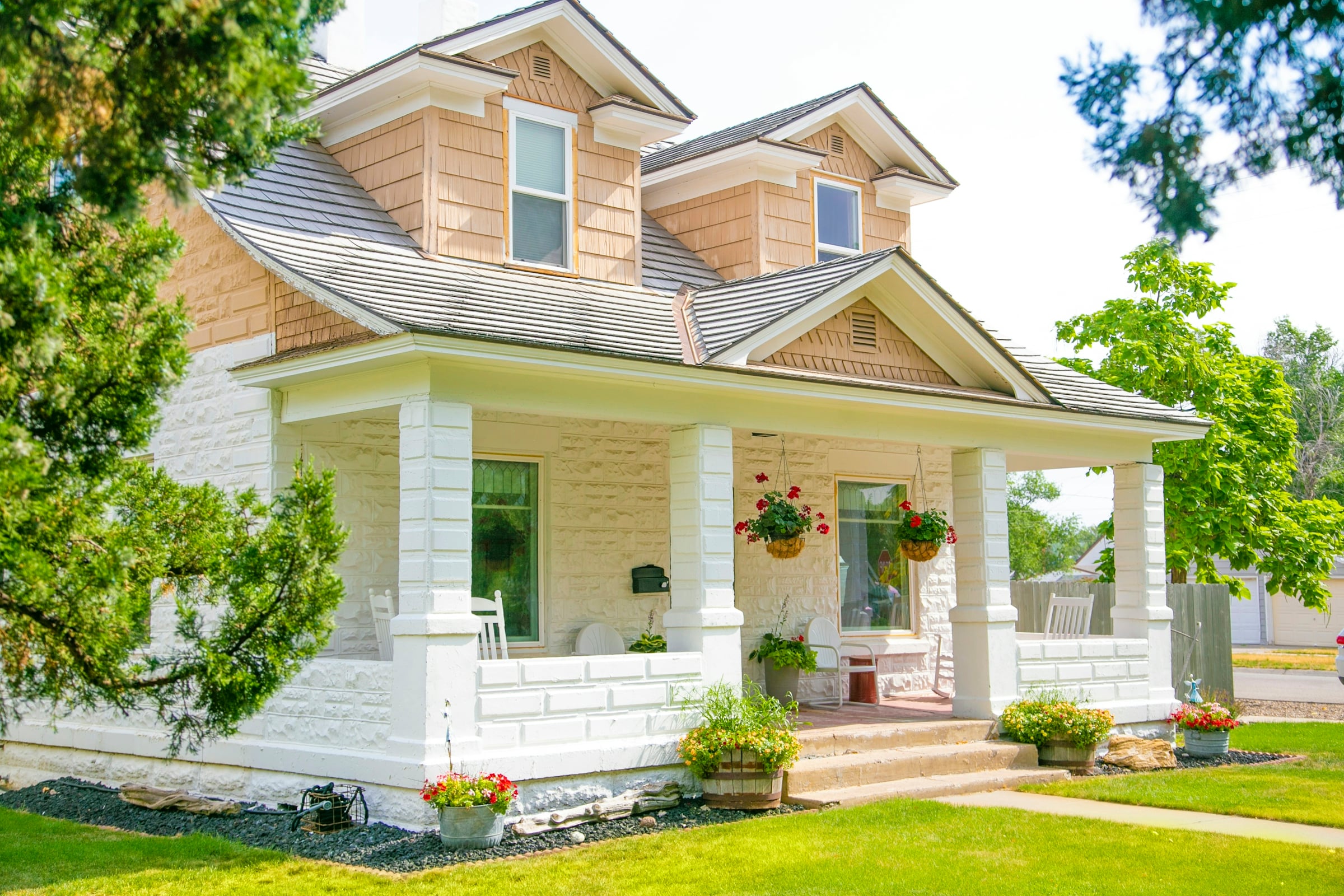
The first layer is the historic core. Ashland began life in the mid-nineteenth century as a mineral springs resort developed in connection with the railroad, and Richmonders built summer cottages here to escape the city heat. What survives is a genuinely handsome collection of Victorian houses, Queen Anne cottages with deep porches, and early-1900s Foursquares and Craftsman bungalows, concentrated on the streets flanking the tracks and around the college. These are the houses buyers picture when they think of Ashland: front porches, mature trees, ornamental woodwork, high ceilings. They also come with older-home realities, including original wiring and plumbing in some cases, knob-and-tube remnants, plaster walls, and the maintenance demands of wood siding and historic windows.
The second layer is mid-century and later infill inside and just outside town limits: brick ranches, Capes and split-levels from the 1950s through the 1970s on larger, flatter lots. These are often the practical value in Ashland, since they offer town proximity with simpler systems and lower maintenance than a Victorian.
The third layer is the surrounding subdivisions, built from the 1980s onward along the corridors radiating out of town, plus current new construction in the general Ashland area. These give you newer systems, larger square footage and garages, at the cost of the walkability that makes the town distinctive. Beyond the subdivisions, Hanover County opens quickly into acreage, farms and wooded parcels on well and septic, where you can buy real land within a short drive of downtown.
What Is It Like Living With the Trains?
You have to be honest with yourself about this before you buy in Ashland, because it is not a detail you can renovate away.
The line running through the center of town is a busy CSX main line, and it carries freight traffic around the clock as well as Amtrak passenger trains. Trains sound their horns at grade crossings, which means the sound is not just the rumble of passing cars but the horn itself, at all hours. Volume depends heavily on how far you are from the tracks and from a crossing, and on whether trees and buildings sit between you and the line. A house two blocks away is a very different experience from a house facing Railroad Avenue.
Here is the strange part, and we have seen it repeatedly: a large share of Ashland residents genuinely like it. The trains are part of the town’s self-image, people watch them from downtown benches, and the town leans into it with Train Day and a public train-watching culture. Buyers who have lived near a rail line often stop noticing within weeks. Buyers who are sound sensitive, or who work night shifts and sleep during the day, sometimes cannot adjust at all. There is no middle prediction we can make for you.
The compensating benefit is real transportation value. Ashland has an Amtrak station right downtown, and the Northeast Regional and long-distance trains that stop there make it possible to travel to Washington, Baltimore, Philadelphia and New York, or south toward Richmond and beyond, without driving or flying. Very few small towns anywhere in the South offer walk-to-the-platform intercity rail service. Check current Amtrak schedules directly, because stops and timetables change and are not something to take from a blog post.
What About Schools, Parks and Getting Around?
Ashland students attend Hanover County Public Schools, since the town does not operate its own division. The schools most commonly associated with the Ashland area are John M. Gandy Elementary School, Liberty Middle School and Patrick Henry High School, all located in or near the town. Attendance boundaries and feeder patterns are set by Hanover County Public Schools and they do change, so verify the assignment for any specific address directly with the division before you write an offer. We do not publish school ratings or test scores, because those change annually and are not figures a brokerage should present as fact.
For parks and outdoors, the town and county offer more than the small footprint suggests. Hanover Wayside Park provides county park space near town with fields and open ground. The Trolley Line Trail follows the route of the old electric railway that once connected Ashland toward Richmond, giving the town a genuine walking and biking path with real local history attached. Randolph-Macon’s campus green functions informally as a town park, and the streets themselves, with their sidewalks and canopy, are where most of the walking actually happens. Poor Farm Park, one of Hanover County’s larger recreation areas with trails and athletic facilities, is a short drive away.
Getting around is easy by regional standards. I-95 runs just west of town with interchanges that put most Ashland addresses within a few minutes of the highway, making downtown Richmond a straightforward drive south and Fredericksburg accessible north. Route 1 parallels the interstate and carries much of the local commercial development, while Route 54 runs east and west through town toward Hanover Courthouse in one direction and Goochland in the other. Richmond International Airport is roughly a half hour away.
One thing to check property by property: utilities. Inside town limits you are generally on public water and sewer, while properties outside the town boundary are frequently on private well and septic systems. Internet options also vary, which matters if you work from home.
| Part of Ashland | Typical housing | Walkability | Main tradeoff |
|---|---|---|---|
| Streets flanking the tracks | Victorians, Queen Anne cottages, Foursquares | Highest in the region | Train horns at all hours |
| Around Randolph-Macon | Historic homes, some student rentals | Excellent | Student foot traffic and parking |
| Historic core, a few blocks out | Bungalows, Craftsman, early-1900s homes | Very good | Older systems and maintenance |
| Mid-century pockets in and near town | Brick ranches, Capes, split-levels | Good to moderate | Less historic character |
| Subdivisions outside town | 1980s to current construction | Limited, drive-dependent | Loses the walkable advantage |
| Outer Hanover near Ashland | Acreage, farmhouses, custom homes | None | Well and septic, longer drives |
Frequently Asked Questions About Living in Ashland, Virginia
Is Ashland VA a good place to live?
It is one of the best options in the Richmond region for buyers who specifically want small-town walkability, and a poor fit for buyers who need quiet or want a large modern house on a big lot inside town. Ashland gives you a compact historic grid, an active downtown on England Street, Randolph-Macon College’s programming, Hanover County schools, easy I-95 access and an Amtrak station you can walk to. The recurring complaint is train noise, which is genuinely constant near the tracks. The Mission Realty Team will show you where in town that tradeoff is mild and where it is not.
Why is Ashland Virginia called the Center of the Universe?
The nickname is attributed to a remark by a Randolph-Macon College professor about the town’s importance, and Ashland adopted it with characteristic humor. It now appears on town signage, local business names and merchandise, and it functions as shorthand for Ashland’s strong sense of local identity. For a buyer, the slogan is a reasonable signal of what the place is like: a small town that is genuinely proud of itself rather than an anonymous suburb. Residents use the phrase constantly and without irony.
How loud are the trains in Ashland VA?
Loud enough that you must test it in person before buying, because the CSX main line through the center of town carries freight around the clock plus Amtrak passenger service, and trains sound their horns at grade crossings. Volume depends heavily on your distance from the tracks and from a crossing, so a house two or three blocks away is a completely different experience from one facing Railroad Avenue. Many residents genuinely enjoy the trains and stop noticing them within weeks, while sound-sensitive buyers and people who sleep during the day sometimes never adjust. Stand at the property for an hour and hear at least two trains before you decide.
Can you commute from Ashland to Richmond by train?
Ashland has an Amtrak station right in downtown, and the trains that stop there connect south toward Richmond and north toward Washington and the Northeast Corridor, which makes rail travel genuinely practical in a way it is not from most Richmond-area addresses. Whether it works as a daily commute depends entirely on the current schedule, since Amtrak timetables are built around intercity travel rather than local commuting. Check current schedules and stops directly with Amtrak. Most Ashland residents commuting to Richmond drive I-95 or Route 1.
What schools serve Ashland Virginia?
Ashland is served by Hanover County Public Schools, and the schools most commonly associated with the town are John M. Gandy Elementary School, Liberty Middle School and Patrick Henry High School. Because attendance boundaries and feeder patterns are set by the division and can change when enrollment shifts, always verify the assignment for a specific street address directly with Hanover County Public Schools before you write an offer. We also do not publish test scores or school ratings, since those change annually and are not something a real estate brokerage should present as fact.
How far is Ashland from Richmond VA?
Ashland sits roughly fifteen miles north of downtown Richmond, and the drive is generally straightforward down I-95 or Route 1 depending on traffic and where in the city you are headed. Most Ashland residents reach downtown Richmond, the VCU Health campus or the northern Henrico office corridors in well under half an hour outside peak periods. Richmond International Airport is about a half hour away on the other side of the metro. Short Pump and Innsbrook in western Henrico are also reasonable, often easier from Ashland than from Mechanicsville.
What kind of houses are in Ashland Virginia?
There are three distinct layers. The historic core near the tracks and the college holds Victorians, Queen Anne cottages with deep porches, American Foursquares and Craftsman bungalows, many dating to the town’s era as a railroad-served summer resort for Richmonders. Around and just outside that core are mid-century brick ranches, Capes and split-levels on larger, flatter lots. Further out are 1980s-onward subdivisions and current new construction, plus acreage and farm parcels in the surrounding parts of Hanover County. Walkability decreases as you move outward.
Does Ashland VA have its own town government and taxes?
Yes. Ashland is an incorporated town within Hanover County, which in Virginia means it remains part of the county rather than becoming independent of it. The town has its own mayor and council, planning and zoning authority, ordinances and police department, while Hanover County provides the school division, courts, library system and county-level services. Town residents generally pay both a town and a county real estate tax because they receive both sets of services. Verify current rates with the Town of Ashland and Hanover County, since they are set annually.
What is there to do in Ashland Virginia?
Downtown England Street carries independent restaurants, cafes and shops plus the restored Ashland Theatre, a historic single-screen movie house that programs films and live events. Randolph-Macon College adds lectures, gallery shows, concerts, theatre and Division III athletics that residents can walk to. The seasonal Ashland Farmers Market, the long-running Train Day celebration and the Fourth of July parade are the town’s signature events. For outdoors there is the Trolley Line Trail, Hanover Wayside Park and Poor Farm Park a short drive away, and Richmond’s museums and the James River Park System are less than half an hour south.
Is Randolph-Macon College a good thing for Ashland homeowners?
On balance yes, and most residents see it that way. The college supports a downtown that a town of this size would otherwise struggle to sustain, brings free and low-cost public programming within walking distance, and is a significant stable local employer. It also creates genuine rental demand near campus, which is useful if you are buying as an investor. The tradeoffs are localized: streets immediately bordering campus see student foot traffic, parking pressure and some late-night noise, and some nearby houses have been converted to student rentals over the years.
Should I buy a historic home in Ashland?
Only with a clear-eyed view of what older houses require, though the reward is a kind of house you simply cannot buy new. Expect to look closely at electrical service capacity and any knob-and-tube remnants, original plumbing supply lines, roof age, foundation and crawl space condition, plaster walls, and the ongoing maintenance of wood siding and historic windows. Homes built before 1978 also carry a required federal lead-based paint disclosure. Additionally, check the town’s rules on exterior alterations before you plan a renovation, because Ashland takes its historic character seriously.
Is Ashland VA better than Mechanicsville for buyers?
They serve different buyers, and the choice usually comes down to walkability versus space and services. Ashland offers a walkable historic downtown, rail access and a distinct town identity in a small footprint, with train noise as the cost. Mechanicsville offers far more subdivision inventory, larger newer homes, a hospital campus and a big retail corridor, at the price of being entirely car-dependent. Commute matters too, since Ashland is generally easier for western Henrico employment while Mechanicsville is closer to the East End and the airport. Ask us to run both.
Does Ashland have public water and sewer?
Properties inside the Ashland town limits are generally served by public water and sewer, while properties outside the boundary are frequently on private well and septic systems. Because addresses on both sides of the line say Ashland, this is one of the most important things to confirm on any specific property rather than assume from the mailing address. Well and septic is entirely manageable but it changes your inspection scope, your lender’s requirements and your long-term maintenance planning. We verify utilities and town boundary status on every Ashland property we show.
Is Ashland Virginia growing?
The town itself is geographically small and largely built out, so most new residential development in the area happens in the surrounding parts of Hanover County along the corridors radiating out from town rather than inside the town limits. That has kept the historic core fairly stable while adding subdivision inventory nearby. For a buyer, the practical effect is that walkable in-town houses are a limited and competitive supply, while newer construction is available a short drive away. Call the Mission Realty Team at (804) 601-4960 or stop by 3701 Cox Rd, Richmond VA 23233 and we will show you both.
Thinking About Buying in Ashland?
The Mission Realty Team knows Ashland street by street, including which blocks hear the horns and which do not, and we will confirm town limits, utilities and school assignments before you write an offer. Call us at (804) 601-4960 or stop by 3701 Cox Rd, Richmond VA 23233 for a current list of Ashland homes.