Before you buy, find out which fuel runs the furnace, water heater, range and dryer, then look at how that fuel gets to the house. Natural gas arrives by pipeline. Propane and heating oil are delivered by truck and sit in a tank on the property. The tank and the shutoffs are part of what you are buying.
This is a checklist for walking a home in Chesterfield County, Henrico County, Hanover County or anywhere else in the Richmond area. It covers what to look at, what a Virginia home inspector is and is not required to cover, what federal agencies say about carbon monoxide, and what to ask the seller.
Step one: identify the fuel and where it comes from
The U.S. Department of Energy says gas furnaces and boilers can run on natural gas or propane. Natural gas depends on a local pipeline network. Propane is trucked in and kept in a large tank. DOE adds that propane typically costs more (DOE, Gas-Fired Boilers and Furnaces). Heating oil is the third common option, and it also lives in a tank.
Make a short list for the house, appliance by appliance:
- Furnace or boiler: gas, propane, oil or electric.
- Water heater: same question. A house can mix fuels.
- Range, cooktop, dryer and fireplace: gas, propane or electric. Gas logs are common and are treated separately by inspectors (see below).
- Source: a gas meter at the house, a propane tank, an oil tank, or none because the house is all electric.
If a house has a gas range but no meter, or a furnace that looks like a gas unit but no visible tank, ask. Do not guess from the appliance.
What to look at on a walkthrough
Gas lines and shutoffs
- Find the meter and the main shutoff. Ask the seller to show you. Knowing where it is before you own the house matters more than it sounds.
- Look for a separate shutoff valve at each gas appliance, usually a short handle near the connector.
- Look at the flexible connector behind the range and dryer. Kinks, heavy rust or a connector pulled tight against the wall are worth a note for your inspector.
- Look for rust or scale on the pipe, loose pipe supports, and any pipe that looks improvised or patched.
Propane tanks
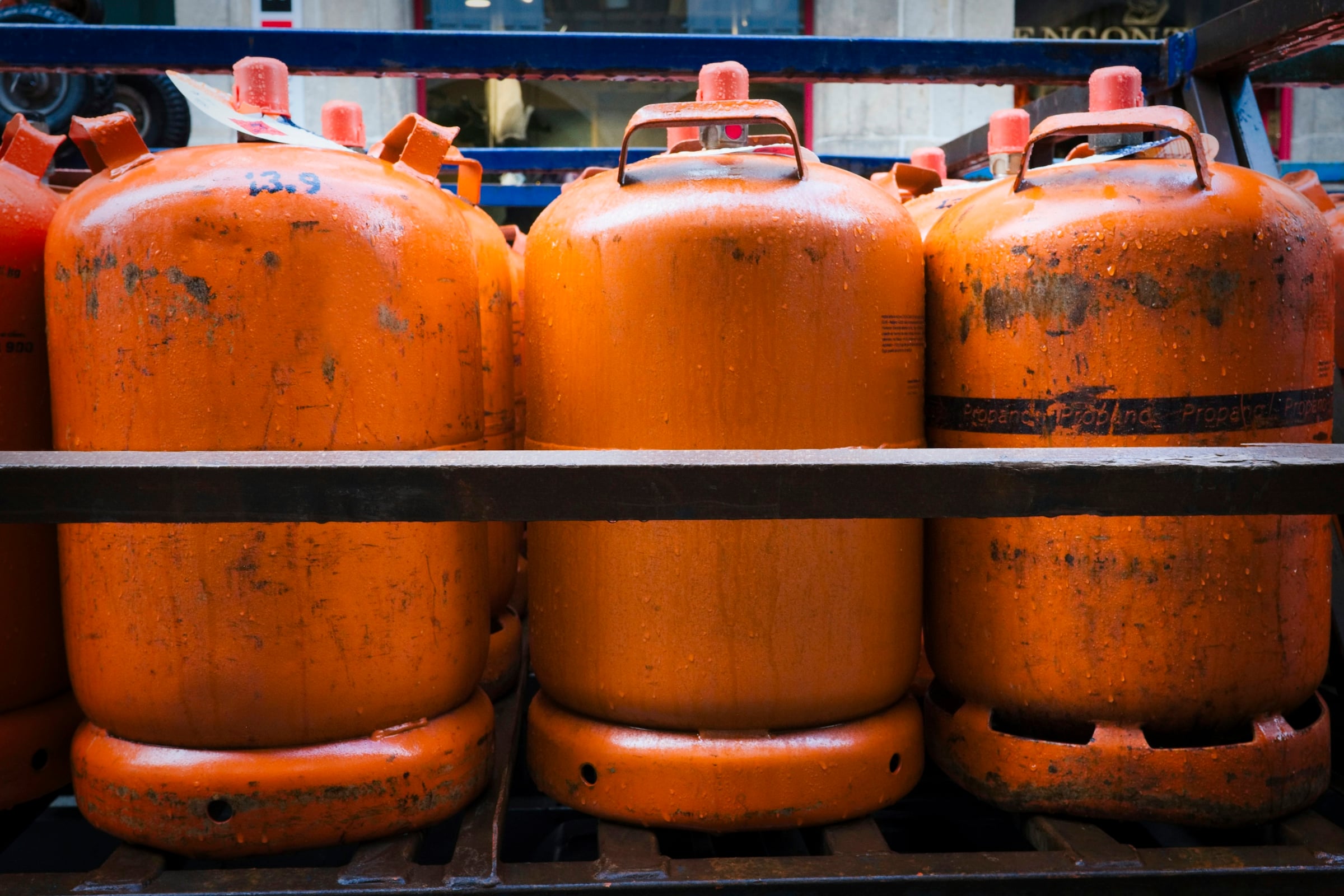
- Is the tank above ground or buried? Where is it relative to the house, the driveway and any air intake?
- Who owns it? A leased tank usually belongs to the supplier and stays with that supplier’s contract. Ask the seller for the supplier name and the paperwork, and ask the supplier what changes when the house sells.
- Does the regulator and piping look intact, with no heavy rust or damage?
Heating oil tanks
- Inside or outside, and above ground or buried? Ask directly. A buried tank is a bigger question than one in a basement.
- Look for stains, drips or dampness on the floor under the tank and along the fuel line, and for a fill pipe and vent pipe that are clear of damage.
- Ask for the tank’s age and any service or removal records. DOE notes that a technician can check an oil system during the annual service visit, including a draft test of how much heat escapes up the chimney (DOE, Oil-Fired Boilers and Furnaces).
Flues, chimneys and combustion air
- Fuel-burning appliances need a path for exhaust to leave. Look for corroded, disconnected or loose vent pipe and a chimney that looks sound.
- Look for scorch marks or soot around a furnace, water heater or fireplace opening.
Carbon monoxide: what federal agencies say
Carbon monoxide is a poisonous gas you cannot see, smell or taste. The Consumer Product Safety Commission says it forms when fuels such as natural gas, propane, oil, wood or charcoal burn incompletely, and that malfunctioning furnaces, stoves and water heaters are common sources. It recommends alarms that meet the UL 2034 standard on every level of the home and outside each sleeping area, and a yearly professional inspection of fuel-burning heating systems, including chimneys and flues (CPSC carbon monoxide fact sheet).
The CDC gives similar advice: have furnaces, water heaters and other gas, oil or coal appliances checked by a qualified technician each year, and have chimneys checked or cleaned. It says alarms should be replaced on the manufacturer’s schedule or about every five years, and that generators belong outdoors, never in a garage (CDC, Carbon Monoxide Poisoning Basics).
Practical steps for a buyer: count the alarms during the walkthrough, look at the date printed on the back of each one, and plan to replace any that are old or missing as part of move-in. If you will lose power in a storm, see our guide to checking a home before you buy for storms and outages.
Search homes by fuel and heating questions you care about
Tell us the areas you are considering and we will set up a saved search, then flag listings that mention gas, propane or oil so you can ask the right questions before you tour.
What Virginia home inspectors cover, and what they do not
Virginia’s standards of practice for home inspectors, 18VAC15-40-130, are the baseline for a licensed inspection. As we read the current text on the Virginia Law site (18VAC15-40-130):
| Item | Covered | Excluded or limited |
|---|---|---|
| Heating | Heating equipment and operating controls, the energy source, distribution, and vents, flues and chimneys including dampers | Heat exchangers, gas logs, built-in gas-burning appliances, grills, stoves, space heaters, solar heating |
| Fuel storage and distribution | Listed under plumbing as fuel storage and distribution systems | The standard does not specifically mention buried tanks |
| Water heater | The unit, its energy source, and its vent, flue or chimney | Solar water heating |
| Fireplaces | Fireplace, venting, hearth, damper and firebox | Mantels, screens and doors, seals and gaskets |
| Alarms | Presence or absence of smoke alarms and carbon monoxide detectors | Testing of a smoke alarm is not required if it would alert a fire department |
| Systems turned off | Inspector must note why it was not inspected | A system shut off or winterized need not be put into operating condition |
The inspection also covers only readily accessible components and is subject to the limits in your inspection contract. Gas logs and built-in gas appliances being excluded is the detail buyers miss most. If the house has them, ask the seller for service records and consider a separate specialist. For a full walkthrough of the process, see our Richmond home inspection guide.
Questions to ask the seller
- Which appliances use gas, propane, oil or electricity?
- Where are the main shutoff and each appliance shutoff?
- For a tank: who owns it, who is the supplier, how old is it, and has it ever leaked or been moved?
- When was each fuel-burning appliance last serviced, and by whom? Can you share records?
- Have any carbon monoxide or gas-related alarms gone off?
- Have any chimneys or flues been cleaned or relined?
- Is any fuel line, tank or appliance work unpermitted, to your knowledge?
If you are comparing heating systems, read our piece on heat pump or gas furnace for Richmond-area buyers. If you are touring in Midlothian, Glen Allen or the Fan, the questions are the same, and you can browse current listings to start. Our preferred lenders page is a good next stop once you know your budget.
Saved search for the areas you are touring
Name the areas and we will set up a saved search so new listings reach you the day they come up. Bring this checklist to each showing.
Frequently asked questions
Do I need a separate inspection for a propane or oil tank?
The general home inspection standard lists fuel storage and distribution systems, but it does not specifically mention buried tanks. If the house has a buried tank or you want a closer look at an old tank, ask your inspector in writing what they will and will not check, and ask whether a specialist is advisable.
What should I do if I smell gas at a house?
Leave, do not flip switches or use a phone inside, and call your gas or propane supplier or 911 from outside. Do not try to find the leak yourself.
Can I switch the fuel after I buy?
Often, yes, but it depends on what is available at the street and what the house needs. Moving from oil or propane to a heat pump or natural gas can involve new equipment, permits and, for gas, a utility connection. Ask the utility and a licensed contractor before you count on it.
Does an all-electric home have fuel risks?
It removes combustion from the furnace and water heater, but you should still check smoke alarms and the other fuel sources, such as a fireplace, grill or generator. The CPSC says generators produce carbon monoxide and belong outside.
Who is responsible for removing an old buried oil tank?
That depends on your contract and the facts. Ask the seller for records, and ask a Virginia real estate attorney how to address a known or suspected buried tank in the contract.
How often should the heating system be serviced?
Both the CPSC and the CDC say fuel-burning heating systems and their chimneys and flues should be inspected by a qualified professional every year.