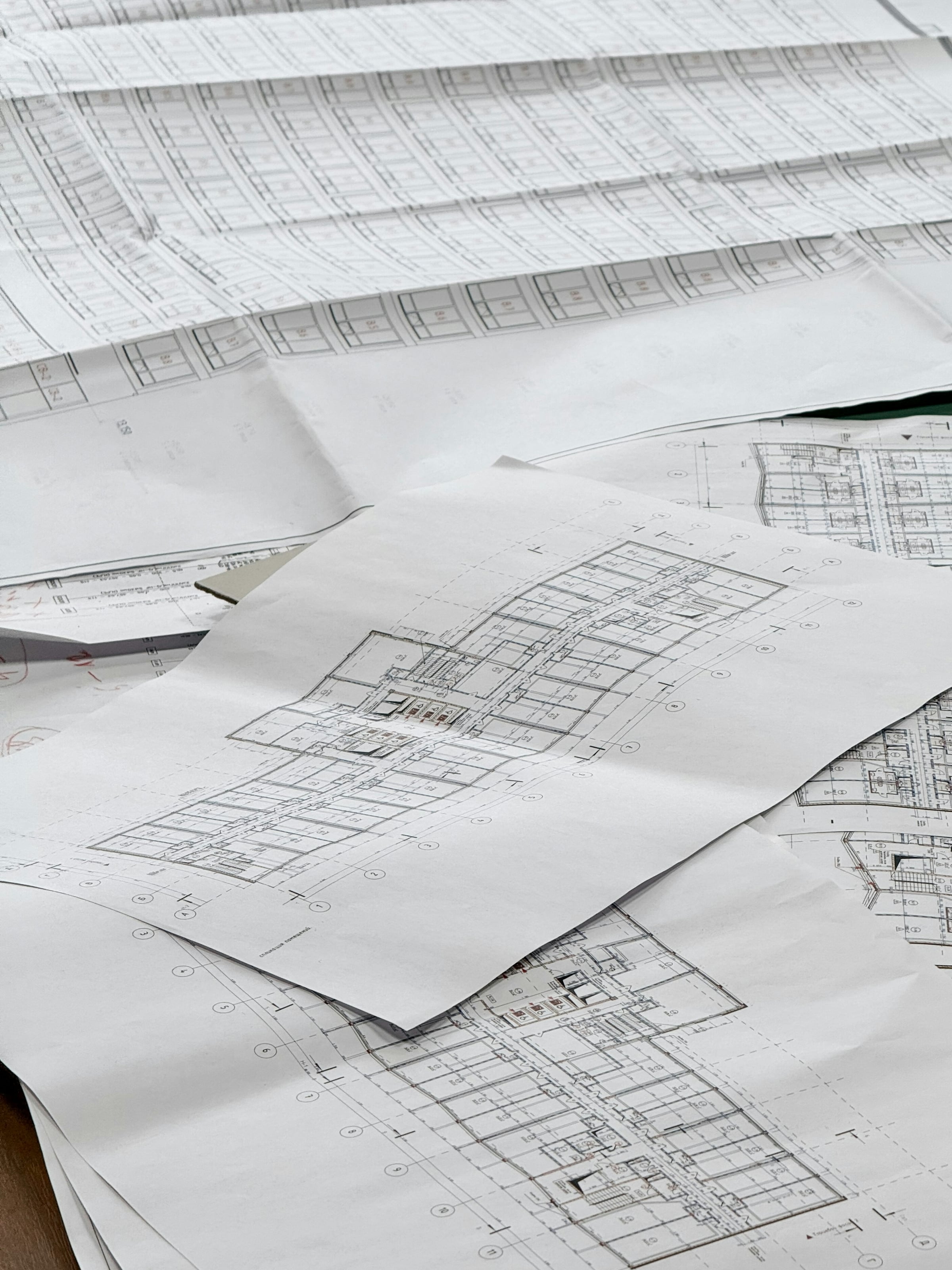
The field behind the house you are about to buy has a future, and somebody has probably already filed it with the county. The information is public, it is free, and almost nobody looks at it before making an offer, because by the time a sign appears at the roadside the decision is usually eighteen months old.
Here is how to check, locality by locality, and how to read what you find.
The sequence, so you know what stage you are looking at
- Pre-application. The developer files early plans and meets staff informally. Nothing is entitled and nothing is guaranteed, but the site plan exists and it is public. This is the earliest useful signal.
- Formal application. A rezoning or use permit request is submitted, with a case number. From here there are advertised deadlines and hearing dates.
- Staff report. Planning staff analyze the request against the comprehensive plan and recommend approval, denial or deferral. Read this before anything else: it is written by people with no stake in the outcome.
- Planning Commission. A public hearing and a recommendation. You may speak. Cases are frequently deferred here, sometimes repeatedly.
- Board of Supervisors, or City Council. The binding decision, usually with conditions or proffers attached.
- Site plan and permits. Engineering approval, then land disturbance and building permits. Only now does anything visible happen.
Two live examples from this month show what different stages look like in practice. In Goochland, a 72-lot subdivision on Hermitage Road is at stage one, a pre-application, with the formal filing expected around October: see the Allston Station filing. In Henrico, the former Hadad’s Lake site in Varina is further along, seeking a provisional use permit and a rezoning, with staff recommending deferral: see the Oasis Point proposal. Neither is approved. Both are already fully readable.
Where each locality publishes it
| Locality | Where to look, and what they call it |
|---|---|
| Chesterfield | The county maintains an Active Development and Zoning Cases page listing pending cases. Chesterfield issues conditional use permits. |
| Henrico | The Planning Department publishes cases, agendas and the comprehensive plan. Henrico issues provisional use permits, and maintains a searchable list of approved ones. |
| Goochland | Planning and Zoning for cases, and Public Notices, Meetings, Agendas and Minutes for what is being heard and when. |
| City of Richmond | Planning and Development Review, with cases going to the City Planning Commission and City Council rather than a board of supervisors. |
| Hanover and Powhatan | Both publish planning cases and meeting agendas through their county planning departments. Start from the county’s own planning page rather than a search engine result, because third-party aggregators lag badly. |
Use the locality’s own word. Chesterfield issues conditional use permits. Henrico issues provisional use permits. They are equivalent tools with different names, and searching the wrong term in the wrong county is the single most common reason people conclude that nothing has been filed. Both write “rezoning”, not “rezonings”. How these move through the two largest counties is covered in how rezonings and use permits actually work.
The five-minute version, before you write an offer
1. Identify the parcels, not just the address
Pull the county GIS viewer and note the parcel numbers for the lot you are buying and every parcel that touches it, plus anything vacant within a quarter mile. Cases are indexed by parcel, not by “the field behind 1234 Elm”.
2. Search the pending case list for those parcels
If a case exists, you will get the application, the site plan, and usually the staff report. The site plan is the document that tells you where the entrance, the stormwater ponds and the rear lot lines would sit relative to your back fence.
3. Read the staff report first
It will tell you plainly whether the request is consistent with the comprehensive plan, and what staff are worried about. A staff recommendation to defer, or a note that a proposal is inconsistent with the plan, is a genuine signal that approval is not routine.
4. Check the calendar
Find the next hearing date for the case. If it falls inside your contract timeline, you will know more before your contingencies expire, which is worth knowing when you set those dates in the first place.
5. Read the conditions, not the headline
Approvals come with conditions and proffers, and they are where the practical impact lives: hours of operation, buffers, screening, access points, lighting. A use that sounds alarming with tight conditions can be a better neighbor than a benign-sounding one with none.
Want this done for a specific address? We check the pending case lists and the parcels around a property as part of working with our buyers, before the inspection deadline rather than after. See how we work with buyers, or browse current listings.
Read the comprehensive plan, not just the case
Every locality we cover maintains a comprehensive plan that designates what each area is intended to become: residential at a stated density, commercial, mixed use, or rural preservation. It is the document staff measure an application against, and it is the closest thing available to a map of the future.
This is more useful than the pending case list for one specific reason. A case tells you what one applicant wants on one parcel right now. The plan tells you what the county expects across the whole area for the next decade or two, including parcels nobody has filed on yet. If the plan designates the land behind you for suburban residential at three units to the acre, then a future subdivision there is not a surprise waiting to happen, it is the stated intention, and any rezoning consistent with it starts with the wind behind it.
The reverse is also worth knowing. When staff note that a proposal is inconsistent with the comprehensive plan, as they did on the Varina venue, the applicant is asking the county to depart from its own adopted policy. That does not mean refusal, and boards approve plan-inconsistent applications regularly, but it does mean the case is contested rather than routine.
What the public record will not tell you
Land with no case filed is not land with no future. Most of what gets built was unentitled and quiet at some point, so the absence of a case means only that nothing is pending today. That is why the zoning itself matters as much as the case list: what is already permitted by right can be built without any hearing at all. We work through that in buying a home next to undeveloped land.
Nor will the case file tell you about the unfinished parts of a subdivision you are buying into, which is a separate conversation with the builder and is covered in what to ask a Richmond builder. Rights already recorded against the land, such as utility strips and access easements, sit in the title work rather than the planning file, and those are in easements on a Richmond VA property.
For ongoing coverage, Richmond BizSense reports filings across the region well before most of them reach a hearing, and our own running coverage is collected in Richmond Area News.
Common questions
How far ahead can I actually see?
Often two to four years before anything is visible. A pre-application filed now might reach a formal application in a few months, a decision months after that, and construction the following year. The Goochland subdivision filed as a pre-application in August 2026 has a developer target of starting construction in the third quarter of 2027.
Does a filed application mean it will be built?
No. Applications are deferred, amended heavily, and withdrawn regularly, and staff recommendations against a proposal are common. Treat a filing as a statement of intent rather than a plan of record.
Is a conditional use permit the same as a provisional use permit?
Functionally yes, but the name depends on the locality. Chesterfield uses conditional use permit and Henrico uses provisional use permit. Use the right term for the county you are searching or you will find nothing.
Can I object to a project near a house I am only under contract on?
Public hearings are open and you can generally speak, though weight is usually given to owners and adjacent property owners. Check the specific locality’s rules for who may speak and any sign-up deadline before the hearing.
Do I need a lawyer to read a planning file?
No. Applications, site plans and staff reports are written to be read by the public. If you are negotiating based on what you find, or a recorded restriction is involved, that is the point to bring in a Virginia real estate attorney.
Will my agent check this for me?
Ask before you assume it. It is not part of a standard home inspection and it is not on the disclosure form. If it matters to you, say so explicitly at the start rather than after you are under contract.
Where do I find the zoning for a parcel?
The county GIS viewer for the locality usually shows the zoning district, and the planning department’s ordinance sets out what each district permits by right and what needs a use permit. Confirm anything decisive with the planning office directly.
What is a proffer?
A commitment a developer offers as part of a rezoning, often cash or infrastructure, to offset the impact of the development. It is enforceable once accepted, and it is one of the more useful things to read in an approved case file.