Living in Bon Air, Virginia: Schools, Parks, Prices & What Buyers Need to Know in 2026
A Victorian resort that became a suburb, and still does not look like one
Bon Air is an older, heavily wooded community in northern Chesterfield County, just across the James River from Richmond’s west end, and it does not look or behave like the rest of Chesterfield. It began in the late 1870s as a summer resort reachable by rail, which is why its street pattern winds, why its tree canopy is enormous, and why late-1800s cottages sit two doors down from 1950s brick ranches and 1990s infill. The Bon Air Historic District recognizes the resort-era core. Buyers get an established location minutes from the Huguenot Bridge, Stony Point and the Powhite Parkway, with Chesterfield County Public Schools, the Bon Air Library on Buford Road and real park access nearby. The tradeoffs are honest ones: limited inventory turnover, older housing systems, few sidewalks, and Powhite tolls if you commute that way. Anyone searching Bon Air VA homes for sale, living in Bon Air Virginia, Bon Air Chesterfield County, or Bon Air historic district should ask the Mission Realty Team for current pricing rather than relying on any published figure, because this is a small market where a handful of sales move the numbers.
Table of Contents
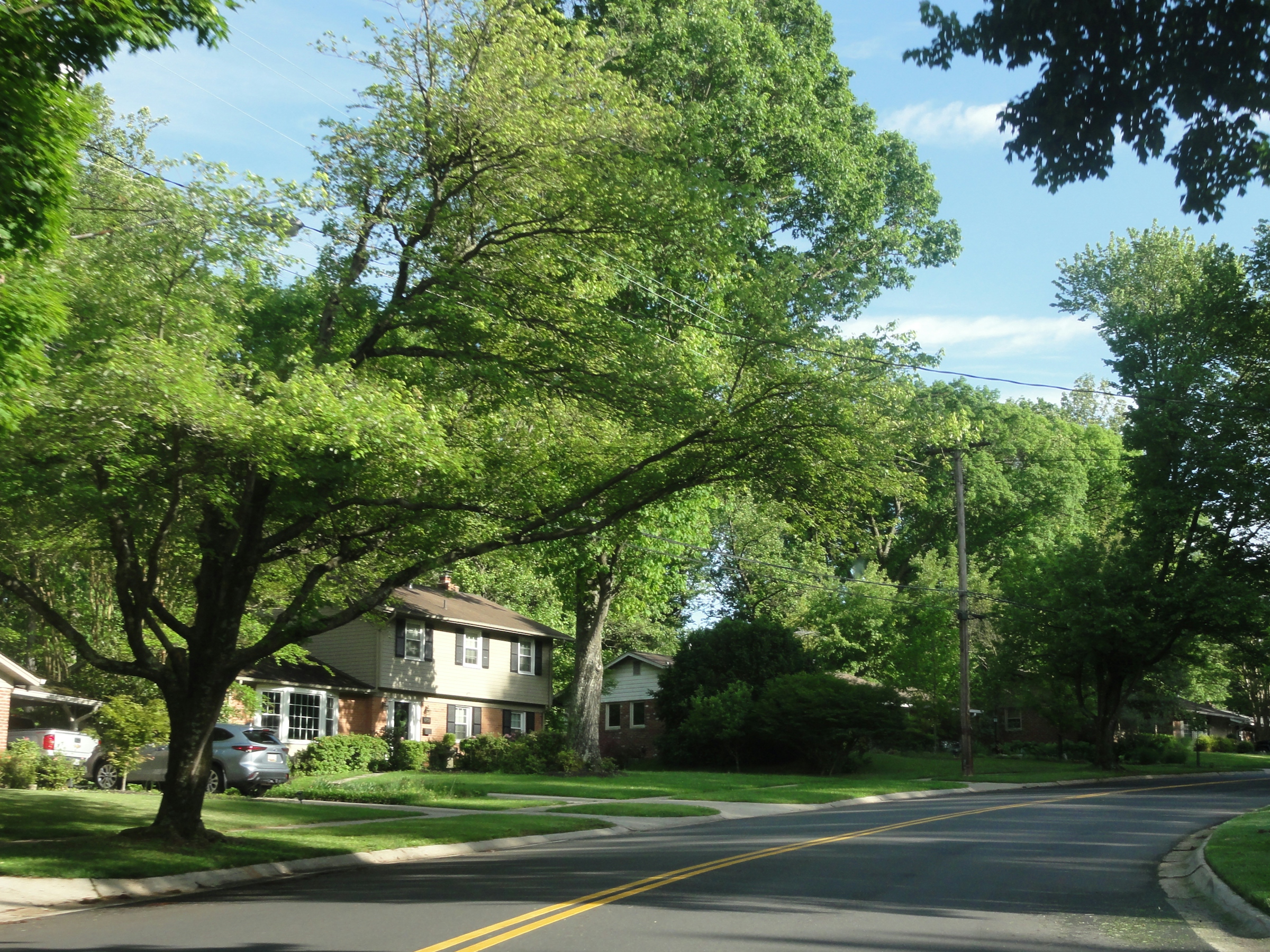
Drive into Bon Air from Buford Road and you will notice within a block that something is different. The road bends where it has no obvious reason to. The trees meet overhead. There are no sidewalks, no curb and gutter on many streets, and no subdivision entrance sign announcing a name and a year. Then you pass a wide-porched frame house that is clearly from the 1890s, and next to it a brick ranch from 1958, and behind them a 2004 colonial on a lot that was somebody’s side yard.
That is Bon Air, and the explanation is historical rather than accidental. This is an unincorporated community in northern Chesterfield County, roughly bounded by Buford Road, Robious Road, Forest Hill Avenue and Huguenot Road, and it existed as a destination before it existed as a suburb. Understanding that history explains almost everything a buyer needs to know about the housing, the streets and the reason inventory here is thin.
The Mission Realty Team works this area regularly, and Bon Air is one of the places where general Chesterfield County assumptions fail. If you are shopping here expecting the newer, HOA-governed housing that dominates western Chesterfield, you will be surprised in both directions. Where money is involved we will tell you what to verify rather than quote a figure that will be stale by the time you read it.
Where Bon Air Is and How It Started
Bon Air sits on the high ground on the south and west side of the James River, directly across from Richmond’s Stony Point and Westhampton areas. The name is French for good air, and that was the marketing pitch. In the late 1870s, the railroad that ran southwest out of Richmond created a summer resort here, and wealthy Richmond families came out by train to escape the heat, humidity and disease of the low-lying city in July and August. The elevation and the breeze were the product.
The resort had a hotel, a social pavilion, and a scatter of summer cottages built by families who returned year after year. Because it was a resort rather than a subdivision, nobody laid out a grid. Roads followed the terrain and the rail line, which is why the street pattern is still irregular and lots are odd sizes rather than uniform rectangles.
As Richmond grew and air conditioning made summer in the city survivable, the resort function faded and the summer cottages became year-round houses. The land between them filled in gradually across the twentieth century rather than all at once, which is the single most important fact about Bon Air real estate. There was no single builder, no single decade and no single plan. The community accumulated.
The Housing Stock: Three Eras on One Street
The oldest layer is the resort-era housing from roughly the 1880s through the 1910s. These are frame Victorian cottages and some larger houses, typically with deep wraparound or full-width porches, high ceilings, tall narrow windows, decorative woodwork and irregular footprints. They were built as summer houses, which has real consequences: some were originally uninsulated, some sit on shallow foundations or piers, and heating and plumbing were added rather than designed in. Many have been beautifully restored. Some have not.
The second and largest layer is mid-century. From the late 1940s through the 1960s, Bon Air filled in with brick ranches, Cape Cods and split levels on generous, irregular lots under existing trees. This is the bulk of what actually comes to market, and it is the layer where most buyers end up. Expect one-story or story-and-a-half plans, hardwood floors, original single-pane or first-generation replacement windows, and mechanical systems that have been replaced once or twice.
The third layer is later infill: houses from the 1980s through the 2000s and a handful newer, built on remaining lots or on land created by subdividing a large old parcel. These are usually larger colonials or transitional designs, and they are the closest thing Bon Air has to conventional suburban product. Some sit in small pockets with their own street; others are inserted individually among much older neighbors.
Because these three layers interleave, two houses 200 feet apart can differ by a century in construction. That is part of the appeal and part of the due diligence burden, and it means your inspection scope should be set by the age of the specific house rather than by a generic checklist.
Tree Canopy, Winding Streets and the Historic District
The tree canopy is the first thing everyone mentions and the thing most likely to sell the neighborhood to you. Bon Air has enormous mature hardwoods, mostly oaks, tulip poplars and beeches, many of which predate the houses. On a summer afternoon the streets are genuinely shaded, and the temperature difference compared with an open subdivision is noticeable.
Canopy is also a maintenance and risk item, and we would be doing you a disservice not to say so. Large trees mean gutters that fill twice a year, roofs that grow moss on the north side, roots that find sewer laterals, and real exposure during the wind and ice events central Virginia gets. When you tour, look up as deliberately as you look at the kitchen.
The street pattern is the other defining physical feature. Roads wind, intersections are irregular, and many streets have no sidewalks and no curb and gutter, with drainage handled by roadside swales. People walk and run in the road, which works because traffic is slow and local, but it is a genuine consideration if you have young children or if you specifically want a sidewalk network. There is also no unified street lighting scheme on many blocks, so evenings are darker than in a modern subdivision.
The Bon Air Historic District recognizes the resort-era core and is listed on the National Register of Historic Places and the Virginia Landmarks Register. Buyers frequently assume historic listing means design review over what they can change. Generally it does not by itself impose local review, while locally designated districts with a review board do. Confirm the status and any county requirements for a specific address before you buy a house you intend to alter.
Robious Road, Buford Road and Everyday Errands
Bon Air is residential almost throughout, so daily errands happen on two corridors. Buford Road runs through the eastern side and is the closer of the two for many residents, carrying neighborhood-scale commercial: small shopping centers, restaurants, a grocery option, services and the Bon Air Library. Robious Road runs west from the Huguenot Road area toward Midlothian and carries more traffic, more schools and more of the county’s institutional uses, and it is the road most people use to get anywhere west.
Just outside Bon Air the options expand quickly. Huguenot Road runs north to the Huguenot Bridge and south toward Midlothian Turnpike. Cross the Huguenot Bridge and you are at Stony Point in the city, with Stony Point Fashion Park, groceries, restaurants and medical offices within a few minutes. Head south and Midlothian Turnpike, which is Route 60, gives you the full range of big-box retail, and Chesterfield Towne Center is a short drive. Forest Hill Avenue runs east into the city’s Southside neighborhoods.
The practical upshot is that Bon Air is quiet without being isolated. This is not a walkable neighborhood in the sense that the Fan or Bellevue is, but almost everything is a five to twelve minute drive and you are closer to the city than most of Chesterfield.
Schools, the Library and Parks
Bon Air is served by Chesterfield County Public Schools, which is one of the two largest divisions in the Richmond metro and operates an extensive specialty center and program offering at the middle and high school levels. Bon Air Elementary School sits within the community, and area students attend Chesterfield middle and high schools in the northern part of the county. We will not list a single assignment for the whole neighborhood, because Chesterfield draws attendance boundaries by address and redraws them as enrollment shifts, so a street can be zoned differently than the street behind it. Verify the assignment for the exact address with the division before you write an offer.
The Bon Air Library on Buford Road is a Chesterfield County Public Library branch and functions as a genuine community anchor, with children’s programming, meeting space and the county system’s full catalog. Several long-established churches along Buford and Robious Roads play a similar role, and the community has an active civic and neighborhood association culture that reflects how long families have been here.
On parks, Bon Air’s own green space is mostly private tree canopy rather than large public parkland, but access nearby is strong. Huguenot Park off Robious Road has trails, playgrounds and courts, and Robious Landing Park further west offers James River access with a boat launch. Powhite Park sits to the southeast, across the Huguenot Bridge you reach the city’s James River Park System, and Pocahontas State Park is roughly twenty minutes south.
Getting Around, Prices and the Real Tradeoffs
Location is Bon Air’s strongest argument. The Huguenot Bridge puts you into the city’s west end in minutes, which means the Stony Point area, Westhampton, the University of Richmond and the Willow Lawn and Libbie corridors are all close. Powhite Parkway, which is Route 76, and Chippenham Parkway, Route 150, are both immediately accessible and get you downtown or to VCU Health quickly. Robious Road runs west into Midlothian, so you can reach the western Chesterfield employment and retail concentration without touching an interstate.
Two honest notes on the commute. Powhite Parkway is a toll road, and if it is your daily route into the city that is a real recurring cost you should price out rather than ignore; rates and payment methods change, so check current tolls with the operating authority. And the Huguenot Bridge, while genuinely convenient, is a chokepoint at rush hour, as is the Powhite and Chippenham interchange. Drive your actual commute at your actual departure time before you commit.
On prices, we are not going to publish a number. Bon Air is a small market where a restored century-old cottage, an unrenovated 1955 ranch and a 2003 colonial are three different products sharing a zip code, and a handful of sales can move any published average. What we can tell you is the structure: the mid-century ranches and Capes are generally the accessible entry point, restored historic houses and larger infill colonials sit above them, and condition rather than street address explains most of the spread. Call the Mission Realty Team for a current, address-specific comparable sales analysis.
The tradeoffs are worth stating plainly. Inventory turnover is limited, because people who buy in Bon Air tend to stay, so you may wait months for the right house rather than choosing among six. The housing is older on average, so first-year maintenance budgets should be real. There are few sidewalks and limited street lighting. And you are in Chesterfield County, not the city, so confirm the county’s real estate tax rate and remember Virginia’s annual personal property tax on vehicles. In exchange you get a distinctive, established, heavily shaded neighborhood minutes from both the city and Midlothian.
| Feature | What buyers should know |
|---|---|
| Location | Northern Chesterfield County, across the James from Richmond’s west end |
| Origin | Late 1870s rail-served summer resort, not a planned subdivision |
| Oldest housing | 1880s to 1910s frame cottages with deep porches |
| Most common housing | Late 1940s to 1960s brick ranches, Capes and split levels |
| Streets | Winding, irregular, frequently no sidewalks or curb and gutter |
| Tree canopy | Heavy mature hardwoods; a major amenity and a maintenance item |
| Historic status | Bon Air Historic District on the National Register; confirm any local review with the county |
| Schools | Chesterfield County Public Schools; verify assignment by exact address |
| Commuting | Huguenot Bridge, Powhite Parkway (tolled) and Chippenham Parkway |
| Main tradeoff | Limited inventory turnover and older housing systems |
Frequently Asked Questions About Living in Bon Air, Virginia
Where is Bon Air, Virginia?
Bon Air is an unincorporated community in northern Chesterfield County, on the south and west side of the James River directly across from Richmond’s Stony Point and Westhampton areas. It sits roughly within the area bounded by Buford Road, Robious Road, Forest Hill Avenue and Huguenot Road, and it is one of the closest Chesterfield communities to the City of Richmond. The Huguenot Bridge connects it to the city’s west end in a matter of minutes. Because it is unincorporated, it has no town government of its own and is served by Chesterfield County.
Why is Bon Air called Bon Air?
The name is French for good air, and it was essentially a marketing claim. In the late 1870s the railroad running southwest out of Richmond developed the area as a summer resort, selling the higher elevation and the breeze as an escape from the heat, humidity and disease of the low-lying city in July and August. Wealthy Richmond families rode the train out for the season and stayed in a hotel or in cottages they built themselves. The resort function faded as the city grew and air conditioning arrived, but the name and the street pattern stayed.
What kind of houses are in Bon Air?
Three distinct eras, often on the same street. The oldest are frame Victorian cottages and larger houses from roughly the 1880s to the 1910s, typically with deep porches, high ceilings and irregular footprints. The largest group is mid-century, meaning brick ranches, Cape Cods and split levels built from the late 1940s through the 1960s on generous irregular lots. The third group is infill from the 1980s through the 2000s, generally larger colonials on remaining or subdivided lots. Two houses a few hundred feet apart can be a century apart in construction, so evaluate each one individually.
How much do homes cost in Bon Air VA?
We will not publish a figure, because Bon Air is a small market where a handful of sales move any average and stale numbers circulate online for years. What we can tell you is the structure: mid-century ranches and Capes are generally the accessible entry point, while restored historic houses and larger infill colonials sit above them, and condition explains more of the spread than street address does. A 1955 ranch needing systems work and a restored 1895 cottage are genuinely different products. Call the Mission Realty Team at (804) 601-4960 for a current, address-specific comparable sales analysis.
What schools serve Bon Air, Virginia?
Bon Air is served by Chesterfield County Public Schools, and Bon Air Elementary School is located within the community. We will not list a single middle or high school assignment for the whole neighborhood, because Chesterfield draws attendance boundaries by address, redraws them as enrollment shifts, and one street can be zoned differently from the street behind it. Verify the assignment for the exact address directly with the division, and ask whether any boundary review is currently underway. Chesterfield also operates an extensive specialty center and program offering at the secondary level worth researching separately.
Is Bon Air a good place to live?
It suits a specific buyer very well and frustrates others, so the honest answer depends on what you want. It is quiet, heavily shaded, architecturally varied, genuinely established, and closer to the City of Richmond than most of Chesterfield while still offering quick access west to Midlothian. It is not walkable in the way an urban neighborhood is, it has few sidewalks and limited street lighting, the housing is older on average, and inventory turnover is limited. If you value character, trees and location over newness and convenience, it is one of the better values in northern Chesterfield.
What is the Bon Air Historic District?
It is a designation recognizing the resort-era core of Bon Air and its concentration of late-1800s and early-1900s buildings, listed on the National Register of Historic Places and the Virginia Landmarks Register. Buyers often assume this means design review over what they can change, but National Register listing is generally honorific and does not by itself impose local architectural review, while locally designated districts with a review board do. Whether a specific property is subject to any local review, and what Chesterfield County requires, should be confirmed with the county planning department for that exact address. Do it before you buy a house you intend to alter.
Does Bon Air have sidewalks?
Many streets do not, and this is one of the genuine tradeoffs of the neighborhood. Because Bon Air grew out of a resort rather than a planned subdivision, roads follow the terrain and were not built with curb, gutter and sidewalk, and drainage is often handled by roadside swales instead. People do walk and run in the streets, which works because traffic is slow and local, but it is a real consideration for families with young children. Street lighting is also limited on many blocks, so evenings are darker than in a modern subdivision.
What parks are near Bon Air?
Bon Air’s own green space is mostly private tree canopy rather than large public parkland, but nearby access is strong. Huguenot Park off Robious Road has trails, playgrounds and courts, and Robious Landing Park further west in Midlothian offers direct James River access with a boat launch and riverside trails. Powhite Park sits to the southeast. Across the Huguenot Bridge you reach the city’s James River Park System including the Huguenot Flatwater and North Bank areas, with Forest Hill Park a short drive east, and Pocahontas State Park is roughly twenty minutes south.
How long is the commute from Bon Air to downtown Richmond?
It is one of the shorter Chesterfield commutes, since Powhite Parkway and Chippenham Parkway are both immediately accessible and downtown or the VCU Health campus is a reasonably quick trip outside peak hours. Two caveats matter. Powhite Parkway is a toll road, so if it is your daily route you should price the recurring cost and check current rates with the operating authority rather than assuming. And the Huguenot Bridge and the Powhite and Chippenham interchange both back up at rush hour, so drive your actual route at your actual departure time before you commit to an address.
Is there a toll to get from Bon Air into Richmond?
There is if you take Powhite Parkway, which is a tolled facility, and many Bon Air residents do because it is the fastest route downtown. There are untolled alternatives, including Forest Hill Avenue east into the city’s Southside and the Huguenot Bridge north into the west end, though both are slower for a downtown destination. Toll rates and payment methods change over time, so verify current pricing with the operating authority rather than relying on a figure in an article. Factor it into your monthly carrying cost the same way you would factor in fuel.
Why is there so little inventory for sale in Bon Air?
Because it is a fully built-out older community where owners tend to stay a long time. There is very little vacant land left, so new supply comes almost entirely from resales and the occasional infill house on a subdivided lot, and the neighborhood’s appeal to people who already live there keeps turnover low. Practically this means you may wait months for a house that fits your specification rather than choosing among several. Buyers who succeed here get set up on an immediate alert, stay pre-approved, and are ready to tour within a day of a listing appearing.
What should I inspect carefully in an older Bon Air home?
Build the inspection around the era of the specific house rather than treating it generically. In the resort-era housing, look hard at crawl space and pier or foundation condition, vapor barriers, electrical service capacity and any knob-and-tube remnants, plumbing supply material, roof age, original window condition, and whether additions were permitted. In mid-century ranches, add aluminum branch wiring, which can affect insurability, and get a sewer lateral camera scope given the mature tree roots. A structural engineer is worth the money if the inspector flags movement.
Are the big trees in Bon Air a problem?
They are the neighborhood’s best feature and a genuine maintenance item, and both things are true at once. The canopy shades the streets, cools the houses and gives Bon Air its character, and it cannot be replicated by planting. It also means gutters filling twice a year, moss and moisture on north-facing roof slopes, root systems that find sewer laterals and foundation drains, and real exposure during the wind and ice events central Virginia gets. Removal of a mature oak is expensive, so look up when you tour and ask whether trees have recently been removed or cabled.
Is Bon Air on public water and sewer?
Some of it is and some of it is not, and the answer is not uniform street to street. Chesterfield County has both public utilities and areas on well and septic, and in an accumulated older community like Bon Air you cannot assume based on a neighboring property. Well and septic is entirely manageable, but it changes your inspection scope, may add lender requirements, and creates long-term maintenance obligations you should budget for. Confirm the utility situation for the specific address early, and ask the Mission Realty Team to check it along with the county assessment and permit records before you tour.
Thinking About Buying in Bon Air?
The Mission Realty Team knows this neighborhood house by house rather than subdivision by subdivision, and we will set you up to move quickly when the right one appears in a market with limited turnover. Call us at (804) 601-4960 or visit 3701 Cox Rd, Richmond VA 23233 for a current Bon Air comparable sales analysis.