Radon is a colourless, odourless radioactive gas that seeps out of soil and rock and collects inside buildings. The Virginia Department of Health indoor radon program calls it the second leading cause of lung cancer, and the leading cause among people who have never smoked, and states it may contribute to roughly 21,000 cases a year nationally, including almost 700 in Virginia. It is also the most commonly declined add-on in a Richmond home inspection.
Is your county EPA Zone 1? The honest answer is more interesting than yes or no
VDH states Virginia has 46 counties and 15 cities in EPA Zone 1, the high risk band, plus 24 counties and 8 cities in Zone 2. That sounds decisive until you read what VDH publishes about the map.
On its EPA radon risk map for Virginia page, VDH notes the map was produced in 1993 and 1994 from a very limited number of test results plus surface geology and background radiation readings, that EPA has no plans to revise it, and that it was never intended to be predictive. VDH then lists its own known inaccuracies, and one of them is local: it says the low risk counties that border high risk jurisdictions to their west, naming Henrico, Hanover and Richmond City, should be designated moderate risk rather than low.
So on the published map, Henrico, Hanover and the City of Richmond are not Zone 1. They are the state health department’s own example of where the map errs on the low side. VDH adds that high radon results have been found in every Virginia county, including all of those designated low risk, and that EPA and VDH both recommend testing every home, especially one being purchased.
The conclusion holds either way. A zone number describes a county, not a house, and two houses on one street can test differently depending on foundation type, fill material and how each was cut into a slope. The EPA map page says exactly that.
What counts as a high reading
EPA measures radon in picocuries per litre of air, written pCi/L, and its map page states the action level directly: fix your home at 4 pCi/L or higher, which is 150 becquerels per cubic metre, and consider fixing between 2 and 4 pCi/L. EPA adds that the action level should follow the guidance of the jurisdiction where the test is run. For the longer treatment, EPA publishes A Citizen’s Guide to Radon.
Short term, long term, and why placement decides the result
VDH’s radon testing and mitigation page defines a short term test as two to seven days. That is the format used in a transaction, because a long term test runs for months and no contract waits for it. The long test gives a truer annual average; the short one gives you a decision in time to write a repair request.
VDH is specific about setup, and each rule exists because breaking it produces a wrong number:
- Test the lowest livable level, where concentrations are typically highest. VDH is explicit that crawl spaces, garages and cellars lacking utilities or headroom, or with exposed dirt or rock, are not livable space.
- Place the device at least 20 inches above the floor and away from exterior walls, fans, windows, humid rooms and floor openings such as sumps and plumbing cut-outs.
- Test every section in contact with the ground, especially where foundation types sit at different elevations. A slab addition on a crawl space house is two tests.
- Do not run a short term test through a severe storm. Heavy rain, sustained wind and deep low pressure can spike readings temporarily.
- Expect winter to read higher. VDH notes indoor radon usually peaks in the coldest months.
Those placement rules are also why the house has to be shut up while the test runs. Open windows and whole-house fans change the pressure relationship between house and soil, which is the mechanism the measurement depends on.
How a radon test fits inside a Virginia inspection period
Radon is not part of a general home inspection. It is an add-on you request and pay for, alongside the sewer scope, termite letter and survey, as set out in what a Richmond home inspector will not cover. Book it when you book the inspection, not after, because two to seven days plus lab turnaround eats most of a standard contingency window.
A result above the action level is then a negotiated repair item like any other. It is not automatically the seller’s problem, and the mechanics match every other line on the request, which we walked through in how to negotiate repairs after a Richmond inspection. Sellers often prefer a credit to arranging the work, which is usually fine provided the credit is sized against a real quote.
Virginia is a buyer beware state, and that is the part buyers misread. The seller is generally under no obligation to test, and one who never tested has nothing to disclose. What the disclosure framework does and does not require is covered in our guide to the Virginia disclosure statement. If you want to know, you test. The same logic governs a buried oil tank and well and septic systems out in the counties.
Get the Richmond closing timeline checklist
The radon test is one of six things that must be ordered in the first week of a Richmond contract, and the order decides whether you make your contingency deadline. Our downloadable Richmond closing timeline checklist sets out the whole sequence day by day, from ratified contract through inspection add-ons, appraisal and walkthrough, including the point at which a radon result has to be in hand. Ask for it on our contact page with “closing timeline checklist” in the message. Earlier than that in the process, our buy with us page explains how buying works here.
What testing and mitigation cost
These are VDH’s published figures, not market estimates.
| Item | Published cost | Source |
|---|---|---|
| VDH discounted do-it-yourself short term kit | $4 shipping fee, while supplies last | VDH indoor radon program page |
| Professional radon test, depending on device | $100 to $200 | VDH radon testing and mitigation page |
| Typical sub-slab depressurisation system | $800 to $1,200 | VDH radon testing and mitigation page |
| Crawl space, or a house with multiple sections to mitigate | $2,000 or more | VDH radon testing and mitigation page |
| Retest after mitigation | [DATA NEEDED: no separate retest cost published] | Not published |
VDH describes sub-slab depressurisation as the most common system: pipes and a fan pulling radon from below the foundation before it enters the house, without major structural changes. Sealing cracks helps sometimes but is rarely the whole answer.
Worth knowing before installing one: the system is visible. PVC runs up an exterior wall or through the house above the roofline, and the fan hums. Buyers notice it at resale and some read it as a warning rather than a solved problem. The countermeasure is paperwork: keep the installer’s documentation and the post-mitigation test result, so the story is tested, fixed and verified.
Why Richmond’s housing stock makes this a local question
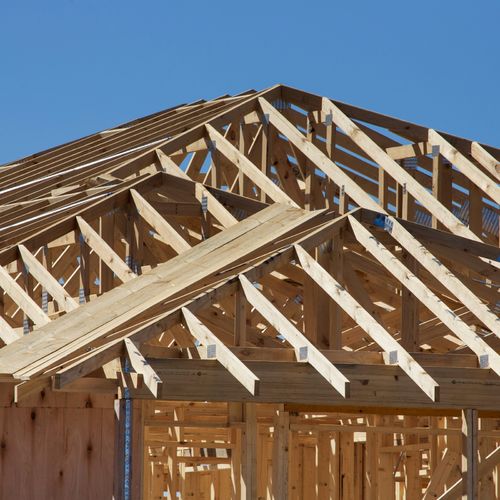
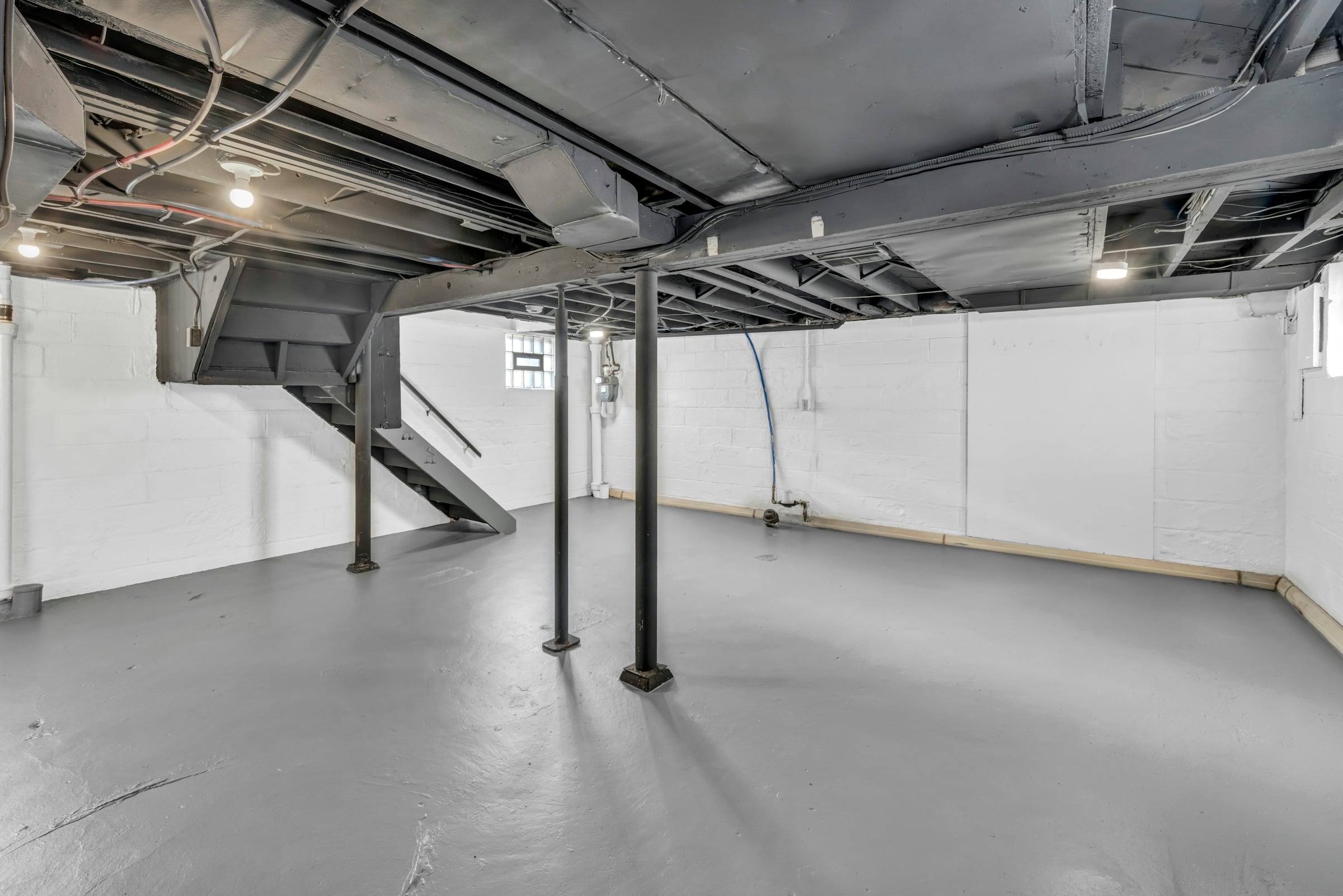
Radon enters through the parts of a house touching the ground, so foundation type matters more than county lines. The 1920s and 1930s houses in Forest Hill, North Side and the streets around Lakeside commonly have unsealed or partly finished basements with a sump, a floor drain and an old coal chute, each of them a pathway. Further out in Powhatan, Goochland and rural Chesterfield, vented crawl spaces over bare earth are the norm, and a crawl space is the case VDH flags as the more expensive fix at $2,000 or more.
That predicts what a bad number costs to fix, not what the number will be, which is more useful before you write an offer. Filter by area on our property search and ask about foundation type on anything you tour.
Common questions
Will a radon test fit inside a normal Richmond contingency period?
Usually, if you order it on day one. A short term test runs two to seven days under VDH’s definition, with lab turnaround on top. Order it with the general inspection rather than after reading the report, or you will be asking for an extension.
Can I use the $4 VDH kit instead of hiring someone during a purchase?
You can test a house you own that way, and VDH offers kits for a $4 shipping fee while supplies last. For a purchase it is the wrong tool: you are not in the house to place and retrieve the device under controlled conditions, and the result drives a repair request. VDH says buyers and sellers may prefer a professional, at a published $100 to $200.
My house is on a slab with no basement. Do I still test?
Yes. VDH says to test every section of the home in contact with the ground, and specifically flags different foundation types at different elevations as needing more than one device. A slab is in contact with the ground.
The house already has a mitigation system. What do I ask for?
The installer’s documentation and the post-mitigation test result, with dates. A system with no verifying test behind it is a pipe, not a solution. Then test it yourself during your inspection period, because the fan is a mechanical part with a finite life.
Does a mitigation system hurt resale?
We have no published Richmond data on that and will not invent any. The pipe and fan do get noticed and asked about, and sellers who produce the installation paperwork and a clean post-mitigation result have a shorter conversation about it.
Are new homes exempt?
No. Radon comes from the soil the house sits on, not from its age. Some newer homes have passive radon-resistant rough-ins that can be activated with a fan later, which is cheaper than retrofitting, but a rough-in is not a tested result. Ask the builder whether it exists, then test anyway.
Who is allowed to test or mitigate radon in Virginia?
VDH states the Virginia Code requires professional radon testers and mitigators in the Commonwealth to be currently certified by either the National Radon Proficiency Program or the National Radon Safety Board. Both publish directories searchable by zip code, and all test devices must be approved by one of the two.
Does the seller have to tell me the radon level?
Only if they know it. Virginia’s buyer beware framework does not require a seller to test, so a seller who never tested has no number to disclose. You can ask whether a previous test exists, but the reliable path is your own test during the inspection period.
Before you write the offer
Order the radon test with the inspection, not after, and use our downloadable Richmond closing timeline checklist so the result lands before your contingency deadline. Request it on our contact page with “closing timeline checklist” in the message.