Relocating to Richmond VA from Cleveland: Cost of Living, Neighborhoods & What to Expect
An honest comparison of two great early-twentieth-century housing cities – and what really changes
Moving to Richmond, Virginia from Cleveland usually comes down to two things: weather and job growth. Richmond winters are shorter, milder and considerably sunnier than Northeast Ohio’s, with no lake-effect snow, and the outdoor season runs most of the year. The honest tradeoff is summer, which is hotter and much more humid here. Cleveland has genuine strengths that Richmond cannot match – world-class hospitals, one of the great orchestras, a free and exceptional art museum, rail transit, professional sports and notably accessible housing – and you should expect to pay more for a comparable house in Richmond. Both cities have superb early-twentieth-century housing stock, so the houses themselves will feel familiar. On taxes it is a trade: Virginia has no municipal income tax, which Ohio residents will welcome, but Virginia localities levy an annual personal property tax on vehicles that Ohioans have never paid. Buyers researching moving from Cleveland to Richmond VA, Richmond vs Cleveland cost of living and Richmond VA neighborhoods will find the practical detail below. The Mission Realty Team serves Richmond, Henrico, Chesterfield, Goochland, Hanover and Powhatan.
Table of Contents
- Why People Make the Cleveland to Richmond Move
- Climate: Lake-Effect Grey to Humid Sun
- Housing Stock: Colonials and Doubles to Bungalows and Brick Ranches
- Neighborhood Analogues: Heights and Lakewood to Museum District and Bellevue
- Commuting, Transit and Driving Culture
- Taxes and Vehicle Registration: A Genuine Trade
- The Richmond Job Market and the Healthcare Parallel
- Food, Culture, Sports and the Outdoors
- What to Do First: A Practical Relocation Sequence
- Frequently Asked Questions
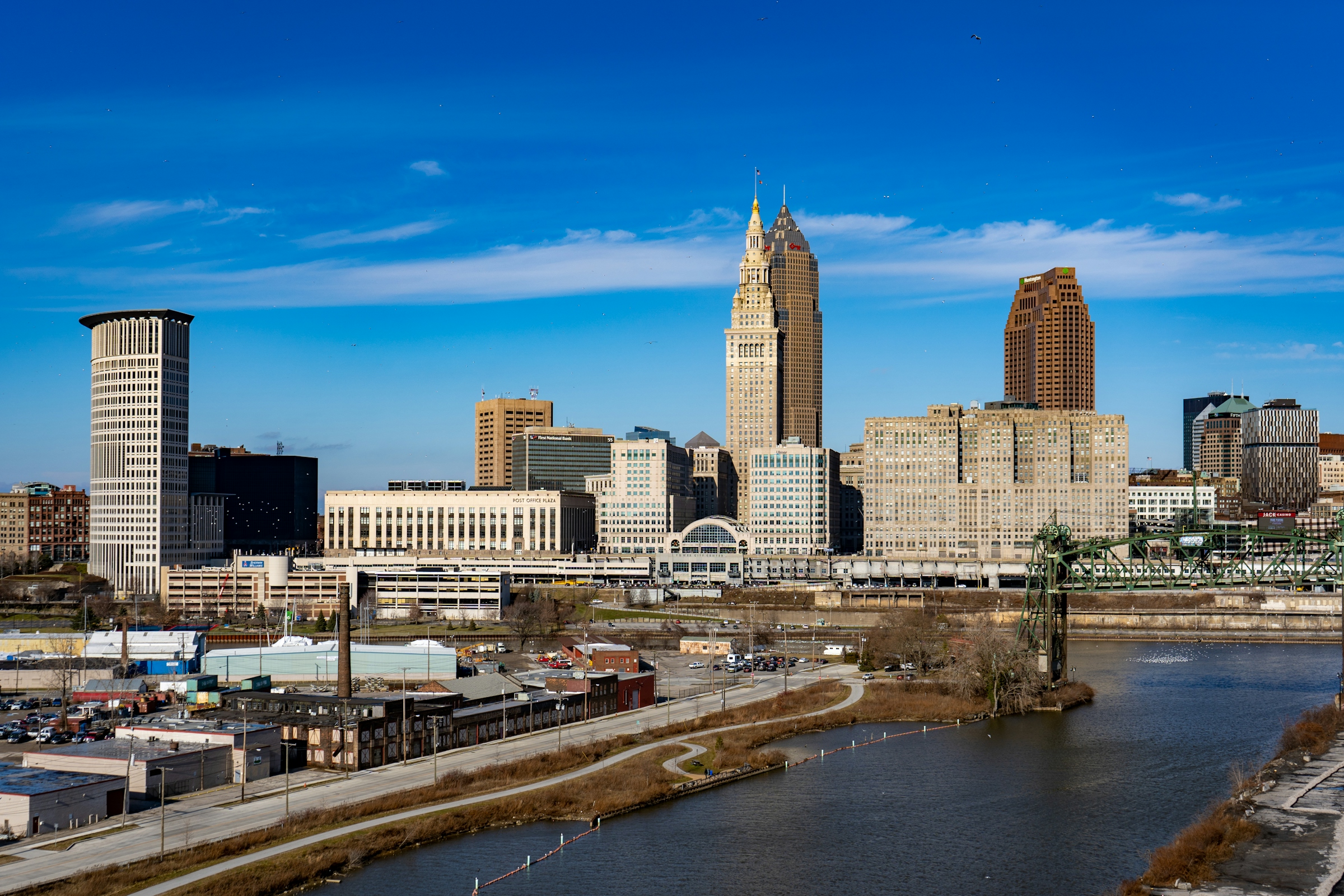
Let us start by saying the thing most relocation guides skip: Cleveland is a genuinely good city, and people who leave it usually know that. It has one of the finest art museums in the country and it is free. It has an orchestra with a global reputation. It has two of the best hospital systems in the world. It has a national park twenty minutes from downtown, a Metroparks system that rings the whole county, and housing stock that is both beautiful and remarkably accessible. If you are moving away from that, you are trading real things away, and we would rather you go in with clear eyes.
What Richmond offers is a milder, sunnier climate, a longer outdoor season, stronger regional job growth and a position on the East Coast that puts Washington, the Northeast Corridor, the Blue Ridge and the Atlantic all within a short drive. We are a licensed brokerage, so you will not find median prices or market percentages here. For current pricing in any neighborhood below, call the Mission Realty Team at (804) 601-4960.
Why Do People Move From Cleveland to Richmond?
Weather is the reason most people lead with, and specifically the grey. Northeast Ohio’s winters are not just cold, they are persistently overcast, and the combination of low light from November through March plus lake-effect snow wears people down in a way that raw temperature does not explain. Richmond winters are shorter, milder and meaningfully sunnier. That single change is the most common thing our Cleveland clients say they notice first.
The second reason is career trajectory. Richmond’s metro has grown steadily and its employment base in healthcare, finance and insurance, state government and logistics has expanded, which tends to mean more openings and more upward movement than a flatter market provides. The third reason is geography. Richmond sits on I-95 about two hours south of Washington, DC, with Amtrak service from Staples Mill Road and Main Street Station to Washington, Philadelphia and New York, plus the Blue Ridge two hours west and the Atlantic two to three hours east.
Climate: Lake-Effect Grey to Humid Sun
Richmond has no lake-effect snow, which is the single biggest weather change. Snow here arrives in a handful of concentrated events rather than as steady accumulation from Thanksgiving to March, and there is no snowbelt effect where driving twenty minutes east triples your total. Winters are short, punctuated by cold snaps and hard freezes, and the characteristic hazard is ice rather than snow: freezing rain that coats trees and power lines and brings down limbs. Keep a plan for a multi-day outage.
Now the honest half. Richmond summers are long, hot and humid, running roughly June into September, with August genuinely heavy. Cleveland gets humid stretches, but Lake Erie moderates them and they break; Richmond’s do not for weeks at a time. Air conditioning is structural here rather than a nice-to-have, and evaluating a home’s HVAC system is a primary inspection item. Spring pollen is also notably heavy in central Virginia, with oak and pine coating everything for several weeks, which surprises newcomers with allergies.
The compensation is the length of the season. Richmond’s growing season is long, the shoulder seasons are real and pleasant, autumn color is excellent, and you can reasonably be outside eight or nine months of the year. Geographically Richmond sits at the fall line, where the Piedmont drops to the Coastal Plain, so the James River runs through the city over genuine whitewater and the neighborhoods on both banks are built on bluffs and ravines. That topography is more pronounced than anything in Cleveland outside the Cuyahoga Valley.
Housing Stock: Colonials and Doubles to Bungalows and Brick Ranches
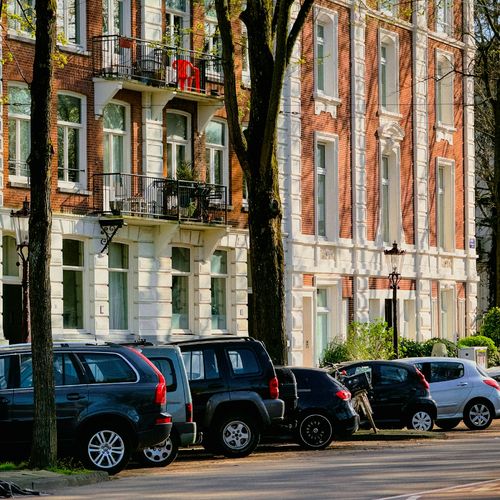
Both cities have excellent early-twentieth-century housing, and both built it in volume, so your instincts about old houses will serve you well. The types differ though. Cleveland and its inner suburbs are dominated by center-hall and side-hall colonials, Tudor Revivals, and the two-family “doubles” that fill Lakewood, Ohio City and much of the west side. Richmond’s equivalent inventory is bungalows and American Foursquares across Northside and Southside, Victorian rowhouses in the Fan and Church Hill, and an enormous postwar stock of brick ranches and Cape Cods across inner Henrico and Chesterfield.
Two structural differences matter most. First, foundations. Ohio’s deep frost line means footings go well below grade, so you got a full basement almost by default. Virginia’s frost line is shallow, so a great many Richmond houses sit on crawl spaces instead, often unconditioned and prone to moisture. Clevelanders miss basement storage and workshop space immediately, and crawl space encapsulation becomes a new line on the inspection list. Second, material. Richmond is emphatically a brick city because brick was locally made and cheap, where Cleveland’s stock is largely wood frame with siding. Brick means less exterior painting and different repointing considerations.
Expect plaster walls, original hardwood, one or one and a half baths in unrenovated older stock, and in pre-1940 homes the possibility of knob-and-tube wiring remnants and original galvanized or cast iron plumbing. Homes built before 1978 carry a federal lead-based paint disclosure, exactly as in Ohio. Mid-1960s ranches sometimes have aluminum branch wiring, which can affect insurability, so raise it with your insurance agent early.
Neighborhood Analogues: Heights and Lakewood to Museum District and Bellevue
If you loved Cleveland Heights or Shaker Heights, look at the Museum District and Richmond’s Near West End, with Windsor Farms and Westhampton for the higher end. The Museum District is a planned early-twentieth-century streetcar neighborhood centered on the Virginia Museum of Fine Arts, with Colonial Revivals, Tudors and Foursquares under a mature canopy on a walkable grid – the closest thing Richmond has to the Heights’ combination of substantial architecture, institutions and sidewalks. Windsor Farms plays a role similar to Shaker’s more formal streets.
If you loved Lakewood, look at Bellevue in Northside, with Woodland Heights and Westover Hills in Southside as strong alternatives. Bellevue is a dense grid of 1920s bungalows and Foursquares with alleys, front porches and a genuine walkable commercial node on MacArthur Avenue. It carries Lakewood’s tone: modest houses, close together, well-loved, with a real main street. What you will not get is the two-family double, which is not a common Richmond building type, so house-hacking a duplex is harder here.
If you loved Ohio City or Tremont, look at Scott’s Addition, Manchester and Church Hill. Scott’s Addition is a former industrial district turned dense mixed use and is the most concentrated brewery, cidery and distillery district in Virginia, which makes the Ohio City parallel close. Church Hill is older and sits on a bluff with long downtown and river views, mixing restored Victorians and frame cottages with a small restaurant cluster near 25th Street, much as Tremont does.
If you were in Rocky River, Westlake or Solon, the suburban equivalents are Short Pump and Glen Allen in western Henrico, Midlothian in Chesterfield, and Mechanicsville in Hanover County. For more land, Goochland and Powhatan counties play the role Geauga or Medina do. For a small-town center, Ashland in Hanover County has a walkable core with a rail line running down the middle of its main street, which will remind you of Chagrin Falls in spirit if not in setting.
Commuting, Transit and Driving Culture
Richmond commutes are broadly comparable to Cleveland’s, landing mostly between fifteen and thirty-five minutes, with close-in city neighborhoods like the Fan, Northside and Forest Hill often under fifteen minutes to downtown. Richmond sits where I-95 crosses I-64, with I-295 forming a bypass loop around the north and east. The one consistently difficult stretch is I-95 through the city and its interchange with I-64, which is worth routing around rather than through.
Two things are genuinely different. First, tolls. The Powhite Parkway and the Downtown Expressway are tolled, and an E-ZPass is standard equipment here rather than optional, particularly if you settle in Chesterfield or Southside. Second, transit is a downgrade. Cleveland has heavy rail with the Red, Blue and Green lines and a rail connection directly to the airport, which very few American cities its size can claim. Richmond has no rail transit at all. GRTC operates the Pulse, a bus rapid transit line running east to west along Broad Street through downtown, Scott’s Addition and the Fan, plus a conventional bus network, and fares have been zero-fare in recent years, though you should confirm current policy. Along that corridor it is genuinely usable; elsewhere the region is car-dependent.
On air service, Richmond International and Cleveland Hopkins are broadly similar in scale, with Cleveland holding an edge on some destinations. Richmond’s offset is Amtrak to the Northeast Corridor and two large Washington airports about two hours up I-95, which is a meaningfully better position for East Coast travel than Northeast Ohio.
Taxes and Vehicle Registration: A Genuine Trade
State and local income tax. Both Ohio and Virginia levy a state individual income tax, so that part is not new. What is new, and welcome, is what Virginia lacks: Virginia has no municipal income tax. Ohio residents are accustomed to a city income tax withheld where they work and often filed separately where they live, frequently through RITA or a local collector, with credits and reciprocity to sort out. None of that exists in Virginia. For many Cleveland-area households that is a real simplification and a real saving. Virginia’s state tax uses graduated brackets whose top bracket begins at a relatively modest income level, so most working households pay the top marginal rate on the bulk of their income. Confirm current rates with the Virginia Department of Taxation or your tax preparer, since they change with legislation.
The vehicle personal property tax. This is the offset, and it is the item Ohioans most consistently fail to budget for. Virginia localities levy and bill an annual personal property tax on the assessed value of every vehicle you own, including cars, trucks, motorcycles, trailers and boats. Ohio charges registration fees but nothing like this, so the bill arrives as a genuine surprise in your first year. Because it is local rather than state, the rate and assessment method differ between the City of Richmond, Henrico, Chesterfield, Goochland, Hanover and Powhatan, and Virginia runs a partial relief program for qualifying personal-use vehicles at levels that change annually. Verify the current rate and relief percentage with the commissioner of the revenue for your specific locality.
Mechanics and real estate tax. New residents must obtain a Virginia driver’s license and title and register vehicles with the Virginia DMV within a defined window, then register each vehicle locally for personal property tax purposes. Budget for Virginia’s one-time titling tax, and confirm with DMV whether safety inspection or emissions requirements apply where you land. Real estate tax rates differ between the city and each surrounding county by enough to change your monthly payment on the same-priced house. We will run a side-by-side estimate for any two jurisdictions you are comparing, but verify the rate with the locality’s assessor before you rely on it.
The Richmond Job Market and the Healthcare Parallel
If you work in healthcare, this move is unusually clean. Cleveland Clinic, University Hospitals and MetroHealth have direct counterparts here in VCU Health, which operates a large academic medical center downtown alongside the VCU School of Medicine, plus Bon Secours Mercy Health and HCA Virginia. Bon Secours Mercy Health is itself a system with deep Ohio roots, so the name may already be familiar. Clinical, research, nursing, allied health and hospital administration roles all transfer, and academic medical center experience is directly relevant at VCU.
Beyond healthcare, finance and insurance form Richmond’s second pillar, with Capital One’s headquarters campus in western Henrico, the Federal Reserve Bank of Richmond, Markel and Genworth – a reasonable landing zone for anyone coming from Progressive, KeyCorp or the Cleveland insurance and banking world. State government is a major employer because Richmond is Virginia’s capital, and the legal sector is correspondingly deep. CarMax, Performance Food Group, Dominion Energy and Altria are headquartered here, logistics has grown along the I-95 corridor and around the Port of Virginia’s inland connections, and Fort Gregg-Adams to the south adds a federal presence. What Richmond does not have is Cleveland’s heavy manufacturing and industrial base, so careers built around companies like Parker Hannifin or Eaton have fewer local equivalents.
Food, Culture, Sports and the Outdoors
On institutions, Cleveland wins several categories outright and we will not pretend otherwise. The Cleveland Museum of Art is one of the great American collections and admission is free. The Cleveland Orchestra is among the finest in the world. Playhouse Square is an enormous theater district, the Rock and Roll Hall of Fame is unique, and the West Side Market is a genuine institution. Richmond’s cultural offering is strong but smaller: the Virginia Museum of Fine Arts is free to enter and holds one of the best collections in the Southeast, alongside the Virginia Museum of History and Culture, the Institute for Contemporary Art at VCU and the Richmond Symphony. Where Richmond holds its own is independent music, with a deep punk, hardcore and metal lineage fed by VCU’s arts programs and venues including The National and The Broadberry.
Food is closer than you might expect. Richmond’s restaurant culture is independent and chef-driven, concentrated in walkable districts rather than spread along arterials, with real clusters in Scott’s Addition, Church Hill, Jackson Ward, Carytown, the Fan and Manchester, plus a dense craft beverage industry and a strong bakery and coffee scene. Richmond has no West Side Market equivalent, but it does have Chesapeake Bay oysters and blue crab and wine country near Charlottesville about an hour and change west.
Sports is a clear downgrade. Cleveland has three professional franchises and Richmond has none. What Richmond has is the Flying Squirrels in Double-A baseball, the Richmond Kickers in soccer, strong VCU basketball and University of Richmond athletics, and a two-hour drive to Washington’s professional teams. Outdoors, the comparison is more even than people assume. Cuyahoga Valley National Park and the Metroparks Emerald Necklace are excellent, and Lake Erie is genuinely useful in summer. Richmond’s answer is the James River Park System, roughly 600 acres along both banks with Class III and IV whitewater, mountain biking and swimming holes inside the city limits, plus the paved 52-mile Virginia Capital Trail to Williamsburg, Shenandoah National Park and the Blue Ridge Parkway two hours west, and the Atlantic two to three hours east. The real difference is that Richmond’s season is much longer.
What Should You Do First When Moving to Richmond?
Before you list your Cleveland home. Talk to a Virginia-licensed lender and get pre-approved, then build a realistic monthly figure that includes the local real estate tax rate and the annual vehicle personal property tax. Also budget honestly for the housing cost difference, because a house equivalent to what you own in Cleveland Heights or Lakewood will generally cost more here.
Decide your jurisdiction before your neighborhood. The City of Richmond, Henrico, Chesterfield, Goochland, Hanover and Powhatan have separate school divisions, separate tax rates, separate park systems and different service levels. That is a bigger decision than choosing a street, and newcomers routinely rush it.
Rethink two house assumptions. You may not get a full basement, and the air conditioning matters more than the furnace. Add crawl space moisture and encapsulation to your inspection priorities, and ask about aluminum branch wiring on any mid-1960s ranch, since it can affect insurability.
In your first 30 days. Get your Virginia driver’s license, title and register your vehicles with DMV, register them with your locality for personal property tax, register to vote, and get an E-ZPass. Contact your school division directly about registration documentation. Talk to a Virginia insurance agent early, and if you are looking anywhere near the James, ask specifically about flood zone designation and whether your lender will require flood insurance.
| Factor | Cleveland | Richmond | What it means for you |
|---|---|---|---|
| Winter | Long, grey, lake-effect snow and a snowbelt | Short and milder; ice storms more than snow | More sunshine; plan for outages |
| Summer | Humid stretches moderated by Lake Erie | Long, hot and humid June into September | AC is structural; inspect it closely |
| Housing cost | Unusually accessible for the quality | Higher for a comparable house | Model the difference before you tour |
| Housing types | Colonials, Tudors, two-family doubles | Bungalows, Foursquares, rowhouses, brick ranches | Familiar era, different types; brick not frame |
| Foundations | Full basements, deep frost line | Often crawl spaces; basements the exception | Storage and workshop space need rethinking |
| Municipal income tax | Yes, city income tax and RITA filings | None in Virginia | A real simplification and often a saving |
| Vehicle tax | Registration fees only | Annual locally billed personal property tax | A new recurring bill; verify the local rate |
| Transit | Heavy rail, including to the airport | Bus rapid transit on Broad Street only | A clear downgrade; plan on driving |
| Pro sports | Three professional franchises | Minor league and college; DC about 2 hours | A real downgrade if this matters |
Frequently Asked Questions About Moving to Richmond VA from Cleveland
Is Richmond VA warmer than Cleveland?
Yes, and the bigger change is sunshine rather than temperature alone. Richmond winters are shorter and milder, and critically there is no lake-effect snow and no snowbelt, so snow arrives in a handful of concentrated events rather than accumulating from Thanksgiving through March. Northeast Ohio’s persistent winter cloud cover is what most Cleveland transplants say they notice leaving behind. The tradeoff is summer: Richmond is hotter and considerably more humid from June into September, with no Lake Erie effect to break it.
How much snow does Richmond get compared to Cleveland?
Far less, and it behaves differently. Richmond has no lake-effect mechanism, so there is no equivalent of driving twenty minutes east and tripling your snowfall. The characteristic Richmond winter hazard is freezing rain and sleet that coats trees and power lines and brings down limbs, which makes outages a bigger concern than shoveling. Because the region rarely needs it, Richmond has very little snow-removal capacity, so two inches closes schools and side streets may go unplowed, which Clevelanders find genuinely funny for about one winter.
Is Richmond more expensive than Cleveland?
In housing, generally yes, and this is the most important financial fact of the move. Cleveland and its inner suburbs offer unusually accessible pricing for the quality and size of the housing stock, and a comparable house in Richmond will typically cost more, in some neighborhoods substantially more. The tax picture is more mixed, because Virginia has no municipal income tax while Ohio cities do, but Virginia adds an annual vehicle personal property tax. Ask the Mission Realty Team for current listings in the neighborhoods you are considering so the comparison happens on paper rather than at a showing.
Does Virginia have a city income tax like Ohio?
No, and this is one of the genuine advantages of the move. Virginia has no municipal or local income tax, so the city income tax withheld where you work, the separate local filing where you live, and the credits and reciprocity questions handled through RITA or a local collector all disappear. Virginia does levy a state individual income tax with graduated brackets whose top bracket begins at a relatively modest income level, so most working households pay the top marginal rate on the bulk of their income. Confirm current rates with the Virginia Department of Taxation or your tax preparer.
What is the Virginia personal property tax on vehicles?
It is an annual tax that your Virginia city or county levies and bills on the assessed value of every vehicle you own, including cars, trucks, motorcycles, trailers and boats. Ohio charges registration fees but nothing comparable, so this bill is a genuine surprise for Cleveland transplants in their first year here. Because it is local rather than state, the rate and assessment method differ between the City of Richmond, Henrico, Chesterfield, Goochland, Hanover and Powhatan, and Virginia runs a partial relief program for qualifying personal-use vehicles. Verify the current rate and relief percentage with the commissioner of the revenue for your specific locality.
Which Richmond neighborhood is most like Cleveland Heights or Shaker Heights?
The Museum District is the closest match, with Richmond’s Near West End alongside it and Windsor Farms or Westhampton for the higher end. The Museum District is a planned early-twentieth-century streetcar neighborhood centered on the Virginia Museum of Fine Arts, with Colonial Revivals, Tudors and Foursquares under a mature canopy on a walkable grid, which mirrors the Heights’ mix of substantial architecture, institutions and sidewalks. Windsor Farms fills a role similar to Shaker’s more formal streets. Be aware that Richmond has no equivalent to the Heights’ density of grand older houses at accessible prices.
What is the Richmond equivalent of Lakewood?
Bellevue in Northside is the closest, with Woodland Heights and Westover Hills in Southside as strong alternatives. Bellevue is a dense grid of 1920s bungalows and American Foursquares with alleys, front porches and a real walkable commercial node on MacArthur Avenue, which gives it Lakewood’s tone of modest, close-set, well-loved houses with a genuine main street. The one thing you will not find is the two-family double, which is not a common Richmond building type. That makes buying a duplex to offset your mortgage considerably harder here than in Lakewood.
Is there a Richmond equivalent of Ohio City or Tremont?
Yes. Scott’s Addition is the closest parallel to Ohio City: a former industrial district converted to dense mixed use and now the most concentrated brewery, cidery and distillery district in Virginia, and where most of Richmond’s recent apartment and condominium construction has gone. Manchester, across the river from downtown, is a second former industrial area on a similar trajectory. For Tremont’s feel, look at Church Hill, which is older, sits on a bluff with long downtown and river views, and mixes restored Victorians and frame cottages with a small restaurant cluster near 25th Street.
Do Richmond houses have basements like Cleveland houses?
Usually not, and this is one of the biggest practical adjustments. Ohio’s deep frost line requires footings well below grade, so a full basement came almost by default, while Virginia’s frost line is shallow and many Richmond houses sit on crawl spaces instead. Those crawl spaces are often unconditioned and prone to moisture, so encapsulation and drainage become new inspection priorities. Basements do exist here, mostly in the hilly Southside neighborhoods and in some Northside and Museum District homes where the grade allows a walkout, so tell your agent early if it is a requirement.
Will my healthcare career transfer from Cleveland to Richmond?
This is the cleanest career parallel in the move. Cleveland Clinic, University Hospitals and MetroHealth have direct counterparts in VCU Health, which runs a large academic medical center downtown alongside the VCU School of Medicine, plus Bon Secours Mercy Health and HCA Virginia. Bon Secours Mercy Health has deep Ohio roots, so the name may already be familiar to you. Clinical, nursing, allied health, research and hospital administration roles all translate, and academic medical center experience is directly relevant at VCU.
What are the biggest employers in Richmond VA?
Healthcare is the largest sector, anchored by VCU and VCU Health, Bon Secours Mercy Health and HCA Virginia. Finance and insurance form the second pillar, with Capital One’s headquarters campus in western Henrico, the Federal Reserve Bank of Richmond, Markel and Genworth, which makes Richmond a reasonable landing zone for people coming from Progressive, KeyCorp or the Cleveland banking and insurance world. State government is a major employer because Richmond is Virginia’s capital, and CarMax, Performance Food Group, Dominion Energy and Altria are headquartered here. What Richmond lacks is Cleveland’s heavy manufacturing and industrial base.
Does Richmond have public transportation or rail?
Richmond has no rail transit, which is a clear downgrade from Cleveland’s Red, Blue and Green lines and its rail connection to the airport. What Richmond has is GRTC’s Pulse, a bus rapid transit line running east to west along Broad Street through downtown, Scott’s Addition and the Fan, plus a conventional bus network, and fares have been zero-fare in recent years, though you should confirm current policy with GRTC. Along the Broad Street corridor it is genuinely usable. Everywhere else the region is car-dependent, and you should also budget for an E-ZPass because the Powhite Parkway and Downtown Expressway are tolled.
Does Richmond have professional sports teams?
No, and Cleveland transplants feel this one. Cleveland has three professional franchises while Richmond has none. What Richmond offers is the Flying Squirrels in Double-A baseball, the Richmond Kickers in soccer, and strong college programs at VCU and the University of Richmond, with VCU basketball in particular drawing serious crowds. Washington, DC is about a two-hour drive north for professional games, and plenty of Richmond residents keep allegiances to teams elsewhere.
What outdoor options does Richmond have compared to Cleveland?
The comparison is closer than people assume, and the real difference is season length. Cuyahoga Valley National Park, the Metroparks Emerald Necklace and Lake Erie are genuine strengths that Richmond cannot match one for one. Richmond’s answer is the James River Park System, roughly 600 acres along both banks with Class III and IV whitewater, mountain biking and swimming holes inside the city limits, plus the paved 52-mile Virginia Capital Trail to Williamsburg. Shenandoah National Park and the Blue Ridge Parkway are about two hours west and the Atlantic two to three hours east, and you can use all of it eight or nine months a year.
Should I rent before buying when relocating to Richmond?
For most buyers moving from a very different climate and housing market, yes, even though it delays a transaction. Richmond changes character block to block far more than Cleveland’s suburban municipalities do, and living through one summer in a central rental teaches you things about shade, elevation, breeze and drainage that touring in pleasant weather will not. Renting also lets you drive your real commute in real traffic and receive your first Virginia tax bills before committing to a mortgage payment. If your timeline does not allow it, the Mission Realty Team can compress the discovery process with focused neighborhood tours instead.
Planning a Move From Cleveland to Richmond?
The Mission Realty Team works with relocating buyers every week across Richmond, Henrico, Chesterfield, Goochland, Hanover and Powhatan, and we will tell you honestly which neighborhoods fit your commute and your budget and which do not. Call us at (804) 601-4960 or stop by 3701 Cox Rd, Richmond VA 23233 for a current list of homes in any neighborhood on this page.