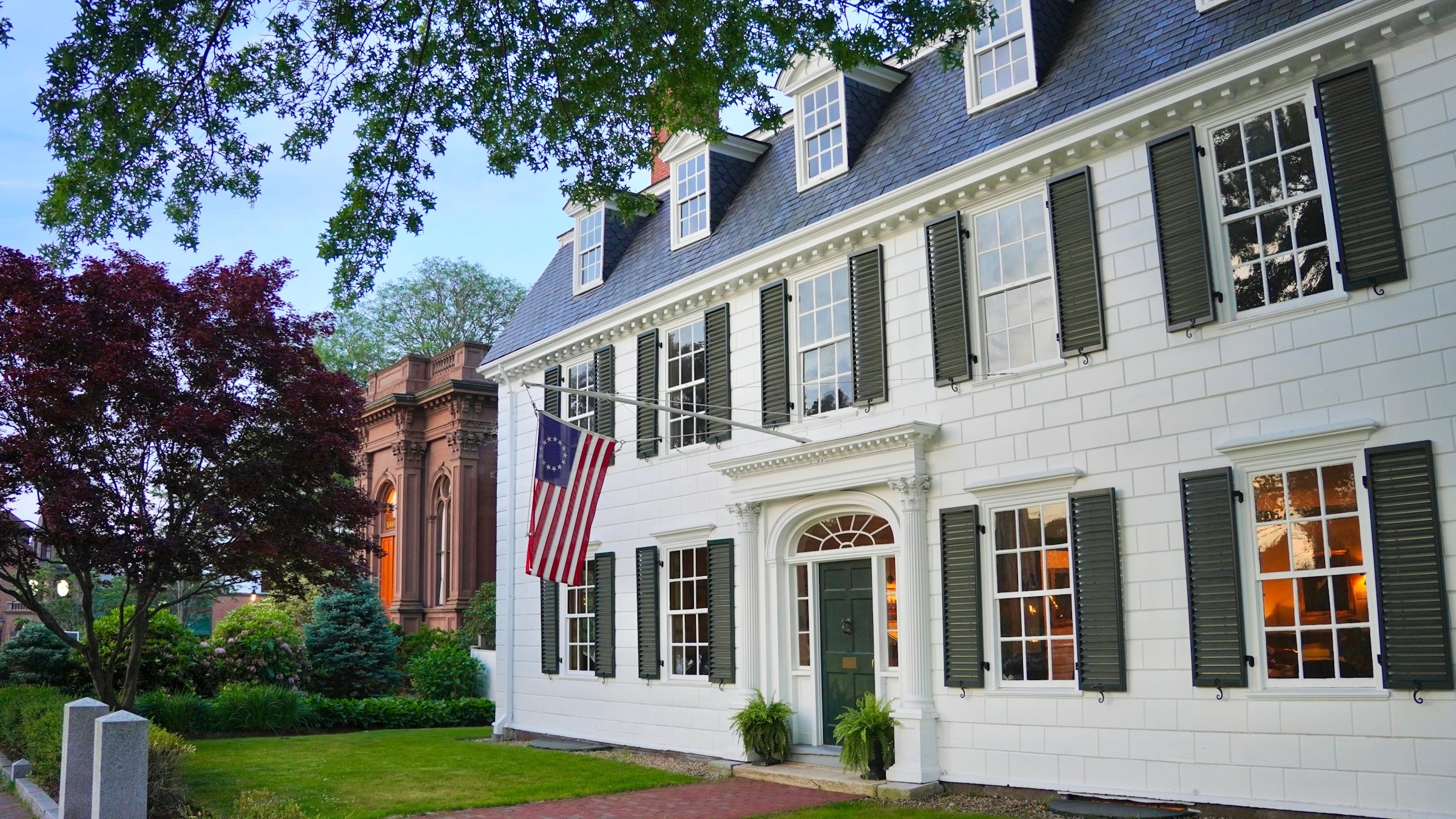
If you want a Colonial Revival or Georgian Revival house in the Richmond area, the most reliable bet is a neighborhood whose state historic register record names the style: six do, led by Ginter Park, where the Virginia Department of Historic Resources (DHR) calls Colonial Revival the dominant style. The catch is that a district record describes a whole area, not the house you are touring, and three neighborhoods people often name for these styles had no record we could link that says so.
So this list only makes a style claim when a linked DHR page or nomination form makes it first. It is ordered by how directly the record says it: districts whose DHR summary page names the style come first, then districts where you have to open the full nomination form to find it. The areas we checked and could not confirm come last, with the reason.
How to read a register record
Each listed historic district has a short summary page on the DHR site and, behind it, a long nomination form filed for the state and national registers. The summary is a quick read. The nomination is where surveyors list architectural styles, often building by building. When we say a style is present, we point you to the one you can open and check.
Two words matter. Colonial Revival and Georgian Revival are 20th-century houses that borrow from 18th-century American and English forms. A record that says “Georgian” without “Revival” may be describing that same borrowing on a newer house, and we flag it where that happens.
What to look for from the curb
Records tell you where to look. Your eyes tell you which house fits. On a drive-by, these are the usual signs of both revival styles:
- A front that is close to symmetrical, with the door in the center and windows balanced on each side.
- Windows split into many small panes, often with shutters.
- A door framed by a decorative surround, a small portico or a fanlight above it.
- Brick or wood siding with a plain, boxy main block and a side-gabled or hipped roof.
Georgian Revival houses tend to be more formal and are more often brick. Colonial Revival covers a wider range, from large brick houses to modest frame ones. Neither list is a test. A later porch, addition or new windows can hide the original style, so read the listing history and ask the seller’s agent what has changed.
Ginter Park: the record calls Colonial Revival dominant
The DHR page for the Ginter Park Historic District says most buildings in its expanded boundaries went up between 1911 and 1930, and that Colonial Revival is the dominant style, alongside Tudor Revival and Dutch Revival. That is the most direct statement of any record in this post. Ginter Park is on Richmond’s north side. We do not have a Ginter Park community page yet, so start with our City of Richmond overview and the nearest pages we do have, North Side and Lakeside.
Forest Hill: Colonial Revival mansions on larger lots
The DHR page for the Forest Hill Historic District describes a streetcar suburb south of the James with a mix of house sizes: Queen Anne and Colonial Revival mansions on park-like lots, and smaller Craftsman bungalows and Tudor Revival houses on smaller lots. So in Forest Hill, Colonial Revival tends to mean the larger houses, by the record’s own description.
The Museum District: Georgian, in brick town house form
The DHR page for the West of The Boulevard Historic District, which it notes is now commonly called the Museum District, says the streets are lined mainly with attached two-story brick town houses built mostly from 1910 to 1930. Its words on style: “modified Georgian predominates,” with Tudor, Craftsman and Mediterranean also present. The record says Georgian, not Georgian Revival, but on houses of that age it is describing the same borrowing. The Museum District is where to look if you want that look in a row house.
The Fan and Monument Avenue: both styles in the landmark nomination
The DHR summary for the Monument Avenue Historic District describes a rich mix of styles without naming them. The 1997 National Historic Landmark nomination on the DHR site does. Its architectural classification lists both Colonial Revival and Georgian Revival, and its block-by-block notes describe Colonial Revival houses on blocks of both Monument Avenue and West Franklin Street. Monument Avenue runs through The Fan, so this is the pick when you want both styles in one district.
Westhampton and the Three Chopt Road district: architect-designed revival houses
The 2012 nomination for the Three Chopt Road Historic District describes a 1.3-mile stretch in Richmond’s far West End that grew near the Westhampton streetcar line. It lists Colonial Revival and Georgian Revival among the styles, and it describes most houses as roughly 3,500 to 7,500 square feet (Three Chopt Road Historic District, as surveyed for the 2012 nomination, DHR). We place it with our Westhampton page because of that streetcar tie, but check any listing against the nomination’s boundary map.
Bon Air: Colonial Revival among the Victorian cottages
The DHR summary for Bon Air in Chesterfield County talks mostly about its Victorian cottages. The 1988 nomination adds that Buford Road also has larger Queen Anne and Colonial Revival houses from around 1900 and later, and that much of the district mixes Queen Anne, Colonial Revival, bungalow and American Foursquare houses. We did not find Georgian Revival named in it. Bon Air is the county pick for buyers who want the style outside the city.
Get a saved search for these six areas
Tell us which of Ginter Park, Forest Hill, the Museum District, the Fan, Westhampton and Bon Air you want, and we will set up a saved search for those areas so new listings reach you as they come up.
Checked, not confirmed: Windsor Farms, Westover Hills and Malvern Gardens
These three come up often when buyers ask about Colonial Revival and Georgian houses. We looked for a state register record we could link that names either style in each one, and did not find one.
- Windsor Farms: the only DHR record we found there covers a single estate, not the neighborhood’s houses as a group.
- Westover Hills: we found no district listing under that name on DHR’s register list.
- Malvern Gardens: we found no district listing under that name either. It is in the far West End, so our Westhampton and Near West End pages are the nearest guides.
That does not mean these areas lack the styles. It means we will not say they have them without a record to point to. On a tour, judge the house in front of you.
Before you buy an older revival house
A register listing and any local historic district rules are separate things, so ask the locality before you plan exterior changes. If you plan a major renovation, read our checklist on the Virginia historic rehabilitation tax credit for owner-occupied homes. For other house types in this series, see our guides to Cape Cod and cottage homes and mid-century ranches and split-levels. When you are ready, browse current listings or read how we work with buyers.
Your saved search, same six areas
Pick any of Ginter Park, Forest Hill, the Museum District, the Fan, Westhampton and Bon Air, and we will build the saved search for them, so you see revival-era homes in those areas as they list.
Colonial Revival and Georgian Revival home questions
What is the difference between Colonial Revival and Georgian Revival?
Both are 20th-century styles that borrow from 18th-century houses. Georgian Revival draws on the formal, symmetrical English Georgian house, while Colonial Revival is a broader label for houses that borrow from American colonial forms. Register records often list them separately, as the Monument Avenue nomination does.
Does a historic district listing mean every house is that style?
No. A district record describes the area as surveyed. Ginter Park’s record says Colonial Revival is dominant, but it also names Tudor Revival, Dutch Revival and other styles. Judge each house on its own.
Where can I read the full nomination for a district?
Each DHR register page has a link to the nomination form near the bottom. Those forms can run to dozens of pages and often describe houses address by address, which is useful when you are weighing a specific street.
Is a house in a register-listed district eligible for a tax credit?
It can be, if it qualifies and the work meets the program’s standards. The rules are specific, so read our historic rehabilitation tax credit checklist and confirm with DHR before you count on a credit.
Why did you leave Windsor Farms off the main list?
Because we could not find a state register record to link that describes the neighborhood’s house styles. The only DHR record we found there covers a single estate. We only make a style claim when a record we can show you makes it.
Can you send me only Colonial Revival listings?
Listing data does not always tag architectural style reliably, so a style filter can miss houses. A saved search by neighborhood, which we can set up for the six areas above, is the more dependable way to see them.
Should I get a specialized inspection on a house this old?
Many buyers of century-old houses add checks beyond a general home inspection, such as a sewer line camera or a look at the roof and chimneys. Ask your inspector what they recommend for the house’s age and construction.