

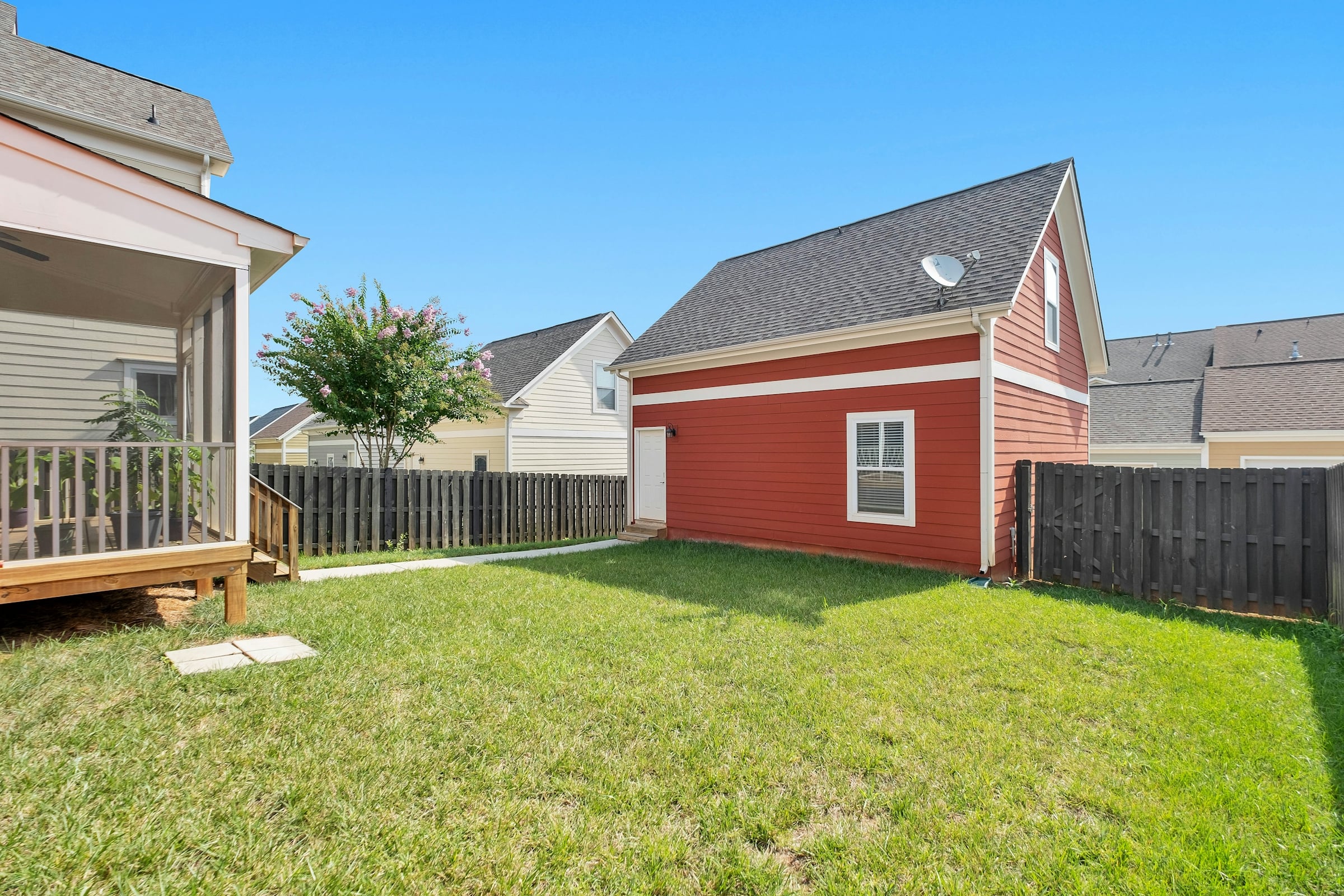
Buyers ask for two things that have quietly stopped appearing together around Richmond: a yard big enough to matter, and no association telling them what to do with it. Since roughly 1990 almost every new subdivision here has been platted with a recorded association attached, because localities prefer common areas and stormwater facilities maintained privately. Want land without covenants in 2026? You are shopping older city and first-ring neighborhoods, or unincorporated county land.
Nine places are named below, grouped by distance rather than ranked, with what each costs you as well as what it gives. If you want the yard without the isolation, our roundup of neighborhoods for gardeners and yard lovers covers the same ground from the growing side.
What a homeowners association legally is in Virginia
The term people use loosely has a statutory definition. Under Code of Virginia section 55.1-1800, a property owners association is an entity on whose behalf mandatory regular or special assessments are levied on lots in a development under a recorded declaration. Three words do the work: mandatory, assessments and recorded declaration. A civic league collecting $25 a year is not a property owners association, because nothing is mandatory and nothing is recorded against your deed.
Where a declaration exists it binds you whether or not you read it. Where none exists there is nothing to pay, nothing to enforce, and nothing to protect you. Buyers leaving a covenanted subdivision should read our guide to what to read in a Richmond HOA before you sign and our explainer on Virginia HOA disclosure packets and the right to cancel, to see what you will no longer receive.
The trade, stated plainly
What you gain
- No assessment and no special assessment.
- No architectural review on a fence, shed, roof colour, boat or work vehicle.
- No board, meetings or violation letters.
- Lot sizes set by mid-century platting or agricultural zoning, not by a developer chasing density.
What you give up
- No shared maintenance. Common paths and stormwater are yours or nobody’s.
- No covenant enforcement on your neighbour. The four cars on the lawn next door are a zoning question at best.
- No resale disclosure packet, so no budget, reserve or minutes to read.
- Private roads and private septic become your cost and your liability.
| Area | Closed (YoY) | Median (YoY) | Days on market (YoY) | Months supply (YoY) |
|---|---|---|---|---|
| Richmond City (city level) | 218 (+6.9%) | $450,000 (-3.4%) | 17 (-5.6%) | 1.5 (-16.7%) |
| Henrico County (county level) | 287 (-2.0%) | $475,000 (+11.8%) | 16 (-11.1%) | 1.5 (-11.8%) |
| Goochland County (county level) | 44 (+51.7%) | $655,000 (-3.0%) | 30 (+11.1%) | 2.8 (+3.7%) |
| Powhatan County (county level) | 46 (+4.5%) | $486,250 (-3.4%) | 22 (0.0%) | 3.1 (+6.9%) |
[DATA NEEDED: median price per square foot, July 2026, by area]
[DATA NEEDED: median sold price split by whether the parcel is subject to a recorded declaration, July 2026]
Month covered: July 2026, the latest published; August 2026 is not out.
Source: Central Virginia Regional MLS, July 2026, via the Richmond Association of REALTORS Sortable Statistics, detached single-family report.
Every row is county or city level, and no published report separates covenanted from covenant-free sales, so treat the table as the envelope your search sits in. It does show the outer counties moving differently: 3.1 months of supply in Powhatan and 2.8 in Goochland against 1.5 in Henrico and Richmond City.
How this list is grouped
By distance from the city centre: first-ring neighborhoods, then eastern Henrico County, then the western counties, alphabetical inside each band. There is no scoring behind it.
Lakeside: quarter-acre lots five miles from downtown, and no declaration on most streets
Lakeside is the closest thing the metro has to a real yard on a short commute: 1940s and 1950s platting on flat rectangular lots, generally a quarter acre and sometimes more, almost none of it under a recorded declaration. County water and sewer removes the biggest hidden cost of going further out.
Laurel and Montrose: lot size still varies street to street
Laurel in the northwest and Montrose in the east were built out before the association model took hold, and both contain pockets never subdivided down to the modern standard. Check parcel by parcel rather than assume: two houses on one street can sit on very different lots, because these areas grew by accretion rather than master plan.
Stratford Hills: wooded city lots with ravines instead of rules
Stratford Hills sits South of the James inside the City of Richmond, its mid-century streets laid over rolling terrain that builders of the era worked around. The result is unusually large, unusually private city lots with mature canopy, no covenant structure, city services and a short trip downtown.
Westover Hills: flatter ground, smaller lots, same absence of covenants
Westover Hills is the trade-off version of its neighbour: flatter, more workable yards on generally smaller parcels. Nearby Forest Hill runs the same way. Both are covenant-free in the ordinary case, in a city whose median was $450,000 in July 2026, down 3.4% year over year at city level while Henrico rose 11.8%.
Sandston: the cheapest way into a covenant-free lot in Henrico
Sandston was built as compact postwar housing on a grid in eastern Henrico, on county utilities, with essentially no association structure in it. Lots are modest, but the entry price is the county’s lowest and the yards are flat, fenced and usable now. Adjacent Highland Springs behaves the same way.
Varina: half an acre to several acres, mostly unrestricted
Varina is rural eastern Henrico and the best answer in the metro to the exact question this post asks. Parcels run from half an acre to several acres, low-density zoning holds, county utilities stop at a line so much of it is well and septic, and recorded declarations are the exception. You keep a locality with a published tax rate of $0.83 per $100 while buying land that looks nothing like the rest of it.
Powhatan: acreage with the most supply on the board
Powhatan posted 3.1 months of supply in July 2026, the highest in the table, with a county-level median of $486,250, down 3.4% year over year on 46 closed sales. More inventory plus a softening median is the closest thing to negotiating room in this market. Most of the county is unrestricted rural parcels, and well and septic is normal.
Goochland: unrestricted land and a high county median
Goochland carries the table’s highest county-level median at $655,000 on only 44 closed sales, and it also holds a great deal of genuinely unrestricted acreage. Both are true because estate parcels and working farmland share a tax base. Read that median as what sold in one month, not as a price of entry. If you plan to build rather than buy, start with our guide to buying land or acreage near Richmond.
Also worth a look, though its covenant-free pockets are scattered: Hanover, county-level median $525,000 in July 2026 on 137 sales, up 33.0%.
A saved search for non-HOA homes on larger lots in these nine areas
The hard part is not finding listings, it is filtering out the ones that quietly come with a declaration. We will build you a saved search for homes with no association on lots above your minimum size across Lakeside, Laurel, Montrose, Stratford Hills, Westover Hills, Sandston, Varina, Powhatan and Goochland, with lot acreage and the association field on every result. Start with our Richmond homes with acreage search or the full property search, and we will set the filters up on our buyer side.
Private roads and septic are the costs that replace the assessment
Covenant-free rarely means paying nothing. It means paying directly instead of through a board. Two line items account for most of it.
The road. If the street is not in the state secondary system, nobody plows, paves or fixes the culvert but the owners on it. How a road gets taken into that system is set out in the VDOT Secondary Street Acceptance Requirements, and a road that does not meet them may never be accepted. Get the maintenance agreement in writing before you remove a contingency.
The system. Well and septic is the norm in Varina, Powhatan and much of Goochland. Drain field replacement is a five-figure event and its life depends on soils, not on you. Our guide to buying with well and septic near Richmond covers the inspections and records to ask for.
No covenants is not the same as no rules
Zoning still applies. Lot coverage, setbacks, accessory structure limits and what you may run as a business are county matters, changed by ordinance rather than by a vote of your neighbours. Check the district and its permitted uses for any parcel where your plan involves a second dwelling, a shop building or livestock. A neighbour having done the same thing is not a permit. Compare Chesterfield County, where most post-1990 subdivisions carry both zoning and a declaration.
If the house rather than the lot is the constraint, the companion posts fit better: one on Richmond-area neighborhoods for single-story living, one on low-maintenance townhome neighborhoods, the opposite bargain: an association, on purpose.
General information, not legal advice. On covenants, road agreements or contract language, consult a Virginia real estate attorney.
Questions buyers ask before going covenant-free
How do I confirm a property really has no association before I make an offer?
Pull the recorded documents for the subdivision, not the listing remarks. A declaration sits in the circuit court land records and runs with the land; the MLS association field is data entry and is wrong often enough to matter. Title search catches it, but usually after your inspection period starts, so ask early.
Can an association be created on my street after I buy?
Not retroactively over your objection. A property owners association depends on a recorded declaration binding the lots, and adding that burden to a parcel requires the owner’s agreement. What can appear without your consent is a locality-created service district levy.
Do lenders treat non-HOA properties differently?
Association status is not the issue; acreage, outbuildings, private road access and septic are. A large parcel with few comparable sales can appraise slowly or short, and some loan products cap acreage or require a recorded road maintenance agreement. Raise it with a lender before you write.
Is it harder to resell a house with no association?
It narrows the buyer pool rather than the price. Some buyers want covenants, particularly relocating buyers who read them as protection. The offset is that covenant-free acreage close to Richmond is scarce, and scarcity is not a resale problem.
What is the difference between a civic association and a property owners association?
Money and recording. A civic association is voluntary, funded by dues you can decline, with no lien power. A property owners association levies mandatory assessments under a recorded declaration and can lien your lot. Older Richmond neighborhoods often have the first and not the second.
How much land do I actually need for what I want to do?
Answer that before you shop, because it changes the locality. Chickens, a garden and a workshop fit on a half acre in Varina. Horses, a second dwelling or anything commercial pushes you into Powhatan or Goochland and into a zoning conversation. More acreage than the plan needs is more maintenance than the plan wanted.
Filter for the lot, not the listing photos
The search that works here is narrow and mechanical: no recorded association, above a lot-size floor you set, in nine specific areas, with acreage visible on every result. We will build it, send it as listings hit, and flag the ones with private road frontage.
Selling a covenant-free lot rather than buying one? The scarcity cuts your way, and a home valuation is the place to start. The wider metro is mapped on our community pages, and the people who run the search are on our team page.
