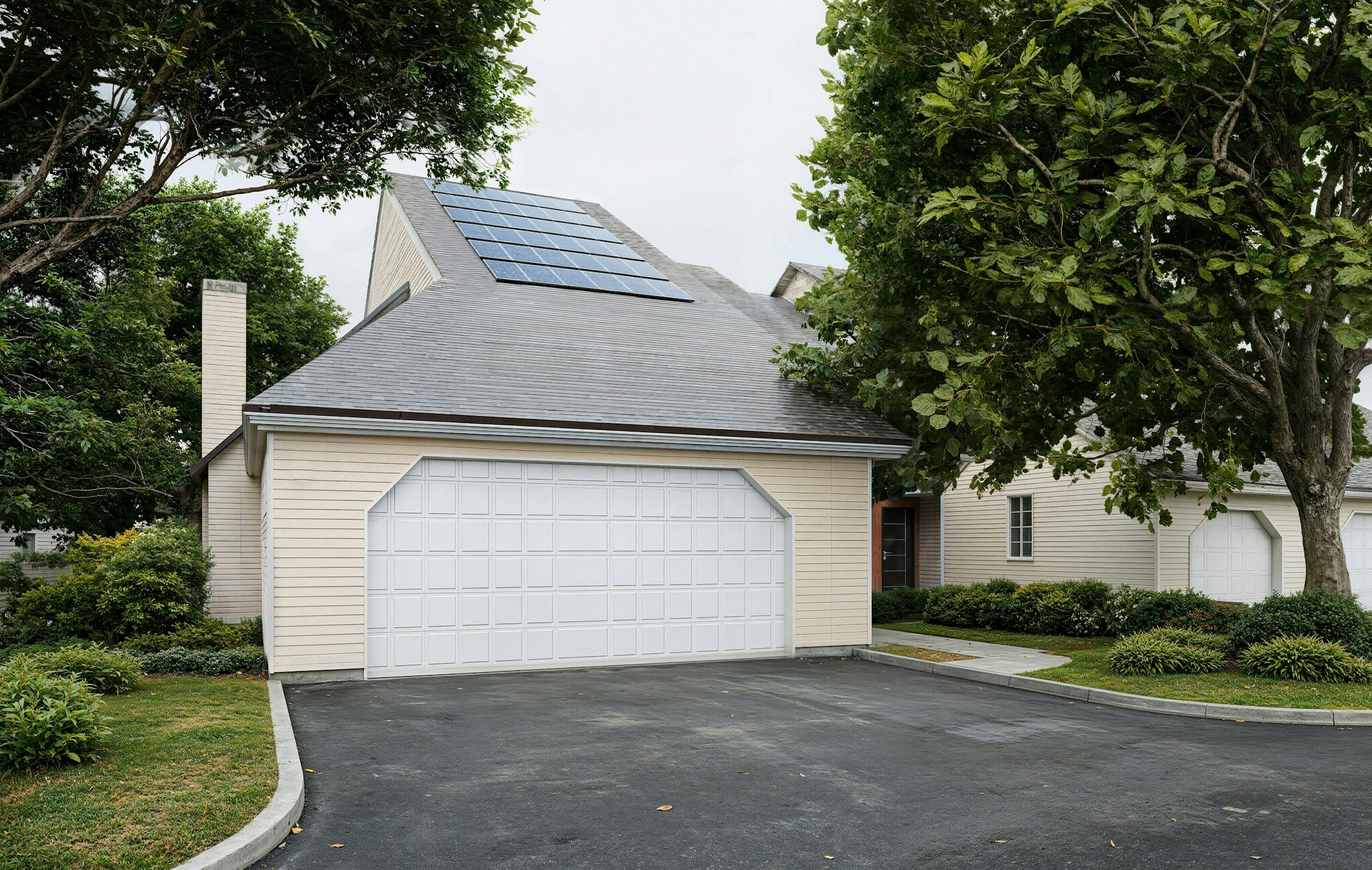
If you own your solar panels outright, selling is close to routine: they stay with the house, the buyer’s appraiser can consider them, and your Dominion Energy net metering arrangement moves to the new owner. If you financed the panels, or a solar company owns them under a lease or power purchase agreement (PPA), the paperwork sets your closing date, and the two usual problems are a lien that has to be paid off and released, and a buyer who has to be approved by the solar company before closing.
This is the seller’s side. For the buyer’s view, read our post on buying a home with solar panels in Richmond.
Three setups, three different closings
Find your solar paperwork before you list. The contract you signed when the panels went up tells you which setup you have.
Owned free and clear. You paid cash, or the panels were part of the price when you bought the house, or you paid the solar loan off. Fannie Mae’s Selling Guide section B2-3-04 says that when the borrower owns the panels outright, its standard appraisal, insurance and title rules apply. Nothing extra has to happen at your closing beyond the normal transfer.
Financed with a separate solar loan. You own the panels, but a lender holds a security interest in them. That interest may be recorded in the land records as a fixture filing. It has to be paid off and released at or before closing, or the buyer’s lender may count it as other debt secured by the house.
Leased or under a PPA. A solar company owns the equipment, and you pay either a monthly lease or a per-kilowatt-hour rate for the power. You cannot sell what you do not own. The buyer either takes over your agreement with the company’s approval, or you pay it off on the terms your contract allows.
Quick test: if you still make a monthly payment to a solar company or solar lender, you are not in the first group. Ask the company for the full contract with every exhibit.
Know where your house stands before you call the solar company
Get your instant home value, built from recent sales near you.
Financed panels: the payoff and the fixture filing
Solar loans are often secured by the equipment. Under Virginia’s version of the Uniform Commercial Code, a lender that files a financing statement as a “fixture filing” files it in the same office where mortgages on the property are recorded (Va. Code 8.9A-501). That is why a solar lien can show up on the buyer’s title search alongside your mortgage.
What to do about it, in order:
- Request a written payoff statement early. Ask the solar lender for the payoff figure, the per-diem interest, any prepayment terms in your note, and how it will release its filing once paid.
- Give the payoff to your settlement agent. Your closing attorney or title company pays it from your proceeds at closing, the same way your mortgage is paid off. Our line-by-line walk-through of a seller’s closing figures shows where payoffs sit on the statement.
- Make sure the release actually gets filed. Under Va. Code 8.9A-513, once nothing is owed, a secured party must file (or, for some collateral, send you) a termination statement within 20 days after it receives your signed demand, and for consumer goods it must file one within one month after the debt is paid even without a demand. Ask your settlement agent who will send that demand, and keep the payoff letter.
Why the buyer’s lender cares: Fannie Mae’s guide says that if a fixture filing sits in the land records with priority ahead of the new mortgage, it must be subordinated. It also says separately financed panels should not add to the appraised value unless the loan documents show they cannot be repossessed on default. Paying the loan off and clearing the filing removes both issues. If you financed the panels through a PACE program, the same section says Fannie Mae will not buy the new loan unless the PACE financing is paid in full before or at closing.
Leased panels or a PPA: getting the buyer approved
With a lease or PPA, your buyer is effectively taking on a contract with the solar company, so the company decides whether they qualify. Read your agreement for the transfer section, the transfer fee if any, the remaining term, any annual payment increase, and what buyout or prepayment options exist.
Then, the week you list:
- Request the provider’s transfer package. Ask how long credit review takes and what the buyer signs.
- Get the remaining obligation in dollars. Buyers will ask.
- Know your fallback. Ask for the buyout or prepayment figure in case a buyer does not qualify.
Expect the buyer’s lender to ask for a copy of the lease or PPA. Fannie Mae requires lenders to review it, to leave the value of leased or PPA panels out of the appraisal and the loan-to-value math, and generally to count a monthly lease payment in the buyer’s debt-to-income ratio. Payments under a PPA that are based only on the energy produced may be left out of that ratio. Fannie Mae also lists terms the agreement must contain, such as the equipment owner being responsible for roof damage caused by installation or removal, so send the full contract early.
Fannie Mae notes that lessors often record a “precautionary” UCC filing to put the public on notice that they own the equipment. Fannie Mae calls that an acceptable minor impediment to title when it describes only the solar equipment, not the house or land. Have the agreement ready for your title company.
Dominion Energy and the net meter
If your power comes from Dominion Energy, its Virginia net metering page answers the seller’s question directly. When you sell, Dominion says it will keep net metering the property and transfer the net meter to the next owner. Until Dominion is told the system has been removed, it treats the address as a net metering premise.
You still need to stop service in your name for the closing date. Dominion’s page describes credits for excess power and a 12-month net metering period, but it does not say what happens to credits left on a seller’s account at a sale, so ask Dominion before closing. If your bill comes from a different utility, ask it the same questions.
What to tell buyers, and when
Virginia is a buyer-beware state. The residential property disclosure statement required by Va. Code 55.1-703 says the owner makes no representations about any right to install or use solar energy collection devices on the property, and it points buyers to their own due diligence. That is no reason to stay quiet about a lease or lien. Anything you say about the system should be accurate, and a buyer who learns about a PPA at the title stage may walk.
The practical answer is a solar packet ready on day one of listing:
- The full purchase, loan, lease or PPA contract, with exhibits and amendments
- The payoff letter or the provider’s transfer package and timeline
- Your interconnection approval and recent Dominion bills, ideally a full year
- Monitoring data, equipment warranties and the installation permit records
It works like an energy audit report or a CLUE insurance claims report: shared early, it reads as confidence.
How the buyer’s appraiser will see your panels
Solar does not automatically add what it cost. Under Fannie Mae’s guide, owned panels can add value only within its standard appraisal rules for energy efficiency improvements. Leased and PPA panels cannot be counted in the appraised value. Separately financed panels add nothing unless the loan documents show they cannot be repossessed. And if the ownership of the panels is unclear and the paperwork is thin, the guide says no value may be given to them unless the lender obtains a UCC search showing no other lender claims the panels.
So paperwork can be a price issue, too. Clear proof of ownership gives the appraiser something to work with. Treat a leased system as a power-bill feature, not equity, and browse homes we have recently sold to see how features play in your price range.
A seller’s solar timeline, from listing to closing
- Before listing: confirm which setup you have, collect the contract, request a payoff statement or the transfer package, and get the buyout figure as a fallback.
- Listing day: share the solar packet and describe the setup accurately.
- Ratification day: send the buyer’s information to the provider (lease or PPA) and the payoff request to your settlement agent (loan). Tell your settlement agent about the panels in writing.
- Title search: match every solar filing to a document you have.
- Before closing: confirm the provider signed off on the transfer or the payoff figure is current, and schedule your Dominion stop-service date. Your settlement agent handles prorations on the rest of the statement.
- After closing: keep copies of the payoff, release and transfer approval.
We work with sellers across the City of Richmond, Henrico County, Chesterfield County and Hanover County, and the solar steps are the same wherever the house sits. See how we prepare a listing on our seller services page, reach us through our contact page, or point your buyer to our preferred lenders.
Start with your number, then the solar paperwork
Get your instant home value, built from recent sales near you.
Questions sellers ask about solar at closing
Can I take my solar panels with me when I move?
Only if you say so up front. Owned panels attached to the roof are usually expected to convey with the house, so if you want to keep owned panels, exclude them in the listing and the purchase contract before offers arrive, and plan for removal and roof repair. A leased or PPA system belongs to the provider, so you cannot take it without the company’s agreement.
Do I have to pay off my solar loan before I list?
Not necessarily. A solar loan can be paid from your sale proceeds at closing, the same way a mortgage is paid. What matters is requesting the payoff statement early so your settlement agent has it, and making sure the lender files its release once paid.
Does a precautionary UCC filing from my lease company block the sale?
Not by itself. Fannie Mae’s Selling Guide treats a precautionary filing that describes only the solar equipment, not the house or land, as an acceptable minor impediment to title when the loan is underwritten under its solar rules. Your title company will still want to see the lease or PPA.
What happens if my buyer does not qualify with the solar company?
Then you fall back on whatever your agreement allows, usually a buyout or prepayment of the remaining contract, or you look for another buyer. Get the buyout figure before you list so you can make that decision quickly instead of under deadline pressure.
Will my leftover net metering credits be refunded?
Dominion Energy’s net metering page says the net meter transfers to the next owner, but it does not say how credits on the seller’s account are handled at a sale. Ask Dominion directly before closing and, if the amount matters to you, address it with the buyer in the contract.
I financed my panels through a PACE program. Does that change anything?
Yes. Fannie Mae’s Selling Guide says a property with solar or other energy improvements financed by a PACE loan is not eligible for a Fannie Mae loan unless the PACE financing is paid in full before or at closing. Plan to pay it off at settlement and confirm the figure early.