Moving to Richmond VA from Northern New Jersey: What to Know Before You Relocate
Ending the Manhattan commute and the cost of carrying a home – an honest look at both sides
Moving to Richmond, Virginia from northern New Jersey – Bergen, Essex, Hudson, Morris and Union counties – is driven by two things above all others: the cost of carrying a home and the commute. New Jersey funds municipal government, county government and a local school district out of the same property tax bill, and because northern New Jersey is divided into a very large number of small municipalities each running its own district, the per-household cost of that structure is among the heaviest in the country. Virginia does it differently, with countywide school divisions and a single locally set real estate tax rate, which is a structurally different bill rather than simply a smaller one. The second driver is ending a NJ Transit or PATH commute into Manhattan and working in the city you actually live in. The honest tradeoffs are real: you give up the Manhattan orbit, the Jersey Shore, genuine walkable density and a diner, bagel and pizza culture that Richmond does not replicate. You gain a milder winter, considerably more house and yard, Virginia Beach about two hours east, the Blue Ridge about two hours west and Washington about two hours north. Buyers researching moving from New Jersey to Richmond VA, Richmond vs New Jersey property taxes and Richmond VA neighborhoods will find the practical detail below. The Mission Realty Team serves Richmond, Henrico, Chesterfield, Goochland, Hanover and Powhatan.
Table of Contents
- Why People Leave Northern New Jersey for Richmond
- The Cost of Carrying a Home: How Property Taxes Are Structured
- Ending the NJ Transit and PATH Commute
- Climate and Geography in Both Directions
- Housing Stock, Lot Sizes and What a Yard Means
- Neighborhood Analogues: Montclair and Ridgewood to Richmond
- Schools: Small Municipal Districts to Countywide Divisions
- Income Tax, Vehicle Tax and Registration
- Density, Walkability, Food and What You Will Genuinely Miss
- The Job Market and What to Do First
- Frequently Asked Questions
Let us be precise about who this is written for. This is about northern New Jersey – Bergen, Essex, Hudson, Morris and Union counties – not New York City. That distinction matters, because people leaving Hoboken or Montclair or Ridgewood are not leaving Manhattan. They are leaving a particular arrangement: a house in a small, well-run, expensive municipality, a property tax bill that funds that municipality’s own school district, and a daily trip on NJ Transit, the PATH or the bus into a city they do not live in.
What Richmond offers is a different arrangement rather than simply a cheaper one. You work in the city you live in. Your property tax goes to a county that runs one school division for the whole county. Your house is likely larger and sits on more land. And you are positioned within about two hours of Washington, the Atlantic and the Blue Ridge.
What you give up is substantial and we would rather say so plainly: the Manhattan orbit, the Shore, real walkable density, and a food culture built on diners, bagels, pork stores and pizza by the slice that Richmond genuinely does not replicate. We are a licensed brokerage and we will not quote you market statistics that go stale. The Mission Realty Team works with relocating buyers across Richmond, Henrico, Chesterfield, Goochland, Hanover and Powhatan, and if you want current pricing in any neighborhood named below, call us and we will pull a live list.
Why Do People Leave Northern New Jersey for Richmond?
The first reason is the total monthly cost of carrying a house, and specifically the property tax component of it. Northern New Jersey households often describe a situation where the mortgage is manageable and the tax bill is what actually constrains them. When that bill is a large recurring number that rises independently of your mortgage, the arithmetic of staying starts to feel fixed rather than chosen.
The second reason is the commute, and it is usually about time rather than money. A NJ Transit or PATH commute into Manhattan is a substantial daily commitment on both ends, and the shift to remote and hybrid work made many households ask why they were paying a location premium for proximity to an office they visited twice a week.
The third is space. For the same household budget, Richmond typically means more house, more yard and a garage. The fourth is the reposition on the East Coast: Richmond keeps you on I-95 within driving range of family in New Jersey, New York and Pennsylvania, while putting the mountains and the ocean within a couple of hours in the other directions.
The Cost of Carrying a Home: How Property Taxes Are Structured
We are not going to publish rates or percentages here, because both states’ numbers change annually and a brokerage quoting stale tax figures does nobody any favors. What is worth understanding is the structure, because the structure is what actually differs.
In New Jersey, your property tax bill funds three things: your municipality, your county, and your local school district. Northern New Jersey is divided into a very large number of small municipalities, and many of them run their own school district with its own administration, its own facilities and its own contracts. That model delivers a lot of local control, which is genuinely valued, and it spreads fixed overhead across a small tax base. That is the mechanism behind New Jersey’s property tax burden being among the heaviest in the country.
In Virginia, the county is the primary unit of local government, and each county runs one school division for the entire county. Richmond is an independent city, not part of any county, and it runs its own. Each locality sets its own real estate tax rate annually and assesses property on its own schedule. The result is a bill built on a much larger tax base with far less duplicated administrative overhead.
The practical consequence for you is that the comparison is not apples to apples, and you should not assume the direction or the size of the difference without checking. Get your actual New Jersey bill, get the current Virginia rate and assessment practice from the locality, and do the math on the specific house.
Ending the NJ Transit and PATH Commute
This is the change people underestimate, in a good way. Working in the city you live in is not merely a shorter commute, it is a different daily structure. You stop organizing your evenings around a train schedule. You stop deciding whether a school concert is worth the trip back. The commute stops being a third place you spend an hour or two in every day.
The Richmond version is a car commute, and it is generally modest by East Coast standards. The metro’s constraints are specific rather than general: I-95 runs straight through downtown, I-64 crosses it east to west, and the James River divides the region with a finite number of bridges. Two limited-access toll roads, the Powhite Parkway and the Downtown Expressway, function as ordinary commuter routes, so an E-ZPass is a first-week purchase.
Be honest with yourself about what you lose, though. On a train you can read, work or sleep. In a car you cannot. Some people who commuted into Manhattan for years genuinely miss that hour of reading, and a twenty-five minute drive is not automatically better than a fifty-minute train ride you had learned to use well.
Climate and Geography in Both Directions
Richmond’s winter is meaningfully milder and shorter than northern New Jersey’s. There is less snow, the outdoor season runs longer on both ends, and you will use a snowblower rarely if at all. The caveat is that a good share of Richmond’s winter precipitation arrives as freezing rain and ice, and with the region’s heavy tree canopy that means downed limbs and power outages. Expect Richmond to handle two inches with more disruption than Bergen County handles eight.
Summer runs the other way. Richmond summers are longer, hotter and considerably more humid, with high dew points from June well into September, near-daily afternoon thunderstorms in July and August, and the remnants of tropical systems arriving in late summer and early fall. Central air conditioning here is structural rather than optional.
Geographically, Richmond sits at the fall line where the Piedmont drops to the coastal plain, and the James River runs over that seam in genuine rapids through the middle of downtown. So the terrain is hilly in a way that will feel familiar to anyone from Morris or northern Essex County, though the hills are lower and softer than the Watchungs or the Ramapos.
Housing Stock, Lot Sizes and What a Yard Means
Northern New Jersey housing is dominated by center-hall colonials, Cape Cods, split-levels and ranches, plus a very large supply of two-family houses in Hudson and Essex counties that function as both homes and income property. Almost everything has a full basement, and lots in the older commuter towns are typically narrow and deep.
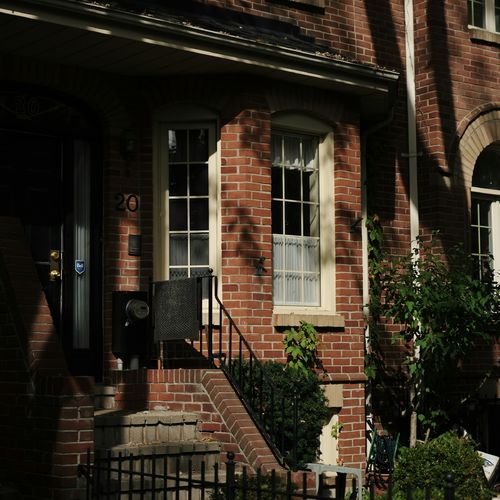
Richmond’s stock is different in era and in type. The city has a deep supply of pre-1940 housing: bungalows and American Foursquares through the streetcar suburbs of Northside and Southside, and brick rowhouses in the Fan and Church Hill. Then there is an enormous belt of 1950s through 1970s brick ranches and Capes across inner Henrico and inner Chesterfield, and newer construction out west toward Short Pump, Midlothian, Goochland and Powhatan. Two-family houses are comparatively rare, so if part of your New Jersey strategy was rental income from a second unit, that model is harder to execute here.
Two physical differences matter most. Brick is the regional default rather than the exception, which helps on maintenance. And full basements are much less common, because Virginia’s shallower frost line made crawl space foundations the norm. New Jersey transplants consistently underestimate the storage, laundry and workshop space they are giving up. On lots, the trade is generally favorable: yards are wider and flatter, garages more common, and a quarter acre here often feels considerably more usable than a quarter acre on a narrow New Jersey lot.
Neighborhood Analogues: Montclair and Ridgewood to Richmond
Montclair and Maplewood map onto Richmond’s Museum District, Bellevue and Forest Hill. What defines those New Jersey towns is a walkable village center, a strong arts and civic culture, mature street trees and good early-twentieth-century architecture on modest lots. The Museum District, anchored by the Virginia Museum of Fine Arts, is the closest urban match, with rowhouses and detached houses on shaded streets and a genuinely walkable commercial edge. Bellevue in Northside gives you the same feel in bungalow form, with a small commercial node on MacArthur Avenue. Forest Hill on the Southside adds the strongest park and river access in the city, with a Saturday farmers market that anchors the neighborhood the way Montclair’s does.
Ridgewood and Westfield map onto the Near West End and Midlothian. These are the larger-lot, established, family-oriented options with more formal housing and a settled feel. The Near West End and Westhampton, near the University of Richmond, are the closest match on architecture and canopy, generally closer in and more expensive. Midlothian and the Chesterfield side deliver more square footage and more land for the money at the cost of a longer commute and full car dependence.
For anyone leaving Hoboken or Jersey City specifically, the closest thing Richmond has to that density and energy is Scott’s Addition, a former warehouse district converted to lofts and packed with breweries, cideries and a distillery within a few walkable blocks. It is genuinely lively, and it is also honestly a fraction of the density you are used to.
Schools: Small Municipal Districts to Countywide Divisions
This is the mental adjustment New Jersey families find hardest, and it has nothing to do with quality. It is about structure.
In northern New Jersey, the town is the district. You choose Glen Ridge or Chatham or Tenafly and you have effectively chosen your schools, which is why house prices track district reputation so tightly and why a street’s town line matters so much. In Virginia, the county is the division. Henrico County Public Schools, Chesterfield County Public Schools, Hanover, Goochland, Powhatan and Richmond City each run one division covering the whole locality, and within that division there are attendance zones for individual schools.
The practical difference is that your decision happens at two levels instead of one. First you pick a locality, which determines your division, your tax rate and your services. Then you pick an attendance zone within it. Henrico and Chesterfield also run specialty centers, magnet programs and governor’s school options that admit from across the whole county by application, which is a genuine opportunity and has application windows that open well before the school year.
Income Tax, Vehicle Tax and Registration
New Jersey and Virginia both levy a state income tax, so this is not a move from a taxed state to an untaxed one, and the brackets and treatment of various income types differ enough that you should model it with a tax preparer rather than guess. If you have been working in New York while living in New Jersey, the nonresident filing and credit arrangement you have grown used to simply ends, which is its own simplification.
The genuinely new item is Virginia’s local personal property tax on vehicles. Each Virginia city and county assesses the vehicles garaged there every year, applies a locally set rate, and mails you an annual bill. Cars, trucks, motorcycles, boats and trailers can all be in scope. Virginia has a statewide relief program that offsets part of the bill on qualifying vehicles, but how much reaches you varies by locality, so identical vehicles in Henrico and in the City of Richmond can produce different bills.
We are not printing rates because localities set them annually. Contact the commissioner of the revenue for each locality on your shortlist and ask for the current personal property tax rate, the current real estate tax rate, and how new residents are billed in their first partial year. On registration: title and register with the Virginia DMV and get a Virginia license after establishing residency, then separately register those vehicles with your locality for the personal property tax. Those are two different offices and the second is the step newcomers forget. Virginia also requires an annual motor vehicle safety inspection, which works differently from New Jersey’s inspection regime, and emissions requirements vary by locality.
Density, Walkability, Food and What You Will Genuinely Miss
Here is the honest part. Richmond is not a dense city by northern New Jersey standards, and outside a handful of neighborhoods it is not a walkable one. The Fan, Church Hill, the Museum District, Jackson Ward and Scott’s Addition have real sidewalk life and things worth walking to. Everywhere else, you drive. Transit is GRTC buses plus the Pulse, a bus rapid transit line along Broad Street that is useful in that corridor and largely irrelevant off it. There is no rail transit and no equivalent of standing on a platform and having a train show up.
On food, Richmond’s scene is genuinely excellent and genuinely different. It is strong on independent, chef-driven restaurants, Southern cooking done seriously, a substantial global mix along Broad Street and the Hull Street corridor, and a brewery and cidery culture concentrated in Scott’s Addition. What it does not have is the everyday infrastructure northern New Jersey takes for granted: the 24-hour diner, the bagel place with a line on Sunday morning, the Italian pork store, pizza by the slice from a counter that has been there fifty years. There are good versions of some of these. There is not the density of them, and you will notice.
You also lose the Shore and the Manhattan orbit. No more day trips to the city for a show, and no more driving down the Parkway on a Friday. What you gain is a different set: Virginia Beach and the Outer Banks about two hours or a bit more east, the Blue Ridge and Shenandoah about two hours west, Washington about two hours north on I-95, and the James River Park System with real whitewater running through the middle of the city.
The Job Market and What to Do First
Richmond’s economy runs on state government, healthcare and finance. VCU Health, Bon Secours and HCA Virginia anchor healthcare; Capital One’s large West Creek campus in Goochland, Markel, Genworth and the Federal Reserve Bank of Richmond anchor finance and insurance; and CarMax, Altria and Dominion Energy are headquartered here. Add the Commonwealth of Virginia, VCU and the University of Richmond, plus logistics driven by the Port of Virginia and the I-95 corridor. Financial services, insurance and healthcare backgrounds transfer well. The honest gap is pharmaceuticals and life sciences: northern and central New Jersey’s pharma corridor has no Richmond equivalent at anything like that scale, so if that is your industry, verify there is a specific role here before you list your house.
Practically, start six to eight weeks out. Get pre-approved with a lender licensed in Virginia, since Virginia closings use a settlement agent rather than the attorney-driven process you may know. Decide whether you are shopping in the City of Richmond or a county, because that drives your taxes, your school division and your house type. Contact the commissioner of the revenue in each locality for current rates, and the school division for zones and program deadlines.
On arrival: Virginia driver’s license and vehicle titling at DMV, then register the vehicles with your locality for personal property tax, then register to vote, then get an E-ZPass. If your circumstances allow it, rent for six months. Richmond changes character block to block, and one summer here will teach you more about which neighborhood suits you than a dozen pleasant weekend visits.
| Factor | Northern New Jersey | Richmond | What it means for you |
|---|---|---|---|
| Property tax structure | Municipality, county and local school district | Locality-set rate, one countywide school division | Different structure; compare your real bill |
| Local government | Many small municipalities | Counties plus independent cities | Fewer, larger jurisdictions |
| Commute | NJ Transit, PATH or bus into Manhattan | Car commute within the metro | Time back; no reading on the train |
| Winter | Real snow season | Shorter and milder; ice more than snow | Longer outdoor season; plan for outages |
| Summer | Humid but shorter | Long, hot and humid June into September | AC is structural; inspect it closely |
| Housing types | Colonials, capes, split-levels, two-families | Bungalows, Foursquares, rowhouses, brick ranches | Two-family income model is harder here |
| Foundations | Full basements standard | Crawl spaces common; basements rarer | Rethink storage and laundry space |
| Vehicle tax | Registration fees only | Annual locally billed personal property tax | New recurring bill; verify the local rate |
| Transit and walkability | Extensive rail; genuinely walkable towns | Buses plus Pulse BRT; a few walkable pockets | A real downgrade; plan on driving |
| Weekend range | Manhattan and the Shore | Beach, Blue Ridge and DC each about 2 hours | Different trips, not fewer |
Frequently Asked Questions About Moving to Richmond VA from Northern New Jersey
Is moving from New Jersey to Richmond VA worth it?
For households whose main constraints are the cost of carrying a home and a long commute into Manhattan, it usually is, but it depends on what you value. The clearest gains are more house and yard for the same budget, a milder and shorter winter, working in the city you actually live in, and being about two hours from Washington, the Atlantic and the Blue Ridge. The clearest losses are walkable density, rail transit, the Jersey Shore and a diner, bagel and pizza culture that Richmond does not replicate. If density and food culture are your top two priorities, think carefully; if they are fourth and fifth, most people are happy here.
Are property taxes lower in Virginia than New Jersey?
The structures are genuinely different, and you should verify your own numbers rather than rely on a published comparison. New Jersey funds a municipality, a county and a local school district out of one property tax bill, and because northern New Jersey is divided into many small municipalities each running its own district, the fixed overhead is spread across a small tax base. Virginia counties run one school division for the whole county and each locality sets a single real estate tax rate annually, so the bill is built on a much larger base. Pull your actual New Jersey bill and ask the commissioner of the revenue in each Virginia locality for their current rate and assessment schedule, then compare on a specific house.
Does Virginia have an income tax like New Jersey?
Yes, Virginia levies a state income tax, so this is not a move from a taxed state to an untaxed one. Brackets, deductions and the treatment of retirement and investment income differ enough between the two states that you should model it with a tax preparer rather than estimate. One real simplification is that if you have been working in New York while living in New Jersey, the nonresident filing and resident credit arrangement ends. Virginia also has no local income tax anywhere, so there is no municipal layer on top of the state return.
What is Virginia’s car tax and does New Jersey have one?
Virginia localities levy an annual personal property tax on vehicles, and New Jersey does not, so this is a brand new line item for New Jersey transplants. Each Virginia city and county assesses the value of every vehicle garaged there each year, applies a locally set rate, and mails you a bill, and cars, trucks, motorcycles, boats and trailers can all be in scope. Virginia has a statewide relief program that offsets part of the amount on qualifying vehicles, but how much reaches you varies by locality. Contact the commissioner of the revenue where you plan to live for the current rate and for how new residents are billed in their first partial year.
How far is Richmond VA from New York City?
Richmond is a long day trip rather than a commute, roughly a six to seven hour drive up Interstate 95 depending on traffic through the Washington and Baltimore corridors. Amtrak runs from two Richmond stations onto the Northeast Corridor, which most people find far more pleasant than driving, and it is a realistic option for a weekend visit. What this means practically is that the Manhattan orbit ends. You can still see family and go to a show, but it becomes a planned trip rather than something you do on a whim after work.
Is Richmond VA cheaper than northern New Jersey?
We do not publish cost-of-living comparisons, because the honest answer depends entirely on your household, your commute and the specific house you buy. What we can tell you are the factors that actually drive the difference: the property tax structure, the age and type of house you choose, which locality you land in, your vehicle count once Virginia’s personal property tax applies, and whether you were paying a location premium for commuter rail access. The useful exercise is to price two or three specific candidate houses in specific localities and model the full monthly cost including taxes and insurance. The Mission Realty Team will run that comparison with you on real properties rather than on averages.
What Richmond neighborhood is like Montclair or Maplewood?
The Museum District, Bellevue and Forest Hill are the closest matches, each capturing a different part of what those towns offer. The Museum District, anchored by the Virginia Museum of Fine Arts, is the most urban version, with shaded streets, good early-twentieth-century architecture and a walkable commercial edge. Bellevue in Northside delivers the same civic, tree-lined feel in bungalow form with a small commercial node on MacArthur Avenue. Forest Hill on the Southside has the strongest park and river access in the city and a Saturday farmers market that anchors the neighborhood much as Montclair’s does.
What Richmond neighborhood is like Ridgewood or Westfield?
The Near West End is the closest analogue inside the city, with Midlothian in Chesterfield County as the larger-lot suburban version. The Near West End and adjacent Westhampton, near the University of Richmond, match Ridgewood and Westfield on mature canopy, more formal architecture and an established family-oriented feel, and they are among the more expensive parts of the metro. Midlothian and the wider Chesterfield side give you more square footage and more land for the money, at the cost of a longer commute and complete car dependence. Short Pump and Wyndham in western Henrico are the northern equivalent of that same tier.
How do Virginia schools compare to New Jersey schools?
The most important difference is structural rather than a matter of quality. In northern New Jersey the town is the district, so choosing a municipality effectively chooses your schools, which is why prices track district reputation so closely. In Virginia the county is the division, so Henrico, Chesterfield, Hanover, Goochland, Powhatan and Richmond City each run one division covering the whole locality, with attendance zones for individual schools inside it. That means your decision happens at two levels, and it also means Henrico and Chesterfield can run specialty centers and magnet programs that admit by application from across the entire county, which is a real opportunity with deadlines well before the school year.
Do houses in Richmond VA have basements?
Many do not, and this surprises almost every New Jersey buyer. Virginia’s shallower frost line meant builders were never obliged to dig deep, so crawl space foundations are widespread across every era of Richmond housing and slab foundations are common in newer construction. Full basements do exist, more often in older homes on the sloped lots of Northside and Southside where a walkout was natural, but you should not assume one. Plan for less storage, laundry on a main floor rather than below, and no basement workshop or playroom unless you specifically shop for it.
Is Richmond VA walkable compared to northern New Jersey?
No, and this is the honest downgrade in the move. A handful of Richmond neighborhoods have genuine sidewalk life and things worth walking to, principally the Fan, Church Hill, the Museum District, Jackson Ward and Scott’s Addition. Outside those, Richmond is a driving city, and there is no equivalent of the walkable downtown-with-a-train-station model that defines northern New Jersey’s commuter towns. Transit is GRTC buses plus the Pulse bus rapid transit line along Broad Street, useful in that corridor and largely irrelevant off it, with no rail service within the metro.
Does Richmond have good pizza, bagels and diners?
There are good individual examples, but not the density or the everyday reliability that northern New Jersey takes for granted, and we would rather tell you that up front. What Richmond does have is a genuinely excellent independent restaurant scene, serious Southern cooking, a substantial global mix along Broad Street and the Hull Street corridor, and a concentrated brewery and cidery culture in Scott’s Addition. The pattern most transplants describe is that dinner out is as good or better here, while the everyday counter food is the thing they miss. Expect to develop new habits rather than to find substitutes.
How far is Richmond from the beach and the mountains?
Virginia Beach is roughly two hours east on Interstate 64 and the Blue Ridge and Shenandoah National Park are roughly two hours west, with the Outer Banks a bit further southeast. Washington is about two hours north on Interstate 95. Closer to home, the James River Park System runs through the middle of Richmond with real whitewater, and the paved Virginia Capital Trail runs from downtown all the way to Williamsburg. It is a different weekend menu than the Shore and Manhattan, not a smaller one, though it does trade a coastline you know intimately for one you will have to learn.
Is Richmond VA winter milder than New Jersey?
Yes, noticeably. Richmond winters are shorter, there is far less snow, and the outdoor season runs meaningfully longer on both ends, so most transplants stop thinking about snow removal as a routine part of life. The caveat is that a good share of Richmond’s winter precipitation falls as freezing rain or sleet rather than snow, and with the region’s heavy tree canopy that means downed limbs and power outages. Expect Richmond to handle two inches with more disruption than northern New Jersey handles eight, simply because there is less equipment and less practice.
What should I do first when moving from New Jersey to Richmond?
Start by pulling your actual New Jersey property tax bill and getting current real estate and personal property tax rates from the commissioner of the revenue in each Virginia locality on your shortlist, so you are comparing real numbers. Then get pre-approved with a lender licensed in Virginia, since Virginia closings use a settlement agent, and decide whether you are shopping in the City of Richmond or in a county, because that drives your taxes, schools and house type. Contact the school division directly about attendance zones, registration documents and specialty program deadlines. After you arrive, handle your Virginia license and vehicle titling at DMV, register those vehicles with the locality for personal property tax, register to vote and get an E-ZPass, and if you can, rent for six months before you buy.
Planning a Move From Northern New Jersey to Richmond?
The Mission Realty Team works with relocating buyers every week across Richmond, Henrico, Chesterfield, Goochland, Hanover and Powhatan, and we will tell you honestly which neighborhoods fit your commute and your budget and which do not. Call us at (804) 601-4960 or stop by 3701 Cox Rd, Richmond VA 23233 for a current list of homes in any neighborhood on this page.