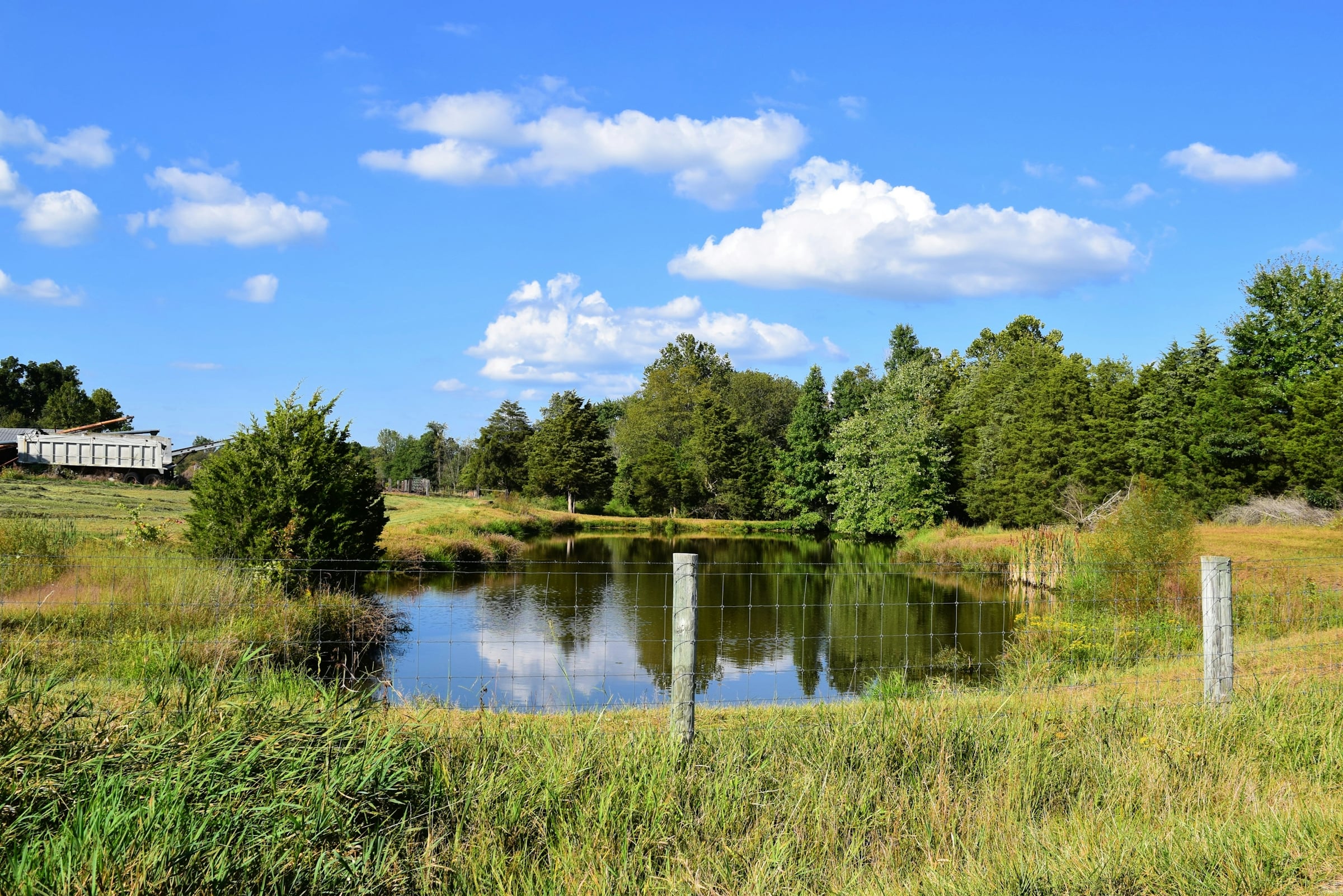
A pond is not automatically a regulated dam, but a pond held back by an earthen dam can be. Under the Virginia Department of Conservation and Recreation (DCR) Dam Safety Program, the owner of a regulated dam carries the maintenance, inspection and emergency planning duties, and those duties transfer to you when you buy the property. This is general information, not legal advice. Ask a Virginia real estate attorney about your specific property.
If you are browsing acreage in Chesterfield, Powhatan, Goochland or Hanover, you may see ponds in the listing photos. The same questions apply in Henrico, where the county publishes guidance for private dam owners, and in the City of Richmond. Start with our Richmond homes with acreage search to see what is on the market.
When a dam is regulated in Virginia
According to the DCR Dam Safety Program page, all Virginia dams are regulated unless an exclusion applies. Height means the vertical distance from the streambed at the downstream toe to the top of the dam. Capacity means the most water the dam can hold at its top.
| Excluded from regulation if the dam… | Figure |
|---|---|
| Is low | Under 6 feet high |
| Is under 25 feet high and holds a small volume | Under 50 acre-feet |
| Is over 25 feet high and holds a small volume | Under 15 acre-feet |
| Is used mainly for agriculture | Under 100 acre-feet or under 25 feet high; this can change if use or ownership changes |
Source: the DCR Dam Safety Program page. The page lists more exclusions, including federally owned or licensed dams. An acre-foot is the volume of water that covers one acre one foot deep. Neither height nor capacity is something you can judge by eye, so ask for the numbers.
The agriculture exclusion deserves a second look. DCR’s page says that exclusion can end if the use or the ownership of the dam changes. A farm pond that was excluded under one owner may be treated differently once it belongs to a household that does not farm. Ask DCR rather than the seller, and ask before your inspection period ends.
DCR’s outreach page says dams of specified height and impoundment capacity are regulated, and that you can check a dam’s status through the Dam Safety Inventory System (DSIS) or by contacting DCR Dam Safety. The page does not say what DSIS contains, so treat it as a place to ask. DCR lists the program’s contact details on its program page.
Search acreage with the pond questions attached
Tell us which of Chesterfield, Powhatan, Goochland and Hanover you want to search. We will set up a saved search and, when a listing shows a pond or dam, send the questions in this guide so you can ask before you tour.
Hazard class: what the label means
DCR rates a dam by what would happen downstream if it failed, not by how good the dam looks. The categories on the DCR page are high (failure would probably cause loss of life or serious economic damage), significant (failure might cause loss of life or appreciable economic damage) and low (no expected loss of life or significant economic damage, including dams whose failure would only damage the owner’s property).
Why a buyer cares: the class drives the paperwork and the cost. High and significant hazard dams need an Operation and Maintenance Certificate. The application needs a licensed professional engineer’s assessment, an emergency action plan and fees. DCR says regular certificates last six years. Low hazard dams, as of January 15, 2026, need a General Permit, with a professional engineer’s assessment for the first application, an emergency preparedness plan and fees. A hazard class says nothing about a specific lot, so do not guess it. Ask for the classification on file.
Who is responsible for the dam
The owner. Henrico County’s page for private dam owners says the county cannot manage privately owned dams, and lists owner duties under the state rules in 4 VAC 50-20: classifying the dam, keeping inspection records, preparing emergency action plans, and using DSIS to file certificates, plans and inspections. DCR’s page adds that owners must file an executed emergency plan with the local emergency official and the Virginia Department of Emergency Management.
After certification, DCR says annual inspections are required, done by a professional engineer or the owner. A professional engineer must inspect every two years for high hazard dams and every three years for significant hazard dams.
Maintenance is also hands-on. DCR’s guidance on vegetation on dams says trees should never be allowed to grow on the embankment fill, because decaying roots leave cavities that water can flow through. It recommends dense low grass kept at about 4 to 8 inches, covering the dam and extending at least 25 feet beyond the abutment contacts and toe. On a high or significant hazard dam, a professional engineer should direct tree removal. As you walk the property, big trees on the dam face are an item for your notes.
What to ask the seller
- Is there a dam, and how tall is it from the downstream toe to the top?
- Does DCR regulate it? Is there an Operation and Maintenance Certificate or a General Permit, and when does it expire?
- What is the hazard class on file?
- Is there an emergency action plan or emergency preparedness plan, and where was it filed?
- When were the last inspections, and who did them? Can I see the reports?
- Has the dam been repaired, rebuilt or altered? Was a permit issued? DCR says no one may build or alter a dam without a permit from the Virginia Soil and Water Conservation Board.
- Where is the spillway, and has it ever overtopped?
- Has the property had any notice from DCR or the county?
Get the answers in writing. If the answers are no, none, or I do not know, plan on hiring a professional engineer to look at the dam during your inspection period.
Survey and title questions
- Where is the boundary? Ask your surveyor to show whether the pond, the dam and the spillway sit entirely on the lot or cross a boundary line. A dam that straddles two parcels raises who owns and maintains each part.
- Easements. Ask the title company for any flowage, drainage or access easements that touch the pond or the dam. See our guide to driveways and shared driveway easements for how easements work.
- Access. Can you reach the dam on foot or by vehicle for mowing and inspections?
- Upstream and downstream. A dam can affect, and be affected by, the neighbors. Ask whether anyone else relies on the water or has an agreement about the pond.
- Disclosure. Ask what the seller has put in writing about the pond and the dam.
Send us the address of a home you are considering and we can help you work out what to ask the surveyor and title company. Local county pages such as Powhatan, Goochland and Hanover are a starting point for each area.
Insurance and storm risk
Talk to an insurance agent before you are under contract, not after. Ask whether the policy covers damage from a dam failure or flooding on the property, what liability coverage applies to a pond, and whether a regulated dam changes the price or the terms. No insurance figures are quoted here. Heavy rain is also when a dam is most stressed, so read our guide on storms and power outages for what else to check. A lender will also want to know about insurance requirements early.
Your acreage search, with the dam questions included
We will set up a saved search for acreage in Chesterfield, Powhatan, Goochland and Hanover. When a listing shows a pond or dam, we will send you the questions above.
Frequently asked questions
Does Virginia require a permit to build or alter a dam?
Yes. DCR says no one may construct, alter or begin altering a dam without a construction or alteration permit from the Virginia Soil and Water Conservation Board.
Who do I contact about a particular dam?
DCR’s Dam Safety Program lists its contact details on its program page. DCR’s outreach page also offers a contact form for owners and says a Dam Safety engineer will respond.
Do owners have to file anything with local officials?
DCR says owners must file an executed copy of the emergency plan with the local emergency official and the Virginia Department of Emergency Management. Owners use DSIS to submit certificates, permits, plans and inspections.
What happens if a dam has a problem that is not an emergency?
DCR says that if a dam has a deficiency that is not an imminent danger, the Virginia Soil and Water Conservation Board may issue a Conditional Operation and Maintenance Certificate while the owner corrects it.
Which federal or state dams are excluded?
DCR’s page says dams owned or licensed by the federal government are excluded, as are dams licensed by the State Corporation Commission and subject to a safety inspection program. The page lists others.
How should vegetation on a dam be handled?
DCR says to keep dense, low grass on the embankment, outlet, plunge pool and spillway area, mow regularly and before each inspection, and not allow trees on the fill. For low hazard dams, cutting at the surface may be acceptable only with careful monitoring, while decaying roots still need to be dealt with.
Is the county responsible for a private dam?
Henrico County’s page says the county cannot manage privately owned dams. The owner is responsible for maintenance and for following state regulations, which are in 4 VAC 50-20.