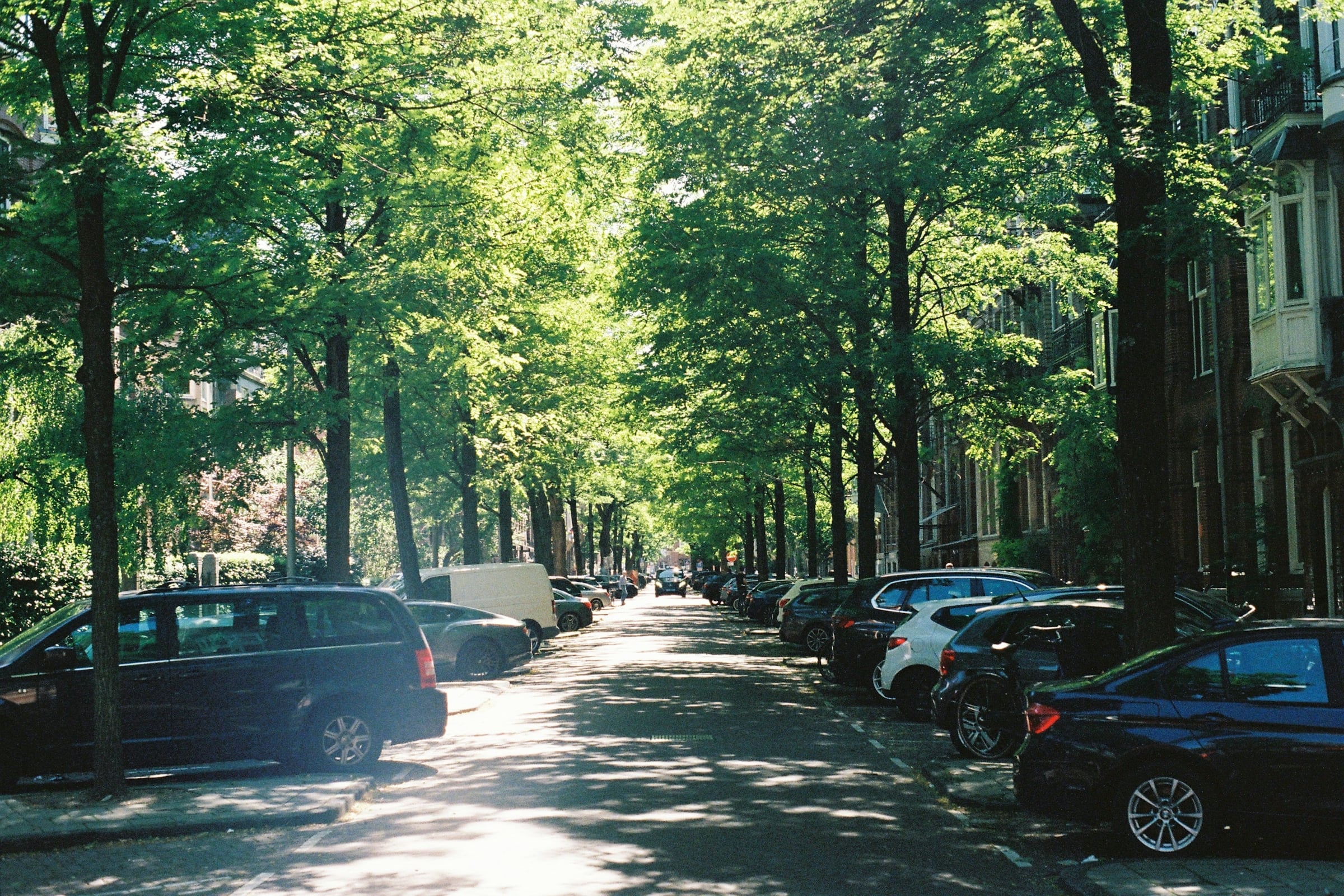
Two Richmond-area subdivisions a mile apart, similar houses, similar prices. One has continuous sidewalks on both sides and a light at every intersection. The other has a ditch and a mailbox. That is not taste or a lazy HOA. It is three governments running three different systems, plus a set of dates deciding which rules applied when your street was drawn. Know the mechanism and you can predict the answer before you visit.
Three jurisdictions, three completely different systems
City of Richmond: the city owns everything
Inside the city limits the old street grid has near-universal sidewalks and the city owns the lights. Richmond’s streetlight utility “operates and maintains approximately 37,000 city-owned streetlights, five electric distribution subsystems, more than 350 miles of overhead and underground wiring and thousands of various pole types.” No other jurisdiction in the metro does that.
Sidewalks fall to the Department of Public Works, split by length: repairs under 150 feet go to city masons, anything longer becomes a Capital Improvement Project prioritised on a risk-based, safety-first basis. Note the catch buyers miss. The city’s sidewalk maintenance page quotes City Code Sec. 24.175(b): the owner abutting the right-of-way is “the prima facie owner and responsible party for the maintenance of the sidewalk crossing” and the adjacent pavement. Your driveway apron is yours.
Chesterfield: VDOT takes the street, the county buys the lights
Most Chesterfield subdivision streets are developer-built then accepted into the state secondary system. Whether sidewalks come with them is governed by 24VAC30-92-120 of the Secondary Street Acceptance Requirements, which sets numeric triggers, not a blanket rule.
| Trigger | What is required |
|---|---|
| Over 400 vehicles/day with median lot a quarter acre or smaller, or over 8,000 vehicles/day | Both sides |
| Over 400 vehicles/day with median lot a quarter to a half acre, or 2,000 to 8,000 vehicles/day | At least one side |
| Within a half street centerline mile of a public school | At least one side |
| Collector or arterial with three or more travel lanes | Both sides |
| Connecting to a stub street that already has accommodations | Must include them |
Big lots plus low traffic means no requirement at all, which explains most half-acre Chesterfield subdivisions with no sidewalk anywhere in them.
Lighting is a separate transaction, because the same regulation states that “VDOT shall not be responsible for the maintenance or replacement of lighting fixtures or the provision of power for lighting.” So the county steps in. Under Chesterfield’s new development streetlight policy, one light is required at each new subdivision or section entrance where an intersection is created, and the developer pays the utility’s quoted installation cost, a $50 administrative fee, and an operating offset fee equal to five years of county operating cost per fixture, priced off the contract between the Virginia Energy Purchasing Governmental Association and Dominion. Fixtures are “supplied, installed, owned and maintained by the supplying utility company.” Anything beyond that entrance light is at developer or HOA expense, and such lights “will not be considered for future inclusion into the county streetlight program.”
Henrico: the county is its own highway department
So the SSAR triggers above do not decide the answer in Henrico. County subdivision standards and conditions attached at rezoning do. Henrico also funds lighting through special service districts covering specific areas rather than blanketing the county, which is why coverage varies street by street.
The dates that decide your street
The rule in force when the plat was approved is the rule your street got.
| Date | What changed |
|---|---|
| Before 20 June 2006 | No adopted Chesterfield residential sidewalk policy. Obligations came case by case from zoning conditions. |
| 20 June 2006 | Chesterfield adopts its Residential Sidewalk Policy: both sides of arterial, collector and residential collector streets; at least one side of local through streets within a half mile walk of a school, park or commercial site. |
| 9 March 2009 | The first SSAR takes effect statewide, superseding the Subdivision Street Requirements and adding the triggers above. |
| 18 December 2024 | Current SSAR version takes effect. The 2024 revisions covered connectivity exceptions, not pedestrian thresholds. |
The Chesterfield policy is explicit that it is not retroactive: “any project that was required to provide sidewalks before that date continues to have those obligations.” Nothing forced older subdivisions to retrofit. That is the whole answer to why your 1988 cul-de-sac has none and the 2015 section behind it has two.
The neighborhoods, in three confidence tiers
Tier 1: near certain, both sidewalks and city lights
The Fan
Platted on a continuous grid before the car, with sidewalks on both sides of essentially every block and city-owned lighting throughout, served by that 37,000-light city utility.
Not for you if: you want a driveway and a garage. Most parking here is on the street, and the sidewalk is the front yard.
The Museum District
Same grid, same era, same city utility, slightly wider streets and more tree lawn between kerb and walk.
Not for you if: you need quiet. The grid brings through traffic on the numbered avenues.
Church Hill
City grid with city lighting, though the walking surface is genuinely uneven in places because much of it is original brick over roots.
Not for you if: you use a wheelchair or a stroller and need consistent surfaces. Walk the specific block first.
North Side
Ginter Park and Bellevue were laid out as streetcar suburbs with sidewalks and planting strips as standard, and they are on the city system.
Not for you if: you want coverage at the edges. Where North Side meets the county line the grid dissolves.
Tier 2: yes, if the section was platted late enough
West Broad Village
Built as a walkable mixed-use district from the start, with continuous sidewalks and pedestrian-scale lighting designed in rather than added later.
Not for you if: you want a large private yard. Density is the trade.
Twin Hickory
Late-1990s-onward Henrico development with internal trails and sidewalk connections to the library and school. Confirm section by section: the earliest phases differ from the last.
Not for you if: you need lit streets throughout. Lighting in the counties is provided fixture by fixture, not by default.
Hallsley
Platted well after the 2006 Chesterfield policy and the 2009 SSAR, with sidewalks and an entrance-light arrangement funded the way the county policy requires.
Not for you if: you are price sensitive. This is the top of the Chesterfield range.
Harpers Mill
Same post-2009 era, denser lots, which matters because the SSAR both-sides trigger keys off a median lot size of a quarter acre or smaller.
Not for you if: you want an established tree canopy. The planting is young.
Tier 3: genuinely varies, check the specific street
Midlothian
Midlothian spans 1960s large-lot subdivisions with no pedestrian infrastructure to 2020s sections built to current standards. The name tells you nothing; the plat date tells you everything.
Not for you if: you are buying from photos. Two Midlothian addresses can be opposites on this question.
Want an alert for just these nine areas?
We can set up a saved search across the Fan, Museum District, Church Hill, North Side, West Broad Village, Twin Hickory, Hallsley, Harpers Mill and Midlothian in your price band, and note the plat era on anything in Chesterfield or Henrico before you tour. Ask us to build the saved search.
How to check one specific address before you write an offer
- Find out which jurisdiction you are in. City, Chesterfield or Henrico changes the answer completely. If it is the city, both are close to guaranteed and you can stop.
- Get the plat or recordation date for that section, not the house’s year built. Before June 2006 in Chesterfield, treat sidewalks as unlikely unless you can see them.
- Walk the full loop, not the entrance. Developers frequently build the entrance boulevard to standard and nothing beyond it. Drive to the far cul-de-sac.
- Drive it after dark. The only reliable lighting test. Count lit intersections against unlit ones.
- Ask who maintains what, in writing. Chesterfield allows privately maintained sidewalks where the HOA has accepted the obligation through recorded covenants, with a funding requirement attached. Get it from the HOA documents, not the listing agent.
- Call the right desk. City of Richmond DPW is 804-646-6430, or RVA311 for a specific defect. Henrico Public Works is 804-501-4393. In Chesterfield, ask Environmental Engineering whether the street is in the county streetlight program, because lights installed beyond the required minimum never enter it.
Because the post-2006 and post-2009 rules are what actually produce both features together, the new construction search is the highest-yield place to look outside the city. If walkability rather than infrastructure is the real goal, our guides to car-free living in Richmond and walking to a grocery store answer a different and probably better question. For the rest of the features listings undersell, see our roundups on homes with real basements, workshop and RV parking, and in-law suites. Compare areas in the communities directory, and when you want someone walking the loop with you after dark, buy with us.
Richmond market data, July 2026
Single-family, Central Virginia Regional MLS, via the Richmond Association of REALTORS, current as of 10 August 2026. County-level and city-level figures, not neighborhood medians.
| Area | Closed sales | Median sales price | 1-yr change | Days on market |
|---|---|---|---|---|
| Richmond City | 218 | $450,000 | -3.4% | 17 |
| Chesterfield County | 407 | $440,000 | -3.3% | 21 |
| Henrico County | 287 | $475,000 | +11.8% | 16 |
[DATA NEEDED: median price per square foot, July 2026, by area]
Frequently asked questions
Who pays to fix a cracked sidewalk in front of a city of Richmond house?
It depends which piece. The city handles general repair, with runs under 150 feet done by city masons and longer runs becoming Capital Improvement Projects. But City Code Sec. 24.175(b) makes the abutting owner responsible for the sidewalk crossing, meaning the driveway apron and carriage walk, plus the adjacent pavement. Report hazards to 3-1-1 or 804-646-7000.
Can I get a streetlight added to my Chesterfield street?
There is a separate county process for existing neighborhoods, but understand what you are asking for. In new development the county requires only one light, at the section entrance where an intersection is created. Lights beyond that minimum are funded and operated by the developer or HOA, and the policy says they will not later enter the county streetlight program.
Why does my Henrico subdivision have sidewalks when the one next door does not?
Because Henrico writes its own rules. It is one of only two Virginia counties, with Arlington, that maintain their own road systems rather than handing streets to VDOT, so the statewide SSAR triggers do not decide it. County standards at the time of platting, and conditions attached at rezoning, do.
Does an HOA ever own the sidewalks?
Yes, and it matters to your dues. Chesterfield permits privately maintained sidewalks only where a corporate homeowners association has accepted the obligation through recorded restrictive covenants, and those covenants must require the association to collect funds in an amount and manner acceptable to the county. Ask for that language before you waive HOA review.
Are sidewalks always required near a school?
In the VDOT secondary system, a street within a half street centerline mile of a public school must have pedestrian accommodation on at least one side. Chesterfield’s 2006 policy is similar for local through streets within a half mile walk of a school, park or commercial site. Neither applies retroactively.
How wide is a sidewalk supposed to be?
Five feet is the working standard. Chesterfield requires publicly maintained walks to be at least five feet wide, concrete, four inches thick, rising to seven inches across a driveway, with ADA ramps at every sidewalk and street intersection. A narrower or asphalt walk is usually privately maintained.
Will a brand new subdivision in 2026 definitely have both?
Sidewalks, very probably, since the current rules date from 2006 and 2009. Streetlights throughout, no. The Chesterfield minimum is one light at the entrance intersection. Anything more was a developer choice priced into your HOA budget, so count the lights on your evening drive.
Do sidewalks and streetlights actually affect resale?
They affect the size of your buyer pool rather than showing up as a line-item premium, and no published local dataset isolates them. [DATA NEEDED: median price per square foot, July 2026, by area] would be needed to test it, and the free RAR tables do not carry it. What is observable: families with young children and people who walk after work rule out unlit, walkless streets early, and at 16 to 21 days on market a smaller pool shows up as time.