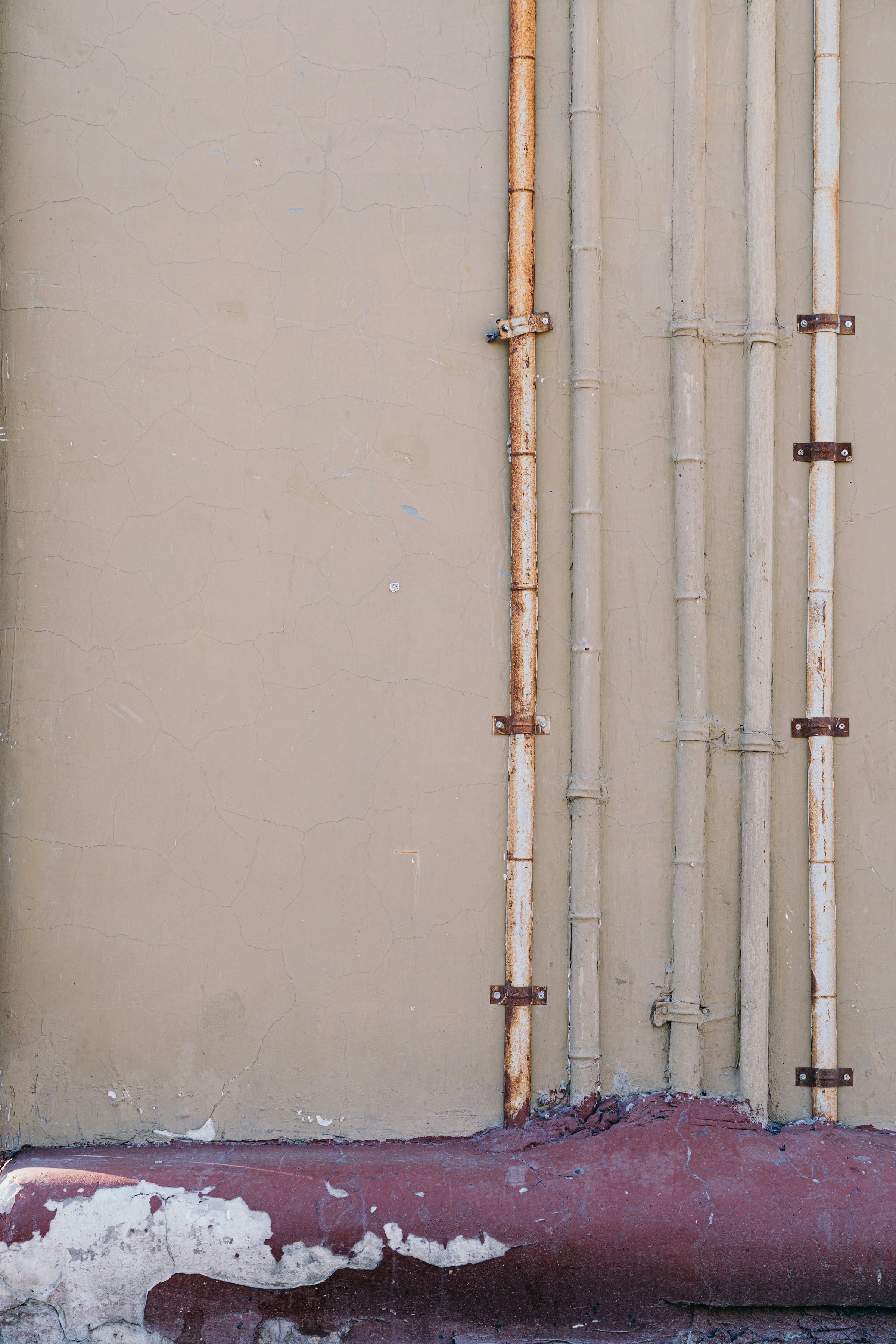
Plumbing is the part of an older house you cannot see most of, and it is often what separates a smooth purchase from a stalled one. In neighborhoods like the Fan, Church Hill and Windsor Farms, and in older pockets of Bon Air and Tuckahoe, it is common to find a house where some of the original pipe is still in the wall and some of it has been replaced over the decades. This guide covers the four materials that come up most, what inspectors and insurers tend to say about each, how repair differs from replacement, and what the City of Richmond, Henrico and Chesterfield say about lead service lines. We do not quote repair prices here, because they vary too much by house; get written bids for yours.
The four materials you will actually run into
Galvanized steel supply pipe
Galvanized pipe is steel with a zinc coating, used for water supply in houses built well before modern plastic and copper took over. The usual problem is internal: the coating wears, rust and mineral scale build up, the pipe narrows, and pressure drops at the far end of the house. Rust-tinted water and weak showers are typical signs. As Chesterfield County notes in its service line guidance, a magnet sticks to galvanized steel, which is the quickest way to tell it from copper or plastic. Era is a guide, not proof, so confirm what is behind the walls.
Polybutylene supply tubing
Polybutylene is a flexible plastic tubing, usually gray, that was commonly installed in houses built from roughly the late 1970s into the mid-1990s. It is the material buyers ask about most, because it has a reputation for failing at its fittings and because some insurers ask about it directly. Inspectors tend to focus on the connections as well as the tubing itself. Not every house with this tubing has had a leak, but it is a reason to get a plumber to look rather than rely on a general inspection.
Cast iron drain and waste lines
Cast iron was the standard material for drain, waste and vent stacks in older houses before plastic drain pipe took over. It can last a very long time, but it rusts from the inside, scales, cracks and can separate at joints. Slow drains, gurgling, and a sewer smell near a stack are typical signs. Because the pipe is under the slab or in a crawl space, a camera inspection is how most problems are found, which is why the sewer scope matters (see below).
Lead service lines, lead solder and brass fixtures
Lead can show up in three places: the service line that connects the water main to the house, solder used on copper joints, and some brass fixtures. The EPA says lead pipes are more likely in older cities and in homes built before 1986, and that service lines are typically the most significant source of lead in the homes that have them. The City of Richmond adds that its water does not contain lead when it leaves the treatment plant, so the lead in a tap comes from the pipes and fixtures after that.
What inspectors and insurers flag, and how repair differs from replacement
A general inspector will usually note the visible material, any active leaks, low pressure at fixtures and drain problems, and then recommend a plumber for anything they cannot evaluate. They are not going to open walls. If you want the boundaries of that work spelled out, read what a Richmond home inspector will not cover and our broader home inspection guide for buyers.
Insurers are a separate gatekeeper. Some applications ask about the plumbing material, and an older supply or drain system can lead to an exclusion, a higher premium or a request for proof of replacement. Policies and appetite differ by carrier, so we are not going to name a rule that applies to all of them. Our guide to how homeowners insurance is priced in Richmond covers the factors, and the CLUE report guide explains why a previous water claim on the house can follow it into your quote.
In general terms, repair means fixing a specific failure, such as a leaking joint or a corroded section, and replacement means re-piping a run or an entire system. Repairs on aging galvanized or polybutylene often buy only a little time, since the material elsewhere in the house is the same age. Replacement of supply lines is commonly done in copper or in a modern plastic; cast iron drains are commonly replaced in sections or lined, depending on what the camera shows. A plumber should tell you which condition you have and what is being proposed. A full re-pipe has permit and finish-work implications, so ask for the scope in writing.
Get the Richmond closing-timeline checklist
Plumbing questions are easiest to handle when you know exactly when your inspection window, sewer scope, insurance quote and lender deadlines fall. We built a Richmond closing-timeline checklist that lays out those dates so a plumber visit does not collide with your contract deadlines. Ask for the Richmond closing-timeline checklist.
The sewer scope and the drain side of the house
The drain line between the house and the connection to the public sewer or septic system is out of sight and expensive to ignore. A sewer scope, which is a camera run through the line, shows cracks, offsets, roots and sagging that no one can see from the surface. It is usually an add-on rather than part of a standard inspection, and our article on add-on inspections explains how to order one. If you are selling, the pre-listing inspection guide is worth reading because a scope done before you list removes a surprise from the buyer’s side. On a house with cast iron drains, the scope is one of the most useful add-ons to order.
Lead service lines: what Richmond, Henrico and Chesterfield say
The City of Richmond’s Lead Free Water Program page says eliminating lead risk is a shared responsibility and that part of every service line is public and part is private. It points residents to a water line map and survey that identifies service line materials, to a preferred plumbers list for free service line inspections, and to funding information. It also lists the usual steps for reducing exposure: use cold water for drinking and cooking, flush pipes that have sat for hours, clean faucet aerators, use certified lead-free fixtures, and consider a filter certified to remove lead.
In Henrico County, the county’s lead service line FAQ says it has completed an inventory using existing data and was still gathering information. As of November 2024, it stated Public Utilities was not aware of any lead service lines in the county. If a line is confirmed to be lead, the county says it will replace it free of charge to the homeowner, with a 2037 compliance timeline, and that it prioritizes older neighborhoods with homes built before 1986 among other factors. Residents are asked to complete a service line survey if they know their pipe material.
Chesterfield County’s service line inventory page says the county completed its inventory by October 16, 2024 and declares its distribution system lead-free for service line material. It says staff reviewed historical records and, in September 2024, visually inspected more than 380 randomly sampled lines with unknown material and found no lead. It still invites customers to identify their private-side material through an online survey, and it says buildings constructed before August 1, 1978 face the greatest risk of having lead service lines.
At the federal level, the EPA’s Lead and Copper Rule Improvements page says the agency issued a final rule requiring drinking water systems nationwide to identify and replace lead pipes within 10 years, with stronger testing and communication requirements. Rules and deadlines can be revised or challenged, so check the EPA page and your utility for the current status instead of treating a date here as final. For a buyer, the practical point is narrower: a utility inventory describes the system, not the plumbing inside this particular house. Use the key-and-coin or magnet checks in the FAQ below, ask the seller what they know, and have a plumber confirm the pipe where it enters the house.
Virginia disclosure and buyer beware
Virginia sellers of residential property complete a disclosure statement under the Residential Property Disclosure Act. According to § 55.1-703 of the Code of Virginia, the form tells buyers that the owner makes no representations or warranties about the condition of the property, and that buyers should exercise whatever due diligence they consider necessary. The version currently in effect also includes a lead-free pipes item that advises buyers to check for pipe, fittings, fixtures, solder or flux that do not meet the federal Safe Drinking Water Act definition, and the Code notes that a new version of the section takes effect January 1, 2027. We unpack how this works in our guides to the buyer beware disclosure statement and what a Richmond seller must actually disclose. If the home was built before 1978, also see our post on pre-1978 lead paint disclosure, and for another system older houses commonly raise, old electrical panels. Asbestos is a separate issue with its own rules; our companion guide on asbestos in older Richmond-area homes covers it.
This guide is general information, not legal advice. For your situation, talk to a Virginia real estate attorney.
A plumbing plan for your inspection window
Order matters here. First, ask for the year built and any permits or re-pipe records. Second, schedule the general inspection and the sewer scope together so a plumber can follow up quickly. Third, get your insurance quote while you still have time to react to it; our City of Richmond community hub and the Henrico and Chesterfield hubs are good places to start if you are comparing older housing stock across jurisdictions. Fourth, bring plumber findings to the seller in writing. If you are still searching, our property search is a place to start, and working with a buyer’s agent can help you read the age of a house before you tour it. Older homes with charm and quirks are the heart of buying a historic home in Richmond, and plumbing is one of the quirks.
Plan your inspection window with the closing-timeline checklist
If you are weighing an older Richmond-area house, the checklist shows where plumbing, sewer scope, insurance and lender dates sit on one timeline. Ask for the Richmond closing-timeline checklist.
Older plumbing questions, answered
How can I tell galvanized, copper and lead pipe apart without tools?
Chesterfield County describes a simple check: a magnet sticks to galvanized steel, copper looks brown and shiny when scratched, plastic does not attract a magnet, and lead is soft and scratches easily. Henrico County adds that lead is generally dull gray, that a scratch with a key or coin turns it bright silver, that a magnet will not stick to it, and that you should not use a knife because it could puncture the pipe. A plumber or your inspector can confirm what you find.
If my utility sends a letter about my service line, does that mean my house has lead?
Not necessarily. Henrico County says a letter simply means the county does not know what material the line is made of and is required to notify the owner. It also says a small number of customers received a letter about a galvanized service line that needs replacement, and that the county will arrange that replacement at no charge. Read your own letter closely, because the wording differs by situation.
Who owns the water service line, the utility or me?
It is split. Henrico County maintains the line from the water main to the meter at the property line, and the owner is responsible from the meter to the house. The City of Richmond says a portion of each service line is public and a portion is private. Ask the utility that serves the address exactly where the dividing point sits before you assume anything about who pays.
Is lead solder still something to worry about?
The City of Richmond says lead solder was banned in the United States in 1986 but may still be present in older homes, and that corrosion of lead-based materials can add lead to tap water, especially when water sits in the pipes for hours. Brass fixtures can also contribute. Flushing cold water after the water has sat, and using a filter certified to remove lead, are among the steps the city lists.
Will my home inspector test the water for lead?
A standard inspection is a visual look at what is accessible, so a lab water test is a separate step. The City of Richmond suggests having water tested by a certified lab if you are concerned, and Henrico County says residents can contact Public Utilities for a free water test. Our guide to what an inspector will not cover explains the usual add-on tests.
Can I still buy a house with polybutylene or galvanized plumbing?
Yes, plenty of buyers do, but the answer depends on your lender, your insurer and your own tolerance for repairs. Get a homeowners insurance quote that discloses the plumbing material before your inspection period ends, ask your lender whether the appraiser or underwriter has any plumbing conditions, and get a plumber to say in writing what is failing now versus what is merely old.
What can I ask for if the inspection finds failing plumbing?
Inside your inspection or due diligence window, buyers commonly ask the seller to repair, to give a credit, or to reduce the price, and may have the option to end the contract if the contract allows it. Which of those you can use depends on the exact wording of your contract, so have it reviewed before you send a request.
Does the Virginia disclosure form tell me what the pipes are made of?
The statutory form says the owner makes no representations or warranties about the condition of the property, and it includes a line about whether the property has pipes, fittings, fixtures, solder or flux that do not meet the federal Safe Drinking Water Act definition of lead free. It tells buyers to do their own due diligence on that point. It does not list galvanized, polybutylene or cast iron by name.