Published October 21, 2026
A neighbor’s fence, shed, driveway or garden bed that sits on the lot you are buying does not automatically become yours or theirs. The Code of Virginia sets a 15-year limit on bringing an action to recover land, and after that time a long-standing use can turn into a legal problem for whoever owns the ground. What a court would decide on your particular strip depends on facts a survey and a title search can show, which is why you look before you close, not after.
This guide covers what the Code says about that time limit, what to look for on the ground and in the paperwork when buying in the city of Richmond, Henrico County or Chesterfield County, and what to do if you find an encroachment. It is part of our property-lines series with plats versus surveys, easements, fences and trees over the line. This is general information, not legal advice. Boundary disputes are a job for a Virginia real estate attorney.
The clock in the Code
Section 8.01-236 says no person may make an entry on, or bring an action to recover, any land unless within fifteen years after the right first accrued to that person or to someone through whom the person claims. The same section sets a separate three-year limit for an action for unlawful entry or detainer under section 8.01-124.
Section 8.01-237 adds an outer limit. Disabilities, such as a minor owner, cannot preserve a right of entry or action for more than twenty-five years after the right first accrued.
These sections are the time limits behind what people call adverse possession. They do not by themselves list what a person using someone else’s land must prove. Those tests come from Virginia court decisions, which we did not review for this article, so do not treat a fence that has stood for fifteen years as a safe conclusion either way. The point for a buyer is narrower. Because the section counts time from when the right first accrued to a person or to someone through whom the person claims, a sale does not obviously start a new count, so ask your attorney how time already run would apply. If someone has used a strip of the lot for a long time before you arrive, you may be buying the problem or the benefit along with the land.
What you can see on a walk of the lot
Most boundary issues are visible if you know to look. Walk every side of the lot with the listing photos and any plat you have, and write down each of these.
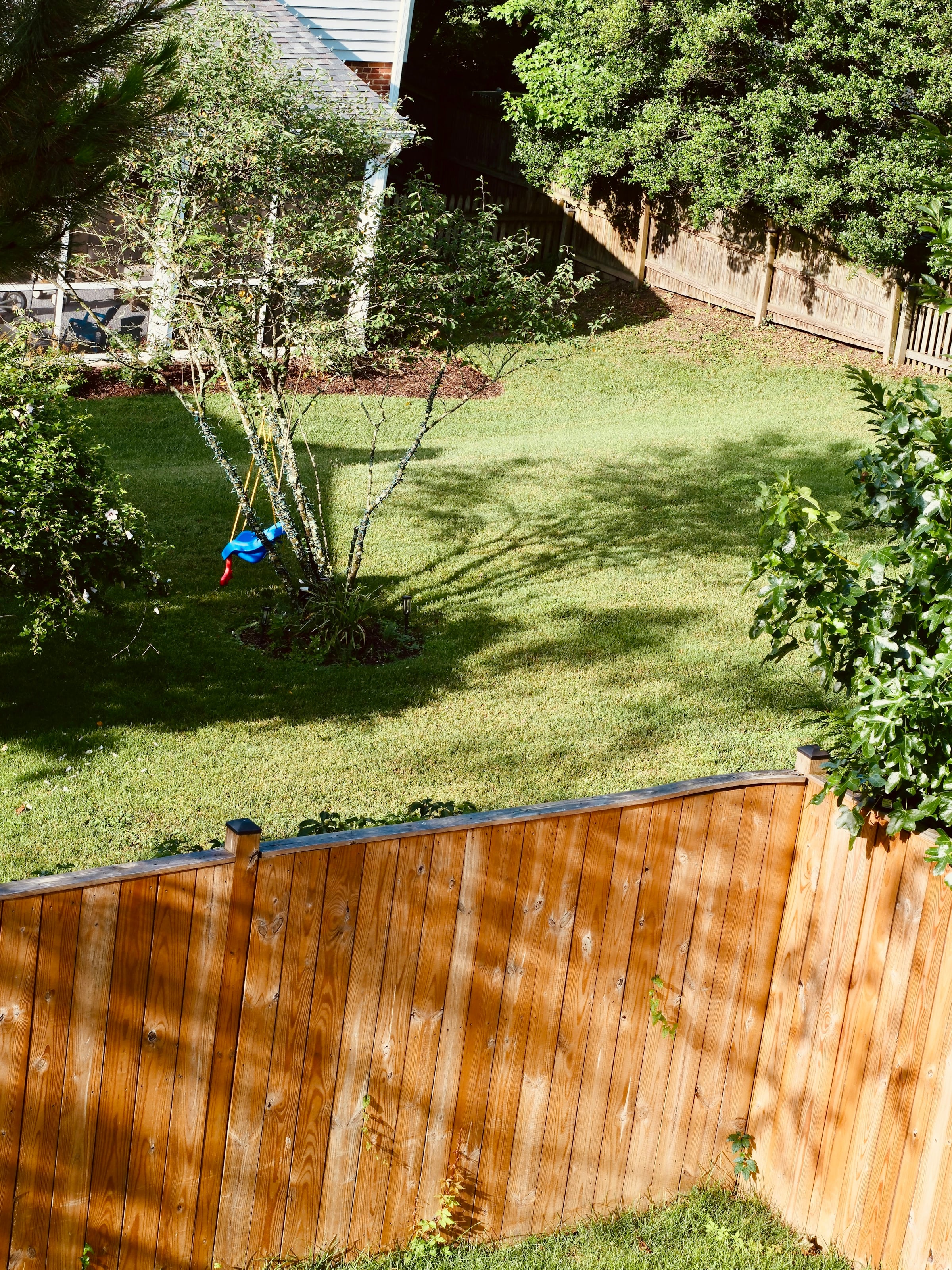
- Fences and hedges. Note where each one stands relative to the corners, and whether it runs in a straight line to the pins or bends around something.
- Sheds and outbuildings. Check whether a neighbor’s shed sits on the lot you are buying, or yours sits near the line.
- Driveways and parking pads. Look for pavement that widens toward a neighbor’s side or an asphalt edge that crosses a line you can identify.
- Retaining walls and landscaping. Walls, flower beds and irrigation often cross lines unnoticed.
- Utilities. Meters, cables and pipes that run toward the neighboring lot raise easement questions rather than ownership questions; our easements guide explains the difference.
Take photos with a landmark in each frame. Visible things matter, because a survey will show them and so will the neighbor’s recollection of how long they have been there. Ask the seller in writing whether they know of any encroachment, boundary dispute or agreement with a neighbor, and keep the answer.
Reading the survey and the paperwork together
A recorded plat shows the lot as it was drawn. A new survey shows the lot as it sits on the ground today, including improvements, and can show where a fence or building crosses a line. Our guides on whether you need a survey and what a plat tells you cover that split. If you want to see the records yourself, how to pull a deed, plat and chain of title walks through it.
Then read the title commitment against the survey. Exceptions in Schedule B that mention boundaries, survey matters or parties in possession are the ones to ask about. Our title commitment guide shows how to sort the exceptions. Ask your title company which survey matters it will except from coverage and whether it would remove an exception if you provide a survey. A local surveyor is one of the services on our local vendors page.
Get the Richmond closing-timeline checklist
Tell us you want the checklist and we will send you a closing timeline that shows where the survey, the title commitment and your contingency deadlines fall, so you know when a boundary question has to be raised.
If you find an encroachment: five paths
Finding a fence on the wrong side of a line is not the end of a purchase. It is a negotiation, and the date matters, because contingency periods are short. The paths below run from quickest to slowest.
- Ask the seller to fix it before closing. That might mean moving a fence or shed, or signing a written agreement with the neighbor that is recorded before settlement. Have an attorney draft any agreement.
- Negotiate a credit or price change. If the problem is real but small, a credit may be easier than a cure. Our guide to negotiating after an inspection applies to survey findings too.
- Ask the title company to treat it. Ask what the company will except, whether it will insure over the matter, and what it needs from you. The answer depends on the company and the facts.
- Walk away while you still can. A boundary problem that blocks the use you planned, such as a pool, an addition or a driveway, may justify using whatever contingency your contract allows. Check the dates today.
- Let a court decide. Section 8.01-184 gives circuit courts power to make binding adjudications in cases of actual controversy, including controversies over the interpretation of deeds. Section 8.01-131 keeps the action of ejectment, which may be brought by a person claiming real estate in fee, for life or for years, as heir, devisee or purchaser or otherwise. Either route is slow and costly, and it is not something to start the week before closing.
What an attorney can do that a survey cannot
A survey tells you where things are. It does not tell you who owns them. If a survey shows a neighbor’s improvement across the line, or yours across theirs, a Virginia real estate attorney can read the deed, the survey and the title commitment together and tell you how the time limits in the Code could apply and which of the five paths fits. Ask for that review before your contingency deadline, not after it. The closing table guide explains who does what at a Virginia closing.
Where this fits in your closing timeline
Order the survey early, because surveyors book out. Read the commitment as soon as it arrives, and read the survey against it the same week. Walk the lot again before the closing, using our final walk-through guide, and look for anything that has changed on the ground since the survey. If you are still choosing a home, our property search lets you start from current listings, and our buyer page describes how we work with buyers.
Ask for the closing-timeline checklist
The same offer, restated: request our Richmond closing-timeline checklist and see where the survey, the title commitment and your contingency deadlines line up with your contract dates.
Frequently asked questions
Can I let a neighbor keep a fence on my land by giving permission?
You can, but put it in a signed, dated writing and have an attorney review it first. How permission affects a later claim is not answered by the Code sections we read; it is a question for your attorney. An unspoken understanding leaves each side remembering it differently years later.
Will a survey always show an encroachment?
Not always. A survey shows what the surveyor locates and marks on the date of the work, so tell the surveyor what you are worried about, such as a fence line, a shed or a driveway edge, before the field visit. Ask what the report will show and whether corners will be staked. A survey that does not mention an item has not necessarily ruled it out.
Does title insurance cover a boundary dispute?
It depends on the policy and on the exceptions in Schedule B of the commitment. Read the exceptions before closing, ask the title company which survey-related matters it excepts, and ask whether a survey would let it remove or narrow an exception. Our guide to reading a title commitment shows how to sort the exceptions into ones you accept, ones to ask about and ones to negotiate.
What if my own fence or shed crosses the line onto a neighbor’s lot?
Treat it as an open problem and not as one that age has solved. Section 8.01-236 sets a limit on actions to recover land, but it does not tell you whether that limit has protected you in your situation. If you are buying and a survey shows this, ask the seller to resolve it before closing or ask for a credit, and have an attorney advise you on the rest.
What should I do if a neighbor tells me part of my yard is theirs?
Stay calm and do not sign anything. Ask them in writing what they base the claim on, keep your photos and survey, and send the exchange to your attorney. If you are still under contract, tell your agent right away, because the dates for contingencies may still be open.
Who pays for the survey on a purchase?
That is set by your contract and sometimes by your lender, so ask your agent before you order one. If a lender requires a survey, the lender will say so early in underwriting. Whoever pays, the buyer should read the result and compare it with the title commitment before the contingency period ends.