Living in Colonial Heights, Virginia: Schools, Parks, Prices & What Buyers Need to Know in 2026
An independent city of 7.8 square miles on the north bank of the Appomattox – citywide utilities, nine parks, five schools and a 30-minute run up I-95.
Living in Colonial Heights, Virginia means buying in a fully built-out independent city of about 7.8 square miles on the north bank of the Appomattox River, roughly 23 to 25 miles and half an hour up Interstate 95 from downtown Richmond. Colonial Heights real estate is small-lot, walkable-in-places and served by city water and sewer everywhere, so the well and septic questions that dominate the surrounding counties simply do not apply. If you are researching Colonial Heights VA homes for sale, Colonial Heights Public Schools, Southpark Mall and the Temple Avenue corridor, the city’s nine parks, or how Colonial Heights relates to Chesterfield County and Petersburg, this guide covers it. Ask the Mission Realty Team for current pricing.
Table of Contents
- Where is Colonial Heights and why is it not in a county?
- Colonial Heights Public Schools: all five schools
- Nine city parks, the Appomattox and Swift Creek
- The commute to Richmond and the Tri-Cities
- Housing stock in a built-out city: infill, not new subdivisions
- City utilities, taxes and who Colonial Heights suits
- Frequently Asked Questions
Colonial Heights, Virginia is the smallest and densest locality in this series and the only one that is not a county. It is an independent city of roughly 7.8 square miles, about 2,400 people per square mile, sitting on the north bank of the Appomattox River at the fall line, directly across the water from Petersburg and roughly 23 to 25 miles south of downtown Richmond. At the 2020 census, 100 percent of Colonial Heights residents lived in urban areas and zero percent in rural areas.
The name comes from May 1781, when Lafayette’s Continental artillery deployed on the heights above British-held Petersburg and someone reportedly called out that the Colonials were up on the heights. The place was a town within Chesterfield County from 1926, became an independent city in 1948, and received its current charter in 1960.
The Mission Realty Team’s honest framing: Colonial Heights is a finished city. There is very little raw land, so the market is resale, renovation, teardown and infill rather than new subdivisions. What you get in exchange is citywide water and sewer, its own compact school division, nine city parks, and the retail center of the Tri-Cities inside your own tax jurisdiction.
Where is Colonial Heights, Virginia and why is it not in a county?
This is the single most-mangled fact set about the city, so here it is precisely. Colonial Heights is bordered by Chesterfield County to the west, north and southeast, by the city of Petersburg to the south, by Prince George County to the east and by Hopewell to the north. The Appomattox River is the boundary between Colonial Heights and Petersburg. Colonial Heights is on the north bank; Petersburg is on the south bank. In places Swift Creek forms the dividing line with Chesterfield, and Swift Creek joins the Appomattox at Conjurer’s Neck.
Colonial Heights is practically surrounded by Chesterfield County, and it was part of Chesterfield until 1948 – and then it was not. Since 1948 it has been an independent city belonging to no county at all, with its own school division, courts, assessor, police and tax rolls. Chesterfield County has no jurisdiction, no taxing authority and no schools inside it. That distinction is not a technicality; it determines your tax bill and where your children go to school.
Inside the city, the names that matter are The Boulevard, meaning the US 1 commercial spine; the Temple Avenue and Southpark district in the southeast, opened up by the mid-1980s State Route 144 Temple Avenue Connector and a new Appomattox River bridge; historic Conjurer’s Neck at the creek confluence; the Oak Hill and Dunn’s Hill area on Carroll Avenue; plus Lakeview, Flora Hill, Edinborough, White Bank, Roslyn Landing and Wakefield. There is one ZIP code for the whole city: 23834.
Colonial Heights Public Schools: what are the five schools?
Colonial Heights Public Schools is its own division, entirely separate from Chesterfield County or Petersburg, and it operates five schools: Lakeview Elementary School, North Elementary School and Tussing Elementary School, plus Colonial Heights Middle School and Colonial Heights High School. The division reports that all five are accredited, and describes accreditation by the Commonwealth stretching back over twenty years, with accreditation from the Southern Association of Colleges and Schools as well.
The division publishes average class sizes of roughly 20 at the elementary level and roughly 22 at the secondary level, one-to-one Chromebooks from pre-kindergarten through grade 12, and more than thirty career and technical education courses. For a city this small, that is a genuinely tight and well-defined offering, and the practical advantage is short bus rides: the entire city is 7.8 square miles, so no child in Colonial Heights lives far from school.
A bit of local history that explains the current structure: Tussing has housed grades kindergarten through 5 since 1990, when the former Junior High became Colonial Heights Middle School. If you see older references to a Colonial Heights Junior High, that is what they mean.
Nine city parks, the Appomattox and Swift Creek: what is there to do?
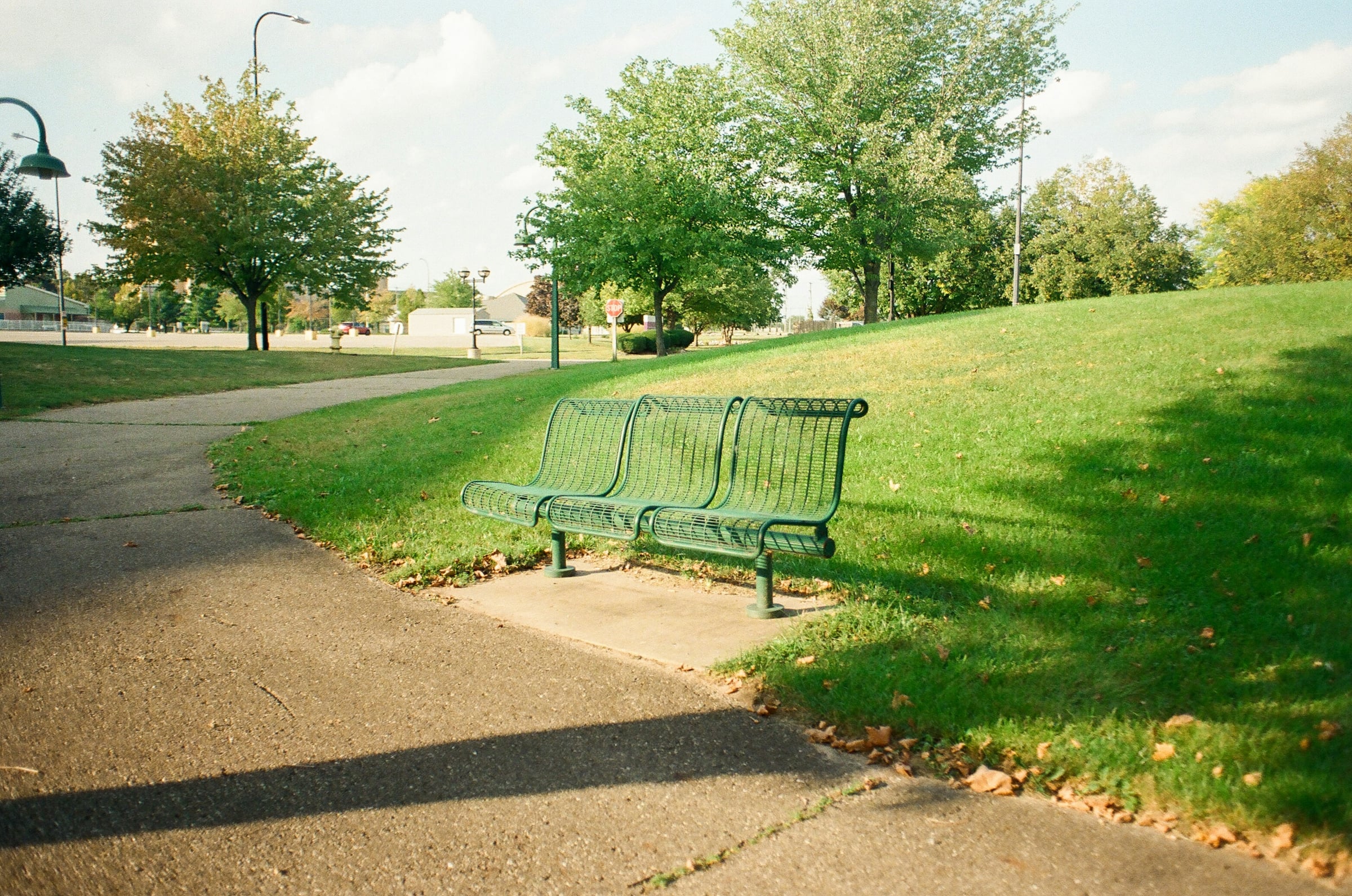
Colonial Heights maintains nine city parks totalling roughly 75 acres, which is a lot of park per square mile. White Bank Park covers about 22 acres next to Swift Creek with two rentable pavilions. Fort Clifton Park covers about 24 acres on the Appomattox and includes an amphitheater, ballfields, a fishing pier and trails, on the site of a Confederate earthwork where an action was fought on June 11, 1864. Appamattuck Park sits on the Appomattox at the Petersburg line, and Lakeview Park has a boat ramp and fishing.
Roslyn Landing Park connects to the Appomattox River Trail, which is a genuine amenity for walkers, runners and cyclists and a growing regional asset. Floral Avenue Park, Edinborough Park, Flora Hill Park and Wakefield Park round out the system, and the city also has Shephard Stadium, a soccer complex, tennis courts and the Dimmock boat landing. For a household that wants river access and organized recreation without owning acreage, this is a strong package.
On history, Colonial Heights carries more than its size suggests. Violet Bank, now the Violet Bank Museum, served as General Robert E. Lee’s headquarters from June through September 1864 during the Siege of Petersburg. The Old Brick House, built around 1677 to 1685 by Richard Kennon, is thought to be the oldest permanent structure in the city. And Conjurer’s Neck, at the confluence of Swift Creek and the Appomattox, was the site of the first English settlement in the area in 1620 and the seat of the Appamattuck people. There is no state park inside the city – Pocahontas State Park in Chesterfield is the nearest.
How long is the commute from Colonial Heights to Richmond?
Interstate 95 runs through Colonial Heights, with a roundabout installed at the I-95 and Temple Avenue interchange in 2017. From the city to downtown Richmond is roughly 23 to 25 miles, generally about 30 to 35 minutes off-peak straight up I-95 through Chesterfield. That is the shortest Richmond commute of any locality in this eight-part series, and it is the main reason buyers who work in the city consider Colonial Heights at all.
The Tri-Cities commutes are shorter still. Petersburg is immediately across the Appomattox. Hopewell is just north. State Route 144, the Temple Avenue Connector, bridges the Appomattox and connects to State Route 36 near the Army sustainment post in Prince George County, which puts a lot of military and civilian defense employment within a genuinely short drive. US 1, The Boulevard, and US 301 handle local traffic.
Be clear about what the city does not have: no passenger rail station and no meaningful transit network, so households should still expect to drive. What it does have, unusually for this series, is real sidewalk coverage in the older sections and a compact enough footprint that errands are short.
Housing stock in Colonial Heights: infill, not new subdivisions
Colonial Heights is essentially built out. The 2020 census counted about 8,147 housing units for 7,633 households with roughly 6.3 percent vacancy. The city’s growth boom was 1960 to 1970, when population jumped from about 9,587 to 15,097, followed by a retail-driven wave in the mid-1980s with the Temple Avenue Connector and Southpark. Since 1980 the population has drifted up only about 10 percent, from roughly 16,509 to 18,170 at the 2020 census. Expect infill, renovation and teardown rather than new subdivisions.
Practically, that means small platted lots, commonly around a quarter acre or less, and a housing stock heavy in mid-century ranch, Cape Cod and split-level homes plus 1960s through 1980s subdivisions, with sidewalks and mature trees in the older sections. If you want a large yard, a barn or a long driveway, this is the wrong locality. If you want a manageable lot, a short commute and a real neighborhood, it is a strong candidate.
The demographics matter for what sells. Median age at the 2020 census was about 41.6, notably older than Prince George’s 34.2, with about 20.9 percent of residents 65 or older, 21.6 percent under 18, roughly 31.6 percent single-person households and about 15.5 percent seniors living alone. This is an established, aging-in-place city, which shapes demand toward one-level living, low-maintenance lots and accessible layouts. On price, we will not publish figures we cannot defend: Colonial Heights generally sits below the Chesterfield County pricing immediately north of it for comparable square footage, and value here is driven by school zone, condition and updates, lot and street, and proximity to the Temple Avenue retail corridor. Contact the Mission Realty Team for current comparable sales.
City utilities, taxes and who does Colonial Heights suit?
Here is the biggest practical difference between Colonial Heights and every county in this series: the city provides public water and sewer citywide. Private well and on-site septic are simply not a practical factor here. There is no soil evaluation to chase, no drainfield to locate, no permitted bedroom count to confirm, and no perc test contingency to write. For buyers who have been frustrated by rural due diligence in Amelia, Cumberland or Dinwiddie, that alone can be decisive.
The flip side is that you are buying into a single small tax jurisdiction with its own rates and its own service levels, and there is no county to share costs with. Colonial Heights is the retail hub of the Tri-Cities, with Southpark Mall and the Temple Avenue and Dimmock Parkway corridor inside city limits, so sales tax revenue does real work in the city budget. The top-employer list reflects that mix: Walmart, the school division, the city itself, healthcare and senior-care providers, Home Depot and a cluster of restaurants. There is essentially no large private industrial anchor.
So who does Colonial Heights suit? Buyers who want the shortest Richmond commute in this series. Households working in the Tri-Cities or at the Army post across the river. Retirees and empty nesters who want one-level living, city services, sidewalks and nine parks without land maintenance. First-time buyers looking for entry-level detached housing on public utilities. It suits you poorly if you want acreage, a barn, hunting land, privacy, a large regional high school with dozens of specialty programs, or new construction. The Mission Realty Team would rather point acreage buyers one county out than sell them a quarter-acre lot they will outgrow.
| Area of Colonial Heights | Character and typical housing | Notes for buyers |
|---|---|---|
| The Boulevard corridor (US 1) | Historic commercial spine with adjacent older residential streets | Walkable in stretches; check traffic noise on frontage lots |
| Temple Avenue and Southpark | Retail center of the Tri-Cities, newer commercial, nearby residential | Best I-95 access; busiest part of the city |
| Lakeview and Lakeview Park area | Established residential, city park with boat ramp and fishing | Lakeview Elementary zone; verify current boundary |
| White Bank and Swift Creek side | North end near the Chesterfield line, 22-acre White Bank Park | Confirm jurisdiction carefully near the creek boundary |
| Conjurer’s Neck and Roslyn Landing | Historic river confluence area, Appomattox River Trail access | Check flood exposure on river-adjacent parcels |
| Oak Hill, Dunn’s Hill and Flora Hill | Elevated older neighborhoods, Revolutionary War history, mature trees | Mid-century stock; budget for systems updates |
Frequently Asked Questions About Living in Colonial Heights Near Richmond VA
Is Colonial Heights, Virginia a good place to live?
Yes, particularly if you want the shortest Richmond commute in this part of the region without buying in Chesterfield. Colonial Heights offers citywide water and sewer, nine city parks totalling about 75 acres, its own five-school division, sidewalks in older sections and the Tri-Cities retail hub inside city limits. The trade-offs are small lots, an older housing stock and essentially no new construction.
Is Colonial Heights in Chesterfield County?
No. Colonial Heights was part of Chesterfield County until 1948, when it became an independent city. Since then it has belonged to no county at all, with its own school division, courts, assessor, police and tax rolls. It is nearly surrounded by Chesterfield County geographically, but Chesterfield has no jurisdiction, no taxing authority and no schools inside the city.
Is Colonial Heights part of Petersburg?
No. Colonial Heights and Petersburg are two separate independent cities, and the Appomattox River is the boundary between them, at the river’s fall line. Colonial Heights is on the north bank, Petersburg on the south bank. Colonial Heights has never been part of Petersburg, although in 1926 it initially sought annexation by Petersburg before a judge made it a town in Chesterfield County instead.
How far is Colonial Heights from Richmond, Virginia?
Roughly 23 to 25 miles from downtown Richmond, generally about 30 to 35 minutes off-peak straight up Interstate 95 through Chesterfield. That is the shortest Richmond commute among the outlying localities in this series. Petersburg is immediately across the Appomattox, Hopewell is just north, and State Route 144 connects to the Army post area in Prince George County.
What schools are in Colonial Heights, Virginia?
Colonial Heights Public Schools operates five schools: Lakeview Elementary School, North Elementary School and Tussing Elementary School, plus Colonial Heights Middle School and Colonial Heights High School. The division reports all five accredited, with average class sizes around 20 at elementary and 22 at secondary, one-to-one Chromebooks from pre-kindergarten through grade 12 and more than thirty career and technical education courses.
Do Colonial Heights homes have well and septic?
No. Colonial Heights provides city water and sewer citywide, so private well and on-site septic are not a practical factor. That is a real contrast with the surrounding counties, where soil evaluations, drainfield locations and permitted bedroom counts drive due diligence. For buyers tired of rural land inspections, this alone can make Colonial Heights the simpler choice.
Is Southpark Mall in Colonial Heights?
Yes. Southpark Mall and the surrounding Temple Avenue and Dimmock Parkway corridor are inside Colonial Heights city limits, and they are routinely misattributed to Petersburg or Chesterfield. That district exists because of the mid-1980s State Route 144 Temple Avenue Connector and a new Appomattox River bridge, which unlocked a previously isolated tract on the city’s southeastern edge.
How much do homes cost in Colonial Heights, Virginia?
Colonial Heights generally sits below Chesterfield County pricing immediately to the north for comparable square footage, which is much of its appeal. Value here is driven by school zone, condition and how recently major systems were updated, the specific lot and street, and proximity to the Temple Avenue retail corridor. Contact the Mission Realty Team for current comparable sales in the neighborhood you are targeting.
What kind of homes are in Colonial Heights?
Mostly small-lot detached homes, commonly on a quarter acre or less, heavy in mid-century ranch, Cape Cod and split-level styles plus 1960s through 1980s subdivisions, with sidewalks and mature trees in the older sections. Because the city is essentially built out at about 7.8 square miles, the market is resale, renovation, teardown and infill rather than new subdivisions.
What parks are in Colonial Heights?
Nine city parks totalling roughly 75 acres. The largest are White Bank Park at about 22 acres beside Swift Creek and Fort Clifton Park at about 24 acres on the Appomattox, with an amphitheater, ballfields, fishing pier and trails. Others include Appamattuck, Lakeview with a boat ramp, Roslyn Landing on the Appomattox River Trail, Floral Avenue, Edinborough, Flora Hill and Wakefield, plus Shephard Stadium and a soccer complex.
Is the Army post in Colonial Heights?
No. The Army sustainment installation is located mostly in unincorporated Prince George County with portions in the city of Petersburg. It does not extend into Colonial Heights. That said, State Route 144, the Temple Avenue Connector, bridges the Appomattox and connects to State Route 36 near the post, so the commute from Colonial Heights is short and the military payroll is a significant indirect driver of the local economy.
Is Colonial Heights a good place to retire?
It is a genuinely reasonable candidate. The 2020 census recorded a median age of about 41.6, roughly 20.9 percent of residents aged 65 or older and about 15.5 percent of households as seniors living alone. City water and sewer, nine parks, sidewalks in older sections, a compact 7.8-square-mile footprint and a lot of one-level ranch stock all suit aging in place. Healthcare and senior care are also among the city’s largest employers.
What historic sites are in Colonial Heights?
Violet Bank, now the Violet Bank Museum, served as General Robert E. Lee’s headquarters from June through September 1864 during the Siege of Petersburg. Fort Clifton was a Confederate earthwork on the Appomattox and is now a city park. The Old Brick House, built around 1677 to 1685, is thought to be the oldest permanent structure in the city, and Conjurer’s Neck was the site of the first English settlement in the area in 1620.
Who should I call about buying a home in Colonial Heights?
The Mission Realty Team works Colonial Heights and the Tri-Cities and can pull current comparable sales, confirm the school zone and the correct taxing jurisdiction near the Chesterfield line, evaluate systems and update history on mid-century homes, and check flood exposure near the Appomattox and Swift Creek. If you actually want acreage instead, we will tell you to look one county out.
Want the shortest Richmond commute without leaving the Tri-Cities?
Colonial Heights gives you citywide water and sewer, its own compact school division, nine parks and about 30 minutes up I-95 – on a quarter-acre lot rather than acreage. The Mission Realty Team will pull live comparable sales, confirm your school zone and taxing jurisdiction, and walk you through what a mid-century home actually needs. Call the Mission Realty Team at (804) 601-4960 or reach out through missionrealty.com for current Colonial Heights numbers.